Thursday, April 2, 2026

Department of War Forges Landmark Agreement to Triple PAC-3 Seeker Production, Bolstering the Arsenal of Freedom

The Department of War, in partnership with Boeing and Lockheed Martin, today announced a landmark framework agreement to triple the production capacity of seekers for the Patriot Advanced Capability-3 (PAC-3®) Missile Segment Enhancement (MSE). This agreement marks a pivotal step in executing President Trump and Secretary Hegseth's vision to build the Arsenal of Freedom, accelerate the delivery of critical capabilities to the warfighter, and create thousands of jobs across the defense industrial base. 

This seven-year agreement with Boeing, a crucial supplier for the PAC-3 missile, directly supports the recently announced agreement with prime contractor Lockheed Martin to more than triple the output of the PAC-3 MSE all-up round. It is a direct application of the Department's new Acquisition Transformation Strategy, which prioritizes engaging directly with key suppliers at all levels of the industrial base. 

This approach ensures the entire supply chain — not just the primes — have the stability and long-term demand signals necessary to invest in new facilities, tooling, and workforce development. 

The seeker, produced by Boeing, provides active measurement data used for PAC-3 MSE missile guidance to ensure precision intercepts. By securing this long-term commitment for seeker production, the Department is mitigating chokepoints and ensuring the industrial base can scale to meet the operational demands of the warfighter.

"To build a true Arsenal of Freedom, we must strengthen every link in the chain," said Michael Duffey, Under Secretary of War for Acquisition and Sustainment. "This agreement with Boeing is a direct reflection that speed, volume, and a resilient supply chain are paramount. We are moving beyond the old model and forging direct partnerships with critical suppliers to ensure the entire defense industrial base is postured to expand production and deliver the decisive capabilities our warfighters need at speed and scale."
 
This initiative is a core component of the Department's broader effort to place the acquisition system on a "wartime footing," prioritizing speed and flexibility to outpace adversaries. By providing clear, stable, and long-term demand signals and fostering collaboration across the industrial base, the Department of War is ensuring that both the final products and the intricate supply networks that build them are robust, responsive, and ready.

Army and Navy Continue Tests of Hypersonic Missile

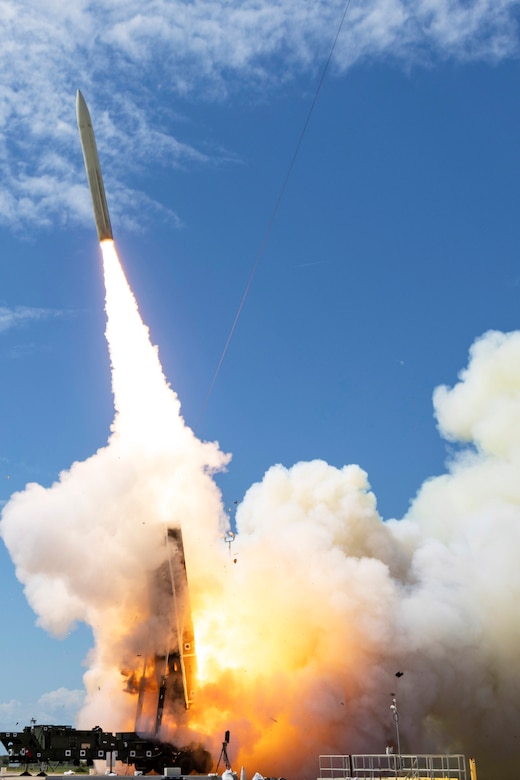
A missile launches during daytime, leaving plumes of smoke and flames behind it as it rises into a blue sky.
The U.S. Army's Portfolio Acquisition Executive Fires, in partnership with the U.S. Navy's Portfolio Acquisition Executive Strategic Systems Programs, conducted a successful launch of a common hypersonic missile from Cape Canaveral Space Force Station, Florida, on March 26, 2026.

The Army and Navy partnership to field a common hypersonic missile across land- and sea-based platforms supports the National Defense Strategy by accelerating timelines, reducing costs, and delivering a highly survivable capability to defeat time-sensitive, heavily defended, and high-value targets at speeds exceeding Mach 5.

Space Launch Delta 45 Supports Artemis II Historic Mission

Yesterday evening, NASA's Artemis II mission successfully launched from the Eastern Range at Cape Canaveral Space Force Station, Florida, with four astronauts bound for lunar orbit. This historic moment would not have been possible without the dedication and commitment of Space Launch Delta 45 personnel. 

A rocket takes off, with fire and smoke plumes beneath it. The launch pad is adjacent to a wooded area next to a body of water.

There are many steps involved in ensuring a safe and successful launch. From oversight of range operations to planning potential emergency response, members of SLD 45 aim to guarantee all launches from the Eastern Range keep the launch vehicle, range personnel and the local community safe. 

The mission starts before the launch countdown begins. Members of the SLD 45 team are responsible for analyzing specific payloads, launch vehicles and their proposed trajectories to compute hazard zones. These zones span land, sea and air and are a crucial to ensuring no person or vehicle is operating within a specified distance of the pad. 

"Each hazardous area reflects hours of trajectory analysis, debris analysis and coordination across multiple agencies," said Emma Cusano, SLD 45 flight safety analyst and aerospace engineer. "When it comes to launch, safety is our No. 1 priority, regardless of whether it is crewed or not."

Prior to launch, the SLD 45 Office of Emergency Management coordinates with state and local leaders to develop plans for an anomaly. Taking the hazard zones into account, the office proactively decides on where roadblocks should be placed, how traffic will flow and where emergency response vehicles will be staged in case of necessary response.

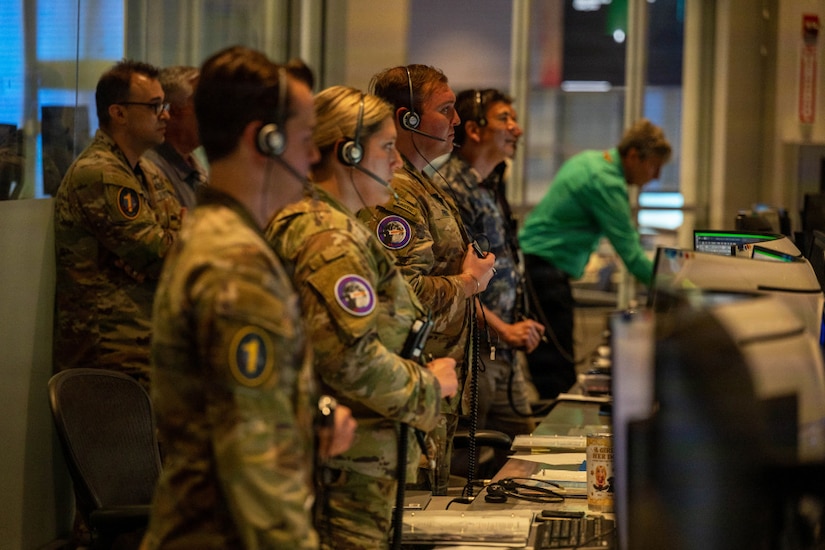
Several people wearing camouflage military uniforms and headsets stand in front of computer screens. A man in the background is dressed in civilian clothing.

"We are committed to doing everything we can in the planning phase to ensure we are ready to execute our emergency response plans," said Air Force Master Sgt. Robert Ridgway, SLD 45 installation emergency manager. "Having effective plans in place is necessary for both ensuring the safety of the local community and the astronauts in the capsule."

The Office of Emergency Management oversees and activates the launch emergency operations center. The operations center's primary function is to survey and respond to any and all potential dangers a launch could pose to Cape Canaveral Space Force Station. Because of the inherently volatile nature of spaceflight, the center remains staffed during launch to act as a node for disseminating emergency information and direction.

To safely get the launch vehicle from the pad to orbit, the 1st Range Operations Squadron and the 45th Weather Squadron are key players in each mission. The 1st Range Operations Squadron is responsible for performing real-time command and control of the Eastern Range. The team continuously analyzes telemetry data, weather and numerous other factors to determine whether a launch is safe to proceed.

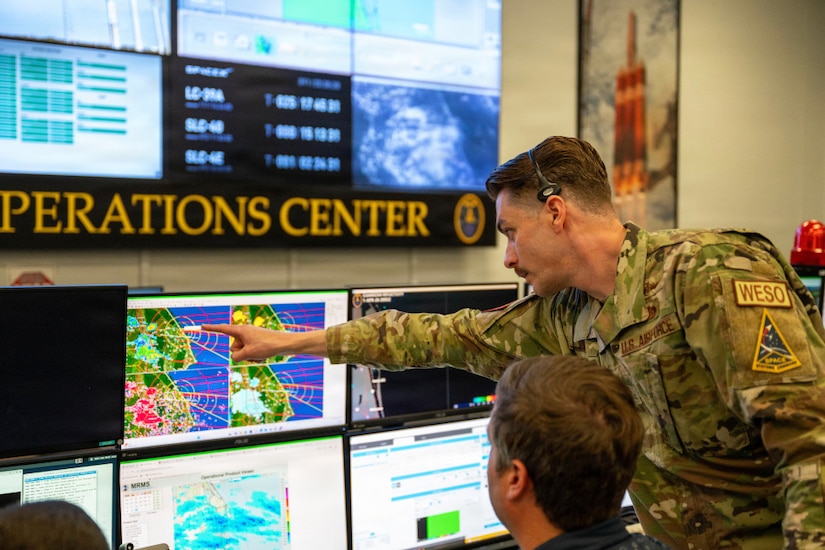
The 45th Weather Squadron supplements the squadron in its uninterrupted investigation of current and future conditions. Weather plays a crucial role in safety and launch success as inclement conditions can damage rockets and payloads. Examining the weather helps to advise SLD 45 personnel on the console.

A standing man wearing a camouflage military uniform points to a computer screen. Another man is seated while looking at the same computer monitor.

"Access to space would not be possible without the contributions of SLD 45 and its oversight of the Eastern Range," said Space Force Col. Joyce Bulson, SLD 45 deputy commander for operations. "These contributions enabled more than 100 launches in 2025, and we aim to only increase the pace."

South of Cape Canaveral Space Force Station, the 45th Logistics Readiness Squadron postures airfield support to facilitate the Air Force Detachment 3's human spaceflight recovery team, which plays the role of overseeing rescue forces at Patrick Space Force Base, Florida.

"I am extremely proud of the members of SLD 45 and their continued determination in executing the mission. These professionals train day in and day out to guarantee space access," said Space Force Col. Brian Chatman, SLD 45 commander. "They are the driving force to maintaining U.S. presence and superiority in the space domain."

In addition to the components already mentioned that support launch, SLD 45 includes many more teams and organizations that enable space launch from the Eastern Range. As the pace of launches and mass to orbit increases, SLD 45 personnel remain committed to safety and mission success.


Saturday, March 28, 2026

Standards 'Vital' to Navy, NASA Mission, Butch Wilmore Says

In early 2025, NASA astronauts Barry "Butch" Wilmore and Suni Williams — both retired Navy captains — were nearing nine months aboard the International Space Station, where they had been stranded since June 2024. The two were rescued and returned to Earth March 18, after spending 286 days in space.

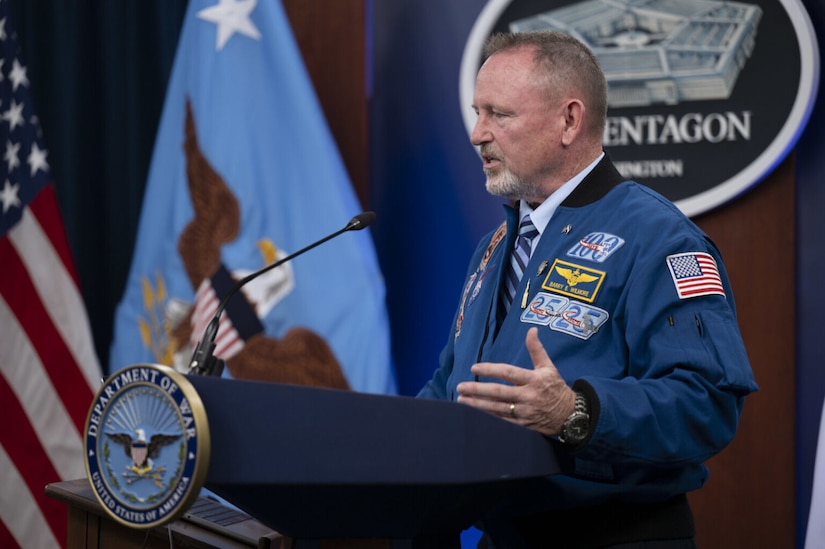
A man wearing a blue jacket with multiple patches stands behind a lectern and speaks to an audience.

During a visit to the Pentagon yesterday, Wilmore spoke with service members about service, space, leadership and the importance of standards. 

Wilmore joined the Navy after finishing college in 1986. He attended flight school and served as a pilot in tactical jets, including the A-7E Corsair II and the F/A-18 Hornet. He served in Operations Desert Storm, Desert Shield and Southern Watch and has logged over 8,000 flight hours and 663 carrier landings. He's a graduate of the U.S. Naval Test Pilot School, and as a test pilot, he participated in developing the T-45 Goshawk trainer aircraft. 

It wasn't until 2000, Wilmore said, that he was accepted into NASA's astronaut program. 

"I didn't join the Navy to become an astronaut," he said. "I joined the Navy to serve my country. And how I thought I would do it, I had a jet in my mind's eye." 

After completing a couple of master's degrees and flight school, he said he was looking for more. 

"I'm like, 'Hey, you can't fly any higher and faster than the space shuttle — let's try that,'" he said. "So again, the Lord gave me that desire in my heart as well."

Preparation for becoming an astronaut, he said, came from everything he'd done previously as a Navy pilot. 

"Think about putting on a one-man space capsule and going out into the vacuum of space, and the responsibility required for that," he said. "This is something obviously that I did with NASA, but you don't get prepared for this type of thing to be able to do it well and take on that responsibility without the foundation that takes place before you get there, and that was, for me, ... in our United States military."

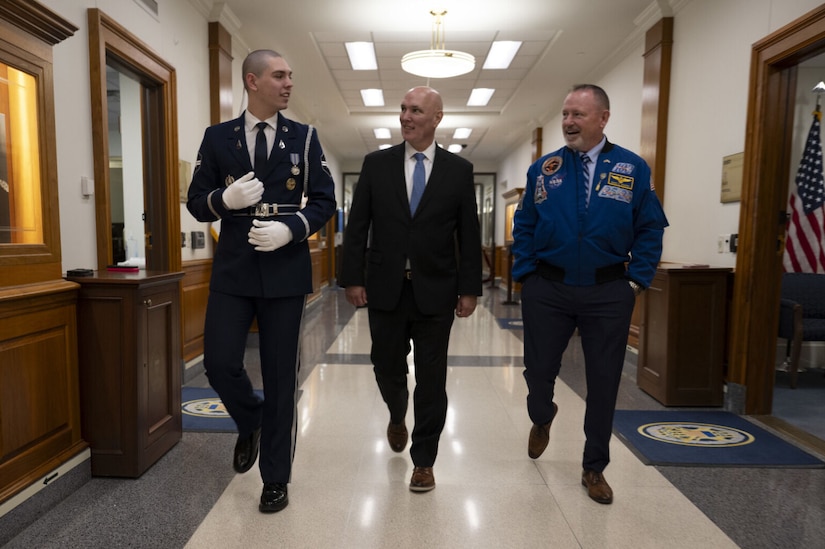
Three men walk alongside each other down a hallway.

Commitment, preparation and resilience, Wilmore said, are things he brought to the NASA job, things he learned in the Navy. 

The jobs of service members and of astronauts are not really jobs at all, he said. They are commitments. 

"This is something that is a way of life, and you've got to be all in," he said. "Because if you're not, you're not going to be able to do this job to the level that is required. And that commitment breeds the desire to be prepared. I mean, absolutely 100% prepared." 

The Navy veteran spoke about the "great responsibility" every service member has, as well as the resiliency required to do their jobs.

"Resiliency is something that is learned," he said. "It is a trait that comes with rigor: blood, sweat and tears. That's where resiliency is born, and it becomes toughness and focus and fairness and all that rolled into fortitude, that term ... that we have to have in our military." 

Wilmore added that the biggest factor affecting resilience is leadership — something he also learned in the Navy. 

"Leadership is required; absolute leadership makes or breaks this resiliency that has its foundation as commitment, preparation and responsibility." 

He described a successful leader as resilient, morally and ethically sound, meek, humble, timely, adaptable, sacrificial and unselfish.

A man wearing a blue jacket with multiple patches stands behind a lectern and speaks with a sign behind him that reads, "The Pentagon."

"And realizes their words have power," he said. "You've got to realize that, and you've got to wield that sword effectively and with compassion and with care. And of course, you've got to be disciplined and determined. You have to be, especially for what you guys are responsible for every single day. I've lived it, I've seen it, I've reaped the benefits of great leaders instilling these characteristics in me, and for that, I am greatly thankful." 

Shortly after taking the helm of the Pentagon last year, Secretary of War Pete Hegseth outlined plans to revive the warrior ethos, rebuild the U.S. military and reestablish deterrence with a focus on lethality, meritocracy, accountability, standards and readiness. 

Wilmore said success, both in the Navy as a pilot and at NASA as an astronaut, depends deeply on those very things the secretary is focused on now. 

"They are vital," he said, adding that success in particular is not possible without standards. "I'm so grateful that our military is doing what it's doing right now, because these standards are there for a reason." 

Wilmore said performance standards exist for the safety and benefit of the entire military, noting that "most of them are written in blood." 

He said his faith is another important element of his own success in both the Navy and NASA. 

When the Starliner spacecraft that took Wilmore and Williams into space in 2024 lost several of its thrusters — limiting maneuvering abilities — he knew he and his teammate would be stranded in space for some time. He said it was his faith that kept him pressing on. 

He described himself, both in maneuvering the Starline craft when it lost thrusters, and later when he was stranded on the space station, as being "content." He cited a biblical story featuring the Apostle Paul, who was beaten, stoned and left for dead, as a way to illustrate this. 

"What does [Paul] say? He says, 'I am content,'" Wilmore said. "In the moment, this moment [in the spacecraft], and others I've had in the past, if I am trying to be what the Lord would have me be — in line, in step with where he would have me be — if I'm anything other than content, I'm not trusting. Paul was content ... he knows he's right where the Lord would have him be, even amongst the trials he's undergoing. And that's contentment. And that's what I try to line my beliefs up, and my understanding with; and that's where I was. That's why I was content." 

Wilmore is a veteran of three space flights and has logged 464 days in space, along with over 31 hours during five spacewalks. 


Wednesday, March 25, 2026

Department of War Secures Agreement on THAAD Seeker Production, Quadrupling Output to Bolster America's Missile Defense

The Department of War, in partnership with BAE Systems and Lockheed Martin, today announced a framework agreement to quadruple the production of seekers for the Terminal High Altitude Area Defense (THAAD) interceptor. This agreement ensures the nation's industrial might is positioned to deliver on President Trump and Secretary Hegseth's mandate to build the Arsenal of Freedom. 

The agreement follows the recent announcement with Lockheed Martin to quadruple THAAD interceptor production. By securing the industrial base for the missile's seeker, the Department of War is moving beyond deals with prime contractors and is actively architecting the resurgence of America's defense industrial capacity across the entire supply chain. 

This agreement provides BAE Systems with the stability required for long-term investment, guaranteeing that this critical component in the supply chain is delivered at speed and scale to deter and defeat any adversary. 

"Securing our supply chain is just as critical as our partnership with the prime contractors," said Michael Duffey, Under Secretary of War for Acquisition and Sustainment. "This agreement with BAE Systems sends a clear, stable, long-term demand signal. We are providing the certainty our partners need to invest, expand, and hire. This is how we place the industrial base on a wartime footing."

By locking in this critical component, the Department of War is ensuring that the nation's capacity to build and deploy this vital defensive weapon will outpace any adversary's threat to the United States or its allies. This is the Arsenal of Freedom in action, built to ensure peace through undeniable strength.

This initiative is a powerful demonstration of the Department's revitalized Acquisition Transformation Strategy, put into practice by the work of the Munitions Acceleration Council. The Council is executing its mandate to dismantle barriers, forge stronger industry partnerships, and build enduring production capacity. By locking in the THAAD seeker supply, the Department is transforming to a new way of doing business, focused on speed, volume, and delivering a decisive overmatch against any threat.

Friday, March 20, 2026

Innovation in Action: Airman-Built 3D Model Strengthens Air Traffic Controller Training

Airmen assigned to the 19th Operations Support Squadron at Little Rock Air Force Base, Arkansas, are taking a creative approach to training the next generation of air traffic controllers by developing a detailed 3D model that visually represents aircraft patterns and procedures used at the installation.

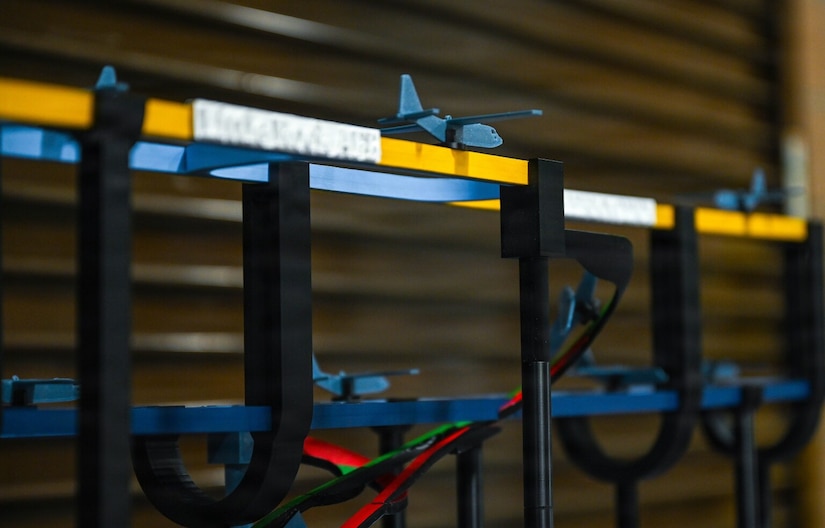
Several small 3D printed model airplanes are displayed in different flight patterns.

 
The innovation demonstrates how airmen are leveraging emerging technologies and creative problem-solving to improve training and operational readiness. 
 
The immersive training tool was designed and produced by Air Force Airman Jay Perry, 19th OSS air traffic control apprentice. It provides a scale representation of the base's airspace and flight patterns. The project was inspired by an idea from Air Force Tech. Sgt. Ryan Sanders, 19th OSS noncommissioned officer in charge of training and standardization. 
 
Traditional training methods often rely on instructors holding model aircraft or cards to demonstrate aircraft positions and movements. While effective, the approach can make it difficult for visual and tactile learners to fully imagine spacing, conflict points and maneuvering patterns.

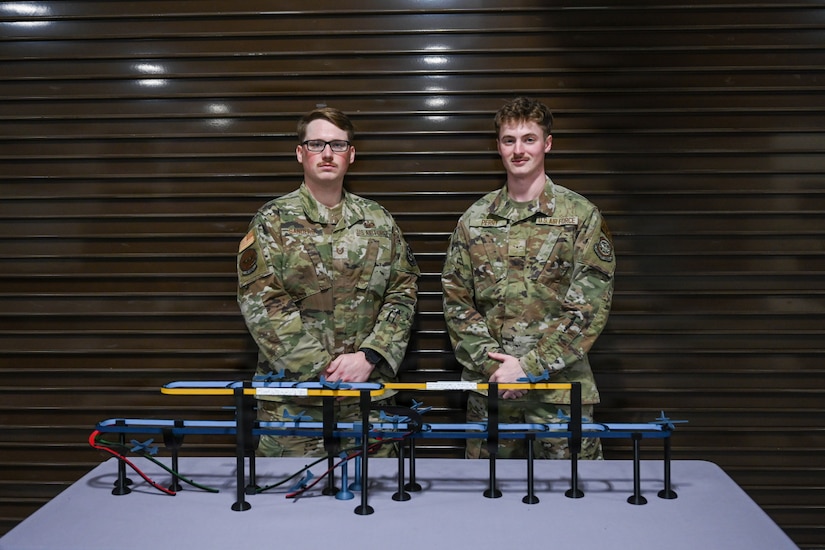
Two men in camouflage military uniforms pose for photo in front of 3D printed models of airplanes as they go through different flight patterns.

 
"This model allows us to physically show where aircraft may break in the pattern, extend downwind or maneuver differently," Sanders said. "It helps airmen understand when conflict may exist or when it doesn't, based on the flight path." 
 
The model re-creates the installation's airspace layout at scale and uses magnets to hold miniature aircraft in place, allowing instructors to demonstrate real-world scenarios more accurately. The enhanced visualization helps trainees better understand aircraft spacing, sequencing and potential conflict areas. 
 
Perry used a 3D modeling program to build his creation, but he made it by manipulating shapes to create detailed designs. After designing each component digitally, Perry prepared the parts for printing and produced them using multiple 3D printers available at the base innovation lab.

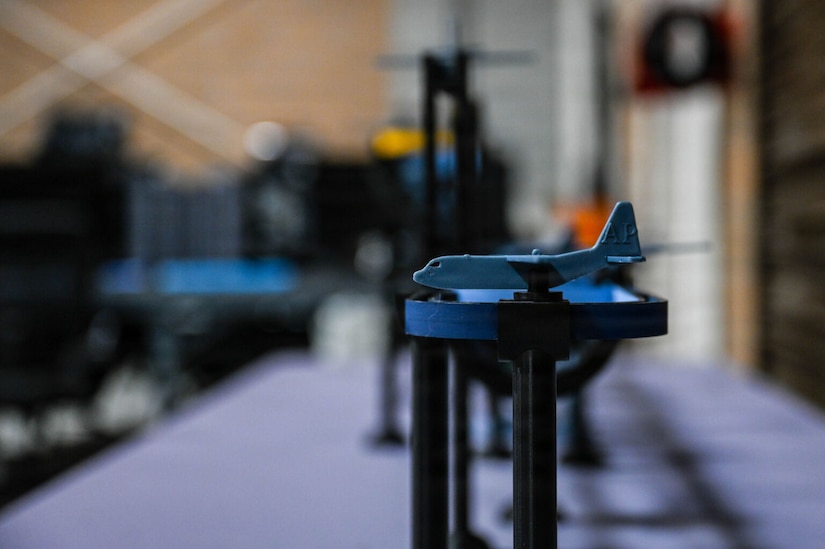
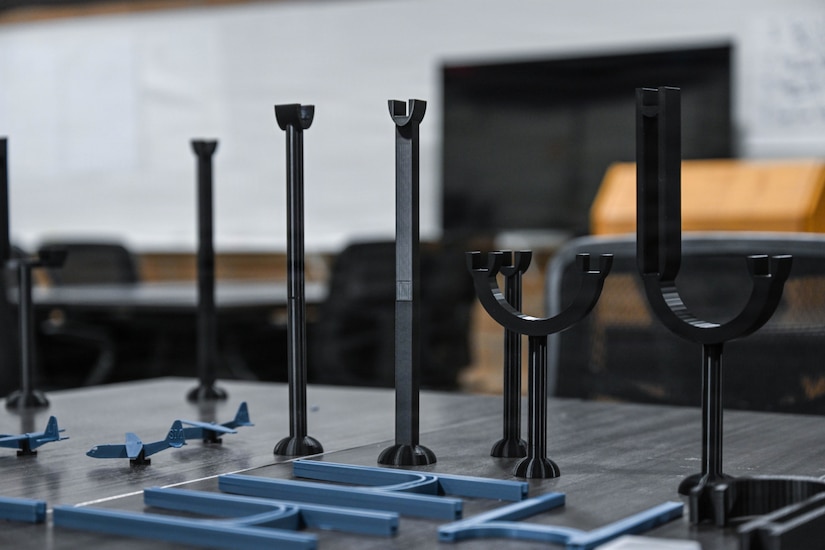
A small 3D printed model airplane is displayed on a stand.

 
The process required careful planning, preparation and experimentation. 
 
"Everything started from a single block in the design software," Perry said. "Each piece had to be separated and designed in a way that it could be printed and assembled later. It might look simple when you see the final model, but a lot of thought went into making sure the supports, slopes and connections would actually work." 
 
One of the biggest challenges was ensuring the model could support its own structure at the scale required to accurately represent the airfield. The team experimented with different stand designs and angles to create a realistic yet durable layout.

Several tools and 3D printed models are displayed on a table.

 
By transforming abstract training concepts into a physical, visual model, the 19th Operations Support Squadron is helping trainees better grasp the complexities of airfield operations. This ensures controllers are better equipped to manage the skies above the base. 
 
The project also highlights a broader culture of innovation across the installation, where airmen at every level are encouraged to identify challenges and develop solutions that enhance mission effectiveness.

Joint Statement Reaffirming a Shared Commitment to Defense Industrial Resilience

The following text was jointly agreed upon by the 16 members of the Partnership for Indo-Pacific Industrial Resilience (PIPIR): the United States, Australia, Canada, Germany, Italy, Japan, Lithuania, Netherlands, New Zealand, Norway, Philippines, the Republic of Korea, Singapore, Sweden, Thailand, and the United Kingdom following the 2nd Annual PIPIR Plenary meeting.

We, the National Armaments Directors and senior government officials of the member nations of the Partnership for Indo-Pacific Industrial Resilience (PIPIR), convened for our 2nd Annual Plenary meeting, virtually, on March 18, 2026, to reaffirm our commitment to accelerating defense industrial cooperation.

We reaffirmed the PIPIR Statement of Core Vision and Terms of Reference, discussed the collective challenges and opportunities to defense industrial cooperation in the Indo-Pacific, and endorsed the 2026 roadmap for PIPIR workstream initiatives.

We also endorsed the accession of Thailand and the United Kingdom to PIPIR, welcoming them as the 15th and 16th members, respectively, to join our Indo-Pacific and Euro-Atlantic partnership. Collectively, we are committed to strengthening defense industrial resilience to promote the continued regional security, economic security, and prosperity of the Indo-Pacific.

We discussed current capacity shortfalls and resilience challenges in the global defense industrial base that impede our ability to meet combined operational needs but acknowledged positive momentum through PIPIR in addressing barriers to increased armaments cooperation. We further reaffirmed our commitment to exploring avenues across the Partnership to strengthen defense industrial base integration to de-risk supply chains, expand forward sustainment capacity, remove policy and regulatory impediments to cooperation, and accelerate production of key systems and components.

We discussed the significant progress that has been achieved through PIPIR since its establishment, recalling the announcement of two marquee initiatives by the U.S. Secretary of War at the Shangri-La Dialogue in May 2025, including the development of a forward repair capability for P-8 radar systems in Australia and the development of standards for small unmanned aerial systems across the Indo-Pacific. We agreed to the following next steps for these marquee initiatives:

  • Expanding the scope of the regional sustainment hub in Australia to support additional P-8 operators in the Indo-Pacific, a project recently announced at the Shangri-La Dialogue in May 2025.
  • Endorsing four Statements of Intent to foster cooperation on small unmanned aerial systems' battery and small motor development through executing an industry survey and sharing results among participants, pursuing reciprocal standards and a common procurement policy, and identifying efforts towards a future battery project.

We agreed that PIPIR continues to make tangible progress toward addressing barriers and accelerating defense industrial collaboration to promote a stronger, more resilient, more integrated, defense industrial base. We also reaffirmed the importance of multilateral frameworks such as PIPIR to help facilitate the rapid delivery of relevant capabilities to our combined defense forces. In doing so, we took measure of the progress made since our last plenary on these efforts:

  • Building on the success of the Multinational Armaments Resilience Seminar, the first Indo-Pacific focused multinational armaments cooperation course, to be executed on a yearly basis, and co-hosted by the Department of War's Asia-Pacific Center for Security Studies and rotating PIPIR members.
  • Continuing our campaign of learning through multiple industrial base-focused subject-matter expert exchanges, tabletop exercises, and collaborative learning events.

We also discussed and endorsed several new lines of effort that will strengthen the Partnership by creating more opportunities for collaboration and will advance defense industrial resilience in the Indo-Pacific and globally:

  • Committing to a project that will explore feasibility and opportunity to establish a forward-deployed F100/F110 engine repair hub in Japan, which, will support regional sustainment for F-15 and F-16 platforms operated by the United States Air Force and partner nations.
  • Progressing the effort to establish a CH-47 Chinook T-55 engine repair hub in the Republic of Korea, a project recently announced at the US-ROK Logistics Cooperations Committee in July 2025.
  • Establishment of a new Solid Rocket Motor (SRM) production initiative between the US and Japan, chaired by Japan.
  • Expanding energetics and munitions development by assessing the potential for interest and funding for the 30mm-by-173mm ammunition load, assemble, and pack line effort with the Philippines.
  • Supporting regional co-production opportunities by exploring modular UAV projects across many mission sets.
  • Instituting new tools and techniques, such as a project development guide, that provides a methodology to identify and assess future collaborations resulting in enhanced project efficiency and efficacy, information sharing, and transparency among governments, industry partners, and stakeholders.

Tuesday, March 17, 2026

Air Force Research Laboratory Tests Draper Liquid Rocket Engine in Flight

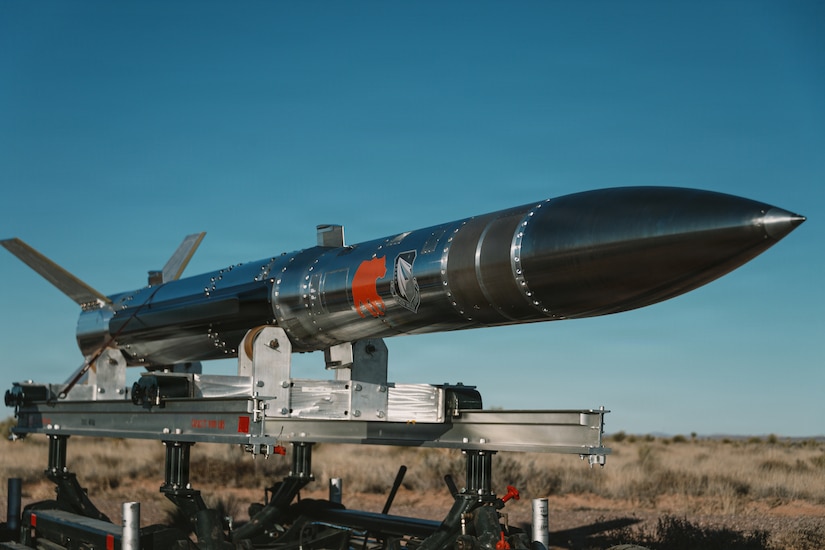
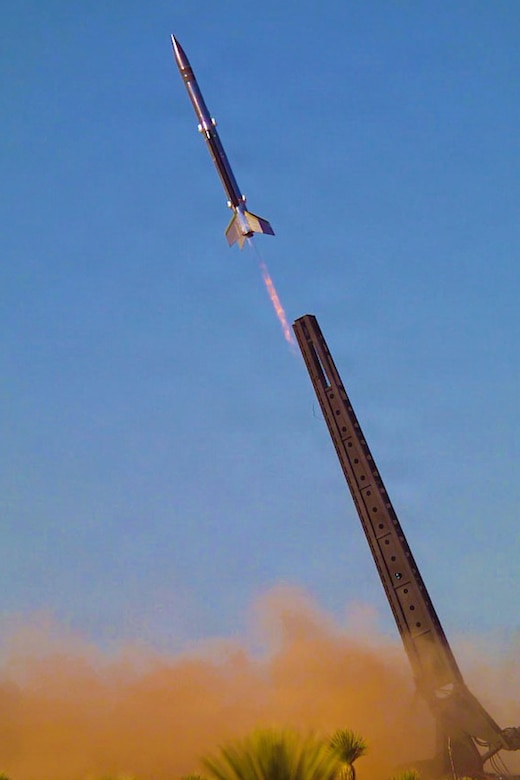
The Air Force Research Laboratory and an aerospace technology and defense systems contractor recently flew the Affordable Rapid Missile Demonstrator, powered by the Draper liquid rocket engine, achieving supersonic speeds and demonstrating key concepts of operations. This flight is an innovative step toward advancing capabilities that strengthen deterrence and provide rapid global strike options.

A missile sits on a trailer in a desert environment.

"This project proves that we can transform and leverage our acquisition models to rapidly deliver critical technology advancements to deter and win in a future conflict," said Air Force Brig. Gen. Jason Bartolomei, AFRL commander and Air Force technology executive officer. "We are not just building a single missile; we are forging a new path toward a cost-effective, mass-producible deterrent for the nation."

This sentiment is echoed by the contractor's leaders, who emphasized their shared commitment to the ARMD program's speed and cost-effectiveness. This project represents a new paradigm for accelerating research and development of critical defense technologies, rooted in fast-paced, effective public-private partnerships.

A missile launches into a clear blue sky, kicking up dust from the ground.

"This flight proves that you can get a vehicle with a safe, storable and throttleable liquid engine in the air quickly and affordably," said Chris Spagnoletti, contractor CEO. "We went from contract to flight-ready of an all-up round and propulsion system in just eight months."

This demonstration of the Draper liquid rocket engine leverages several years of the contractor work on their Hadley liquid rocket engine, along with an enduring public-private partnership with AFRL to develop these new rocket propulsion technologies.

"ARMD represents a key milestone in our efforts to develop revolutionary, affordable and scalable liquid rocket engine technologies to win the wars of tomorrow," said Javier Urzay, AFRL rocket propulsion division chief.

Wednesday, March 11, 2026

Mastering the First Breath: Navy Medicine Research Prepares Warfighters Against Cold's Lethal Shock

The first plunge into icy water is a shock to the system. For a warfighter operating in extreme cold weather environments, a fall into near-freezing seas isn't a mishap; it's a life-or-death battle that is won or lost in the first few minutes. 
 
This research mission took Naval Health Research Center scientists to the Marine Corps Mountain Warfare Training Center in Bridgeport, California, where they spent six days doing research in the harsh Sierra Nevada winter. Working in air temperatures hovering at 19 degrees and with water temperatures at 34 degrees, the team focused on equipping U.S. warfighters with practical survival skills for extreme conditions.

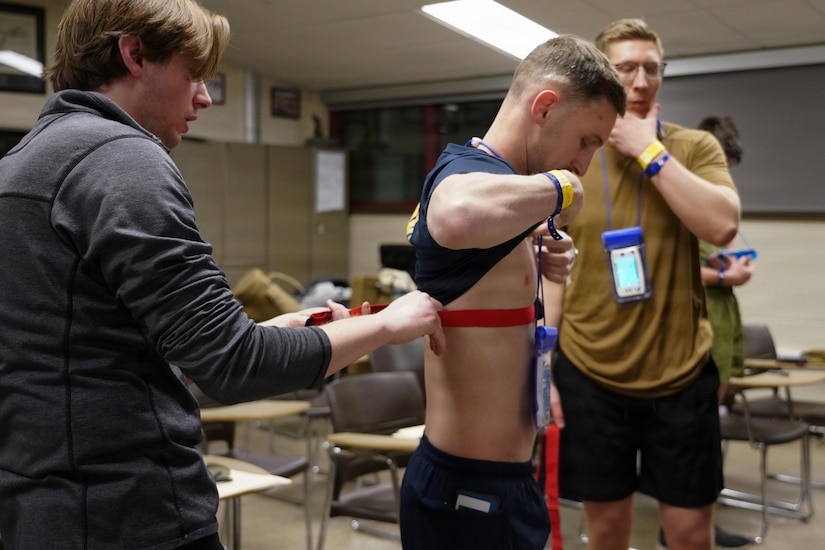
A man in casual attire attaches a medical device to the chest of another man, who is holding his shirt up while standing in a classroom. There is another man in athletic attire standing in the background.

The project, funded by the Office of Naval Research, is directly aimed at improving survival rates during a mass casualty incident at sea, such as a torpedoed ship in arctic waters. Researchers from the center's environmental and thermal physiology team are investigating cold-environment survival to understand and combat a silent killer known as the "cold shock response," a leading threat in sudden cold exposure scenarios.  
 
"Most people's first worry is hypothermia, but in order to actually become hypothermic, you have to survive the cold shock response," said Rebecca Weller, a research physiologist with the research center. "The initial moments in cold water are often the most dangerous, and how you control your breathing in those moments can determine whether you survive." 
 
That initial, involuntary gasp for air upon hitting cold water, the rapid and uncontrolled breathing, and the spike in heart rate and blood pressure are all hallmarks of the cold shock response — a series of immediate bodily reactions to sudden cold exposure. This physiological response can quickly lead to aspirating water, cognitive impairment and drowning. Research suggests that this response is the cause of death in up to 60% of accidental cold-water immersions, long before the body's core temperature begins to drop. 

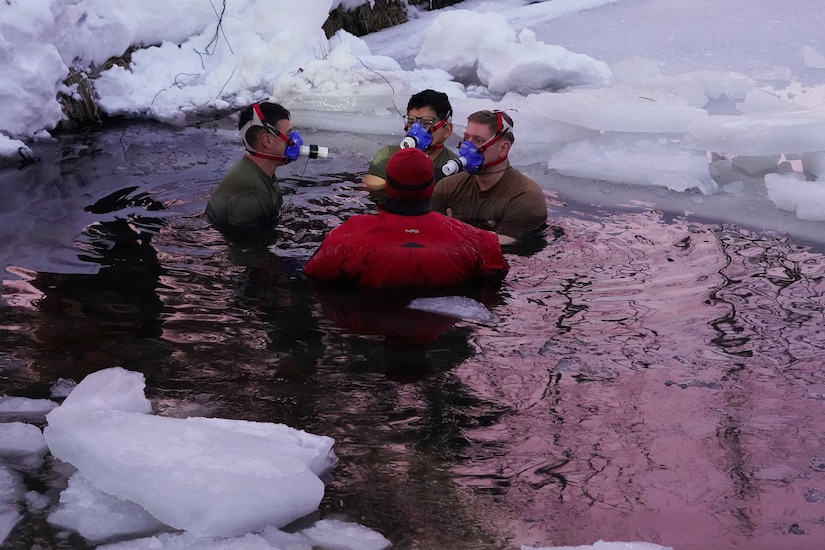
Three men wearing athletic attire and respirators stand in chest-deep cold water with chunks of ice around them. Another person in a cold-weather suit is standing in the water next to them.

 
The environmental and thermal physiology team, led by principal investigator Doug Jones, partnered with the warfare training center to conduct a vital study during its cold-weather medicine course. Students, mostly Navy hospital corpsmen, enrolled in the course prepared for the rigors of cold weather operations and also had the opportunity to volunteer as subjects in an experiment designed to find a simple, effective defense against cold shock. 
 
The day before a planned cold-water immersion, study participants underwent baseline testing for stress, anxiety and information recall. They also received specialized training in slow-paced breathing. 
 
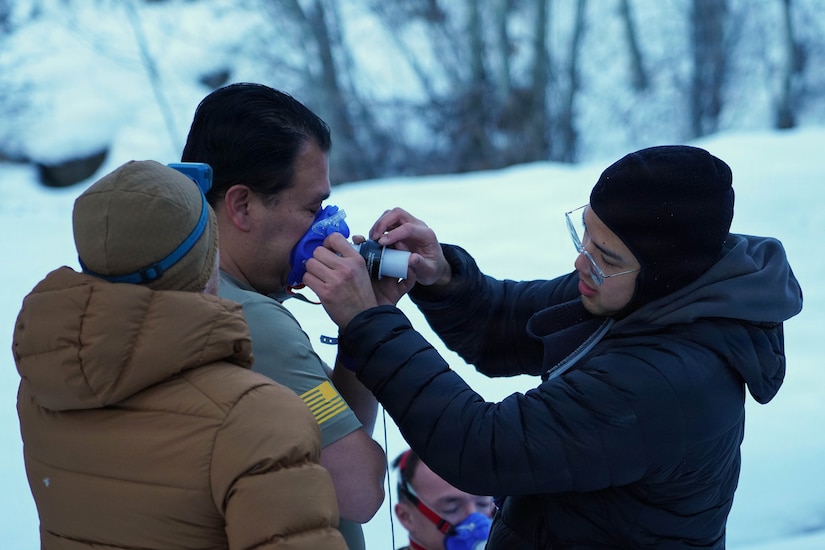
The next morning, volunteers were fitted with an array of sophisticated data-collection devices — heart rate straps and core and skin temperature monitors. The most critical piece of equipment, however, was a spirometer, which measures the volume and rate of breathing.

A man in winter attire places a medical device over the mouth of another man in athletic attire who is standing outside with snow on the ground. A third person in winter attire is standing next to the man in athletic attire.

The goal was to see if a simple breathing exercise could override the body's instinct to panic. 
 
"We are trying to develop a technique and strategy that can limit the stress associated with accidental cold-water immersion," Jones said. 
 
The research center is currently analyzing data from these tests. Based on a preliminary review of the data, the group trained in slow-paced breathing appears to have demonstrated a lower, more controlled breathing rate during the immersion than the untrained control group. They were actively using the technique to fight the body's involuntary response. 
 
The team is now analyzing how controlled breathing impacts the cold shock response and operational performance, such as completion of the nine-line task to determine if a patient needs to be evacuated. During the immersion, participants were tasked with performing the test — a standard military procedure that requires clear thinking and precise communication. The ability to perform such a task under the intense physiological stress of cold shock can mean the difference between life and death for a service member. 

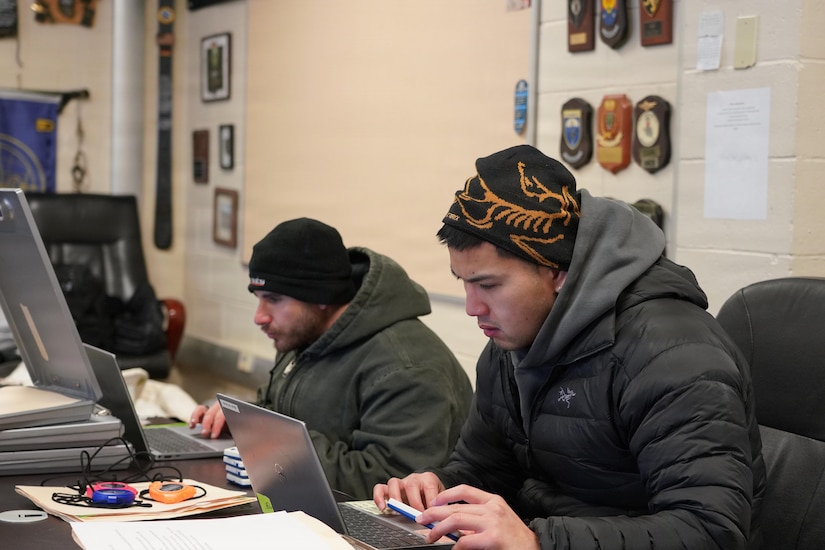
Two men in winter attire fill out forms on computers in a room. There are military awards on the walls in the background.

 
Ultimately, the findings from this research will provide evidence-based data to validate and refine training protocols across the U.S. military. The ultimate goal is to provide the military with evidence-based tools that can be quickly taught to any service member and integrated into official guidance like the Navy's Cold Weather Handbook for Surface Ships, to add strategies for surviving the initial moments of cold-water immersion. 
 
"How you control your breathing in those initial moments of cold-water immersion can determine whether you survive it," Weller emphasized. "By practicing these techniques in a controlled environment, service members may gain the confidence and muscle memory to execute them when it counts." 
 
These findings will educate a new generation of warfighters — more prepared, more adaptable and more lethal — armed with the knowledge to conquer one of nature's most unforgiving environments. They are proving that in the face of the cold's deadly gasp, the most powerful weapon can be a single, controlled breath. 
 
Through a wide range of research, including its cold-water immersion studies, the research center develops strategies that enable the warfighter to overcome the many health and performance-related challenges they face in the course of their duties. This research provides the Navy, Marine Corps and joint forces with the opportunity to develop tools to maintain cognitive function and enhance survivability in the most extreme maritime environments.

Saturday, March 7, 2026

IATF-401, FAA to Conduct Advanced Counter-Drone Laser Test at White Sands Missile Range

Joint Interagency Task Force 401 and the Federal Aviation Administration will conduct a high-energy laser test on March 7-8, 2026, to continue advancing the safe use of counter-unmanned aerial systems in the United States.

This test is part of a long-term, multi-year partnership between the Department of War and the FAA to ensure counter-drone technologies are safely integrated into the national airspace. The plan has been jointly developed by a wide range of stakeholders, with support from the White House Task Force to Restore American Airspace Sovereignty. Key partners supporting the JIATF-401 laser test include the FAA, White Sands Missile Range, the Army Program Acquisition Executive-Fires, Northern Command, and Joint Task Force Southern Border.

"This is a critical step in making sure our warfighters have the most advanced tools to defend the homeland," said U.S. Army Brigadier General Matt Ross, Director of JIATF-401. "By working hand-in-hand with the FAA and our interagency partners, we are ensuring that these cutting-edge capabilities are safe, effective, and ready to protect Americans from emerging drone threats. Our measure of success is to quickly deliver state-of-the-art C-UAS capability to the warfighter, and this test furthers that mission."

The test is a continuation of extensive testing conducted by the DoW over the last few decades. Earlier tests provided valuable data, further refining the system's capabilities and advancing the collaborative effort between DoW and the FAA. This upcoming event will specifically address FAA safety concerns while gathering data about the laser’s material effects on aircraft surrogates, validating the functionality of automated safety shut-off systems, and informing analyses for aircrew eye safety.

To maximize collaboration, representatives from the Department of Energy, National Nuclear Security Administration, Department of Homeland Security, Customs and Border Protection, and the New Mexico National Guard will be in attendance. The test underscores an ongoing unified federal effort to counter threats posed by unmanned aerial systems while maintaining the sovereignty and safety of U.S. airspace.

Tuesday, March 3, 2026

U.S. Space Force Strengthens Partnerships at 45th Cobra Gold

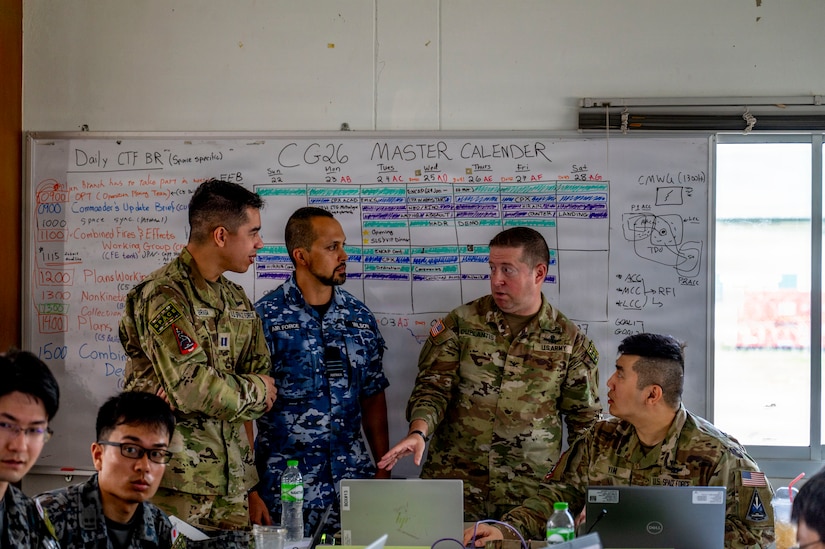
Space Force guardians are participating in the 45th iteration of Cobra Gold for the first time in the exercise's history, marking a milestone for the service and further integrating space as a warfighting domain within one of the Indo-Pacific's largest multinational exercises, Feb. 23 to March 6.

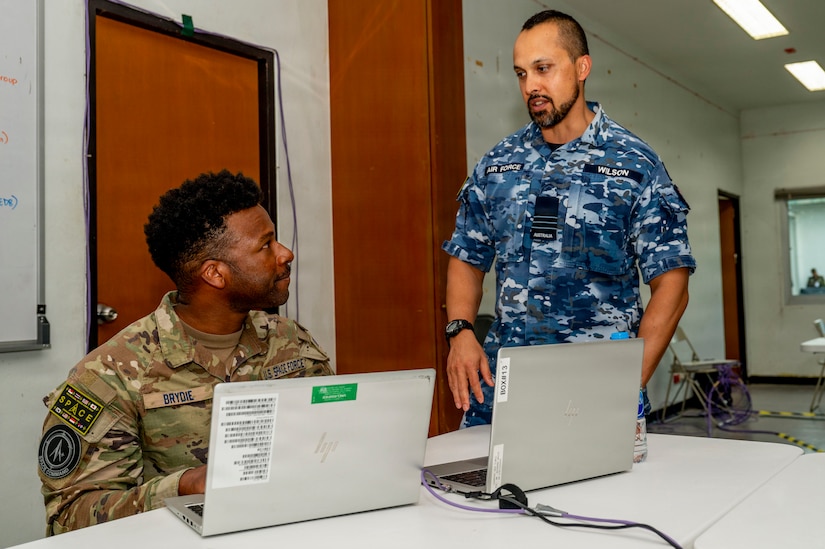
Two men, one seated and wearing a green camouflage military uniform and another standing and wearing a blue camouflage uniform, look at each other. There is a table with laptops in front of them.

The presence of guardians at Cobra Gold signals the continued evolution of the Space Force. It reinforces the U.S.-Thai alliance by enhancing multinational crisis response, mission effectiveness and capability across all domains.

"This marks a significant milestone for the United States Space Force," said Space Force Maj. Jonathan Brydie, a military exchange program embed assigned to the Joint Force Space Component, Headquarters Joint Operations Command. "As our service continues to mature, our participation demonstrates that we can support real-world operations and major multinational exercises simultaneously. It reinforces that space is a warfighting domain. Integrating space from the outset ensures the joint force operates with synchronized effects across air, land, maritime, cyber and space."

As the Air Force's newest military service, the Space Force was established to organize, train and equip forces to protect the United States and allied interests in, from and to space. Its integration into Cobra Gold reflects both operational necessity and the evolving character of warfare.

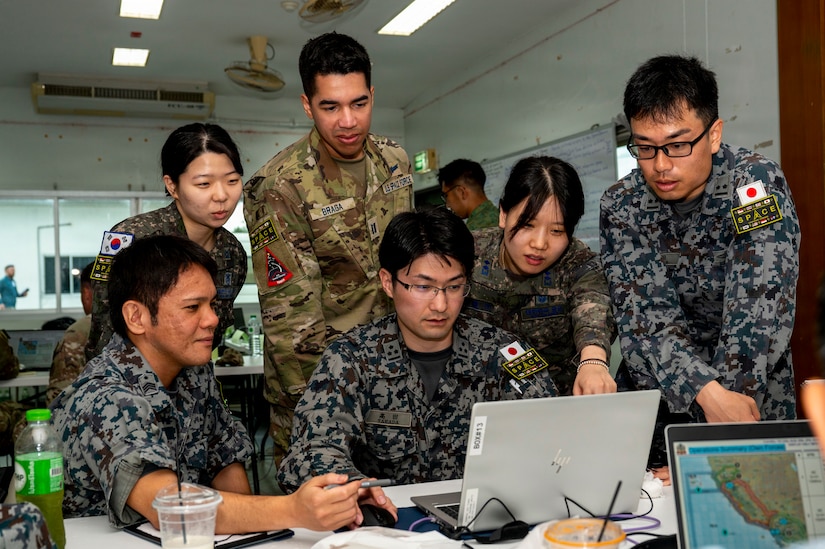
Three men wearing camouflage military uniforms from multiple nations stand in front of a white board. There are other men in similar attire seated at tables with laptops in front of them.

"Integrating space into Cobra Gold enhances the exercise by educating Indo-Pacific partners on the operational role of the space domain during conflict," said Space Force Capt. Nicholas Braga, Space Forces Korea chief of future operations. "It also opens dialogue on how nations can responsibly develop and integrate space capabilities that contribute to regional stability."

In support of Cobra Gold, guardians contributed expertise in space domain awareness, defensive and offensive space operations and operational-level space planning required to maintain space superiority. Rather than operating in isolation, Space Force personnel are embedded alongside air, land, maritime and cyber planners to integrate space effects into decision-making processes.

"We are ensuring space is a deliberate consideration at every decision point," Braga said. "Branch plans and contingency options are developed with space effects integrated from the beginning, giving commanders greater clarity and flexibility in achieving mission objectives."

A group of people, both men and women and wearing various camouflage uniforms from multiple nations, stand and crouch as they look at a laptop on a table.

The operational importance of space domain awareness was a central theme throughout the exercise.

"Most command and control systems rely on satellites and space-enabled networks," Brydie said. "Space superiority is now as vital as air superiority in modern conflict. Maintaining awareness of the space environment allows us to protect those systems and ensure the joint force can operate without disruption."

Beyond operational integration, Cobra Gold provided an opportunity for the Space Force to deepen relationships with regional allies actively developing their own space competencies.

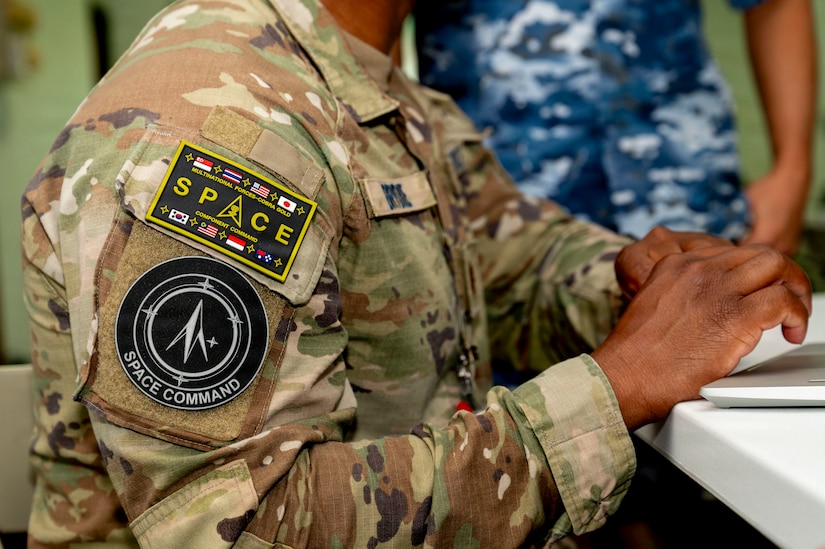
A Space Force patch is shown on the shoulder of a person wearing a camouflage military uniform. Another person in similar attire is standing in the background.

"It has been a tremendous opportunity to collaborate with partner nations," Braga said. "The United States is not the only space-capable entity in this region. Working alongside the Republic of Korea and other allies strengthens trilateral and multilateral integration. The cohesion built here enhances deterrence and reinforces our collective posture across Indo-Pacom."

Coalition partners emphasize shared responsibility in the space domain is essential to regional stability.

"Participating in Cobra Gold demonstrates a shared commitment to the responsible and secure use of space," said Royal Australian Air Force Staff Officer Mark Wilson, wing commander of Joint Force Space Component, Headquarters Joint Operations Command. "It shows we are willing and capable of sharing information and operational experience to achieve common security objectives."

"For the U.S. Space Force, Cobra Gold 2026 serves as both a milestone and platform to demonstrate the service's ability to integrate seamlessly within a complex multinational environment while delivering operational advantage to the joint force," Braga said.

From space domain awareness to operational-level planning, guardians ensured space effects were integrated at every stage of execution reinforcing deterrence, strengthening alliances and advancing the service's role as an essential component of joint and coalition operations in the Indo-Pacific.

Thursday, February 26, 2026

HoloLens Enables Remote Joint Inspection of Cargo

A joint inspection is an important part of preparing cargo for transport on military aircraft. Nearly every day, there are aerial porters in the 521st Air Mobility Operations Wing, spread across multiple areas of responsibility, who inspect pallets of equipment and supplies to confirm proper packaging, weight, balance and preparation, ensuring the cargo can be safely transported via aircraft.

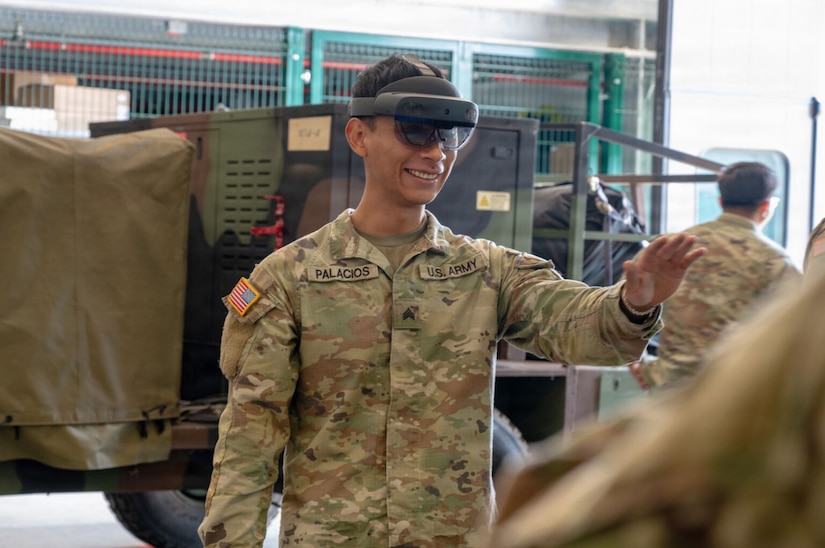
A man in a camouflage military uniform holds his hand out while looking through a headset. There are two other people in similar attire, as well as a vehicle with equipment on it, in the background.
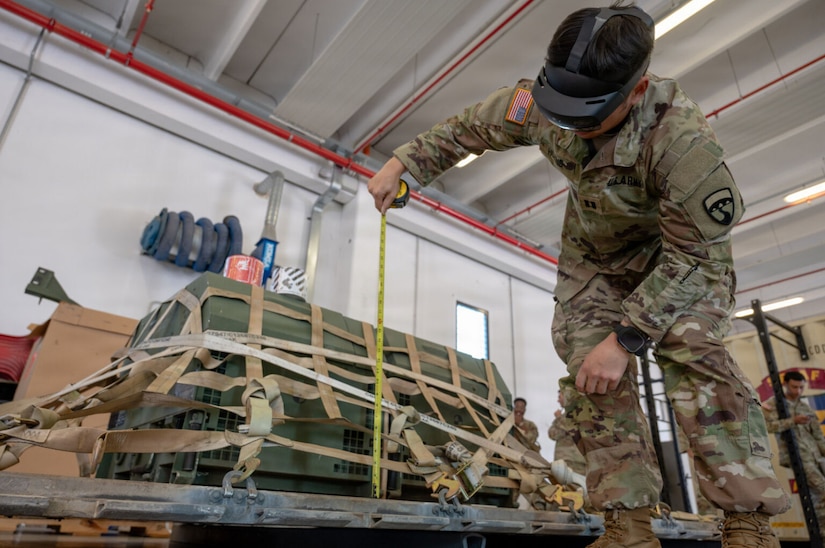
A person in a camouflage military uniform bends over to look at a measurement of a cargo pallet while wearing a headset in a warehouse.
It's an efficient process, but what if these airmen couldn't inspect the cargo in person? 
 
That's the question that the 725th Air Mobility Squadron has been trying to answer since 2021. The HoloLens, an augmented reality headset enabling aerial port experts to aid and guide technicians by looking through their eyes, could be the solution.  

The squadron airmen have demonstrated how the augmented reality capability can be used to increase rapid global mobility in a variety of maintenance, air transportation, and command and control scenarios, increasing the speed of maneuver to sustain joint force lethality across the competition continuum.
 
Stationed at Aviano Air Base, Italy, the 724th Air Mobility Squadron regularly partners with users in the region to prepare their cargo for forward deployment. They received an opportunity to work with the Army's 173rd Airborne Brigade in Vicenza, Italy, to perform a joint inspection remotely using the HoloLens. To best test the utility of the device, the 724th AMS worked alongside the 725th AMS, the operations wings' foremost authority on the technology.

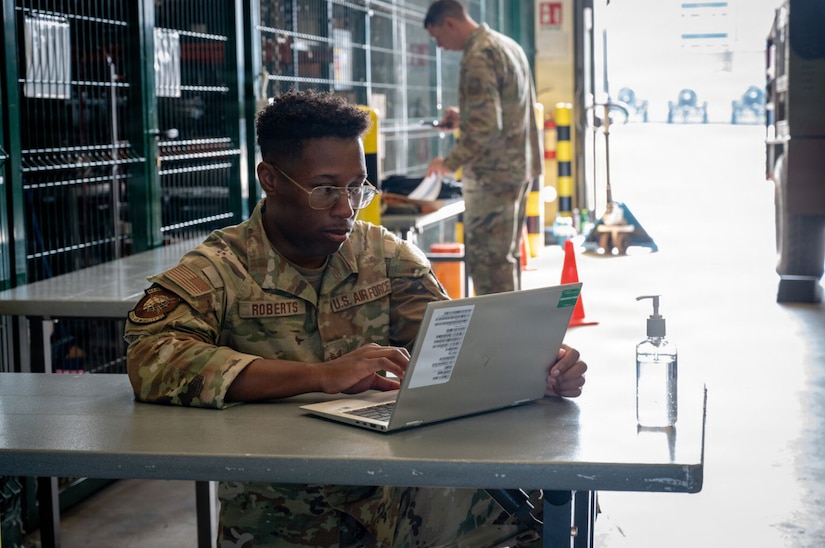
A man in a camouflage military uniform sits at a table looking at a computer screen while in a warehouse. Another man in similar attire stands in the background, holding a phone.

 
"We spent a year working with the manufacturer and experimenting with different add-ons to figure out the right software and process we needed to get to where we are today," said Air Force Chief Master Sgt. Anthony Sewejkis, 725th AMS superintendent. "Now it's plug and play. We can connect [from] anywhere just using the HoloLens, a Wi-Fi hotspot and a laptop." 
 
From a conference room back in Aviano, Air Force Airman 1st Class Delaney Boehm, a 724th AMS aircraft services specialist, guided the personnel in Vicenza through the joint inspection, circling areas on her screen that she wanted them to focus on. 
 
"It was a great experience that showcased our squadrons' innovative approach to conducting routine inspections and allowed a technician in the field to work hands-free while receiving real-time guidance from a remote expert," said Air Force Staff Sgt. Devin Robert, 725th AMS noncommissioned officer in charge of network operations. "The ability to highlight individual objects in the technician's field of view goes beyond the capabilities of a traditional video call." 
 
Although the remote inspection was just a proof of concept, it demonstrated flexibility and ease of use to joint partners and to the headquarters Air Mobility Command staff.

A close-up view of a man in a brown T-shirt looking through a headset.
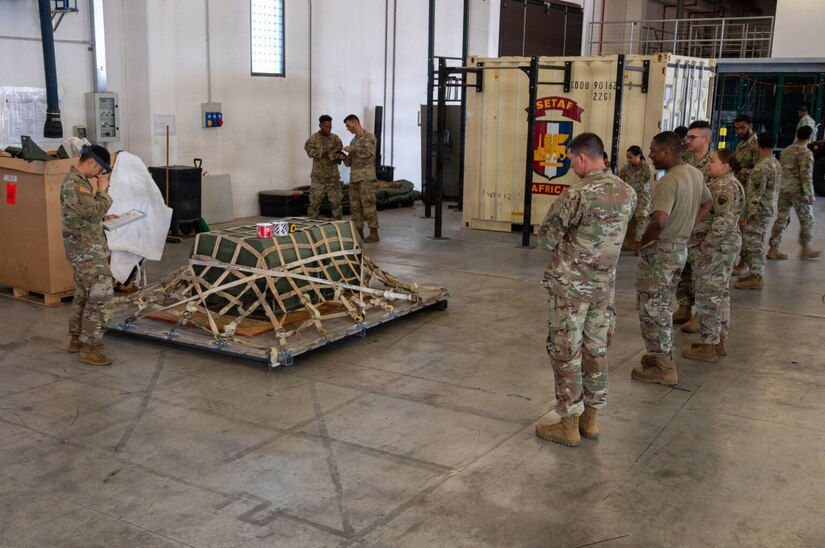
Several people in camouflage military uniforms stand in a warehouse looking at a cargo pallet on the floor. There is a large container and workout equipment in the background.
"There is a push in the air transportation career field to explore new ways of accomplishing our mission, irrespective of geographical constraints," said Air Force Lt. Col. Katherine Wilson, 724th AMS commander. "We tried the HoloLens alongside a traditional video call, and the immersive hands-free component of the HoloLens experience streamlined communication and overall speed of the inspection." 
 
Leveraging this new technology, the 725th AMS is continuing to refine processes and enabling mission execution despite the geographical separation within the operations wing.

Soldiers Experiment With First-Person-View Unmanned Aircraft Systems

The Army's 3rd Infantry Division is revolutionizing how ground forces employ unmanned aircraft systems through specialized UAS operators assigned to the 6th Squadron, 8th Cavalry Regiment, 2nd Armored Brigade Combat Team, 3rd Infantry Division, which officials say is critical to winning on the modern battlefield.

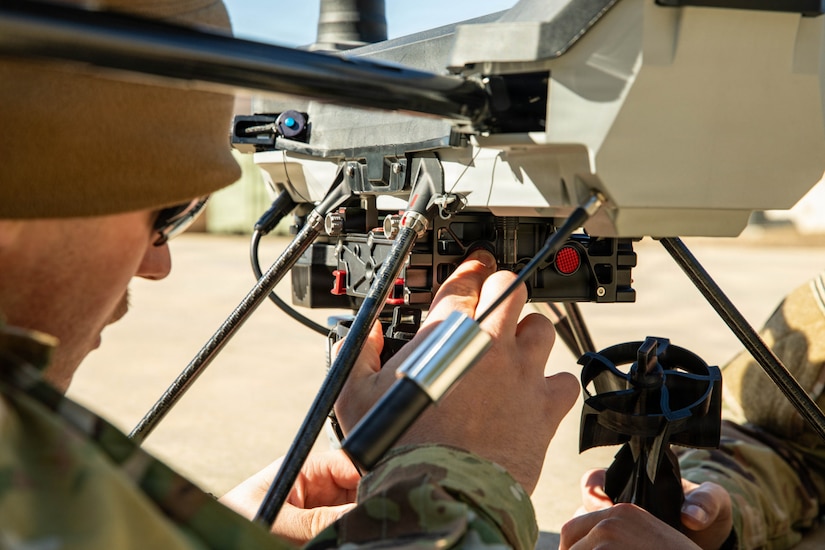
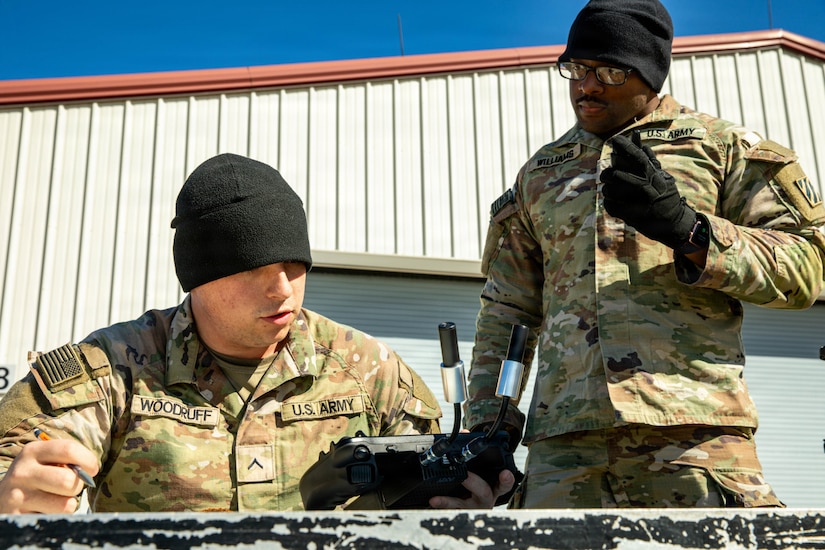
A close-up of two people wearing camouflage military uniforms working on a drone outside.

Combat team soldiers have fundamentally changed how drones are used at the brigade level by spreading the technology across the entire force and establishing a hub for testing innovative capabilities, said Army Capt. William Langley, brigade collection manager. 

"UAS is important on the modern battlefield today because it is a very fast-paced battlefield," Langley said. "The faster you can receive information and sense the enemy, the faster you can react, and whoever reacts first wins."  

The unit combines electronic warfare, UAS and launch effects platoons — a reorganization that provides tactical advantages on the battlefield. Soldiers are experimenting with various payloads on drones, including electronic warfare sensors and advanced capabilities for operational missions.

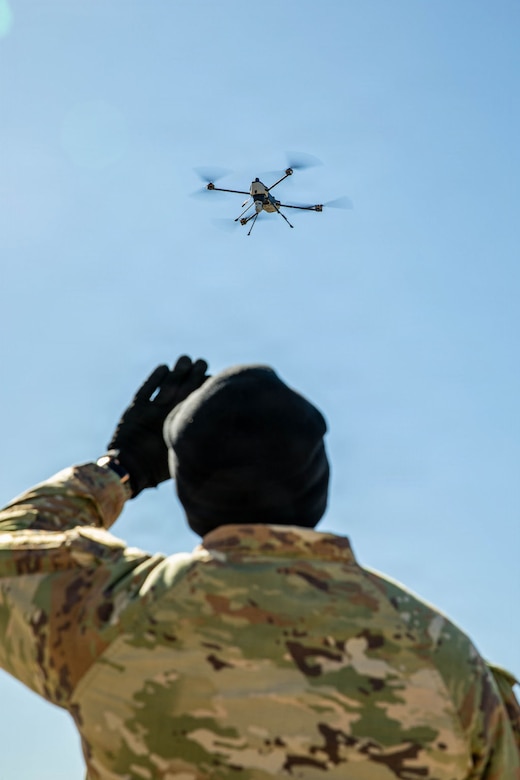
A man wearing a camouflage military uniform looks up at a drone flying in the air.
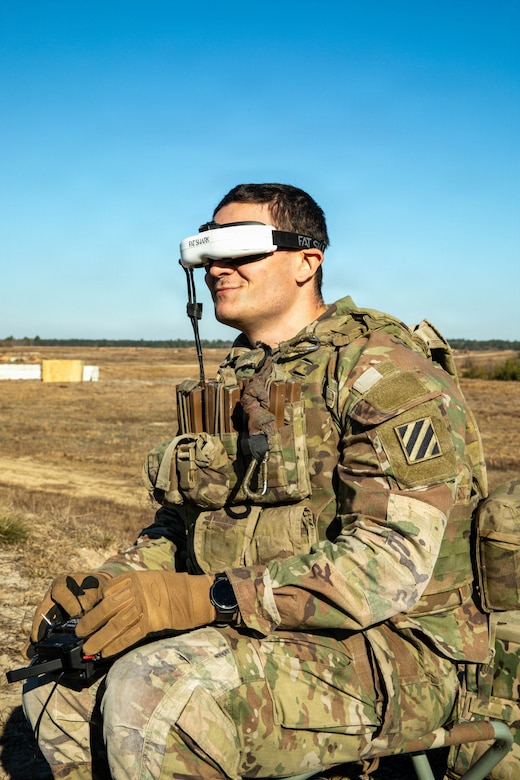
A man wearing a camouflage military uniform pilots a drone by looking through a headset and using a remote control. The man in seated in field.
Army 1st Lt. Declan McKeown, UAS platoon leader, said the combat team aims to improve operational effectiveness by using its platoons to gather intelligence and respond to threats faster than traditional methods allow. 

"The enemy wants to find us first, so it's a competition between the enemy and us to utilize our systems to be able to sense, track and maintain tactical advantage," McKeown said. 

The innovation comes as the 3rd ID participates in the Army's Transforming in Contact 2.0 initiative, which accelerates how combat formations test and adopt new technologies. The division has been designated as an initiative unit, positioning it at the forefront of procurement and experimentation with different platforms.

"Innovation is necessary for the 3rd ID to be successful because, as we have seen in recent conflicts in Ukraine, Israel and other places around the world, the way we fight battles is changing at a rapid pace, and we must continue to modernize to maintain our readiness for future operations," Langley said.

A man wearing a camouflage military uniform stands outside while looking down at another man in similar attire as he is seated holding a remote control. There is a building in the background.

A recent training exercise at Fort Stewart, Georgia, during Spartan Focus 26, featured 6th Squadron soldiers conducting UAS training with C100 medium-range reconnaissance systems configured with 3D-printed training rounds. The exercise incorporated lessons learned from Ukraine, where low-cost quadcopter drones have been widely used in recent conflicts. 

The division's approach has significantly improved the decision-making cycle, allowing forces to gather and process intelligence much faster than previous methods, McKeown said, emphasizing the importance of soldiers maintaining situational awareness. 

"Whoever sees the enemy first can react first, and can respond more effectively, which leads to operational success," he said. 

Soldiers continue to experiment with electronic warfare payloads on medium-range reconnaissance systems and test various configurations on first-person-view drones to determine system limitations and capabilities. The ongoing innovation includes stressing equipment through rigorous training to understand what works best for operational units.

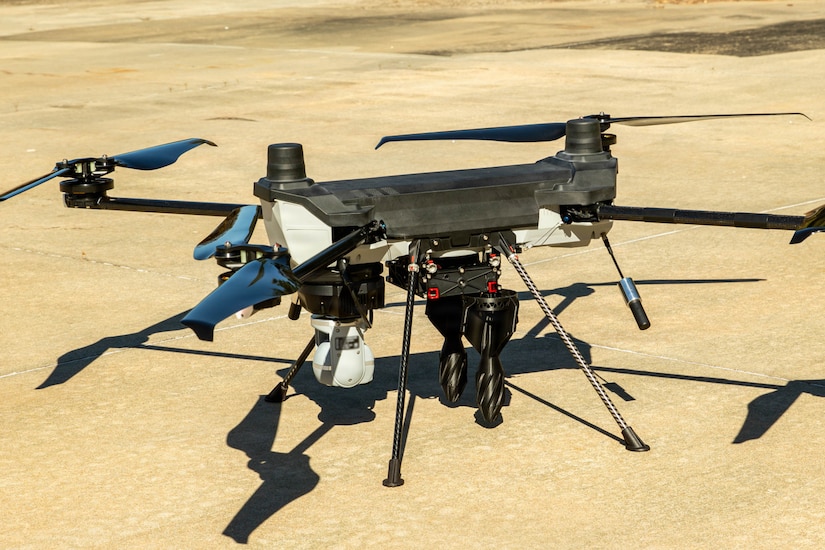
A drone sits on a paved surface outside.

The division's 3rd Combat Aviation Brigade has also integrated unmanned systems manufacturing capabilities, training soldiers on expeditionary manufacturing cells that enable rapid 3D printing of drone components in the field. Soldiers printed more than 90 unique components in hours rather than waiting weeks for ordered parts. 

Langley said being a part of the 3rd ID during this transformative period presents unique opportunities. 

"This is an exciting time to be part of this unit, and it's a great time to test our new capabilities and to really release the creativity of soldiers at every level," he said. 

Tuesday, February 24, 2026

Securing Rare Earth Elements a National Security Imperative, Official Says

Securing a resilient supply chain for critical minerals is fundamental to national security and the economy, said Michael P. Cadenazzi Jr., assistant secretary of war for industrial base policy, who testified today at a Senate Armed Services Committee hearing in Washington.

A man wearing business attire sits at a table and speaks into a microphone.

He noted that there is a growing demand for U.S. capabilities from allies and partners, such as fifth-generation aircraft, precision-guided munitions, satellite constellations and next-generation naval vessels. Cadenazzi said those capabilities all depend on a reliable supply of rare earth elements, including gallium antimony and germanium, as well as dozens of others.

"For decades, we have outsourced and offshored mining and processing, creating a strategic vulnerability of the highest order. Today, our primary strategic competitor, China, controls the global supply chain for numerous critical minerals," he said.

On heavy rare earths alone, China controls 95% of global output, with the United States importing almost 100% of what it uses, 90% of that coming from China.

"This control provides Beijing with the ability to weaponize these supply chains, threatening to disrupt our defense industrial base and compromise military readiness in a crisis; this is not a theoretical risk. It is a clear and present danger to our national security," Cadenazzi said.

A military fighter aircraft flies against a blue sky.

To address this vulnerability, the War Department developed a comprehensive, multiyear strategy designed to create a secure, resilient and sustainable supply chain ecosystem, Cadenazzi said.

Included in that approach is a commitment to reshore and onshore the production of critical minerals. Congress provided funding to do this, he said, utilizing the Defense Production Act.

Cadenazzi said his office partners with colleagues in the Office of Strategic Capital to offer loans, loan guarantees and debt financing options to bring mineral supply chains to friendly shores.

"Through these tools, we are sending a clear and sustained demand signal to the industrial base. We are working across the entire value chain, from mine to front line, to build our resilience," he said.

A silvery metal disc sits atop a sparkly blue surface. Metal shavings stand on edge.

Although DOW prioritizes domestic production, Cadenazzi said no single nation can achieve complete self-sufficiency. Therefore, the supply chain includes allies and America's closest partners.

The department is also aggressively investing in research and development to mitigate demand for the most heavily contested minerals.

"Our scientists at [the Defense Advanced Research Projects Agency] and other service research labs are pioneering the development of next-generation materials and novel manufacturing techniques that can reduce or eliminate the need for certain rare earths and other critical inputs," Cadenazzi said.

He noted that other DOW strategies include funding the development of advanced recycling technologies to recover rare earth from systems and materials being retired, and modernizing the national defense stockpile to ensure it serves as an effective buffer against near-term supply chain shocks.
"We are conducting a rigorous, data-driven analysis of our strategic requirements for 21st-century contested environments and [we] are taking action to acquire materials that face the most acute supply chain risks," Cadenazzi said.

Forecasting the Fight: How Meteorology, Oceanography Marines Support Operational Planning

Weather, while it cannot be controlled, can be predicted, which helps commanders make informed decisions about planning exercises and troop movements. Meteorology and oceanography Marines support battlefield capabilities through forecasting and predicting how weather will impact operations.
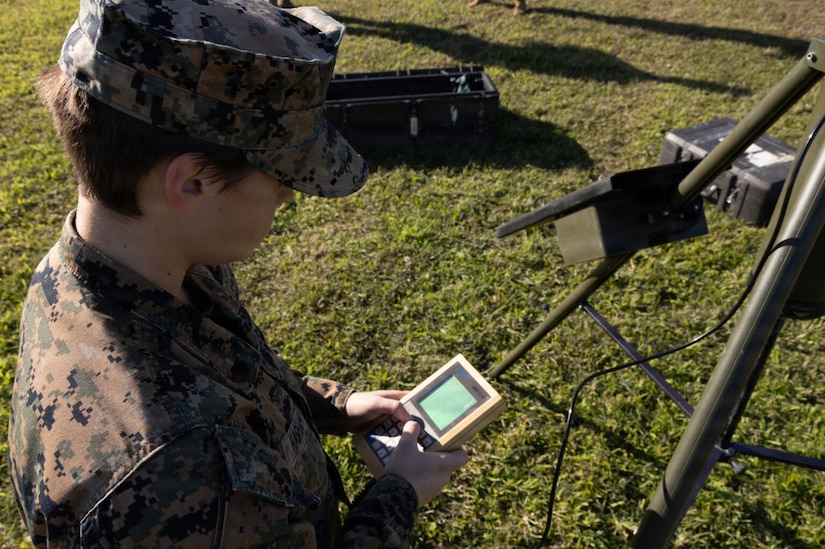
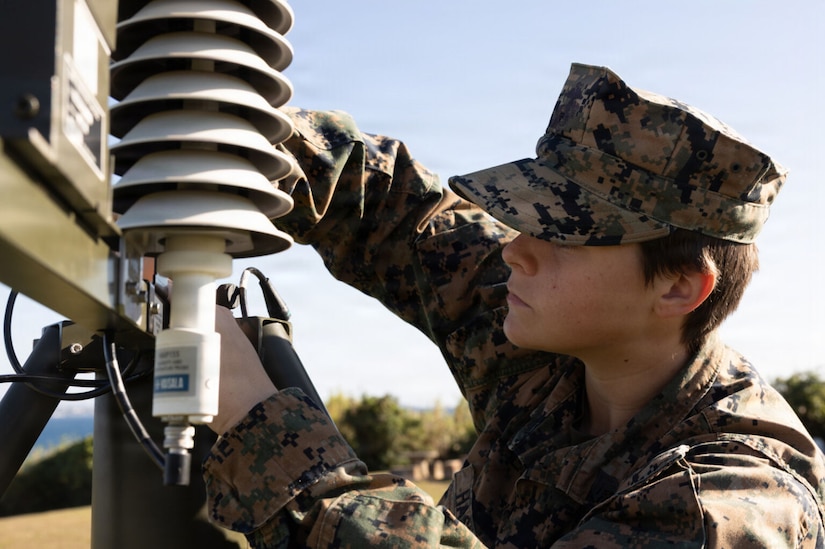
A woman in a camouflage military uniform works on a piece of military weather equipment.

These Marines are trained meteorologists and oceanographers who look at the current state of the environment and create weather forecasts that support operational planning and execution. They create routine forecasts, 96-120 hours out, using satellite data and weather patterns, in addition to future forecasts for exercise planning, using historical weather data over a 20-year period.

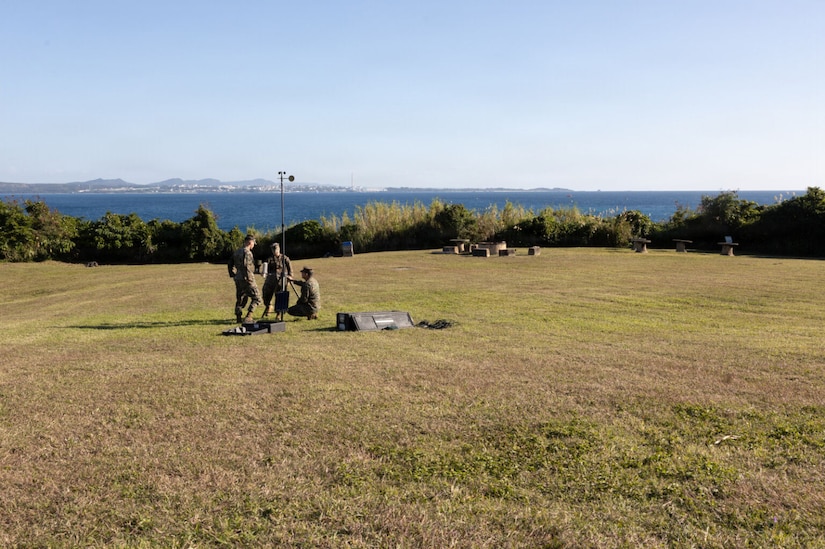
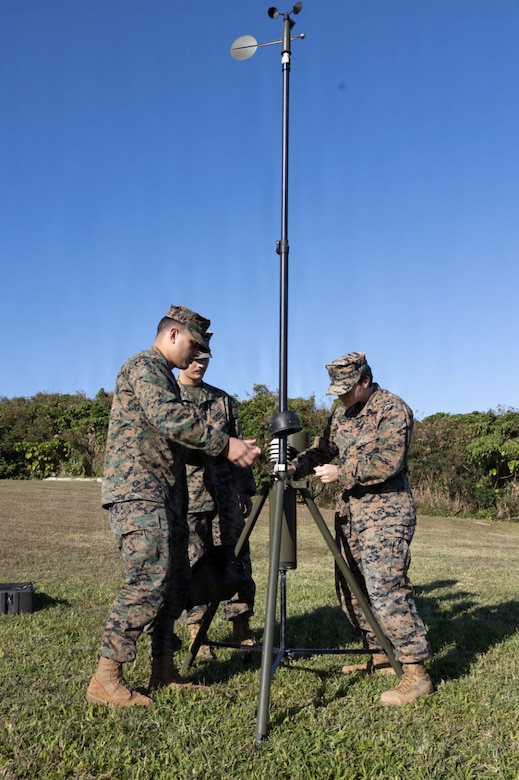
Three people in camouflaged military uniforms work on military equipment in a grassy field.

"Out here in the Pacific, weather can determine both friendly and adversarial pacing of operations," said Marine Corps Sgt. Priya Hasham, a meteorology and oceanography analyst forecaster with the III Marine Expeditionary Force.

To learn this field, Marines attend a yearlong program where they are taught basic physics, develop an understanding of the atmosphere and how it affects the weather and gain the ability to interpret weather radar data to create forecasts. 

In creating a forecast, satellite imagery, radar and data from weather stations around the world can be used. Pattern recognition also plays a significant role in forecasting, making personal experience an important factor. Since weather is influenced by local terrain, the longer a Marine has been in an area, the more familiar they are with local weather patterns, improving their ability to create accurate predictions.

A woman in a camouflage military uniform works on a piece of military weather equipment.
Three people in camouflage military uniforms work on military equipment in a grassy field. A large body of water is in the background.
Most Marine Corps installations have these specialized Marines, whose responsibilities vary between units. At the III Marine Expeditionary Force, their weather predictions support intelligence and battlespace awareness by looking at the big picture of air, land and sea operations to inform commanders as to how assets will operate in various weather conditions.

"Forecasting is an art and science," Hasham said. "There is a lot of technical skill involved."

Monday, February 16, 2026

War, Energy Departments Team up to Advance Future of Nuclear Power, Military Base Energy Security

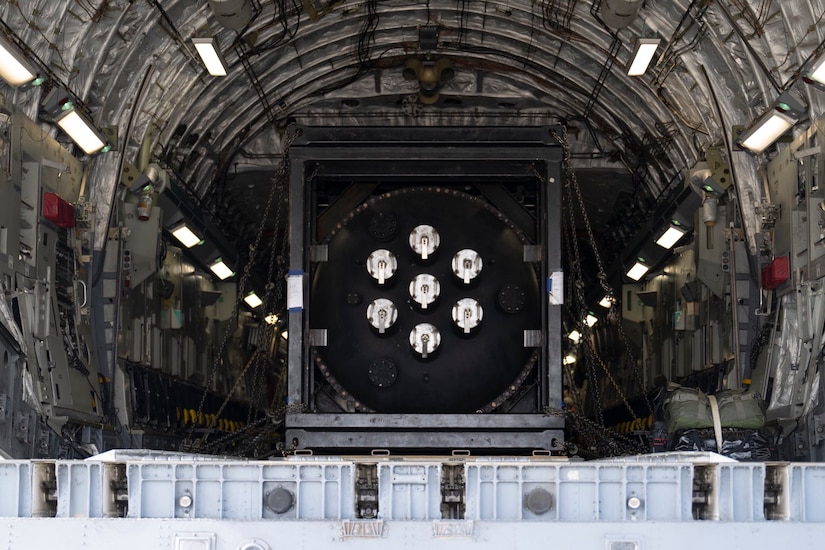
At March Air Reserve Base, California, today, a next-generation nuclear reactor was loaded aboard a C-17 Globemaster III aircraft for transport to Hill Air Force Base, Utah. The reactor will eventually head to the Utah San Rafael Energy Lab for testing and evaluation.

A large piece of equipment is strapped down inside the back of an aircraft.

The Ward 250 is a 5 megawatt nuclear reactor that fits into the back of a C-17 aircraft could theoretically power about 5,000 homes. 

For military use, such a reactor could provide energy security on a military base ensuring the mission there need not depend on the civilian power grid, and in military operations overseas, such reactors would mean U.S. forces could operate without concern that an enemy might cut fuel supplies. 

A reactor such as the Ward 250 also means greater energy security for the entire United States. It is firmly in line with President Donald J. Trump's executive orders to reshape and modernize America's nuclear energy landscape. 

The president signed four executive orders designed to advance America's nuclear energy posture, May 23, 2025. Those include "Reinvigorating the Nuclear Industrial Base," "Reforming Nuclear Reactor Testing at the Department of Energy," "Ordering the Reform of the Nuclear Regulatory Commission," and "Deploying Advanced Nuclear Reactor Technologies for National Security." 

Michael P. Duffey, the undersecretary of war for acquisition and sustainment, said the partnership between the War and Energy Departments is critical to advancing the president's nuclear energy initiatives. 

"It's clear to me that advancing President Trump's priority on nuclear energy depends on close coordination between the Department of Energy and the Department of War," Duffey said. "This partnership ensures advanced nuclear technologies are developed, evaluated and deployed in ways that strengthen energy resilience and national security." 

The future of warfare is energy-intensive, he said, and includes AI data centers, directed-energy weapons, and space and cyber infrastructure. The civilian power grid was not built for that, and so the War Department will need to build its own energy infrastructure.

An aircraft sits on an apron or ramp at an airport.

"Powering next generation warfare will require us to move faster than our adversaries, to build a system that doesn't just equip our warfighters to fight, but equips them to win at extraordinary speed," Duffey said. "Today is a monumental step toward building that system. By supporting the industrial base and its capacity to innovate, we accelerate the delivery of resilient power to where it's needed." 

Secretary of Energy Chris Wright said that with small reactors like those transferred from March Air Reserve Base to Hill Air Force Base, the United States is aiming for a nuclear energy renaissance. 

"The American nuclear renaissance is to get that ball moving again, fast, carefully, but with private capital, American innovation and determination," Wright said. "President Trump signed multiple executive orders that have unleashed tremendous reform of all the things that stopped the American nuclear industry from moving." 

Part of that effort, he said, will mean that by July 4, the administration expects three small reactors will be critical — or running smoothly.

"That's speed, that's innovation, that's the start of a nuclear renaissance," Wright said.