Saturday, December 13, 2025

Romance Didn’t Ghost You. The Algorithm Just Optimized You Out

Romance did not disappear overnight. It was not betrayed by technology, nor replaced by cynicism. It was quietly deprioritized. Somewhere between your profile photo and your last unanswered message, an algorithm ran a calculation and decided your presence no longer improved engagement metrics. You weren’t rejected. You were optimized out.

Artificial intelligence now sits at the center of modern dating, not as a tool, but as an invisible arbiter of human connection. It decides who is seen, who is suggested, who is delayed, and who quietly fades from view. What feels like personal failure is often systemic design. What feels like rejection is frequently automation.

To understand what AI has done to romance, we must look beyond convenience and confront consequence.

Ubiquity Without Awareness

AI is not an optional feature of online dating; it is the architecture. Every swipe, match, pause, and message trains the system. Machine learning models rank desirability, predict response likelihood, and curate visibility in real time. Yet users are never shown the rules. They experience outcomes without explanations, patterns without transparency.

This asymmetry matters. When people don’t understand the system judging them, they internalize its verdicts. A lack of matches becomes self-doubt. Silence becomes unworthiness. The algorithm’s silence feels personal—even when it is not.

A National Experiment in Pairing

At scale, AI-driven dating is no longer private. It influences marriage rates, birthrates, class mobility, and social cohesion. When algorithms reward similarity and familiarity, they reinforce existing divisions—racial, economic, ideological. When they reward engagement over fulfillment, they extend searching instead of resolving it.

This is not neutral matchmaking. It is a quiet national experiment in how intimacy is distributed, delayed, or denied. Over time, those patterns harden into norms, and norms reshape culture.

Emotional Costs Hidden in Code

Dating has always involved vulnerability, but AI compresses emotional highs and lows into rapid cycles. A match arrives instantly. Disappears instantly. Reappears never. The nervous system never catches up.

Ghosting, once a personal failing, becomes a structural feature. The system rewards novelty, abundance, and optionality. Closure has no economic value. Lingering dissatisfaction does. Emotional exhaustion is not a bug—it is a byproduct.

People leave these platforms not heartbroken, but hollow. Not rejected, but replaceable.

Romance as an Optimization Problem

AI reframes love as a solvable equation. Preferences become filters. Compatibility becomes probability. Desire becomes data. The mystery that once defined romance is flattened into metrics that can be tested, tweaked, and monetized.

Users learn quickly. They adjust photos, bios, tone, even personality to please the machine. Authenticity gives way to performance. Dating becomes less about being known and more about being selected.

In the process, people stop asking whether they like someone—and start asking whether the algorithm will.

Cultural Virality and Quiet Damage

The cultural conversation is already here. Memes joke about being “algorithmically unattractive.” Podcasts chronicle dating burnout. Articles lament the death of romance while ignoring the machinery behind it.

AI dating thrives in this contradiction: publicly mocked, privately relied upon. It has become the dominant gateway to intimacy while simultaneously eroding faith in it.

The Long Horizon

AI is not done with dating. Voice analysis, behavioral prediction, emotional modeling, and synthetic companionship are already emerging. The future will not ask whether AI belongs in romance—it will assume it does.

The real question is whether humans will retain agency, discernment, and patience in a system designed to remove friction, even when friction is where meaning lives.

The Moral Reckoning

Romance cannot survive on optimization alone. Love requires inefficiency. Misjudgment. Waiting. Risk. AI has no incentive to protect these qualities unless humans demand it.

The danger is not that machines will choose our partners. The danger is that we will accept their choices without reflection—mistaking convenience for wisdom and visibility for value.

Romance did not ghost us. We allowed it to be quietly deprioritized.

And if love is to remain human, then humans must once again insist on choosing—even when the algorithm suggests otherwise.

Thursday, December 11, 2025

Army Experts Team With European Partners on Arctic Nutrition Research

As the U.S. military and its adversaries shift focus to the Arctic, working with partner nations in cold-weather regions to make sure our warfighters can survive those extremes has never been more important.

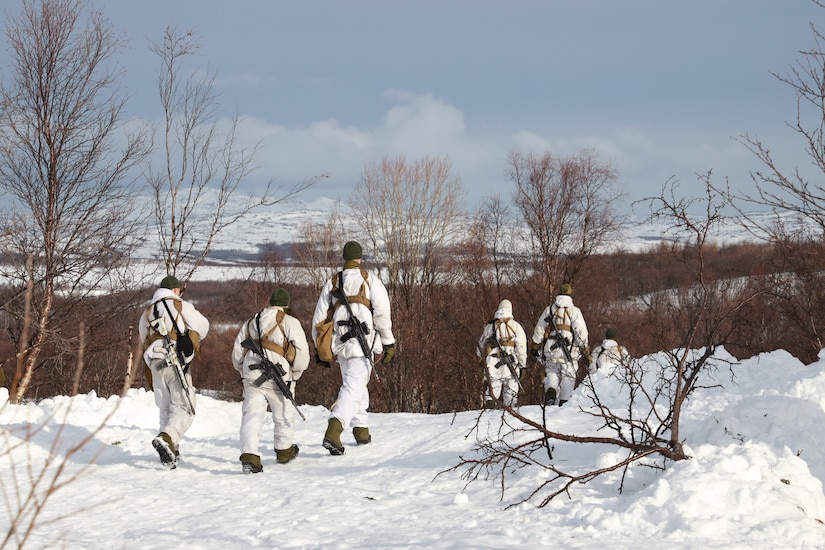
Five soldiers in cold-weather clothing and with rifles slung over their shoulders walk through a snow-covered landscape.

Over the past decade, the U.S. Army Research Institute of Environmental Medicine's Military Nutrition Division has collaborated with the Norwegian Defense Research Establishment, known as FFI, to conduct research on nutrition that service members need to be productive in extreme cold.

One of the division's primary roles is to go into the field with warfighters during operations and training activities to better understand their physiological requirements. Since Norwegian military personnel often train in the Arctic, USARIEM researchers have, on several occasions, joined FFI on those missions to collect data.

"We've been there to study energy demands and warfighter eating behavior," said Dr. James McClung, the Military Nutrition Division chief. "[In extreme cold], there's a significant reduction in the physiological cue to eat, even though adequate nutrition is required."

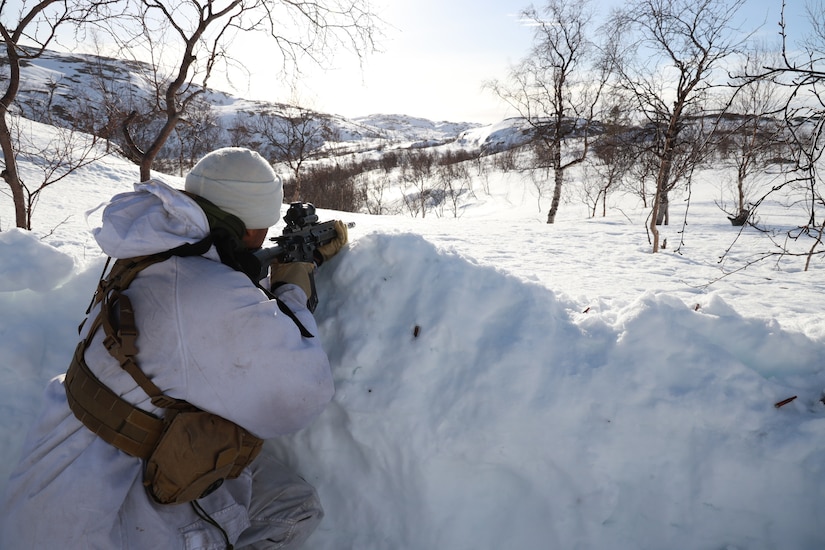
A person in cold-weather clothing points a weapon over the edge of a snow-covered trench in a winter landscape.

Over the course of more than a decade, an MND team conducted four studies in the Arctic on warfighter nutritional health "to better understand individual differences, whether those be sex, body composition or other factors on energy metabolism in the cold," McClung said.

In 2013, MND and FFI researchers evaluated the physical and biological functions of various volunteer warfighters. They followed that in 2015, 2022 and 2025 with studies that required soldiers to test various prototypes of supplemental snack bars; a few of the studies were conducted within the Arctic Circle.

"During these training exercises, they move very far on skis carrying a lot of weight," said Dr. Emily Howard, an MND nutrition physiologist who took part in the Norway studies. "The best part … is seeing the things we study here being implemented in person. You can actually see what they're consuming in that environment, how they're consuming it and gaining some additional insight."

If researchers observed various effects on the soldiers, such as negative energy balance — when a person can't eat enough to maintain their performance — they worked to adjust the nutrition in the rations they were receiving to overcome those problems.

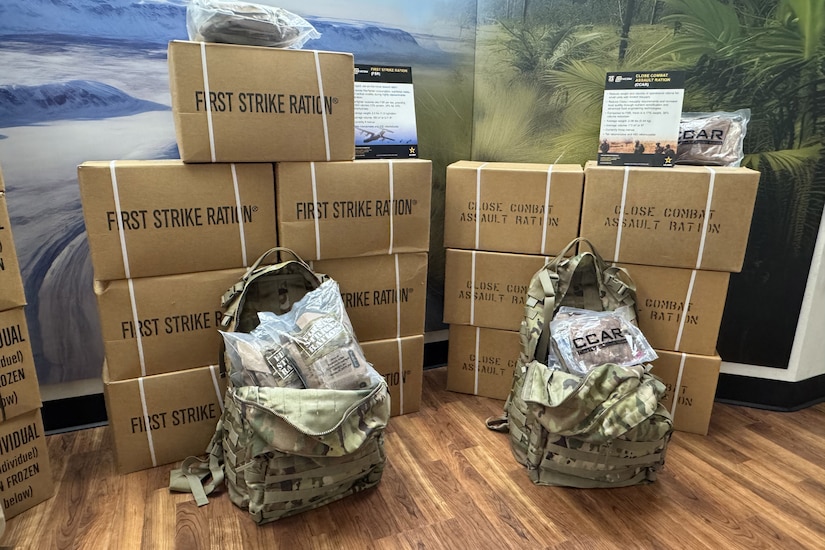
Two camouflage backpacks filled with food packages sit on the floor, in front of cardboard boxes.

The research, which has been years in the making, helped to inform a more energy-dense ration known as the close combat assault ration, which recently replaced the first strike ration for U.S. combat troops.

FFI researchers have also joined MND experts in studies at the labs in Natick, Massachusetts.

"It's been a very productive collaboration, one that allows us to answer really important questions for the warfighter," Howard said.

Dietary Supplements

The division has also worked with partner nations on dietary supplement research after NATO formed a research task group in 2021 to study their use in military personnel across the U.S., France, the United Kingdom and Slovenia.

"One of the primary findings [in a recent study] is that dietary supplement use is greater in military personnel as compared to civilians," McClung said. "In fact, across the nations, on average, more than 60% of warfighters utilize dietary supplements."

Plastic bottles containing various nutritional supplements are lined up for sale on store shelves.

According to the study, service members' reasons for using dietary supplements were also different than civilians, with military personnel mostly using them for recovery and to maintain physical and cognitive performance and body composition standards.

"Items like protein and amino acids are very popular [among military personnel], whereas in civilian communities, the use of multivitamin-type supplements for health and well-being are more common," McClung said.

In the U.S., dietary supplements aren't regulated in the same way as pharmaceuticals, so there's no system for determining whether the ingredients on a product label are actually in the product. To better protect warfighters from harmful substances, the War Department has a dietary supplement and substance program called Operation Supplement Safety. The program recommends third-party certification, which verifies the contents of dietary supplements to ensure the labels match what's in the product and that it's free of contaminants.

McClung said USARIEM also developed a survey tool that the NATO community has agreed to use once it's translated across nations. It will help share data as they work to better understand dietary supplement use.

Standardizing Physiological Requirements

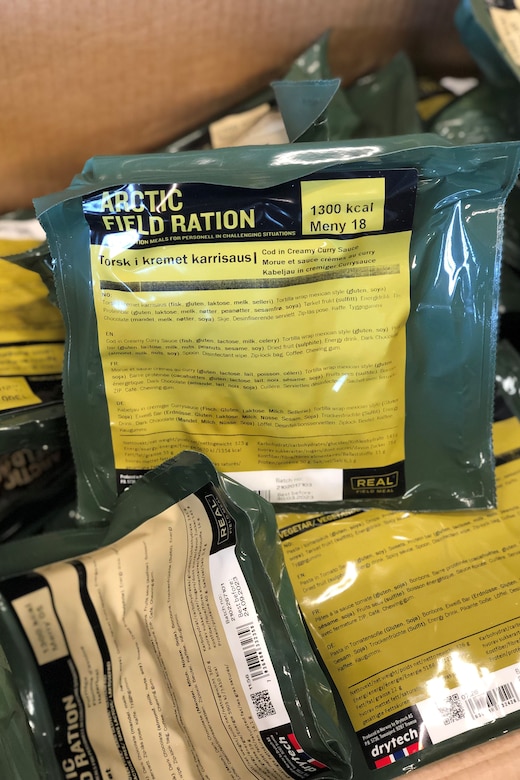
A box is filled with plastic-wrapped food rations with labels that read, "Arctic Field Ration."
USARIEM is also part of a NATO agreement to standardize warfighter physiological requirements across its nations. The agreement is akin to a cross-nation version of the departmentwide Army Regulation 40-25, which outlines nutrition requirements for combat rations and garrison feeding. It allows U.S. meals, ready-to-eat rations and other rations to be used by partner nations during NATO activities, and vice versa.

McClung noted that there's been discussion with NATO partners about using a product like the performance readiness bar to limit stress fractures in new recruits.

"Stress fractures are very common injuries in basic combat training and can result in injury to 7[%] to 20% of our recruits," he said. "NATO partner nations also experience elevated rates of stress fracture during basic combat training."

A standardization agreement is also under development for garrison feeding, which, during NATO operations, is often provided by the host nation. However, cultural differences can mean that warfighters may not always like the food they're being provided, which can lead them to consume less energy than what's required to perform appropriately.

"These types of standardization agreements are really critical in that we're assuring we can provide … the nutritional requirements of our American and partner warfighters," McClung said. "We continue to meet on a regular basis to incorporate new research findings into the requirements."

Tuesday, December 9, 2025

The War Department Unleashes AI on New GenAI.mil Platform

The War Department today announced the launch of Google Cloud's Gemini for Government as the first of several frontier AI capabilities to be housed on GenAI.mil, the Department's new bespoke AI platform. This initiative cultivates an "AI-first" workforce, leveraging generative AI capabilities to create a more efficient and battle-ready enterprise. Additional world-class AI models will be available to all civilians, contractors, and military personnel, delivering on the White House's AI Action Plan announced earlier this year.

This past July, President Donald Trump instituted a mandate to achieve an unprecedented level of AI technological superiority. The War Department is delivering on this mandate, ensuring it is not just ink on paper. In response to this directive, AI capabilities have now reached all desktops in the Pentagon and in American military installations around the world.

The first instance on GenAI.mil, Gemini for Government, empowers intelligent agentic workflows, unleashes experimentation, and ushers in an AI-driven culture change that will dominate the digital battlefield for years to come. Gemini for Government is the embodiment of American AI excellence, placing unmatched analytical and creative power directly into the hands of the world's most dominant fighting force.

"There is no prize for second place in the global race for AI dominance," said Emil Michael, Under Secretary of War for Research and Engineering. "We are moving rapidly to deploy powerful AI capabilities like Gemini for Government directly to our workforce. AI is America's next Manifest Destiny, and we're ensuring that we dominate this new frontier."

The launch of GenAI.mil stands as a testament to American ingenuity, driven by the AI Rapid Capabilities Cell within the War Department's Office of Research & Engineering. Their achievement directly embodies the Department's core tenets of reviving the warrior ethos, rebuilding American military capabilities, and re-establishing deterrence through technological dominance and uncompromising grit.

"We are pushing all of our chips in on artificial intelligence as a fighting force. The Department is tapping into America's commercial genius, and we're embedding generative AI into our daily battle rhythm." Secretary of War Pete Hegseth remarked, "AI tools present boundless opportunities to increase efficiency, and we are thrilled to witness AI's future positive impact across the War Department."

The Department is providing no-cost training for GenAI.mil to all DoW employees. Training sessions are designed to build confidence in using AI and give personnel the education needed to realize its full potential. Security is paramount, and all tools on GenAI.mil are certified for Controlled Unclassified Information (CUI) and Impact Level 5 (IL5), making them secure for operational use. Gemini for Government provides an edge through natural language conversation, retrieval-augmented generation (RAG), and is web-grounded against Google Search to ensure outputs are reliable and dramatically reduces the risk of AI hallucinations.

GenAI.mil is another building block in America's AI revolution. The War Department is unleashing a new era of operational dominance, where every warfighter wields frontier AI as a force multiplier. The release of GenAI.mil is an indispensable strategic imperative for our fighting force, further establishing the United States as the global leader in AI.

Friday, December 5, 2025

Navy Successfully Removes USS Arizona Platform Concrete

Two people wearing hard hats attach chains to a large concrete slab in the water. Several other people in similar attire stand on platforms, observing the two people in the water. There is a large floating, white structure in the background.

The Navy, in coordination with the Pearl Harbor National Memorial, successfully completed the removal of significant portions of two World War II-era mooring platforms from the USS Arizona at Pearl Harbor, Hawaii, Oct. 3. 

The Navy Mobile Diving and Salvage Unit 1, advised by the Navy's Supervisor of Salvage and Diving and supported by local contractors, removed the majority of the 80-year-old concrete platforms in a month's time.

Five people ride in a boat toward a platform in the water. A large crane is lifting a metal object from the platform. There is a large floating white structure in the background with an American flag flying from the top.
At the completion of the project, the team effectively reduced the weight bearing on the Arizona's deck with only minimal portions remaining on both platforms to avoid disturbance or damage to the structure of the ship, including features of the ship that are believed to be embedded in the concrete.

The Navy began these salvage operations Sept. 3, after two years of thorough planning, analysis and preparation with stakeholders to ensure compliance with relevant laws, regulations and policies. Navy staff prioritized operational safety and adherence to environmental best management practices while fully respecting the ship's sacred status as a war grave. 

"I'm very proud of the combined team," said Navy Capt. Lee Shannon, commander of Task Force Arizona. "A great deal of effort from dozens of subject matter experts, both on and off the water, resulted in a successful salvage operation, which included [crews] working 12 to 14 hours every day to complete the [mission]."

The two platforms, estimated to have a combined weight of more than 150 tons, were originally erected to aid in the salvage of guns and munitions from the Pennsylvania-class battleship after the Dec. 7, 1941, attack on Pearl Harbor that marked the beginning of the United States' involvement in World War II.

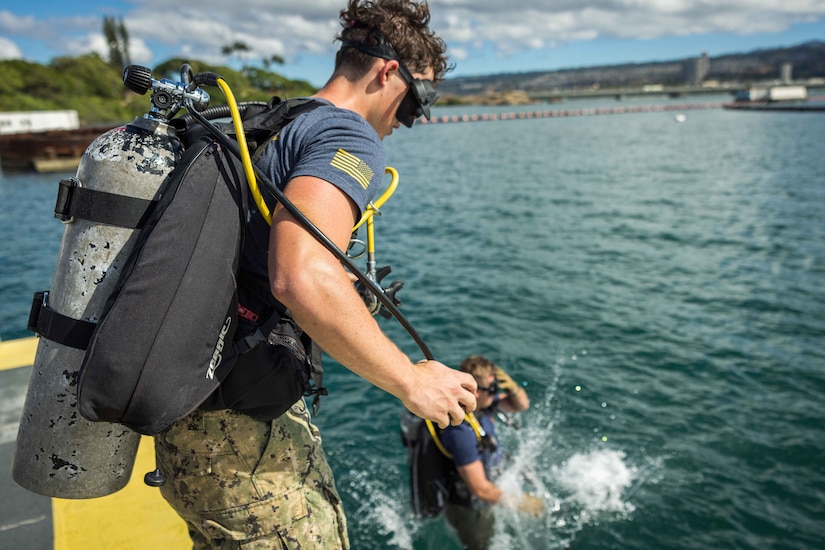
Two people in scuba-diving equipment jump into the water.

With the aid of a crane barge and a diamond wire saw, the sailors, War Department civilians and contractors safely removed the concrete portions. Salvage unit sailors methodically made cuts in the concrete, and contractors used the crane to lift the concrete segments from Pearl Harbor onto the barge. 

"Our No. 1 priority was to protect the USS Arizona for the future," said Navy Cmdr. Matthew Englehart, U.S. Pacific Fleet diving and salvage officer. "As the ship's historic structure continues to age, the sheer weight of these concrete platforms posed a significant threat of collapsing through the decks. This proactive operation successfully removed over 100 tons of that burden, relieving the stress on the memorial and preserving its integrity while honoring the sanctity of the site. It was a privilege to lead this effort and safeguard this vital piece of American history."

A crane sitting on a barge moves metal pillars into the water. There is a large floating white structure in the background, with an American flag flying from the top.

Bill Manley, Navy Region Hawaii environmental director, said preserving and protecting the USS Arizona, while also preventing harm to the environment, were the Navy's top priorities throughout the platform removal process.

"Navy experts in marine resources, water quality, historic preservation and environmental review worked closely to provide proactive, comprehensive support to ensure the operation's success," he said.

Two people wearing reflective vests and hard hats pull on ropes attached to a large concrete slab hanging from chains. Another person in similar attire stands next to the concrete slab. There is a large military ship docked in the background.

The USS Arizona Memorial is located in Pearl Harbor and marks the resting place of more than 900 sailors and Marines killed aboard the ship during the attack, as well as survivors of the attack who were later laid to rest there. The memorial, built in 1962, is accessible only by boat and rests above the sunken remains of the battleship. Since 1980, the National Park Service has managed the memorial.


Tuesday, December 2, 2025

War Department Asks Industry to Make More Than 300K Drones, Quickly, Cheaply

The War Department requested information earlier this week to gauge industry's willingness and ability to make some 300,000 drones quickly and inexpensively — a concrete effort by Secretary of War Pete Hegseth to directly meet the "drone dominance" goals laid out by the president. 

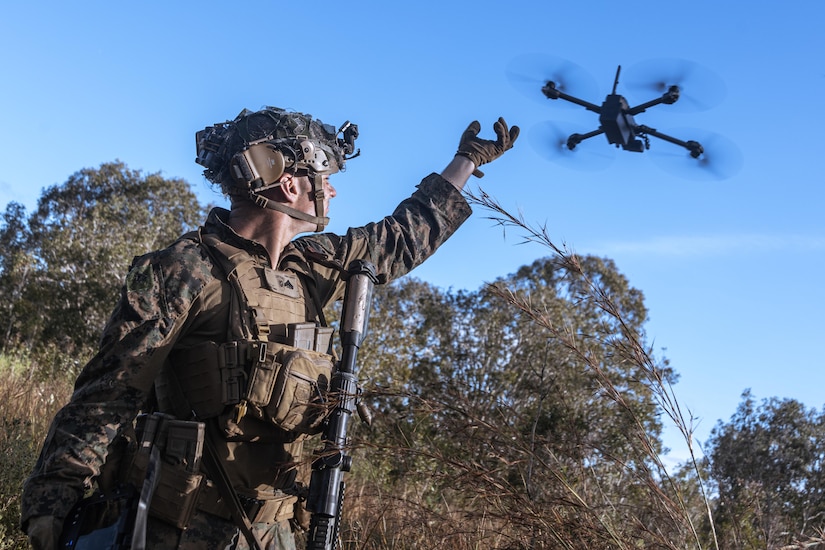
A Marine in tactical gear reaches up towards a drone flying above a forest setting during the day.

On June 6, President Donald J. Trump signed the "Unleashing American Drone Dominance" executive order outlining how the United States would up its drone game in both the commercial and military sectors, including how it would deliver massive amounts of inexpensive, American-made, lethal drones to U.S. military units to amplify their combat capabilities. 

Hegseth followed up in July with the "Unleashing U.S. Military Drone Dominance" memorandum, in which he laid out his plan for how the department would meet the president's intent. 

Part of the secretary's plan included participating with other parts of government in building up the nascent U.S. drone manufacturing base by approving hundreds of American products for purchase by the department, powering a "technological leapfrog" by arming combat units with the very best of low-cost American-made drones, and finally, training as the department expects to fight. 

"Next year I expect to see [drone] capability integrated into all relevant combat training, including force-on-force drone wars," the secretary said. 

At that time, Hegseth said, he had already advanced American drone dominance by stripping away regulations that hindered the military's adoption of small drones and shifting the necessary authorities away from the department's bureaucracy and into the hands of unit commanders. 

"This was the first step in the urgent effort to boost lethality across the force," Hegseth said in a video posted today to social media. 

Now the War Department is moving out in a new way on the drone dominance initiative, Hegseth said. 

"The second step is to kickstart U.S. industrial capacity and reduce prices, so our military can adequately budget for unmanned weapons," the secretary said. 

He noted that, with help from Congress, the department will initially focus on small attack drones. 

"Drone dominance is a billion-dollar program funded by President Trump's Big Beautiful Bill," Hegseth said. "It is purpose-built on the pillars of the War Department's new acquisition philosophy: a stable demand signal to expand the U.S. drone industrial base by leveraging private capital, paired with flexible contracting built for commercial companies, founded by our best engineers and entrepreneurs." 

A stable demand signal means the War Department will make concrete plans to buy lots of drones, on a regular schedule, over a long period of time. When that happens, American industry will step up to the plate to satisfy the department's needs, including by investing in and building out its own capacity to produce in the long term. 

The request for information released to industry this week spells out a plan that'll begin early next year, when the department will, over the course of two years, and within four phases, offer $1 billion to industry to build a large number of small unmanned aerial systems capable of conducting one-way attack missions. 

The first of those four phases, called "gauntlets," runs from February to July 2026. During that time, 12 vendors will be asked to collectively produce 30,000 drones at a cost of $5,000 per unit, for a total of $150 million in department outlays. 

Over the course of the next three gauntlets, the number of vendors will go down from 12 to five, the number of drones ordered will increase from 30,000 to 150,000, and the price per drone will drop from $5,000 to $2,300. 

"Drone dominance will do two things: drive costs down and capabilities up," Hegseth said. "We will deliver tens of thousands of small drones to our force in 2026, and hundreds of thousands of them by 2027." 

Through the drone dominance program, $1 billion from the Big Beautiful Bill will fund the manufacture of approximately 340,000 small UASs for combat units over the course of two years. 

After that, it's expected that American industry's interest in building drones as a result of the program will have strengthened supply chains and manufacturing capacity to the point that the military will be able to afford to buy the drones it wants, in the quantity it wants, at a price it wants, through regular budgeting. 

Equipment is only part of the game, the secretary said. Doctrine — how the warfighter fights — is also critical. 

"I will soon be meeting with the military services to discuss transformational changes in warfighting doctrine," Hegseth said. "We need to outfit our combat units with unmanned systems at scale. We cannot wait. The funding provided by the Big Beautiful Bill is ready to be used to mount an effective sprint to build combat power. At the Department of War, we are adopting new technologies with a 'fight tonight' philosophy — so that our warfighters have the cutting-edge tools they need to prevail." 

Following the end of the Cold War, Hegseth said, U.S. defense spending dropped precipitously, and as a result, there was also a consolidation of defense contractors from hundreds to just dozens. The department, he said, budgeted for quality rather than quantity — and for 30 years got what it needed. 

"However, we now find ourselves in a new era," he said. "An era of cheap, disposable battlefield drones. We cannot be left behind — we must invest in inexpensive, unmanned platforms that have proved so effective." 

Drone dominance, he said, is how the U.S. will meet the drone challenge posed by other nations. 

"One of my priorities is rebuilding our military," Hegseth said. "We can't do that by doing business the same way we have in the past. We cannot afford to shoot down cheap drones with $2 million missiles. And we ourselves must be able to field large quantities of capable attack drones."

Thursday, November 27, 2025

Guardrails for the Future: Why AI Regulation Cannot Wait

Artificial intelligence is rapidly reshaping the foundations of modern life, influencing how we work, learn, communicate, consume information, and even understand ourselves. Yet at the very moment when thoughtful oversight is needed most, some of the world’s most powerful technology companies are assembling vast financial war chests to fight attempts at AI regulation. Reports from national media show that Silicon Valley–aligned political groups are preparing unprecedented spending to influence policy and elections. This escalating battle over governance reveals a truth society can no longer ignore: without enforceable guardrails, AI will deepen inequality, consolidate unaccountable power, and threaten democratic institutions.

AI development has accelerated so quickly that lawmakers, institutions, and social norms are struggling to keep pace. The public increasingly relies on automated systems for medical evaluations, employment screening, credit assessments, and even criminal justice recommendations. At the same time, AI-generated deepfakes are already appearing in political communications, threatening the integrity of elections and public trust. Expert warnings — from computer scientists to national security officials — emphasize that without structured oversight, these systems can produce dangerous outputs, reinforce discrimination, or be weaponized by criminal or extremist groups. Despite these risks, industry giants are investing heavily in political campaigns aimed at weakening or preventing AI laws.

The core issue is not innovation. Innovation can and should continue. The real concern is concentrated power. When a handful of companies can spend hundreds of millions of dollars shaping the laws that govern their own technologies, the public interest is pushed aside. Investigative research shows that Big Tech political spending has surged dramatically over the past five years, reaching more than one billion dollars. This has created an environment where the public’s voice struggles to compete with corporate funding, even when the technologies at stake will impact every American.

Strong regulation does not stifle progress; it ensures progress is safe, transparent, and equitable. Effective oversight could require companies to disclose training data sources, test systems for bias and harmful content, limit high-risk uses such as election deepfakes, and establish accountability for AI-generated misinformation or discrimination. It would also protect workers, ensuring transitions caused by automation are met with fair policies rather than leaving displaced individuals behind. These are not hurdles to innovation, but the foundation for responsible, long-term growth.

When powerful interests attempt to delay or dismantle such safeguards, society must recognize the danger. Unregulated AI will not evolve in a neutral vacuum. It will reflect the objectives of those who build it — and those objectives are increasingly shaped by corporate profit and political influence. History shows that industries left entirely to self-regulation almost never police themselves effectively, especially when profits clash with public welfare. AI is no different, except its consequences may be far more sweeping.

This moment demands moral leadership — from lawmakers, civic organizations, and individuals alike. Democratic governance requires that major technological transformations be guided by public values, not private war chests. Regulation must be enacted with urgency, not fear. Properly structured, it will strengthen innovation, enhance public trust, and reduce the risk of catastrophic misuse. The goal is not to halt the future, but to ensure the future remains human-centered.

Artificial intelligence is too powerful, too pervasive, and too consequential to remain unregulated. The campaigns to resist oversight demonstrate just how high the stakes have become. Now is the time to act — not after the harms are entrenched, but before they reshape society in ways we can no longer control.


References

Abiri, G. (2025). Mutually Assured Deregulation. arXiv.

Biswas, S. (2025). Are Apple, OpenAI, Google, Meta and Amazon plotting to take down state AI regulations? Economic Times.

Bova, P., Di Stefano, A., & Han, T. A. (2023). Both eyes open: Vigilant incentives help regulatory markets improve AI safety. arXiv.

Public Citizen. (2025). $1.1 Billion in Big Tech Political Spending Fuels Attacks on State AI Laws.

Shapiro, A. (2025). Meta and Big Tech pour millions into PACs to fight AI regulation. AI News.

The Washington Post. (2025). Super PAC aims to drown out AI critics in midterms, with $100M and counting.

Wolfe, D. (2025). Tech titans amass multimillion-dollar war chests to fight AI regulation. The Wall Street Journal.

Tuesday, November 25, 2025

Nutrition Research Keeps Warfighters Ready, Lethal in Extreme Cold

Nov. 25, 2025 | By Katie Lange, Pentagon News |

 As the race to control the Arctic intensifies, more research is focused on how to optimize service member performance in the extreme cold, where lack of sleep and appetite, altitude and equipment issues can all affect a warfighter's ability to function.  

Researchers at the U.S. Army Research Institute of Environmental Medicine's Military Nutrition Division in Natick, Massachusetts, study physiological stressors that warfighters encounter. By manipulating dietary, exercise and environmental conditions, they're working to determine the best way to deliver the right nutrition and energy to increase warfighter lethality.  

How Extreme Cold Negatively Affects Warfighters 

In extreme cold environments, difficult terrain, bulky clothing, heavy equipment and the body's own process for regulating internal body temperature can cause service members to expend more energy. Many also don't get enough nutrition or sleep, said USARIEM research psychologist Harris Lieberman. 

"Sleep deprivation is what usually occurs when you're deployed," he continued, "and service members don't eat enough food [in the cold] to keep up with all the work that they do." 

The U.S. military has a cold-weather version of the meals ready to eat, which is dehydrated to keep the rations from freezing. But they need to be rehydrated at mealtime, which can take time — something not all warfighters have. Many just don't eat during busy time periods. That lack of nutrition can lower the energy levels required to do the mission, explained Lee Margolis, a veteran-turned USARIEM nutrition physiologist.

"Energy expenditures can range anywhere from 5,000-7,000 calories per day [in extreme cold]," Margolis said. "For an average individual, normally you're going to burn about 2,000-3,000 calories per day." 

High altitudes, where less oxygen is available, can also affect energy expenditure — even in the strongest special operators — and change the body's ability to metabolize food for fuel. 

"It's critically important that we develop solutions to offset the impacts of altitude," explained James McClung, chief of USARIEM's Military Nutrition Division. "Nutrition can be a part of that." 

Mimicking Extreme Temps     

Researchers visit cold-weather climates, such as Alaska and Norway, to perform studies, but they're also able to do some at home. USARIEM's Doriot Climatic Chambers allow experts to test the effects of extreme environments in two massive indoor chambers: one focuses on human-subject testing, while the other is used for equipment testing.  

"Every climate you could possibly imagine … we can recreate," said Facilities Manager Jeff Faulkner.  

The chambers' temperatures can range from 165 to minus 65 degrees, and they can create 40 mph of wind, rain and snow. Each chamber has inclining treadmills that can handle up to five soldiers at 15 mph on a 12-degree incline. Smaller conditioning rooms have the same capabilities as the chambers, except they can drop to minus 72 degrees. 

In one of the smaller conditioning chambers, Lieberman is leading a cold-weather study to analyze the behavior, physiology and performance of stressed, sleep-deprived soldiers to determine what nutritional needs will increase their performance. 

After various pretests and body composition measurements, the volunteers, who are part of the Natick laboratories' Soldier Volunteer Research Program, spend two days and one night in the room at 16 degrees. While wearing cold-weather-appropriate gear, they undergo various physical activities, such as stationary bike rides and hand strength tests, to measure their reaction time and vigilance.  

They take various cognitive performance tests to measure mental acuity, and they eat meals primarily consisting of military rations that dietitians tailor specifically to their needs. They also forgo sleep. "If something unexpected happens, can you effectively respond and correctly deal with it?" questioned Lieberman, referring to the study's end goal.  

Carbs, Fat, Protein: What's Best for Energy Balance?  

Meanwhile, USARIEM researchers have been working to get a better understanding of the types of macronutrients that will help cold-weather combatants thrive. The goal: to keep warfighters from expending more energy than they're consuming. 

"We're studying using macronutrients to avoid negative energy balance — the case where we cannot eat enough to maintain physical or cognitive performance — which is associated with poor performance and also an increased risk of injury," McClung said. 

"We've seen that there are decreases in lower body power specifically," Margolis said of the negative energy balance. "Obviously, under a combat scenario, your ability to move very quickly, especially if you're carrying a heavy kit, may be the difference in survival." 

The research, which has been years in the making, helped to develop a more energy-dense ration known as the close combat assault ration. The CCAR recently replaced the first strike ration for combat troops.  

In 2016, in collaboration with the Norwegian Defense Research Establishment, known as FFI, USARIEM began studying soldiers in the field to see how they metabolized prototypes of supplemental snack bars created by the Army Combat Capabilities Development Command Soldier Center's Combat Feeding Division. One bar was higher in carbohydrates, while the other was higher in protein. The result: the volunteers liked and ate the bars, but they ate fewer of their actual combat rations, leading to energy deficits.  

Further lab research in 2022 studied the amount of food soldiers ate by feeding volunteers a higher-fat prototype product. Fat has more calories per gram than carbs and protein, so a bar with a higher-fat count could provide more energy in a smaller package, Margolis said — something that could help lighten warfighter load during combat operations. 

All of the volunteers ended up consuming more calories than in previous studies. However, most of their energy deficits remained at moderate levels, causing no adverse effects, explained Emily Howard, a USARIEM nutritional physiologist who helped carry out the study. The takeaway for researchers: the amount of food a warfighter consumes is the most critical factor in preserving their performance, not so much the composition of that food.  

  Evolving Tactics  

One upcoming study will monitor how warfighters on cold-weather ruck marches perform when eating two newer prototype ration bars: one that's higher in fat and more energy-dense, and another that's less energy-dense and higher in carbs. During the study, researchers plan to measure each volunteer's oxygen and carbon dioxide levels. 

"We're able to actually calculate if their body is using primarily carbohydrate, primarily fat, or a mix while they're doing exercise," Margolis said.  

The study will also look at glucose and insulin level changes, as well as hormone responses, to see how well that fuel sustains them on long marches and during moments when they might need to pick up the tempo.  

Margolis' team also plans to do some observational studies during the annual exercise Arctic Edge in Alaska in 2026 to see how service members are using the cold-weather MRE and its supplements.  

Once the studies are concluded, USARIEM's findings are shared with the Combat Feeding Division as recommendations for adjusting current rations or developing new ones. 

Saturday, November 22, 2025

The Coming Deepfake Blackmail Wave: How AI Turned Extortion Into Software

It no longer matters what you actually did—only what an algorithm can make you look like you did.

 Extortion in the Age of Synthetic Reality

Blackmail is one of the oldest crimes in the book. What has changed is the toolset. In the last three years, artificial intelligence has turned extortion from a labor-intensive, high-risk crime into something that can be industrialized—scripted, automated, and launched at scale. Deepfake technology can now fabricate sexual images or videos of anyone with enough public photos, while voice-cloning tools can mimic a loved one or a CEO with chilling realism. Law enforcement agencies from the Federal Bureau of Investigation (FBI) to Europol and FinCEN are warning that synthetic media is rapidly becoming a core weapon in sextortion, financial crime, and online abuse (Europol, 2022; Federal Bureau of Investigation [FBI], 2023; Financial Crimes Enforcement Network [FinCEN], 2025).

This article examines the coming deepfake blackmail wave: how it works, what real cases already tell us, where the threat is going, and how individuals and institutions can prepare before extortion becomes just another piece of software in a criminal’s toolkit.

How Deepfake Blackmail Works

Deepfake blackmail does not depend on truth. It depends on plausibility and panic. Offenders typically follow a basic pattern:

  1. Collection. Attackers scrape photographs and videos from social media, school or workplace websites, livestreams, or old news footage. Research on non-consensual synthetic intimate imagery shows that publicly available content is often enough to build a convincing model (Umbach et al., 2024).

  2. Fabrication. Using generative AI tools, criminals create explicit images or video clips that appear to show the victim engaged in sexual acts or other compromising behavior. The quality of these fabrications is improving rapidly; Europol’s Innovation Lab notes that deepfakes have crossed a threshold where ordinary viewers struggle to distinguish real from fake (Europol, 2022).

  3. Delivery. Offenders contact the victim—usually via email, messaging apps, or social media—attaching samples of the synthetic content and threatening to send it to family, employers, or the public unless money is paid or additional material is provided.

  4. Escalation. If victims comply, the demands often increase. FinCEN’s 2025 notice on financially motivated sextortion describes cases where criminals “re-extort” victims multiple times, leveraging both real and synthetic material (FinCEN, 2025).

Because AI has reduced the time and technical barriers needed to create convincing forgeries, the bottleneck is no longer production—it is finding more targets and sending more threats. Extortion is becoming scalable.

Case Studies: When Synthetic Threats Turn Deadly or Costly

Several recent cases illustrate how serious the problem has already become.

Case 1: A teen’s suicide after AI-assisted sextortion
In 2025, CBS News reported on 17-year-old Elijah Heacock, who died by suicide after scammers used generative AI to create explicit images of him and then extorted him for money (CBS News, 2025). His parents had never heard the term “sextortion” before his death. Investigators found that the scammers leveraged synthetic images to make the threats appear more credible and to intensify the psychological pressure.

Case 2: South Korea’s deepfake pornography crisis
South Korea has seen a surge in deepfake sex crimes, including blackmail rings operating on encrypted messaging platforms. The Guardian reported that authorities identified hundreds of cases involving deepfake pornography targeting women, students, teachers, and military personnel, often linked to digital sex-crime networks that threaten exposure unless victims comply (Kim, 2024). The government responded with a nationwide crackdown and stiffer penalties for producing and distributing such material.

Case 3: FBI national alert on sextortion deaths
In 2023, the FBI issued a national public safety alert after more than a dozen sextortion victims, many of them minors, died by suicide. Offenders posed as peers, coerced victims into sending sexual images, and then used those images as blackmail material (FBI, 2023). While many of these cases involved originally real imagery, more recent FBI public service announcements warn that criminals are increasingly using AI to generate explicit images from benign photos, thereby lowering the threshold for victimization (FBI, 2023, 2024).

Case 4: CEO voice deepfake fraud
Deepfake extortion is not limited to imagery. In 2019, criminals used AI to mimic the voice of a CEO of a U.K. energy firm, convincing a subordinate to transfer approximately $243,000 to their account (Nixon Peabody, 2019). Although this incident was framed primarily as fraud rather than blackmail, it revealed how voice cloning can convincingly impersonate senior leaders—and how easily the same technique could be repurposed for coercion.

Case 5: Family voice-clone ransom scams
More recently, news outlets have documented cases where scammers used AI to clone a child’s voice and stage fake emergency calls. In one widely reported 2025 case, a Florida woman received a call in which her “daughter” screamed for help, followed by a fake lawyer demanding thousands of dollars for bail. The voice was an AI clone, but the emotional impact was real; the victim wired $15,000 before discovering the deception (People, 2025). Similar kidnapping scams involving voice cloning have been reported in multiple U.S. states (KOMO News, 2024). While these cases focus on ransom, they demonstrate that synthetic audio can make any threat—including blackmail—feel immediate and credible.

Why AI Supercharges Extortion

AI transforms blackmail in three key ways.

First, it removes the need for genuine compromising material. The FBI’s 2023 PSA notes that offenders are now “creating synthetic content by manipulating benign photographs or videos” of victims into sexually explicit content (FBI, 2023). That means any person with an online photo footprint—virtually everyone—can be framed.

Second, AI makes the crime scalable. A single offender, or a criminal group, can generate synthetic images of thousands of targets and send mass-produced extortion messages customized with names, schools, or employers scraped from open sources. FinCEN’s 2025 assessment emphasizes that sextortion is becoming an “increasingly common typology” used for financial gain (FinCEN, 2025).

Third, AI amplifies psychological pressure. Deepfake pornography and synthetic intimate imagery are a particularly severe form of image-based sexual abuse. A 2024 academic review found that non-consensual synthetic intimate imagery is strongly associated with shame, fear, and reluctance to report, especially among women and minors (Umbach et al., 2024; Henry et al., 2024). When the content is sexual, the line between real and fake matters less than the perceived damage if others believe it.

Likely Scenarios in the Near Future

Based on current trends, several plausible scenarios illustrate how deepfake blackmail could evolve over the next few years:

Scenario 1: Mass teen targeting
A criminal group scrapes yearbook photos and social media accounts from a school district, generates explicit deepfakes of hundreds of students, and launches a wave of sextortion messages demanding payment in cryptocurrency. Even if only a small percentage pays or complies, the operation is highly profitable and devastating.

Scenario 2: Corporate executive compromise
An attacker targets a mid-level executive at a publicly traded company, creating a deepfake video of the executive engaging in illegal drug use or sexual misconduct. The extortionist threatens to leak the video to investors and the board before an earnings call, seeking either money or insider information.

Scenario 3: Political candidate sabotage
During an election cycle, a municipal candidate is targeted with deepfake intimate imagery and a manufactured “affair” storyline. Blackmailers demand withdrawal from the race or policy concessions, betting that the candidate will capitulate rather than risk public humiliation, even if the images are false.

Scenario 4: Military or law-enforcement coercion
A foreign intelligence service or criminal group targets junior officers with synthetic intimate imagery, threatening to expose them to their chain of command and families unless they share non-public operational information. Even low-level details could provide useful intelligence over time.

Scenario 5: Educator and coach targeting
Teachers and coaches are targeted en masse in a district with fabricated explicit images created from school website photos. Attackers email school administrators and local media, threatening to leak “evidence” unless hush money is paid. The mere allegation harms reputations and careers, regardless of authenticity.

These scenarios are not speculative science fiction; they are extensions of techniques already seen in isolated cases, combined with technologies that are improving and becoming more accessible every month (Europol, 2022; UN Women, 2025).

Policy and Legal Responses

Governments are beginning to respond. In 2025, the United States enacted the Tools to Address Known Exploitation by Immobilizing Technological Deepfakes on Websites and Networks (TAKE IT DOWN) Act, which criminalizes the non-consensual publication or threatened publication of intimate images, including digital forgeries, and requires covered platforms to remove such content quickly once notified (Congressional Research Service [CRS], 2025; Federal Trade Commission, 2025).

Internationally, Europol’s Innovation Lab and subsequent assessments warn that deepfakes are already being used in fraud, disinformation, and image-based sexual abuse, urging law enforcement agencies to build new detection and response capacity (Europol, 2022; Reuters, 2025). UN Women recently highlighted AI-powered online abuse as a driver of gender-based violence, including deepfake sexual imagery and sextortion, and called for coordinated global responses (UN Women, 2025).

A Strong Prevention Mindset: What Individuals Can Do
Although the technology can feel overwhelming, there are practical steps that drastically reduce vulnerability and improve outcomes if an incident occurs.

First, manage your digital footprint with the assumption that any image can be weaponized. This does not mean disappearing from the internet, but it does mean limiting the number of high-resolution, front-facing photos posted publicly, locking down privacy settings, and being cautious about what is shared in closed groups that might not be as secure as they appear.

Second, talk openly—especially with teenagers—about sextortion and deepfakes before something happens. FBI alerts emphasize that shame and secrecy give offenders their power (FBI, 2023, 2024). Make explicit family or organizational rules: If a threat arrives, the first response is to tell a trusted adult or supervisor, not to panic alone.

Third, never pay. Law enforcement and financial-crime experts note that payment rarely ends the abuse; it often encourages further demands (FinCEN, 2025). Instead, victims should immediately stop all communication with the offender, preserve evidence (screenshots, messages, and transaction records), and report the incident to local law enforcement, the FBI’s Internet Crime Complaint Center, or relevant hotlines.

Fourth, use available reporting tools. Under laws like the TAKE IT DOWN Act, many platforms are now required to provide mechanisms for victims to request removal of non-consensual intimate imagery, including deepfakes (CRS, 2025; Federal Trade Commission, 2025). Knowing where and how to file those notices can significantly reduce the spread and impact of synthetic content.

Finally, organizations—schools, companies, religious institutions, and community groups—should integrate deepfake blackmail scenarios into their cyber and crisis-response planning. Clear internal communication channels, pre-approved messaging, and support procedures for victims can make the difference between a contained incident and a reputational catastrophe.

Conclusion: Extortion as Software

Deepfake blackmail is not a distant, hypothetical risk. The building blocks are already here: widely accessible generative AI, enormous social-media image archives, maturing criminal business models, and an underprepared public. Law enforcement is raising the alarm about sextortion, international organizations are warning about AI-driven crime, and legislators are racing to adapt laws originally written for an analog era.

The most dangerous misconception is that deepfake blackmail depends on what is real. It does not. It depends on what looks real enough to trigger fear, shame, and silence. Extortion has always thrived in the shadows; AI simply gives criminals a faster, cheaper way to manufacture those shadows at industrial scale.

The coming deepfake blackmail wave will not be defined only by the sophistication of the forgeries, but by how societies choose to respond: with secrecy and stigma, or with awareness, preparedness, and collective refusal to let synthetic lies dictate real-world outcomes.

References

CBS News. (2025, May 31). A teen died after being blackmailed with A.I.-generated explicit images. CBS News.

Congressional Research Service. (2025, May 20). The TAKE IT DOWN Act: A federal law prohibiting nonconsensual intimate images, including deepfakes.

Europol. (2022). Facing reality? Law enforcement and the challenge of deepfakes. Europol Innovation Lab.

Federal Bureau of Investigation. (2023, June 5). Malicious actors manipulating photos and videos to create deepfakes for sextortion and harassment. FBI Internet Crime Complaint Center.

Federal Bureau of Investigation. (2024, January 23). Sextortion: A growing threat targeting minors. FBI Nashville Field Office.

Federal Trade Commission. (2025). Tools to Address Known Exploitation by Immobilizing Technological Deepfakes on Websites and Networks Act (TAKE IT DOWN Act).

Financial Crimes Enforcement Network. (2025, September 8). FinCEN issues notice on financially motivated sextortion. U.S. Department of the Treasury.

Henry, N., Flynn, A., & Powell, A. (2024). Image-based sexual abuse perpetration: A scoping review. Trauma, Violence, & Abuse, 25(3), 567–589.

Kim, M. (2024, August 28). South Korea battles surge of deepfake pornography after thousands found to be spreading images. The Guardian.

KOMO News. (2024, September 30). Scammers use AI to mimic loved ones’ voices in new kidnapping scam. KOMO News.

Nixon Peabody. (2019, November 18). Deepfake of CEO’s voice used to steal thousands in U.K. cybercrime.

People. (2025, July 3). Woman conned out of $15K after AI cloned her daughter’s voice in terrifying scam. People Magazine.

Reuters. (2025, March 18). Europol warns of AI-driven crime threats. Reuters.

Umbach, R., et al. (2024). Non-consensual synthetic intimate imagery: Prevalence, harms, and responses. Proceedings of the ACM on Human-Computer Interaction, 8(CSCW1), Article 123.

UN Women. (2025). AI-powered online abuse: How AI is amplifying violence against women and what can stop it. UN Women.

Friday, November 21, 2025

Office of Strategic Capital Agrees to Joint $700M Conditional Loan Commitment with Vulcan Elements and ReElement Technologies

The Office of Strategic Capital (OSC) announces a joint $700 million conditional loan commitment with Vulcan Elements ("Vulcan") and ReElement Technologies ("ReElement") to increase domestic Neodymium Iron Boron (NdFeB) magnet production and significantly bolster U.S. critical minerals supply chains.

The OSC commitment includes two separate loans, one to Vulcan for $620 million and one to ReElement for $80 million. These loans will directly support the production of advanced rare earth element separation, metallization, and magnet manufacturing capabilities in the United States. With the increased manufacturing and processing capabilities enabled by OSC's loans, Vulcan and ReElement anticipate collectively producing up to 10,000 metric tons of NdFeB magnet material in the next several years, thereby significantly reducing the U.S. NdFeB magnet supply chain gap.

"These OSC conditional commitments build on the swift and decisive actions taken by the Trump Administration to secure a domestic supply chain for the magnets used in chip manufacturing, drones, electric vehicles, fighter jets, industrial motors, nuclear submarines, and satellites," said the Honorable Emil Michael, Under Secretary of War for Research and Engineering. "Following the Department of War's agreement earlier this year with MP Materials, these conditional loan commitments with Vulcan and ReElement present a forward-leaning approach to further strengthen America's magnet production."

The funding for OSC's conditional loans comes from the One Big Beautiful Bill Act (OBBBA), passed by Congress and signed by President Trump in July 2025. The Act provides up to $100 billion in total OSC lending authority specifically for critical minerals production and related industries and projects. The Department of War will also receive warrants from Vulcan and ReElement as part of the joint commitment. Additionally, the Department of Commerce's Creating Helpful Incentives to Produce Semiconductors (CHIPS) Program Office signed a preliminary non-binding letter of intent to provide $50 million in proposed federal incentives under the CHIPS and Science Act for the purchase of equipment in parallel with OSC's financing. The CHIPS incentives will provide further investment stability to strengthen domestic critical minerals production. The Department of Commerce will also receive $50 million of equity in Vulcan Elements.

The conditional loan commitments between OSC and the respective companies specify additional steps both companies must take to proceed toward financial close on the loan, to include fulfilling financial, legal, technical, and other due diligence requirements. No OSC funds are disbursed until all parties have completed or met the conditions for disbursement as specified in the loan commitment. The time between conditional commitment and financial close varies by project to ensure full due diligence and ultimately protect the American taxpayer.

"These commitments demonstrate that OSC's federal financing tools can successfully scale private capital investment in sectors vital to our economic and national security," said Mr. Ryan Lindner, Chief Investment Officer, OSC. "I am immensely grateful to Under Secretary Michael, Deputy Secretary Feinberg, and Secretary Hegseth for their support in executing these commitments, which are part of the Trump Administration's whole-of-government effort to secure domestic critical minerals production, revitalize the U.S. industrial base, and ultimately achieve peace through strength."

Thursday, November 20, 2025

Department of War Awards $29.9 Million to Create a U.S. Domestic Supply of Gallium and Scandium

The Department of War announced today a $29.9 million a Defense Production Act (DPA) Title III award to ElementUS Minerals, LLC (ElementUSA). ElementUSA will use this award to enable the development of a demonstration facility in Gramercy, Louisiana to separate and purify gallium and scandium from existing industrial waste.  The company will also conduct initial development work at their Critical Resource Accelerator in Cedar Park, Texas.

This investment uses funds from the Additional Ukraine Supplemental Appropriations Act of 2022. It also supports the Administration's goal to increase the production of processed critical minerals and other derivative products as articulated in the March 20, 2025, Executive Order 14241 - Immediate Measures to Increase American Mineral Production.

"Gallium and scandium are critical minerals essential to a wide range of defense manufacturing industries and equipment," said Assistant Secretary of War for Industrial Base Policy Mike Cadenazzi. "Developing domestic production of both is a DOW priority."

ElementUSA is a leading expert in recovering minerals and metals from industrial waste streams to create domestic supply chains of critical minerals necessary for national defense.  Using DPA Title III funds to construct the demonstration facility, the company will become one of the first U.S. producers of both gallium and scandium. Systems such as missile defense platforms, sensors, fighter aircraft, and hypersonic weapons all require these elements in their manufacture.  The company will use a proprietary process to separate and extract these critical minerals from over 30 million tons of mineral-rich bauxite residue, a byproduct of the alumina refining process.  As such, not only will ElementUSA create a domestic supply chain of critical minerals, but it will do so while cleaning up a waste product with no additional mining required.

"By enabling ElementUSA to recover gallium and scandium from processing waste, this award will support the DOW's work to expand the supply of critical minerals needed for numerous defense components and platforms," added Mr. Jeffrey Frankston, Acting Deputy Assistant Secretary of War for Industrial Base Resilience, which oversees the Manufacturing Capability Expansion and Investment Prioritization (MCEIP) directorate.  "Such awards are essential for reconstituting domestic capabilities, diversifying supply chains, reducing dependence on foreign sources, and enhancing national security."

This is one of 18 awards made by the DPA Purchases Office totaling $887.0 million in fiscal year 2025. Recipient cost shares total $88.0 million in FY 2025.  The MCEIP directorate oversees the DPA Purchases Office.


War Department Narrows Technology Development Focus to Half Dozen Areas

Directed energy, hypersonics and artificial intelligence are among the six technology focus areas for the War Department meant to ensure America's warfighters will quickly have what's needed to fight and win on the battlefield.

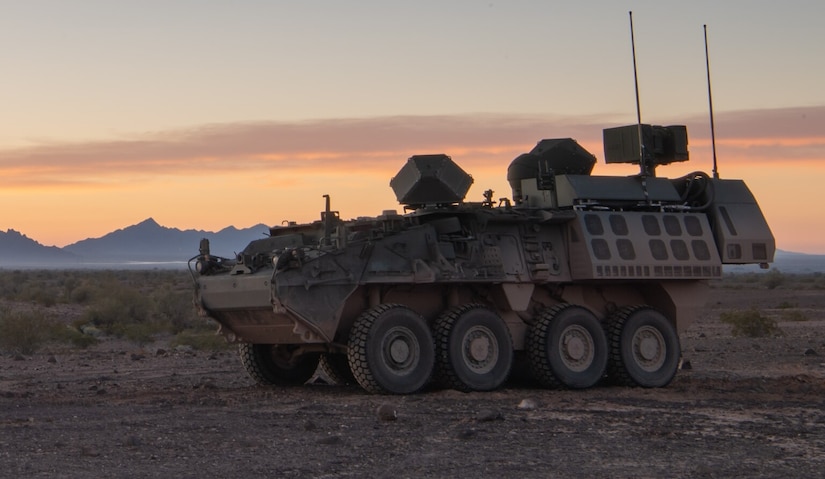
A combat vehicle is outdoors in a desert environment in the evening.

"Our adversaries are moving fast, but we will move faster," said Emil Michael, undersecretary of war for research and engineering. "The warfighter is not asking for results tomorrow; they need them today. These six critical technology areas are not just priorities; they are imperatives. The American warfighter will wield the most advanced technology to maximize lethality." 

Among those technology areas are applied AI, biomanufacturing, contested logistics technology, quantum battlefield information dominance, scaled directed energy, and scaled hypersonics. 

President Donald J. Trump's Winning the Race: America's AI Action Plan, released July 23, directed the War Department to aggressively adopt AI to maintain global military preeminence and ensure it is both secure and reliable. 

"When adopted rapidly, AI will fundamentally transform the department from the enterprise level to intelligence synthesis and to warfighting," Michael said. 

Biomanufacturing uses specially designed genetically modified living organisms, such as bacteria, to manufacture needed materials. 

"[Biomanufacturing] harnesses living systems to produce capabilities at scale," Michael said. "[This effort] will accelerate the development and deployment of biomanufacturing solutions to support critical missions of the department."

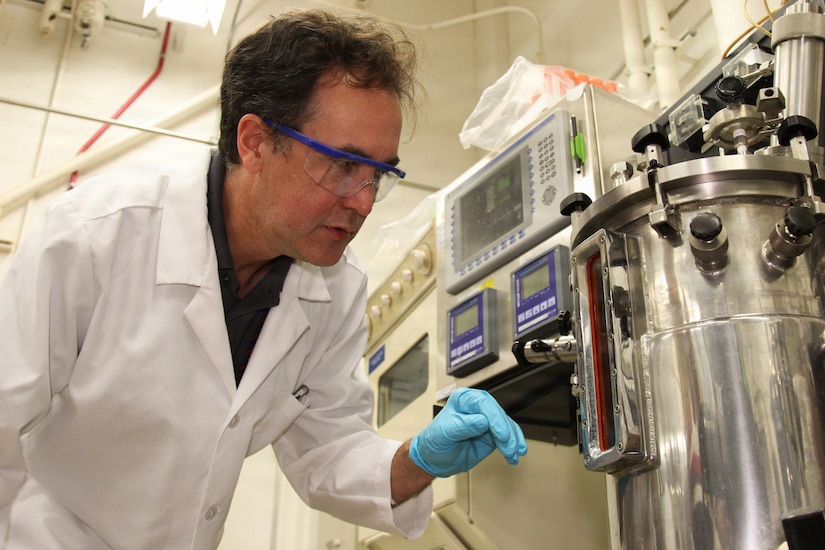
A man in a lab coat interacts with a stainless-steel containment vessel.

With biomanufacturing, he said, the department can expect development of bio-based alternatives for critical chemicals, minerals and energetics for use in warfighting systems. 

A focus on directed energy, Michael said, will enable the department to rapidly scale high-energy lasers and high-power microwave systems with widely accessible, low-cost-per-shot response options. And with scaled hypersonics, the department will focus on scaling production, lowering costs and widely fielding hypersonic weapons to the force. 

Secretary of War Pete Hegseth said the new, more narrowly defined technology focus areas will give America and its warfighters a battlefield advantage and secure the future of American technological dominance. 

Wednesday, November 19, 2025

3rd Combat Aviation Brigade Builds the Future of Drone-Enabled Army Aviation

The low hum of small rotors over Hunter Army Airfield, Savannah, Georgia, may sound routine, but within that hum lies a transformation.

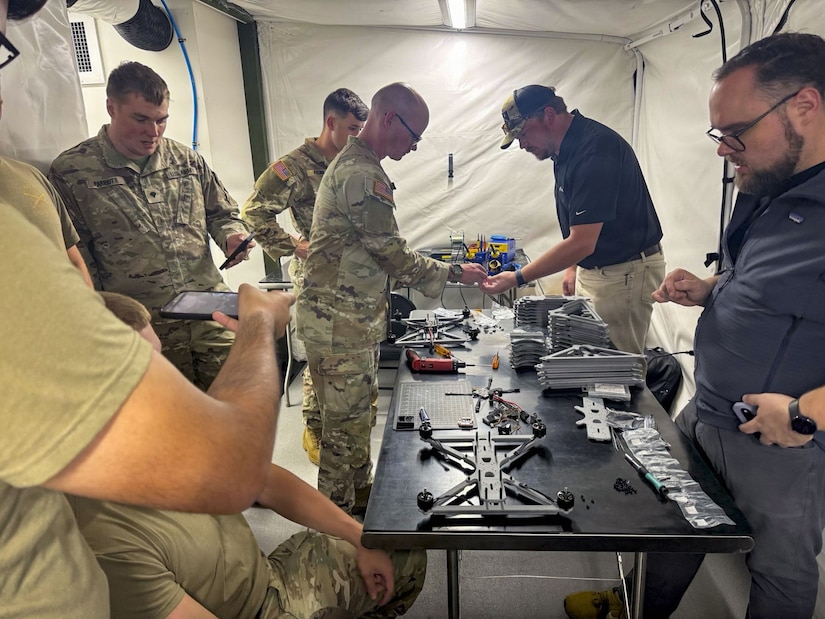
Men some dressed in camouflage military uniforms and others in civilian clothing stand around a table with drone parts.

 
The 3rd Combat Aviation Brigade, 3rd Infantry Division, is not discarding helicopters it is augmenting them. Apache, Black Hawk and Chinook platforms remain indispensable to the force. What is evolving is how those aircraft integrate with unmanned aerial systems and in-house manufacturing, allowing the brigade to redefine what readiness means on a complex future battlefield. 
 
The war in Ukraine offers more than cautionary tales; it offers operational proof. Ukrainian forces have used low-cost drones to strike deep inside Russian territory, harass logistics lines and force Russia's air defense systems into constant repositioning. For example, data shows Ukraine launched at least 58 long-range UAS strikes on Russian energy infrastructure since August 2025, sending drones up to 2,000 km into Russian territory and interrupting about 17% of Russian refining capacity by mid-August.  
 
Russian forces, in turn, have launched hundreds of drones in large-scale saturation attacks. In early February 2025, one overnight strike involved 267 attack drones against Ukraine, marking the largest single drone assault of the war to date. These developments show how unmanned systems are reshaping the way forces detect, target, sustain and make decisions on the front line. 
 
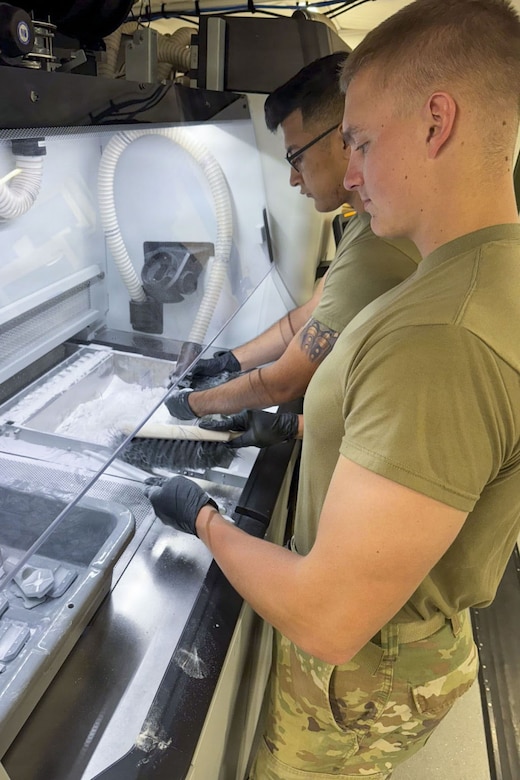
For soldiers of 3rd CAB, the lessons are not theoretical. They recently trained on the Expeditionary Manufacturing Cell, a mobile 3D-printing system that allows rapid production of drone components in the field. Working side by side, UAS operators, UAS repairers and Allied Trade Specialists printed more than 90 unique components in hours rather than waiting weeks for ordered parts. 
 
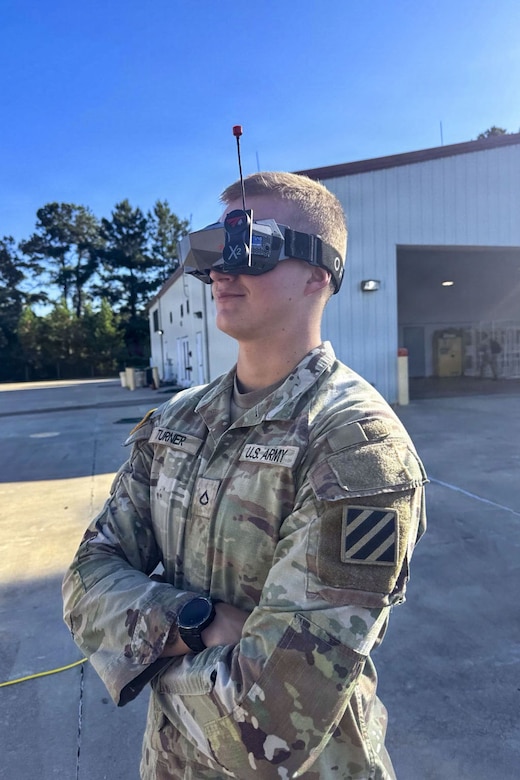
They progressed from printing and assembly to the first flights with Group1 first-person-view drones, which weigh under 20 pounds and can carry small munitions. Additionally, the team completed calibration, sensor integration and flight testing at the tactical level.

A soldier wearing a camouflage military uniform stands with his arms crossed while wearing first-person-view drone goggles.
Despite the transformation, the brigade also remains committed to its rotary-wing force. The difference now lies in employment: the Apache still offers deep strike and aerial firepower; the Black Hawk still performs medevac and air assault; the Chinook still delivers heavy lift and rapid repositioning. 
 
Soldiers assigned to 3rd CAB are layering unmanned systems into those missions. A Black Hawk air assault might still carry troops, but preceding it, a UAS team could scout the route, drop loitering munitions against anti-air threats, or provide a live video feed that shortens the sensor-to-shooter timeline. A Chinook heavy-lift mission might be preceded by unmanned reconnaissance of the landing zone and suppression of nearby sensors. 
 
The brigade has also taken lessons from signature management in Ukraine to heart. Drones and helicopters both leave signatures acoustic, and thermal and units that emit too much or move too slowly become visible targets. 
 
To counter this, 3rd CAB is practicing smaller command nodes, tighter emission control, decoys and adjunct UAS operations that mask or move pathways ahead of the rotary wing force. The objective: maintain the power of manned aviation while reducing its vulnerability in a contested, unmanned-dense environment. 
 
More than hardware, the change is cultural. Soldiers who once requested parts now design and print them. Aviation maintenance sections that focused on rotors and blades now also queue up small drone print runs and payload modifications. Squad level leaders who ran air-assault briefs now also schedule drone launch timelines. Innovation isn't separate or exotic, it's embedded in routine.

Two soldiers dressed in camouflage pants and t-shirt handle small drone parts.
The brigade is experimenting within its formations, embodying what senior leaders call "transformation in contact." The war in Ukraine underlined the danger of being structurally rigid; 3rd CAB soldiers are proving readiness arises from speed, adaptation and integration. 
 
"Today's battlefield is adapting rapidly. By teaching our soldiers to understand how drones work and are built, we are giving them the skills to think creatively and apply emerging technologies to enhance mission effectiveness and readiness," said Staff Sgt. Christian Dodson, the HAAF Innovation noncommissioned officer in charge. 
 
The future battlefield will reward units that can build, integrate, move fast, sense fast, decide fast, and strike fast with precision. Soldiers assigned to 3rd CAB are building that future today by combining the proven might of helicopters with the distributed reach of unmanned systems and the growing capability to manufacture and sustain that capability on-site. When the next fight demands more than traditional aviation, this brigade will be ready.