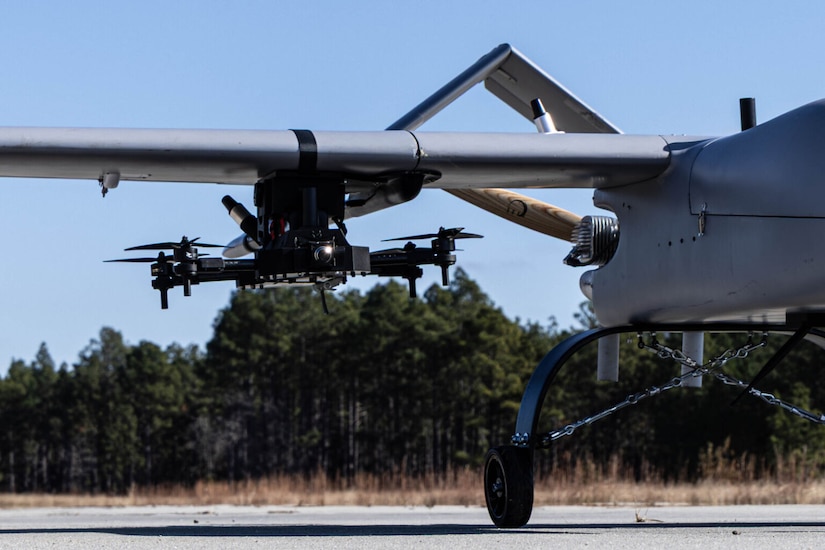
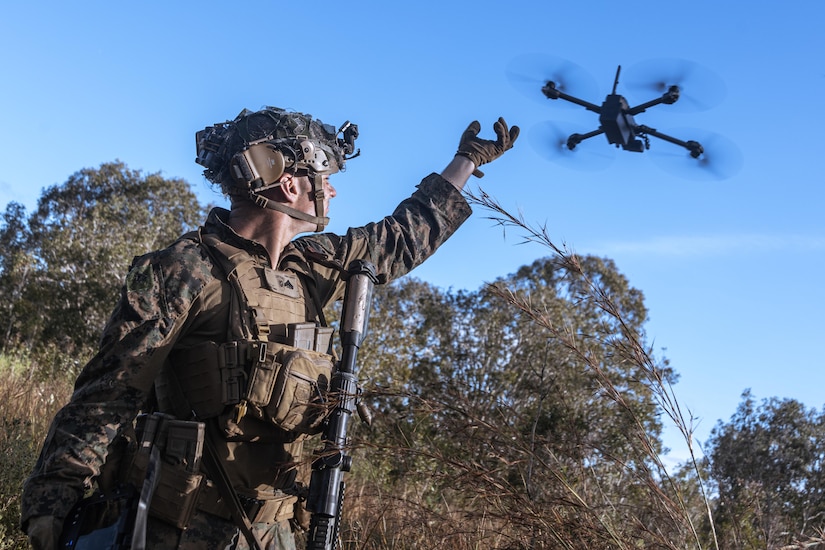
The Marine Corps has launched a training program to rapidly increase the number of small unmanned aircraft system operators for commercial off-the-shelf attack drones.
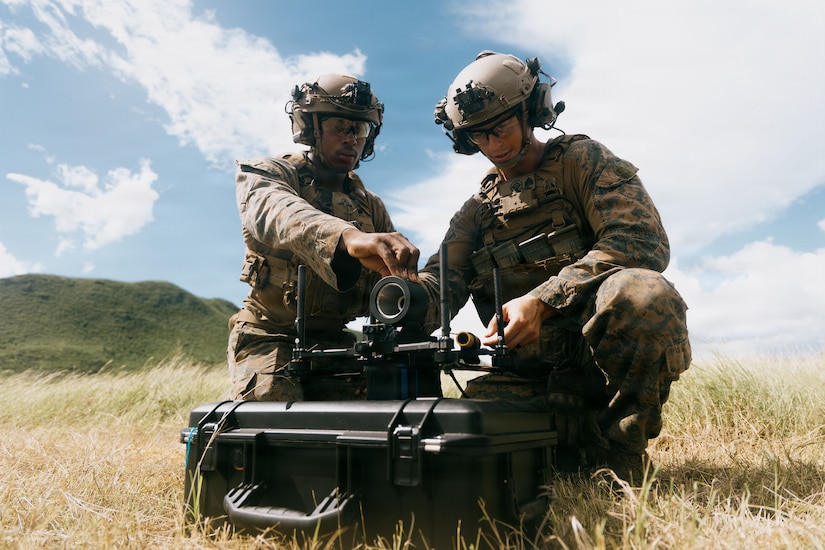
The program, announced in Marine Corps administrative message 624/25, addresses a critical need for standardized training as the service integrates new systems, including the Neros Archer first-person-view attack drone and prepares for this significant investment in various drone technologies.
This initiative builds on the service's success over the past few months scaling FPV attack drones across the Fleet Marine Force. It also aligns directly with War Department plans to field tens of thousands, and then hundreds of thousands, of attack drones across service components starting in March 2026 and continuing over the next several years.
The new framework, created by Training and Education Command, establishes six pilot courses and eight certifications to create a standard for drone operators across the force. These initiatives are designed to provide foundational skills for a variety of small unmanned aircraft systems.
"We are fielding these courses as pilot programs to move quickly while maintaining our commitment to quality training and safety," said Marine Corps Lt. Gen. Benjamin T. Watson, commanding general, Training and Education Command. "This allows us to validate all aspects of the training, from prerequisites and instructional methods to resourcing needs and certification standards, ensuring that we refine and perfect the curriculum before it becomes part of our long-term training framework."
Six approved pilot courses will certify Marines while testing instructional methods and curriculum. These courses include training for drone operators, payload specialists and instructors, with specific prerequisites such as simulator experience on Training and Education Command-approved systems. The courses aim to ensure proper integration and supervision of new drone capabilities. The Training and Education Command has also established a process to grant certifications to Marines who have existing qualifications and experience through an exception to policy.
Seven organizations are designated as regional training hubs with the authority to immediately begin conducting the pilot courses, including schools within Training and Education Command, 1st Marine Division, 2nd Marine Division, III Marine Expeditionary Force, and Marine Forces Special Operations Command.
Weapons Training Battalion at Marine Corps Base Quantico, Virginia, will serve as the interim central hub, responsible for standardizing training, certification and safety across the force. It will consolidate lessons learned and function as the Marine Corps' focal point for adapting training to emerging platforms, payloads and evolving operational requirements.
This effort to scale standardized FPV attack drone training was shaped by lessons from recent certifications, including two Marine Corps attack drone competitions, one in the National Capitol Region and the other in Okinawa, Japan. These efforts certified 19 attack drone operators, five attack drone instructors, seven payload specialists, and two payload specialist instructors.
In mid-November, the Marine Corps Attack Drone Team also supported the certification of 22nd Marine Expeditionary Unit Marines, resulting in 14 attack drone operators and 11 payload specialists fully trained, equipped and ready for contingency operations.
Over the next few months, the Marine Corps Attack Drone Team, alongside Weapons Training Battalion and regional hubs, will certify hundreds more Marines. By May 2026, all infantry, reconnaissance battalions and littoral combat teams across the Corps will be equipped to employ FPV attack drone capabilities.











 Posts
Posts

