As the U.S. military and its adversaries shift focus to the Arctic, working with partner nations in cold-weather regions to make sure our warfighters can survive those extremes has never been more important.
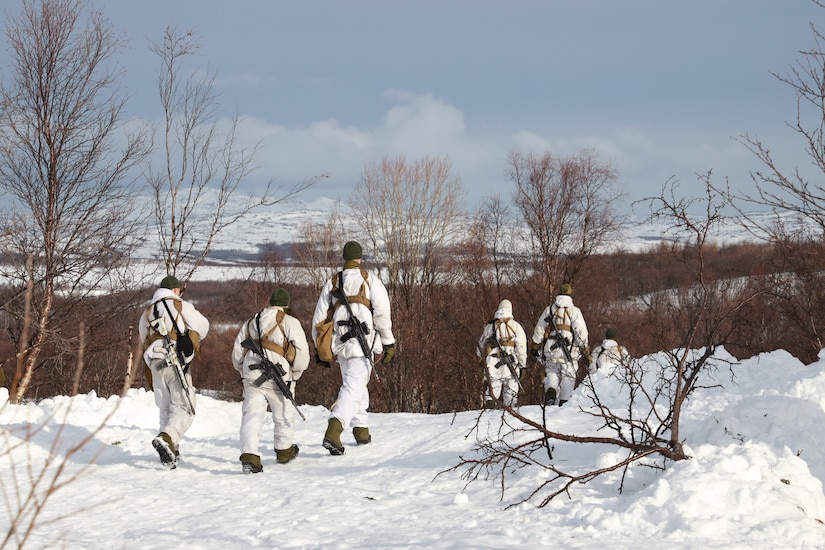
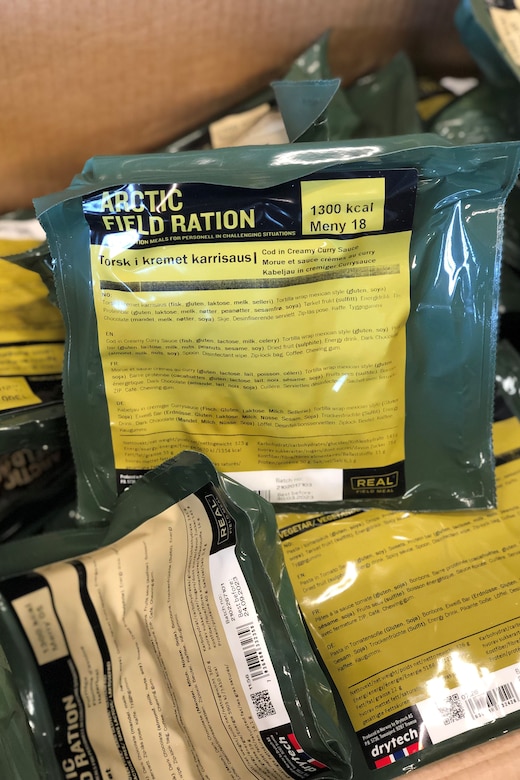
Over the past decade, the U.S. Army Research Institute of Environmental Medicine's Military Nutrition Division has collaborated with the Norwegian Defense Research Establishment, known as FFI, to conduct research on nutrition that service members need to be productive in extreme cold.
One of the division's primary roles is to go into the field with warfighters during operations and training activities to better understand their physiological requirements. Since Norwegian military personnel often train in the Arctic, USARIEM researchers have, on several occasions, joined FFI on those missions to collect data.
"We've been there to study energy demands and warfighter eating behavior," said Dr. James McClung, the Military Nutrition Division chief. "[In extreme cold], there's a significant reduction in the physiological cue to eat, even though adequate nutrition is required."
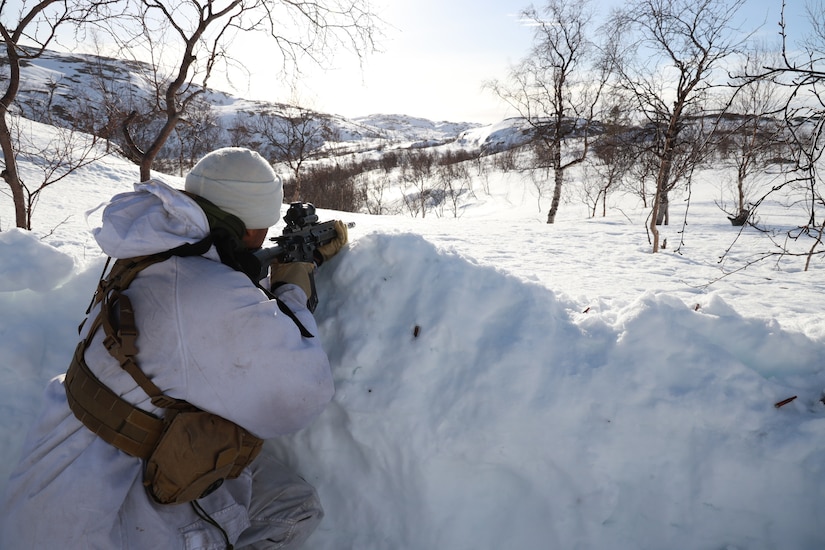
Over the course of more than a decade, an MND team conducted four studies in the Arctic on warfighter nutritional health "to better understand individual differences, whether those be sex, body composition or other factors on energy metabolism in the cold," McClung said.
In 2013, MND and FFI researchers evaluated the physical and biological functions of various volunteer warfighters. They followed that in 2015, 2022 and 2025 with studies that required soldiers to test various prototypes of supplemental snack bars; a few of the studies were conducted within the Arctic Circle.
"During these training exercises, they move very far on skis carrying a lot of weight," said Dr. Emily Howard, an MND nutrition physiologist who took part in the Norway studies. "The best part … is seeing the things we study here being implemented in person. You can actually see what they're consuming in that environment, how they're consuming it and gaining some additional insight."
If researchers observed various effects on the soldiers, such as negative energy balance — when a person can't eat enough to maintain their performance — they worked to adjust the nutrition in the rations they were receiving to overcome those problems.
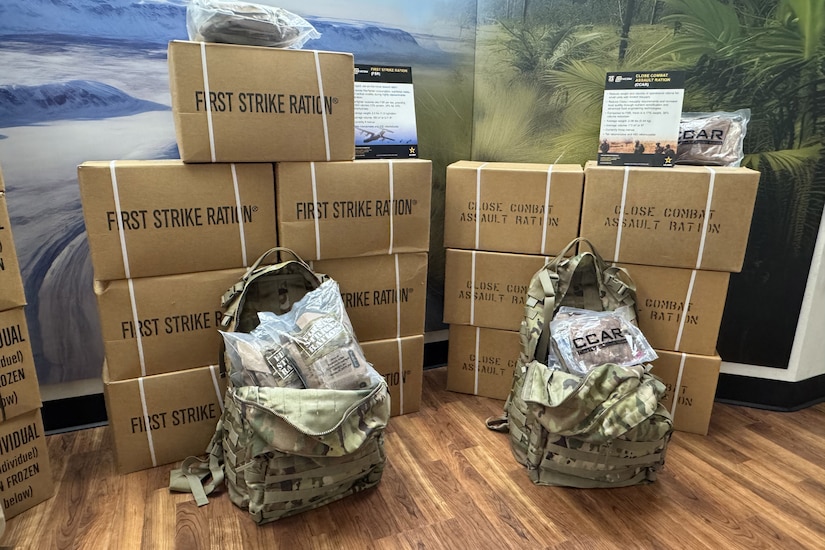
The research, which has been years in the making, helped to inform a more energy-dense ration known as the close combat assault ration, which recently replaced the first strike ration for U.S. combat troops.
FFI researchers have also joined MND experts in studies at the labs in Natick, Massachusetts.
"It's been a very productive collaboration, one that allows us to answer really important questions for the warfighter," Howard said.
Dietary Supplements
The division has also worked with partner nations on dietary supplement research after NATO formed a research task group in 2021 to study their use in military personnel across the U.S., France, the United Kingdom and Slovenia.
"One of the primary findings [in a recent study] is that dietary supplement use is greater in military personnel as compared to civilians," McClung said. "In fact, across the nations, on average, more than 60% of warfighters utilize dietary supplements."
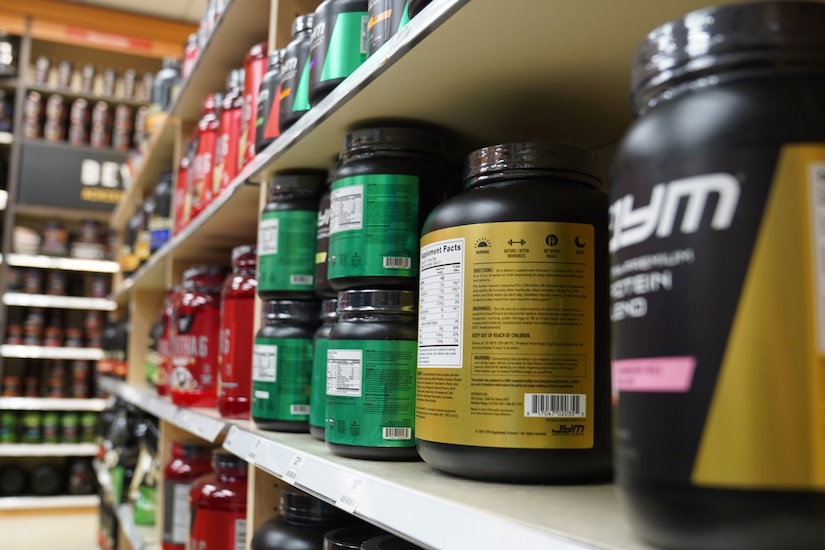
According to the study, service members' reasons for using dietary supplements were also different than civilians, with military personnel mostly using them for recovery and to maintain physical and cognitive performance and body composition standards.
"Items like protein and amino acids are very popular [among military personnel], whereas in civilian communities, the use of multivitamin-type supplements for health and well-being are more common," McClung said.
In the U.S., dietary supplements aren't regulated in the same way as pharmaceuticals, so there's no system for determining whether the ingredients on a product label are actually in the product. To better protect warfighters from harmful substances, the War Department has a dietary supplement and substance program called Operation Supplement Safety. The program recommends third-party certification, which verifies the contents of dietary supplements to ensure the labels match what's in the product and that it's free of contaminants.
McClung said USARIEM also developed a survey tool that the NATO community has agreed to use once it's translated across nations. It will help share data as they work to better understand dietary supplement use.
Standardizing Physiological Requirements
McClung noted that there's been discussion with NATO partners about using a product like the performance readiness bar to limit stress fractures in new recruits.
"Stress fractures are very common injuries in basic combat training and can result in injury to 7[%] to 20% of our recruits," he said. "NATO partner nations also experience elevated rates of stress fracture during basic combat training."
A standardization agreement is also under development for garrison feeding, which, during NATO operations, is often provided by the host nation. However, cultural differences can mean that warfighters may not always like the food they're being provided, which can lead them to consume less energy than what's required to perform appropriately.
"These types of standardization agreements are really critical in that we're assuring we can provide … the nutritional requirements of our American and partner warfighters," McClung said. "We continue to meet on a regular basis to incorporate new research findings into the requirements."


 Posts
Posts


No comments:
Post a Comment