Tuesday, June 30, 2026

Department of War Launches New Website to Help Industry Partners Navigate Section 805 Supply Chain Requirements

The Department of War (DoW) today announced the launch of a new website to provide guidance and resources for industry partners on the implementation of Section 805 of the Fiscal Year 2024 National Defense Authorization Act (NDAA). This provision restricts future DoW procurement from entities identified on the Section 1260H list of Chinese military companies.

The new website https://www.businessdefense.gov/805-waiver-request.html managed by the Office of the Assistant Secretary of War for Industrial Base Policy serves as a central hub for information regarding the upcoming prohibitions. It details the timeline for both the Entity Provision or "direct" ban, effective June 30, 2026, and the Goods and Services Prohibition or "indirect ban," effective June 30, 2027, which applies to supply chains.

The site provides critical resources for companies doing business with the Department, including a clear process for requesting a waiver. The waiver process is designed for partners who require additional time to transition away from suppliers on the 1260H list and requires a compelling justification and a detailed phase-out plan.

Industry partners are encouraged to visit the new website and email the Section 805 team with any questions at osd.805-waivers@mail.mil.

Monday, June 29, 2026

Small Creatures, Big Mission: Bugapalooza Connects Science to Military Readiness

A woman in a bug costume talks to two kids as they look at displays on bugs.

Mosquitoes, ticks, flies and pollinators drew a crowd at the National Museum of Health and Medicine's Bugapalooza in Silver Spring, Maryland, June 13. Nearly 400 visitors attended the annual event to explore the world of insects through hands-on activities, exhibits, and conversations with military and civilian experts. 
 
Throughout the day, visitors learned how insects affect health, support the environment and affect military readiness. Children explored interactive stations, families met researchers and guests discovered simple ways to stay safe from insect-borne diseases. 
 
While each presenter brought a different area of expertise, one message stood out: education is one of the best tools for prevention. 
 
"The first way that anyone protects themselves is by learning. Education is our number one priority," said Navy Lt. Cmdr. Jodi Fiorenzano, Armed Forces Pest Management Board chief of research.

A close-up of hands holding a tarantula over a container.

Experts explained that understanding insects is important, not only for public health but also for military operations. Insects and the diseases they carry have affected military forces throughout history and remain a threat today. 
 
"Historically, infectious diseases have impacted soldiers much more than bullets and shrapnel," said Army Maj. Paul Lenhart, an entomologist assigned to the Walter Reed Army Institute of Research. "A huge portion of those infectious diseases are [illnesses caused by parasites, viruses and bacteria]." 
 
Vector-borne diseases, transmitted between people or from animals to people, can have a serious impact on military units, said Army Maj. Obinna Aduba, U.S. Army Medical Research Institute of Infectious Diseases chief of vector threat assessment.  

"It can incapacitate a whole unit," Aduba added.

Presenters also explained how military teams prepare before service members deploy. Experts study local health threats to help protect forces operating around the world. 
 
"We cannot put forces on the ground anywhere without first making sure that they're going to be safe and the environment is going to be safe," said Navy Lt. Jacob Kabbah, Navy Bureau of Medicine and Surgery comptroller. 

The event also focused on steps visitors can take to protect themselves and their families. Experts encouraged the use of insect repellent, protective clothing and routine tick checks after spending time outdoors. 

By the end of the day, visitors left with more than fun memories and hands-on experiences. They left with a better understanding of how education, research and prevention help protect service members, families and communities. 
 
From mosquitoes and ticks to pollinators and other helpful insects, Bugapalooza 2026 showed that even the smallest creatures can have a big impact on the world.

Thursday, June 25, 2026

The Office of the Under Secretary of War for Research and Engineering Finalizes Lab Review, Aims to Modernize R&D Enterprise

The Office of the Under Secretary of War for Research and Engineering has finalized a set of recommendations to modernize and reform the War Department's vast research enterprise, priming it to ease bureaucratic friction points and to rapidly deliver combat-ready technologies. The recommendations flow from a 90-day comprehensive assessment of the Department's laboratories, Federally Funded Research and Development Centers (FFRDCs) and University-Affiliated Research Centers (UARCs).

Secretary of War Pete Hegseth mandated a sweeping modernization of the U.S. defense innovation ecosystem to keep pace with a rapidly evolving, commercially driven global technology landscape. The Office of the Assistant Secretary of War for Science and Technology is executing on this mandate, completing 30 site visits, which represent nearly a third of the Department's research and development (R&D) enterprise. This assessment provided crucial ground-truth insights into systemic challenges and opportunities for reform across the enterprise.

"On one hand, our findings are reassuring, confirming that the research enterprise is fundamentally sound, with an unmatched concentration of world-class scientists, engineers and researchers who continue to drive capabilities to the tactical edge," said Assistant Secretary of War for Science and Technology Joseph Jewell, whose office led the assessment. "But the findings also show the increasing drag that aging, costly infrastructure imposes on labs and test centers striving to tackle changing missions and pursue emerging technologies. We have researchers pushing the boundaries of 21st century technologies in facilities built when the cathode-ray tube and jet propulsion were the state of the art."

According to Dr. Jewell, a key recommendation of the assessment is asking Congress to establish a dedicated laboratory military construction (MILCON) appropriation specifically for research, development, test and evaluation infrastructure. This would protect these funds from being reallocated to general MILCON needs. A related request to Congress would significantly increase the limit on minor MILCON funds, which labs require to respond quickly to new demands for integrated research and enhanced security.

"This assessment highlights how siloed the R&D enterprise has become as it expanded over the past half century," said Under Secretary of War for Research and Engineering Emil Michael. "The labs are more service-centric, and the networks of university and FFRDC partners are not as integrated as they should be. This comprehensive review mandates our path forward to address the overriding challenge of delivering technology from lab to our warfighters rapidly, without sacrificing our rigorous standards for safety and combat effectiveness."

The review does not recommend consolidating or eliminating institutions, concluding that where overlap exists, it tends to be driven by mission need. The findings suggest that the way to reform the research enterprise is to fix the systemic issues surrounding its institutions, focusing on how authority, money and decisions flow, and how the institutions are funded, measured and governed.

Ultimately, the recommendations presented seek to eliminate the largest bureaucratic friction points, optimize resource allocation and empower the Department's unmatched scientific workforce. The report serves as the foundational blueprint to modernize the Department's R&D ecosystem and ensure the Department maintains a dominant and enduring technological advantage.

The assessment team is currently formalizing an implementation plan to address all identified findings and recommendations, with execution scheduled to begin shortly thereafter.

Department of War Launches Interactive Investment Intelligence Center Tracking Transformative Industrial Base Revitalization

The Department of War's (DoW) Office of the Assistant Secretary of War for Industrial Base Policy (OASW (IBP)) announced today the launch of an Investment Intelligence Center interactive public website (https://www.businessdefense.gov/investments.html). The site provides unprecedented visibility into DoW's efforts to secure and expand domestic supply chains, mapping over $6.7B in Defense Production Act (DPA) and Industrial Base Analysis and Sustainment (IBAS) investments made since 2015.

"A resilient defense industrial base requires transparent partnerships between the government and the private sector," said Assistant Secretary of War for Industrial Base Policy Hon. Mike Cadenazzi. "By openly mapping our DPA and IBAS investments, we are sending a clear demand signal to industry and private capital markets about our most critical national security priorities."

The Intelligence Center provides a centralized, interactive dashboard for users to explore DoW's work across the United States harnessing American innovation and mitigating critical supply chain vulnerabilities. By providing a clear geographic and sector-based view of historical investments, the tool enhances transparency for congressional stakeholders, defense analysts, and private sector partners.

The three different visualizations – interactive map, Mekko chart, and keyword portfolio search – enable filtering by technology sector, year, location, and funding mechanism. Together, they deliver a comprehensive view of DoW's trajectory toward onshoring critical manufacturing and reduced reliance on adversarial supply chains.

Industry partners, researchers, and the public are encouraged to explore the IBP Investment Intelligence Center at: https://www.businessdefense.gov/investments.html

About the Office of the Assistant Secretary of War for Industrial Base Policy (OASW(IBP))

The OASW(IBP) works with domestic and international partners to forge and sustain a robust, secure, and resilient industrial base enabling the warfighter, now and in the future.

Army Armaments Center Develops New Counter-UAS Capability

A new effort led by the U.S. Army Combat Capabilities Development Command Armaments Center demonstrated advancements developed for fire control, enabling the ability to engage and defeat drones with a common remotely operated weapon station while shooting on the move.

A military vehicle is parked on a gravel road in a grassy field.

The fire control project is a Science and Technology Integration Office software effort that is designing, developing and demonstrating advanced counter-drone fire control capabilities. The project underwent testing in April at the Aberdeen Proving Ground in Aberdeen, Maryland. 
 
According to Nick Cascia, project officer, the initiative began as a mission-driven response to the emerging small unmanned aerial system threat after leadership directed the team to pursue an advanced fire control capability to defeat small drones.

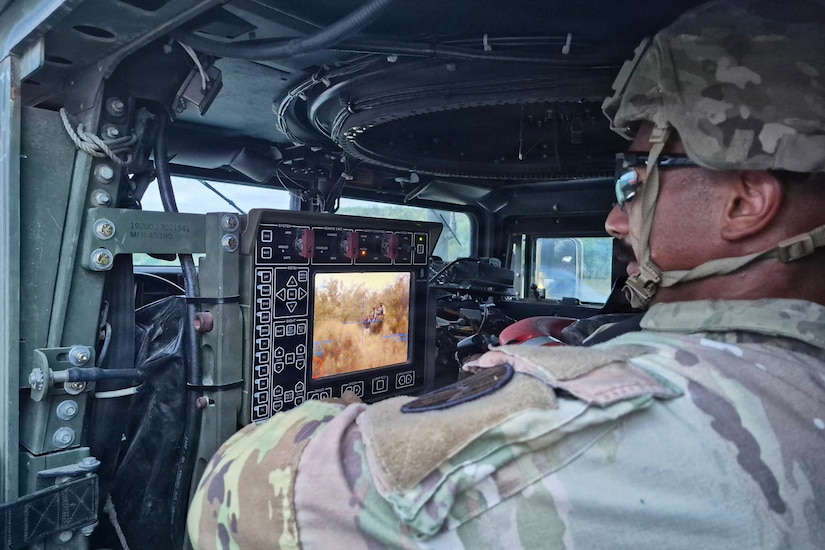
A man in a camouflage military uniform looks at a screen inside a military vehicle.

The effort integrated the Armaments Center's Gunslinger fire control, originally developed under the Future Attack Reconnaissance Aircraft program, and adapted it for ground-to-air targeting. The remote weapon station is able to defeat small moving targets while the vehicle is in motion by using the Gunslinger's fire control, as well as various vehicle sensor feeds, to provide real-time data, ensuring the weapon is accurately aimed at the target drone. 
 
This fire control solution uses a modular open system approach, so the developed software as well as any future enhancements can be shared across the Army. Once matured, the software will improve system accuracy against drones, reducing the number of rounds needed to defeat the threat.

A person in a camouflage military uniform and brown gloves holds a string of large bullets.

 
According to James Little, deputy project lead, the development team received promising results from their April tests and will iterate and build upon these results in subsequent tests to improve system performance. With these tests, developers will continue to increase the speed of both the vehicle and drone. 
 
"It's a great start to the effort," Cascia explained. "The [project] team has put considerable time and effort into developing our advanced fire control algorithms and preparing for this test. Once we started destroying drones, it showed the hard work was paying off."

Tuesday, June 23, 2026

Securing Global Dominance: DoW Unleashes Quantum Defense Strategy to Harden Networks and Empower the Joint Force

The Department of War (DoW) Chief Information Officer, Honorable Kirsten Davies, today announced the release of the DoW Post Quantum Cryptography (PQC) Strategy. This comprehensive, forward-looking plan addresses the urgent need to secure the Department's communications, data, and command and control systems against the emerging threats posed by future quantum computing capabilities.

The Department of War is driving a rapid, enterprise-wide transition to deploy quantum-resistant cryptography on high-impact systems by 2030 and across the entire force by 2031. This aggressive rollout directly aligns with President Donald J. Trump's Executive Order 14409 "Securing the Nation Against Advanced Cryptographic Attacks", placing the DoW at the forefront of the national mandate to protect our highest-value systems. By accelerating this migration now, the DoW is actively neutralizing quantum threats — preventing adversaries from accessing sensitive data, compromising the integrity of systems, or impersonating warfighters.

"Empowering the warfighter is the relentless objective that drives every program," said Hon. Davies. "To deliver on Secretary Hegseth's vision of the most lethal and dominant military force in the world, our networks must be impenetrable. This strategy secures our tactical edge and the safety of our satellite communications and command systems (SATCOM). It builds the interoperability required to rapidly upgrade our cryptography today while ensuring we can adapt at the speed of innovation to counter the threats of tomorrow."

The strategy prioritizes strengthening industry collaboration to drive efficiency across the enterprise. A key element of this is preparing the Defense Industrial Base (DIB) — the engine of the Secretary of War's "Arsenal of Freedom"— for upcoming Federal Acquisition Regulation (FAR) cryptographic compliance. This proactive partnership includes new approaches to accelerate the integration of commercial-off-the-shelf PQC-enabled solutions, ensuring a unified and resilient defense posture while reducing costs to the nation by streamlining testing.

"As we execute this critical modernization, we remain uncompromisingly focused on delivering value for the American people," added Davies. "We are answering the President's call by establishing centralized governance—ensuring we leverage our buying power, eliminate waste, and secure the best possible value for every taxpayer dollar while moving at speed of innovation."

To execute this complex enterprise-wide transition, the strategy maps out five clear, interconnected Lines of Effort:

1. PQC Governance and Integration: Establishing a centralized oversight structure to streamline acquisition and ensure fiscal accountability.

2. Cryptographic Inventory and Planning: Launching an aggressive campaign to scan for vulnerable systems and coordinate migration roadmaps.

3. Technology Acceleration: Developing, testing, and maturing PQC solutions for unique defense needs while collaborating with standards bodies and industry to advance baseline capabilities.

4. Industry Partnership and Enablement: Lowering barriers for commercial partners through initiatives like the "Preparing for Migration to PQC" memo, which enables the rapid intake and adoption of PQC-enabled industry solutions.

5. PQC Migration and Fielding: Physically deploying quantum-resistance across all warfighting domains to secure our systems without slowing mission operations.

With these robust foundations, we will accelerate ahead of the timelines set by Executive Order 14409. This strategy stands as a critical milestone in our mission to forge resilient partnerships and institute a new paradigm for cybersecurity, ensuring that the United States maintains its technological and strategic advantage for decades to come.

The DoW Post-Quantum Cryptography Strategy is available here: https://dowcio.war.gov/Portals/0/Documents/Library/DoW-PQC-Strategy.pdf

Thursday, June 18, 2026

Office of Strategic Capital Signs $500 Million Conditional Loan Commitment With Phoenix Tailings

The United States Department of War's Office of Strategic Capital (OSC) announced today a $500 million conditional loan commitment with Phoenix Tailings, Inc. to scale the company's domestic processing of rare earth elements. Together, the OSC investment and additional private capital are intended to provide approximately $1 billion to support a significant expansion of critical metal production at existing facilities and a new, state-of-the-art, U.S.-based rare earth separation and metallization facility.

This partnership with OSC marks Phoenix Tailings' next stage of growth, positioning the company at the center of an important national security priority focused on building a resilient, domestic supply chain for rare earths. Phoenix Tailings specializes in rare earth separation and metallization, a highly technical midstream process that bridges the critical gap between raw extraction and permanent magnet production. The company's increased production will directly support permanent magnet facilities across the broader U.S. industrial base and improve supply chains for other specialty defense and industrial products.

"Supporting domestic processing for critical minerals and rare earths is a key focus for OSC, and the rare earth midstream processing capabilities that Phoenix Tailings represents are key shortage areas that need to be rapidly addressed. We are pleased to support Phoenix Tailings in building the company's Freedom Facility, which will represent an important step in strengthening the full mine-to-magnet supply chain in the United States," said David A. Lorch, Director of the Office of Strategic Capital and Senior Advisor to Deputy Secretary of War Steve Feinberg.

The company currently operates two metallization facilities located in Burlington, Massachusetts, and Exeter, New Hampshire. The conditional loan commitment between OSC and Phoenix Tailings specifies customary additional steps that the company must take to proceed toward financial close on the loan, including fulfilling financial, legal, technical and other due diligence requirements.

"I applaud the Office of Strategic Capital on this important conditional investment, which advances the reshoring of rare earth supply chains and strengthens the might of America's defense industrial base. The focused, unified effort and support from Secretary Hegseth and Deputy Secretary Feinberg have been crucial in addressing supply chain shortages and vulnerabilities in the defense industrial base," said the Honorable Emil Michael, Under Secretary of War for Research and Engineering.

Camp Lejeune Modernizes Tactical Driving With High-Tech Realism

A man wearing a military camouflage uniform operates a driving simulator.

The Marine Corps is taking a leap forward in tactical vehicle training, trading unnecessary wear and tear for high-tech, immersive realism at Marine Corps Base Camp Lejeune, North Carolina. With the introduction of the multiplatform driver simulator, Marines are now able to push the limits of the joint light tactical vehicle without assuming any physical risk.

According to Shannon Ohlinger, the multiplatform driver simulator, or MPDS, training lead and a Marine Corps veteran, the shift in technology is monumental. The new system is designed to build confidence and critical thinking skills more quickly while addressing the challenges of fuel costs and vehicle maintenance.

"The operator driving simulator used prior to the MPDS was all over the place with training," Ohlinger said. "This entire system is much more advanced than the ODS, and it still has the mobility to mimic the movement of the actual vehicle over different types of terrain."

A man wearing casual attire gestures as he speaks to two other men dressed in military camouflage uniforms inside of a driving simulator.

The MPDS is broken into three distinct parts: the cab itself, made with authentic industry parts; the situation screen for viewing analytics and a third-person perspective; and the instructor workstation. While not replacing the actual physical training Marines get in a live joint light tactical vehicle or medium tactical vehicle replacement, it provides a seamless transition from the classroom to the dirt.

"Everything inside the simulator is an exact copy of what you would see in a real live [joint light tactical vehicle]," Ohlinger explained. "From the switches and functionality to the smart user interface, startup procedures and pre-op checks, everything is a one-for-one match."

Where the MPDS truly outperforms previous training methods is at the instructor workstation. From this console, instructors can manipulate the environment in real time, testing a driver's ability to adapt to sudden, catastrophic changes.

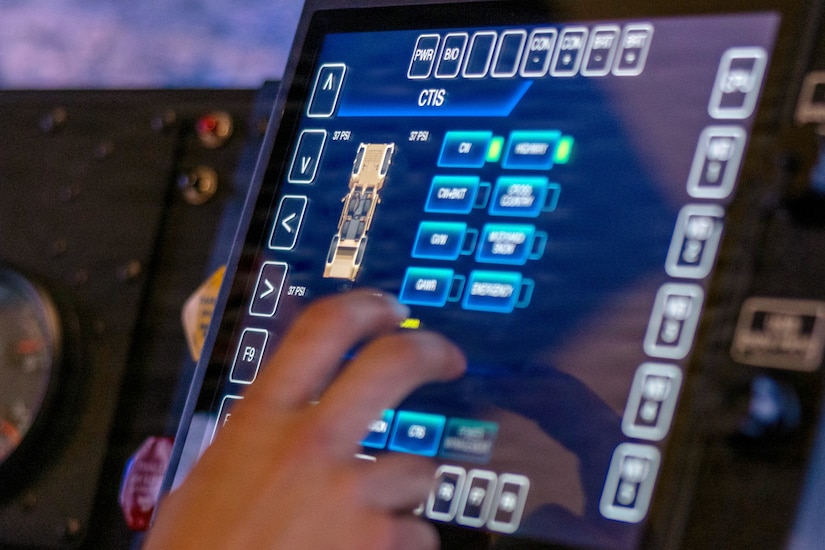
"Through the instructor workstation, I have the ability to throw obstacles at them. I can add rain and thunderstorms, and you will see puddles form and the mud get slick," Ohlinger said. "You're going to start having slippage to where operators need to use their [central tire inflation system] and anything else you would need to incorporate in order to adapt."

A man wearing a military camouflage uniform looks at a screen while operating a driving simulator.
A close-up of a hand tapping the screen in a driving simulator.
Instructors can tailor scenarios to specific unit needs, whether that means deploying a sudden blizzard, initiating low-visibility night driving or triggering dash warnings like low tire pressure or low battery voltage. The goal is to safely overwhelm the driver in a controlled environment, without risking a vehicle roll or a Marine getting hurt.

For Ohlinger, this capability hits close to home. Having driven more than 3,100 miles in Afghanistan, he understands the stakes of tactical driving.

"As a prior enlisted Marine, I can confidently say that if I had training like this, there are situations I experienced that I wouldn't have ever found myself in," he said. "Marines adapt and overcome when they face the unknown, but the MPDS gives them the critical thinking and experience they need ahead of time."

Ultimately, the Marine Corps modernization efforts are about keeping warfighters lethal and safe. The MPDS ensures that by the time a Marine gets behind the wheel of a real joint light tactical vehicle, they have already survived the worst conditions their instructors could throw at them.

"Being in this position gives me the opportunity to help mitigate the accidents that lead to losing service members," Ohlinger said. "I know if I save one life, I have done my job."

Friday, June 12, 2026

Naval Research Laboratory Receives Space Force Antenna, Expanding Joint Space Capabilities

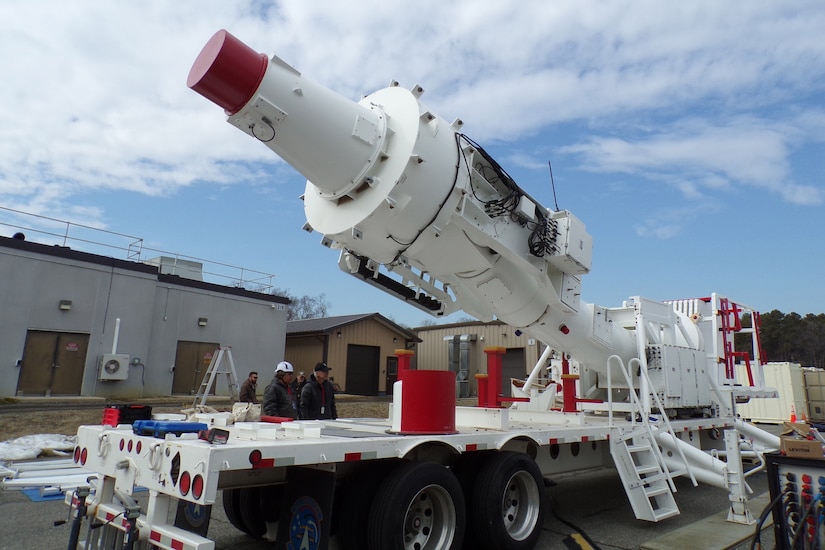
Earlier this year, the U.S. Naval Research Laboratory received a transportable satellite tracking antenna system from Space Systems Command's System Delta 81 to expand joint space testing, training and operational support capabilities at the laboratory's Blossom Point Tracking Facility in Welcome, Maryland. 

A large, white antenna sits on a flatbed truck outside under a blue sky before it is installed.

 
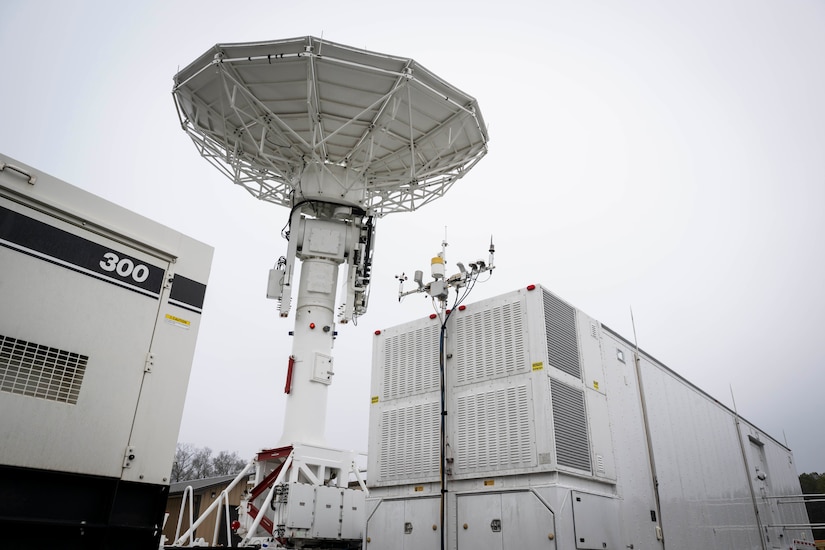
The antenna system enhances the facility's ability to support tracking, telemetry and command operations for emerging space technologies and future operational concepts. The capability will provide additional flexibility for experimentation, system evaluation and long-duration performance monitoring, supporting both naval and joint space missions. 
 
Blossom Point Tracking Facility has long supported satellite command and control, communications experimentation and orbital research. Integrating the transportable system into the site's existing infrastructure increases the facility's capacity to support multiband communications testing, interoperability assessments and advanced space experimentation. Analysis is underway to determine future experiments, exercises and operational events the system may support, as well as potential deployment locations to maximize mission utility. 
 
The transfer supports broader War Department efforts to strengthen joint testing and training infrastructure and improve collaboration across the naval and space communities. The system also supports System Delta 81's mission to develop and field capabilities that enable realistic test and training environments for the Space Force. 

A large, white antenna is pointed upward, next to a large, white trailer.

 
The effort reflects ongoing collaboration between Space Systems Command, System Delta 81 and the Naval Research Laboratory to improve operational readiness, expand flexible testing capability and accelerate the integration of emerging space systems into joint mission environments. The addition of the antenna provides increased access to stable, repeatable testing environments that support the evaluation of critical space-enabled capabilities for future operations. 
 
The laboratory is the Navy and Marine Corps' corporate laboratory, conducting a broad program of scientific research, technology development and advanced experimentation to support operational forces and maintain the nation's technological advantage at sea, on land, in the air and in space. 

Wednesday, June 10, 2026

Army Astronaut Selected for NASA's Historic Artemis III Mission

In a historic announcement that bridges the legacy of military service with the next phase of human space exploration, NASA announced that Army Col. Frank Rubio, assigned to the U.S. Army Space and Missile Defense Command, will serve as a mission specialist on its upcoming Artemis III mission. The announcement, made yesterday at the Johnson Space Center in Houston, places a soldier at the forefront of humanity's return to the lunar surface.

Rubio will join NASA astronauts Randy Bresnik and Andre Douglas, as well as European Space Agency astronaut Luca Parmitano, as they embark on a mission that will serve as a low-Earth orbit demonstration to test systems required for operations in the region between Earth and the moon's orbit. 

Rubio's selection is a testament to his recognized leadership, broad career experience and the technical expertise that soldiers bring to the nation's human spaceflight program.

"I am deeply honored to be selected for Artemis III, a mission that continues to build upon the foundation for the day Americans return to the surface of the moon," Rubio said. "My Army training has been an integral part of the experiences that have enabled me to be ready for this mission. Serving taught me to lead under pressure, how to stay calm when the stakes are highest, and how to put the mission and the people beside you above yourself." 

"To those who have served, and to every soldier and military family serving right now: you are the backbone of everything we do as a nation, including this," he continued. "I am honored to represent the Army on the highest ground."

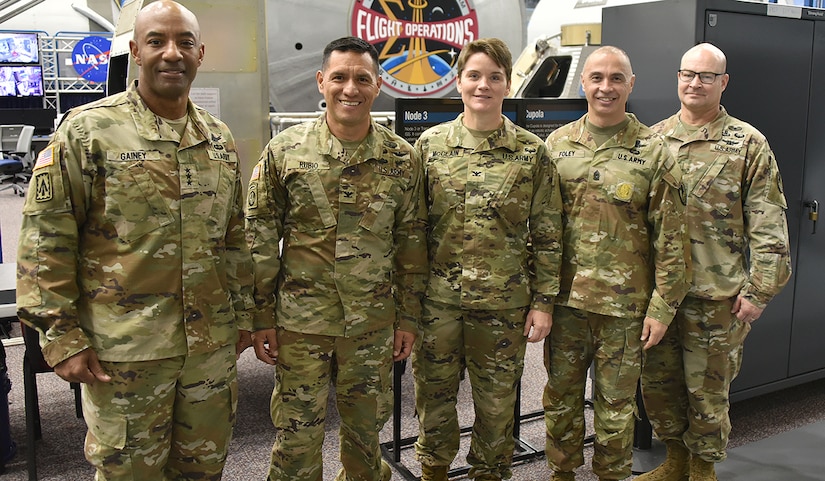
Four men and a woman wearing camouflage military uniforms pose for a photo inside a large room; there is equipment in the background and a command logo that reads, "Flight Operations."

Rubio is no stranger to making history in orbit. He holds the American record for the longest single spaceflight, having spent 371 consecutive days aboard the International Space Station during Expeditions 68 and 69 from September 2022 to September 2023.

During that unexpectedly extended spaceflight, Rubio completed 5,963 orbits of the Earth, traveled more than 157 million miles and conducted three spacewalks totaling 21 hours and 24 minutes. This extensive previous spaceflight experience, marked by deep resilience and adaptability, makes him uniquely qualified to serve under the demanding conditions that will be expected of him and the other Artemis III crewmembers.

Before his selection by NASA in 2017 as a member of Astronaut Class 22, Rubio built a distinguished 19-year military career as both an Army aviator and physician. A 1998 graduate of the U.S. Military Academy at West Point, New York, where he was a member of the Black Knights parachute team, Rubio served as a UH-60 Black Hawk helicopter pilot. He flew more than 1,100 hours, including more than 600 hours of combat and imminent danger time during deployments to Bosnia, Afghanistan and Iraq.

Following his service in the aviation branch, Rubio earned his medical degree from the Uniformed Services University of the Health Sciences in 2010. As a board-certified family physician and flight surgeon, he completed his residency at Fort Benning, Georgia, and subsequently served as a clinic supervisor at Redstone Arsenal, Alabama. Rubio was stationed as a battalion surgeon assigned to the 3rd Battalion, 10th Special Forces Group at Fort Carson, Colorado, at the time of his astronaut selection.

Rubio's selection highlights the critical contributions of the U.S. Army Space and Missile Defense Command NASA Detachment, located at the Johnson Space Center. The detachment bolsters NASA's human spaceflight program by providing active-duty soldiers and space operations officers who deliver leadership, technical expertise and risk management skills. 

Alongside Rubio, the detachment currently includes Army Col. Anne McClain, a veteran astronaut and detachment commander; Army Chief Warrant Officer 3 Joseph Bailey, who in 2025 became the first Army warrant officer selected as an astronaut candidate; and two Army space operations officers and administrative personnel.

Since 1978, a select group of 20 Army astronauts and payload specialists have served at NASA. These Army astronauts and space operations officers not only provide vital human-machine interface and engineering expertise to NASA's operations, but they also bring back invaluable experience and information from NASA and aerospace industry partners to the Army.

"Congratulations to Col. Frank Rubio on his selection for the Artemis III mission," said Army Lt. Gen. John Rafferty, commanding general of U.S. Army Space and Missile Defense Command. "His selection is a testament to his leadership, physical and mental toughness, and technical capability. The U.S. Army celebrates this milestone, and we at U.S. Army Space and Missile Defense Command are incredibly proud of him and the Army astronaut program."

According to NASA, Artemis III's primary objectives for its mid-2027 flight are to test and validate commercial human landing systems. The mission will focus on critical docking operations between the Orion spacecraft and these landing systems. It will also be an opportunity for NASA to conduct the first operational tests of new space suits in orbit.

NASA officials further stated Artemis III's flight will provide the flight experience and standardized vehicle configurations necessary to support subsequent operations. Data gathered from the orbit demonstration will directly clear the path for future crewed landings on the moon and eventual human missions to Mars.