The United States Department of Defense has taken
historic action to advance the application of 5G communications for
America's warfighters.
In October 2020, Acting Under Secretary of Defense for Research and Engineering Michael Kratsios announced $600 million in award contracts
to 15 prime contractors to perform testing and evaluation of 5G
technologies at five military installations across the country. This
initial Tranche 1 effort represents the largest full-scale 5G test for
dual-use applications in the world.
Since then, the Department has made important progress in
establishing the Tranche 1 sites and preparing the upcoming Tranche 2
requests for proposals.
"With these test beds, the Department of Defense is at the forefront
of cutting-edge 5G research that will strengthen America's warfighting
capabilities and accelerate advancements in commercial 5G
technologies," Mr. Kratsios said.
Dr. Joseph B. Evans, principal director for 5G in the Office of the
Under Secretary of Defense for Research and Engineering, provided an
update on the Department's 5G testing and experimentation efforts, as
well as its 5G Strategy Implementation Plan. The latest information can also be found at the newly launched CTO.mil/5G.
"So far, the Department's 5G experiments are coming together as
expected," Evans said. "In addition to the Tranche 1 sites getting stood
up, we also have the Tranche 2 sites that are in the process of
releasing requests for proposals ... the Department is on track for 5G
testing in 2021."
The 5G wireless communications technologies in development now offer
great improvements in speed, connectivity and reduced latency, Evans
said. He also said it's critical for the DOD to be involved in
accelerating the development of that technology, as well as in ensuring
those systems are robust, protected, resilient and reliable.
"5G is important to the Department because it will enable new
capabilities, such as machine-to-machine communication, that will help
us to improve our efficiency and our processes, and enable us to react
more quickly," Evans said.
In the same way traditional telecommunications and the internet have
enhanced DOD operations, 5G is going to do the same — but to a much,
much greater extent, Evans said.
Establishing the Tranche 1 Sites
Marine Corps Logistics Base Albany, Georgia; Joint Base
Lewis-McChord, Washington; Naval Base San Diego, California; Nellis Air
Force Base, Nevada; and Hill Air Force Base, Utah, were designated as
"testbeds" where commercial 5G technology would be evaluated for its
ability to enhance military and service-specific operational challenges.
Together, the five installations make up "Tranche 1" of the
department's efforts.
"We've formulated these experiments as three- to four-year projects,"
Evans said. "We've built them as multiyear projects with iterative
development. After a year, we'll look at the initial experimental
results and metrics and then go forward in future years based on how
those technologies are evolving, reviewing on an annual basis."
Further down the road, Evans said, the department will be able to
identify what particular technologies and systems are able to make a
useful transition into the services or the broader Defense Department.
"Our 5G prototyping and experimentation effort is an ongoing,
iterative evaluation of the different uses cases and technologies, and
how they can transition," Evans said.
So far, more than $600 million has been awarded in over three dozen
prime contracts, with more than 100 companies participating, to evaluate
5G technology at those testbed installations. There, 5G technology will
be applied to problems and challenges identified in collaboration with
the military services.
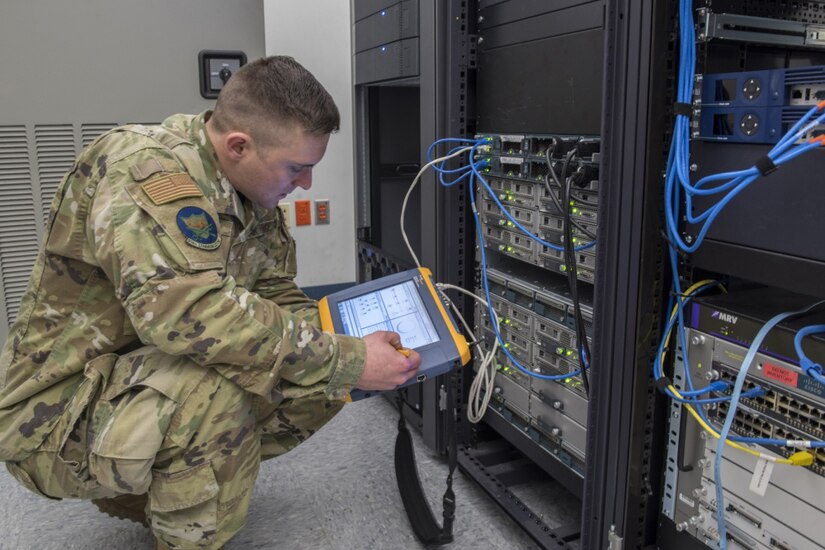
At Marine Corps Logistics Base Albany, experimentation will focus on
efficiency improvements within warehouse operations, including receipt,
storage, inventory control and tracking, issuance, and delivery. There,
Federated Wireless has signed a contract to deploy 5G within and around
an existing Marine Corps warehouse to provide the platform for a
5G-enabled "smart warehouse."
Other partners at MCLBA include GE Research, KPMG LLP, Scientific
Research Corporation, Virginia Tech Applied Research and Alion Science.
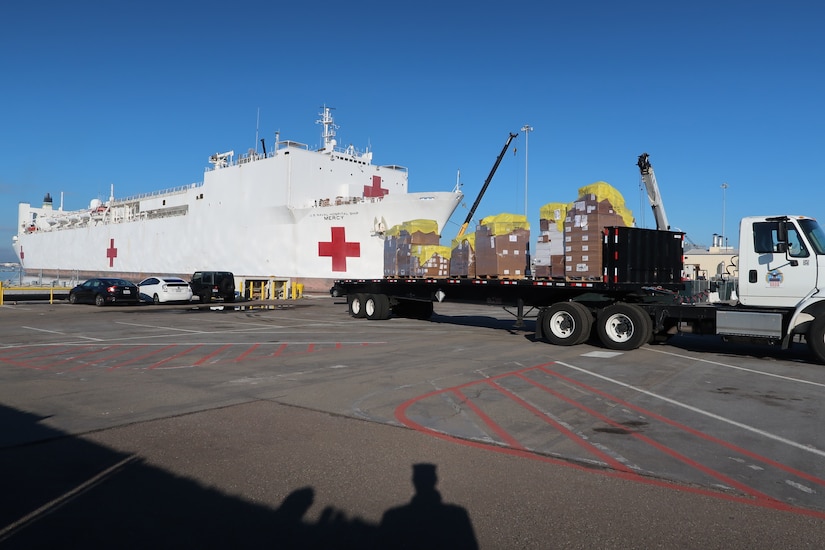
Also involved in smart warehousing is Naval Base San Diego. There,
AT&T has signed a contract to deploy 5G infrastructure, including
millimeter wave technology. In San Diego, the 5G-enabled smart warehouse
experiment will be a proving ground for, among other things, real-time
asset tracking, predictive analytics, environmental sensing, robotics
and augmented reality.
Partners there include GE Research, Vectrus Mission Solutions
Corporation, Deloitte Consulting LLP, Perspecta, XCOM, Parallel
Wireless, Qubitekk, Secure G and GenXCom.
It's early in the Tranche 1 experiments, with contracts just having
recently been awarded. The next big step for Tranche 1 installations,
Evans said, will be to get those testbeds set up and running. It's
expected that all Tranche 1 testbeds will be operational by the fall of
2021, he said.
Preparing for Tranche 2
The Department has also announced a second set of installations
where 5G experimentation would take place. Those installations include
Naval Station Norfolk, Virginia; Joint Base Pearl Harbor-Hickam, Hawaii;
Joint Base San Antonio; the National Training Center at Fort Irwin,
California, and Fort Hood, Texas; Marine Corps Base Camp Pendleton,
California; and Tinker Air Force Base, Oklahoma.
"What we are really focused on with Tranche 2 is getting those
solicitations out so that we can get the best industry performers and
industry players involved in these projects," Evans said. "We're really
trying to reach out to the entire 5G industry — from the big companies
to the traditional defense industrial base, and to small businesses and
startups that are trying to create new and interesting technologies in
5G that can support DOD missions. We're focused on getting those
solicitations out and making sure we get the best players providing
technologies to DOD."
Already, Evans said, solicitations for some of the Tranche 2
installations have taken place. A white paper solicitation was released
for work at Joint Base Pearl Harbor-Hickam, Camp Pendleton, and for
Naval Station Norfolk.
"The solicitation for white papers closed on December 15," Evans
said. "We're in the process of evaluating those. The next step —
hopefully late January or early February — will be a request for
proposals for those three bases."
Evans said the Department is also working with the National Spectrum Consortium on solicitations for four other Tranche 2 sites.
"We hope those will be out in a similar time frame, early in the new
calendar year," he said. "Those solicitations will be for experiments at
Joint Base San Antonio, for experiments at the National Training Center
and Fort Hood, as well as an experiment at Tinker Air Force Base. We
are looking forward to getting exciting responses."
The DOD's Strategy Implementation Plan
In addition to launching the test sites, the Department released its 5G Strategy Implementation Plan. The plan discusses DOD's work to carry out its 5G Strategy,
signed in May, outlining four lines of effort, including promoting
technology development; assessing, mitigating, and operating through 5G
vulnerabilities; influencing 5G standards and policies; and engaging
partners.
"The strategy is an across-the-board plan for what DOD can do with 5G
and how it can advance DOD's capabilities and U.S. capabilities in 5G,"
Evans said. "The implementation plan then goes into each of those areas
and describes how we'll be going about each of those lines of effort.
It's comprehensive view of what we should be doing and will be doing to
implement that 5G strategy."










 Posts
Posts

