Thursday, December 17, 2020

Space Operations Chief Emphasizes the Importance of Partnerships

 Dec. 17, 2020 | BY David Vergun , DOD News

Chief of Space Operations Gen. John W. "Jay" Raymond spoke today at TechCrunch's Space 2020 virtual event.

Raymond emphasized the role partnerships play in the Space Force. "I'm going to really work hard on cultivating partnerships," he said, citing Australia, Canada, United Kingdom, New Zealand, France, Germany and Japan. 

A woman wearing a military uniform crouches on the ground as she sets up a satellite; an equipment case is open behind her.

Two days ago, he said he signed a memorandum of understanding with Japan for the Hosted Payload Program, which involves putting U.S. payloads on Japanese satellites. "It saves us dollars and gives us capability."

Last year, the U.S. signed a Hosted Payload Program memorandum of understanding with Norway. Two payloads on their satellites saved the U.S. more than $900 million, he said.

"We're really turning these partnerships into partnerships where we operate together; we train together; we exercise together; we war-game together; we develop capabilities together, and it's proven to pay significant advantages and there's future growth opportunities ahead," he said.

Raymond said he also wants closer ties to the commercial sector. 

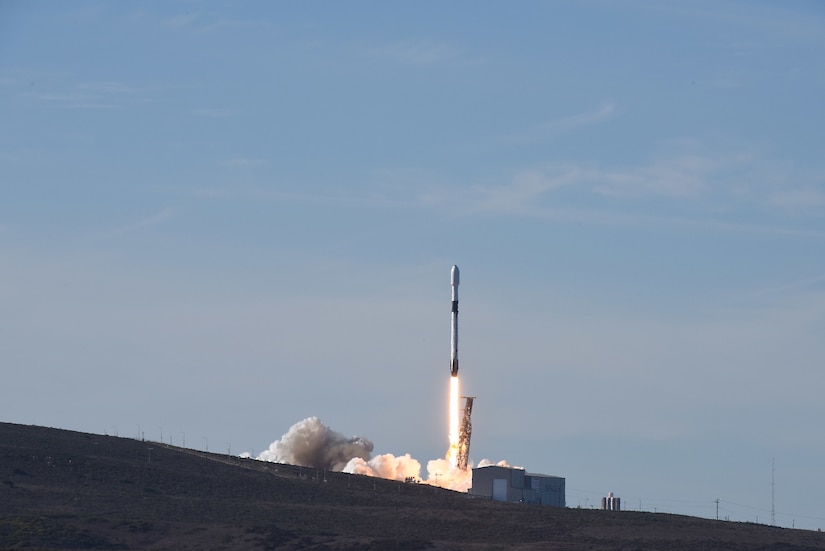
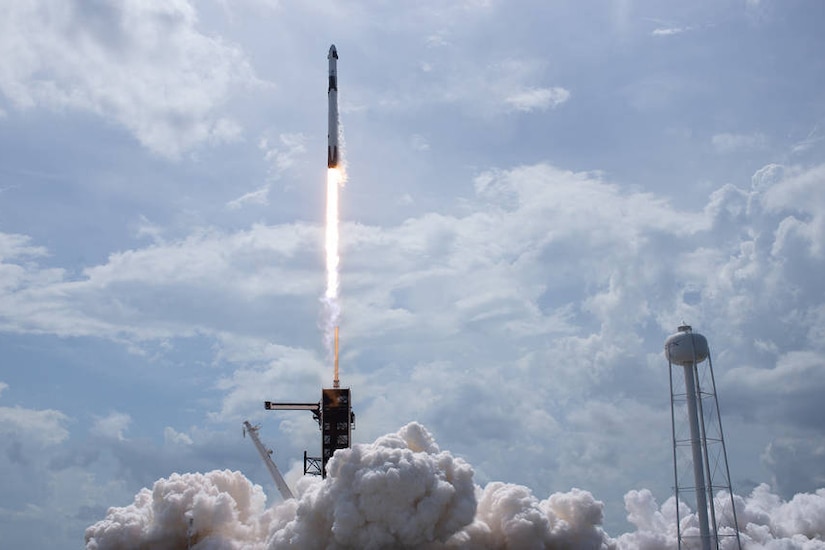
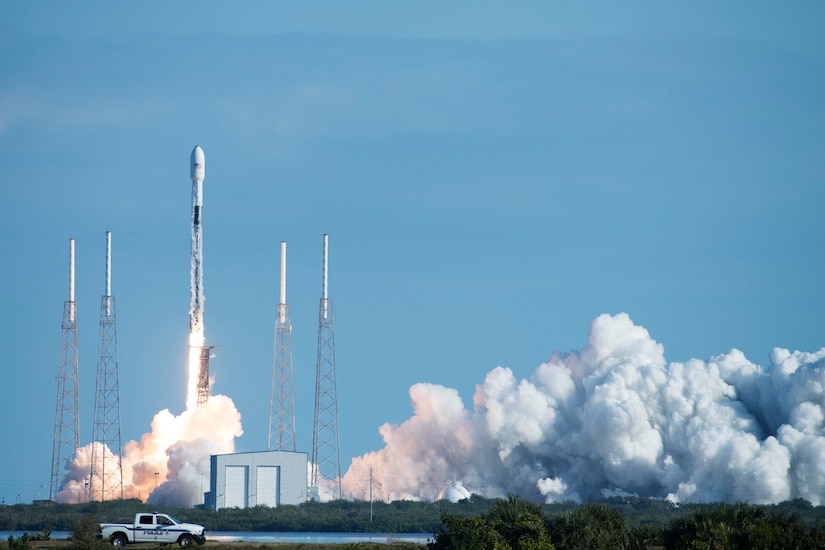
A rocket launches into a bright blue sky as smoke billows beneath it.

A few weeks ago, he mentioned watching NASA launch U.S. astronauts from U.S. soil aboard a commercial rocket to the International Space Station.

"I really believe with all this going on in the commercial industry that there's a fused relationship to be had. And we're trying to bring us closer together and to be able to capitalize on this innovative transformation that's happening, especially in the national security space business," he said.

Raymond said industry is heading toward autonomous launches and reusable rocket stages. "Those are going to be huge national advantages that we need to be able to capitalize on."

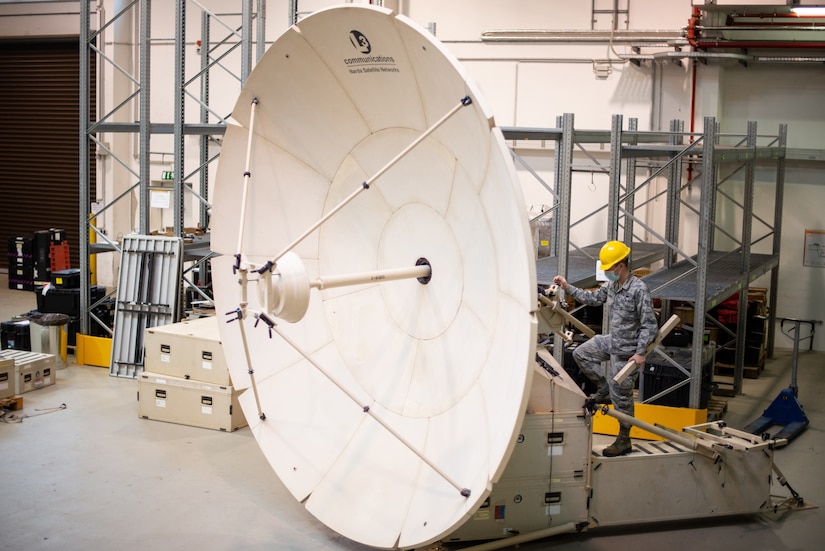
A man works on a large satellite inside a warehouse.

All of the launch industry will eventually go to autonomous launch operations, he predicted, adding that he's written a policy letter mandating that all Defense Department launches be autonomous by 2025. "It completely rewrites the rulebook on how we do range operations; reduces the footprint of the infrastructure that we have; reduces the amount of bodies that have to come to work to support a launch; allows us to launch more cheaply; allows us to have greater transaction rates, so we can launch more and turn the range around a lot quicker and reduces launch costs."

Raymond said the U.S. has no desire to weaponize space.

"Our goals are to deter conflict from beginning or extending into space," he said.

Unfortunately, adversaries such as China and Russia have robust programs to weaponize space, he mentioned. 

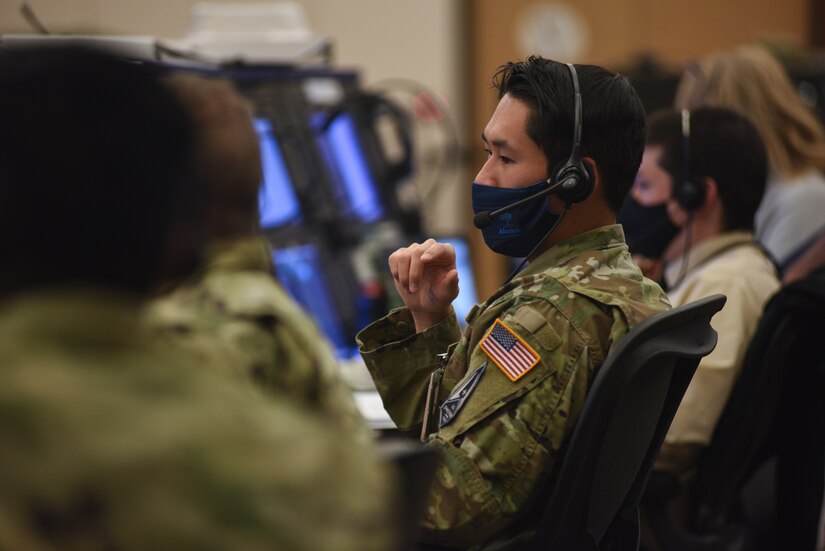
A row of people wearing headsets and face masks sit at desks and look at computer screens.

Raymond said his goals are to keep the Space Force lean, diverse, agile and cutting-edge and to reduce bureaucracy. 

There are currently about 2,400 uniformed personnel in the Space Force, and that number should soon climb about 6,400, he said. Additionally, there are another 10,000 Space Force civilians.

DOD, DHS Collaborating on Innovative Cybersecurity Solutions

Dec. 17, 2020 | BY David Vergun , DOD News

Last month, the Defense Department, Defense Innovation Unit and the Department of Homeland Security's Cybersecurity and Infrastructure Security Agency signed a memorandum of understanding to collaborate on a range of cybersecurity initiatives.

"CISA and DIU have complementary missions and capabilities that both reinforce the Department of Homeland Security and DOD and are additive to one another," said Jeff Kleck, director of Cyber, DIU. "Together we collectively reach across a broad swath of national interests related to cybersecurity."

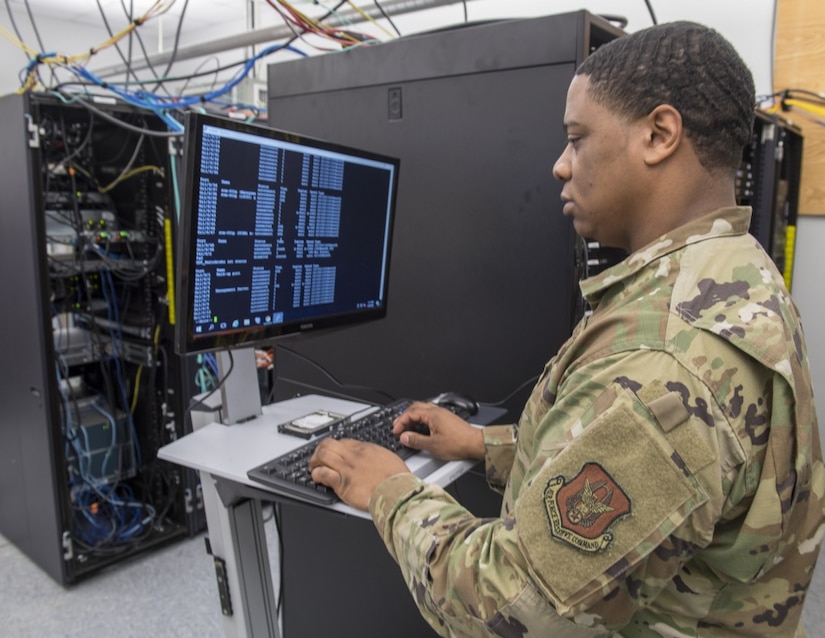
Service member monitors cyber threat.

Notifying the public and private sectors that CISA and DIU are working closely together creates efficiencies that will accelerate advancements in cybersecurity, he explained.

The DIU is the only DOD organization exclusively focused on accelerating commercial technology for national security, he noted. 

The DIU has offices in Silicon Valley, California; Boston; Austin, Texas; and Washington, D.C., where innovative technology companies are located, he said. DIU has lowered the barriers of entry for commercial companies, including startups in those and other locations around the nation. DIU has done this in part with leveraging their Commercial Solutions Opening, a streamlined Other Transaction award, and then scaling successful solutions across the DOD through a production OT.

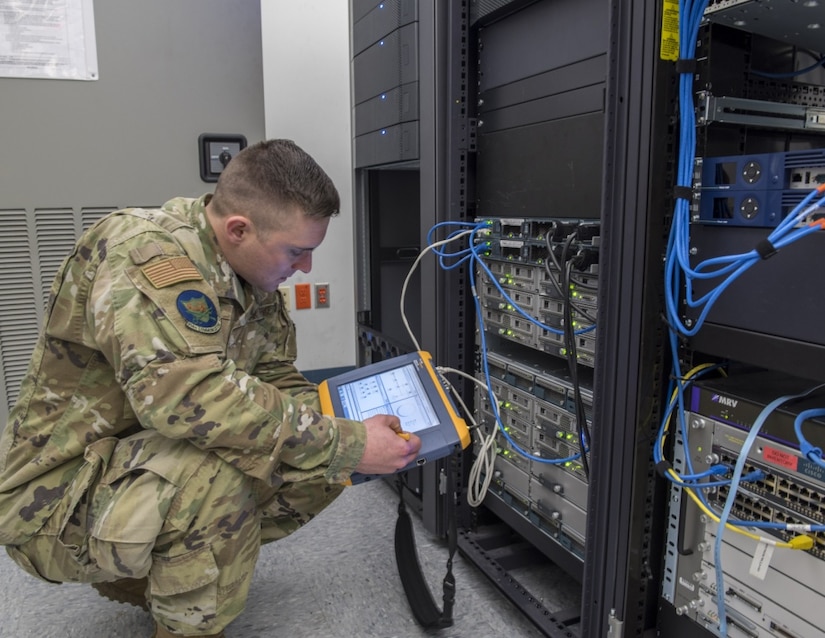
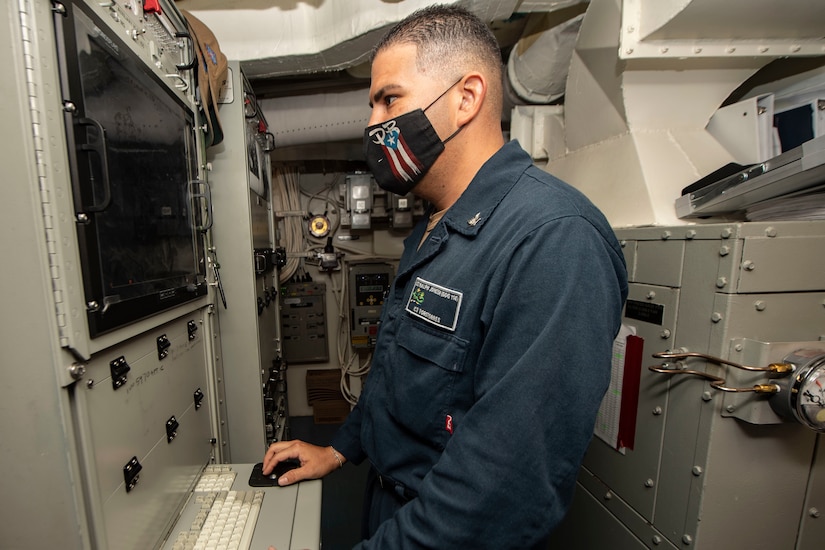
Service member monitors communications circuits.

CISA and DIU source cybersecurity capabilities from both government and industry, said Sabra Horne, chief, Innovation Hub, CISA. "The nation's ability to access commercial innovations quickly and efficiently is critical in keeping abreast of the best industry has to offer.

"We are already sharing information and practice on commercial solutions that can address needs for the nation's security," she continued. "Additionally, CISA is eager to see the procurement processes DIU has successfully developed in action and how it uses alternative procurement authorities and methods to quickly obtain commercial solutions to mission problems."

By working together, the two organizations will help each other fulfill missions, understand new threats, work together to solve challenges and coordinate investments in capabilities that aim to maximize the use of finite resources, she added.

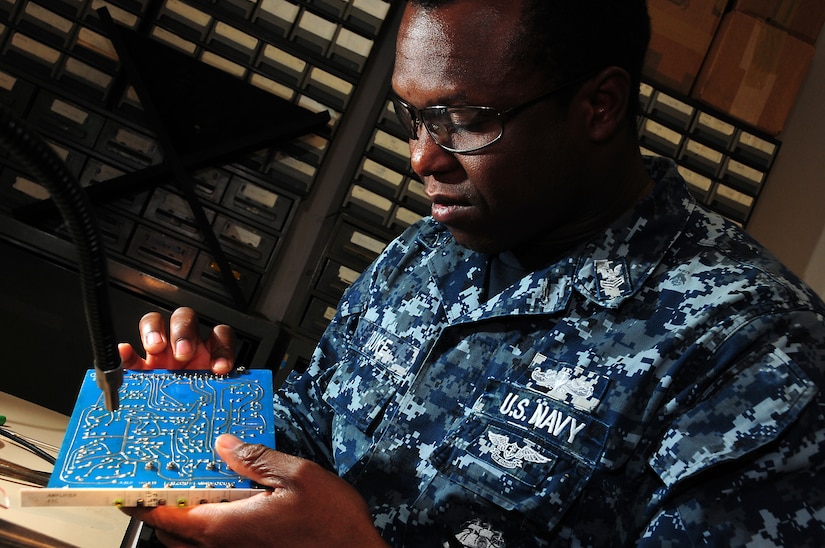
A man in a uniform inspects a circuit board.

Kleck said CISA and DIU are sharing information broadly across all categories of cybersecurity. "The intersection of commonality is quite large.  We will learn together about areas of common interest and how the domestic application of DOD capabilities can benefit the nation."

Kleck said those categories CISA and DIU are collaborating on include:

  • Network & infrastructure security
  • Web security
  • Endpoint security
  • Application security
  • Managed security service provider
  • Data security
  • Mobile security
  • Risk and compliance
  • Security operations and incident response
  • Threat intelligence
  • Internet of things
  • Messaging security
  • Identity and access management
  • Digital risk management
  • Security consulting & services
  • Blockchain
  • Fraud and transaction security
  • Cloud security

Wednesday, December 16, 2020

Tiberius Platform Aids COVID-19 Logistics, Delivery

 Dec. 16, 2020 | BY LISA SIMUNACI, OFFICE OF THE SECRETARY OF DEFENSE PUBLIC AFFAIRS

While Star Trek's Capt. James Tiberius Kirk said he grew tired of explaining the origins of his middle name, Operation Warp Speed officials are eager to highlight their version of Tiberius — a software platform designed to guide the distribution of a COVID-19 vaccine. 

Tiberius was specifically developed for Operation Warp Speed — the collaborative effort led by the Department of Health and Human Services and the Defense Department to develop, manufacture and deliver safe and effective COVID-19 vaccines to Americans. 

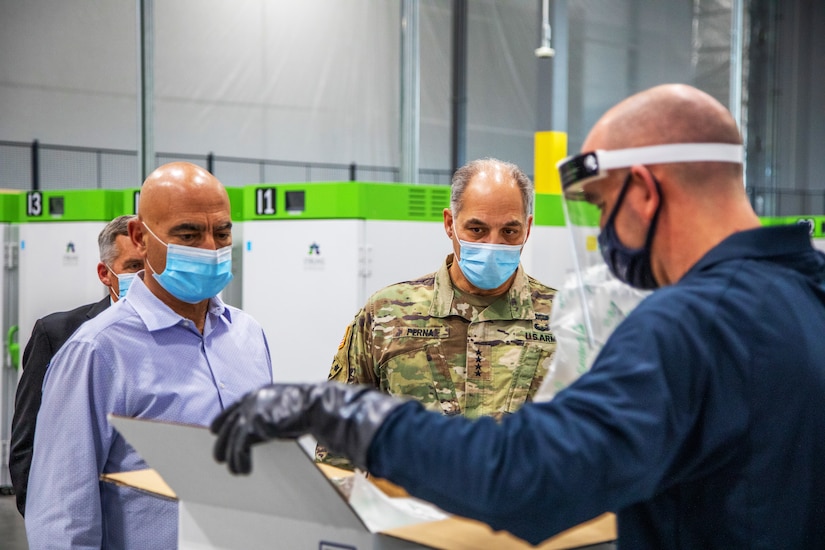
A man in a military uniform and two men wearing civilian clothes watch as another man opens a box. All of the men wear face masks.

Incorporating information from a multitude of sources including the U.S. Census, Vaccine Tracking System and commercial logistics companies, Tiberius provides visibility of each effort within Operation Warp Speed — from manufacturing and allocation of vaccine to granular planning of vaccine administration sites to the provider level. 

The jurisdictions — 64 U.S. states, territories and large metropolitan cities — work inside the Tiberius platform to decide where their allocated doses will go, from local doctors' offices to large medical centers. These decisions are then sent to distributors to deliver vaccines across the country. 

At the beginning of distribution, vaccine availability will be limited. Jurisdictions will be allocated doses based on their census-derived percentage of the U.S. population over the age of 18. As more vaccines become available from the manufacturers, Operation Warp Speed will continue to run the algorithm each week to determine how much vaccine each jurisdiction will receive.

Jurisdictions will determine, based on guidance from the Food and Drug Administration and emergency use authorization along with recommendations from the Centers for Disease Control and Prevention and the Advisory Committee on Immunization Practices, how to prioritize the administration of vaccines. 

"The federal government is running the algorithm, but the states will make the decision as to where the doses go, and we will comply with their decision and get those doses to the final destination," said Paul Mango, the deputy chief of staff for policy at HHS.

While it receives data from several outside systems, all of the information coming into Tiberius is de-identified, and no personal identifying or personal health information comes into the platform. Tiberius integrates the data related to manufacturing, supply chain, allocation, state and territory planning, delivery and administration of both vaccine products and kits containing needles, syringes and other supplies needed to administer the vaccine.

Two men are given a tour of a freezer farm.

With information from both federal and local sources, Tiberius can provide a zip code-by-zip code view of priority populations, including frontline workers and nursing home residents. 

Tiberius provides planning tools for states to optimize their allocation and distribution plans. Based on priority recommendations, Tiberius provides decision support to leaders around the country, drawing from the data which includes planning information provided by jurisdictions.

Once the vaccine ships, Tiberius will also be used to provide information updates for jurisdictional partners, said Deacon Maddox, Operation Warp Speed chief of plans, operations and analytics.

"Like most of America, public health professionals are working through the challenges brought on by quarantines, telework and social distancing," Maddox said. "While the pandemic stresses both people and systems, our expertise and technology tools provide a disciplined and deliberate approach to prioritize vaccine delivery and ease the burden of public health officials throughout the nation."

Tiberius came into full use over Labor Day weekend, and the federal government provided training materials for its users at the jurisdiction level. A help desk is available, as well as dedicated information technology personnel funded by HHS for each jurisdiction to address technical or training issues users experience with the system.

Tuesday, December 15, 2020

Cybersecurity Maturity Model Certification Pilots for Fiscal Year 2021

 Dec. 15, 2020


The Department of Defense (DoD) issued an interim rule on Sept. 29, 2020 to amend the Defense Federal Acquisition Regulation Supplement (DFARS) to implement the Cybersecurity Maturity Model Certification (CMMC) framework. This interim rule includes new DFARS clause 252.204-7021, which specifies CMMC requirements and enables the department to verify the protection of Federal Contract Information (FCI) and Controlled Unclassified Information (CUI) within the unclassified networks of Defense Industrial Base (DIB) companies. The interim rule became effective on Nov. 30, 2020, following the 60-day public comment period. The Chief Information Security Officer (CISO) team for Acquisition and Sustainment is currently reviewing and adjudicating the comments. 

The interim rule includes a phased rollout of CMMC implementation in fiscal years 2021-2025. Starting in fiscal year 2021, the department will pilot the implementation of CMMC requirements for Level 3 and below on select new acquisitions. In support thereof, the CISO team is currently reviewing the following pilot nominations from the military services and defense agencies and anticipates awards in late 2021:  

  • U.S. Navy
    • Integrated Common Processor
    • F/A-18E/F Full Mod of the SBAR and Shut off Valve
    • DDG-51 Lead Yard Services / Follow Yard Services
  • U.S. Air Force
    • Mobility Air Force Tactical Data Links
    • Consolidated Broadband Global Area Network Follow-On
    • Azure Cloud Solution
  • Missile Defense Agency
    • Technical Advisory and Assistance Contract

For approved pilots, all offerors will undergo the appropriate CMMC assessment, and awardee must achieve the required CMMC level at time of contract award, and flow down the appropriate CMMC requirement to subcontractors. This allows for additional time to meet the CMMC certification requirement. 

The CISO team continues to work with the Army and other defense agencies to identify and approve additional candidate CMMC pilots, to ensure they fit within the criteria, and will provide updates in the weeks to come.  

National Geospatial-Intelligence Agency in Midst of Revolution

Dec. 15, 2020 | BY C. Todd Lopez , DOD News

In existence for almost a quarter-century, the National Geospatial-Intelligence Agency has been providing geospatial intelligence to policymakers, the intelligence community and warfighters since 1996. Now, says its director for operations, when it comes to geospatial intelligence, the agency is in the middle of a revolution.

"From a strictly GEOINT standpoint, we're in the midst of a revolution right now," said Army Maj. Gen. Charles Cleveland today during an online conversation with the Intelligence and National Security Alliance.

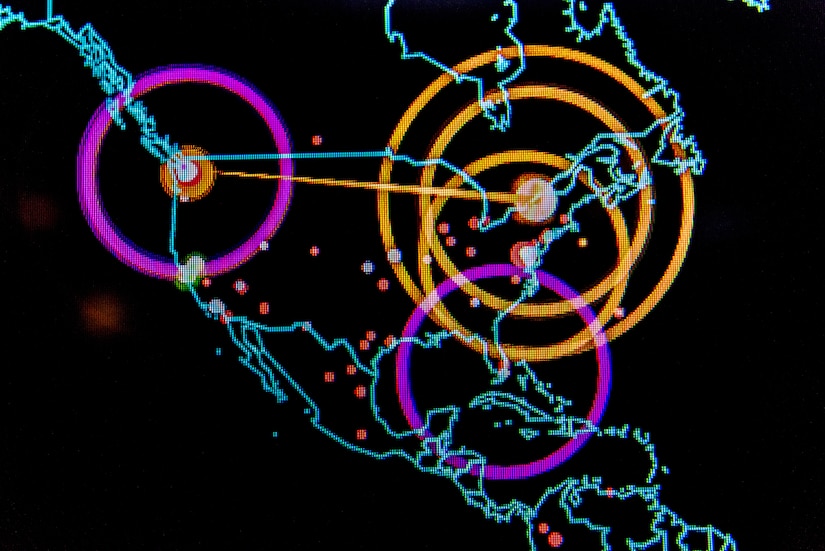
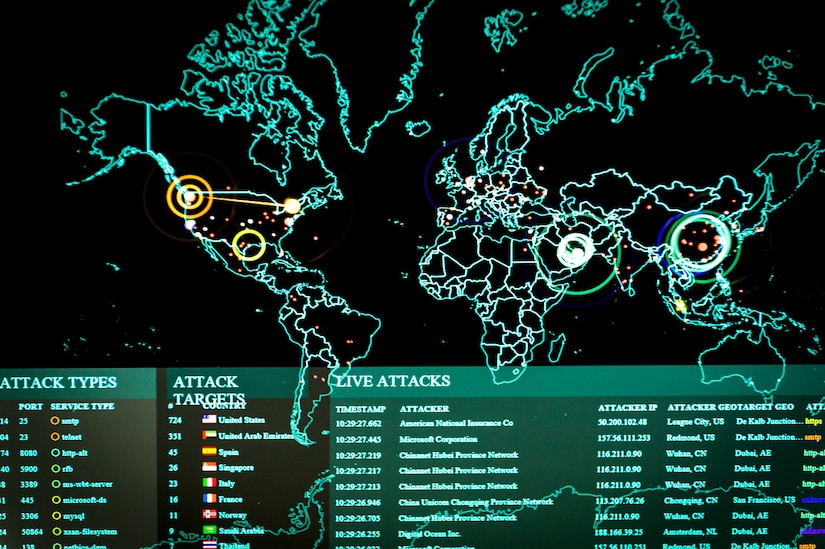
A graphic, computer-generated line map of the world highlights points of cyber activity.

One aspect of that revolution, he said, is the growth in commercial GEOINT capability.

"The explosion of commercial capabilities has just changed the entire opportunity for GEOINT," he said. "We're soon moving to a point where we think, essentially, every part of the planet will be imaged on a daily basis. And so we also then look at all that data coming in, and we struggle, and we think about the opportunity, though, with how to handle all of that data."

One way to handle and extract value from large amounts of GEOINT, both from the commercial sector and from government assets, he said, is through the use of artificial intelligence and machine learning. That's a second aspect of the revolution Cleveland identified — ways to use AI and machine learning to empower human workers with the best of what's possible.

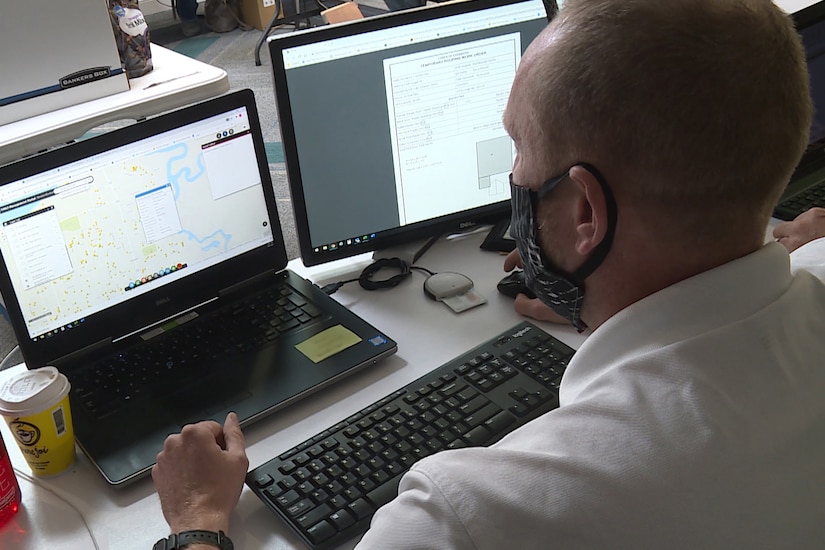
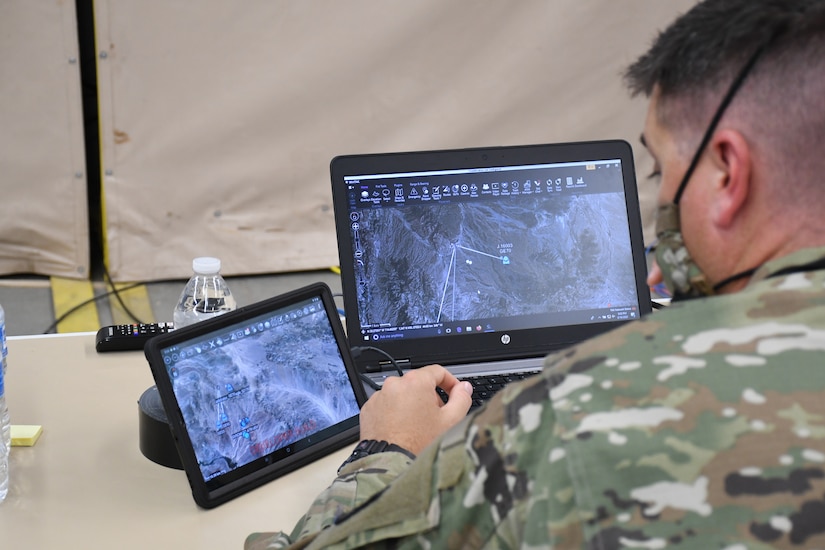
A man in a military uniform sits before two computer screens; one displays a map while the other displays related data.

"We know that our adversaries really do have some significant capabilities," he said. "They are in many ways beginning to close the gap on us. As we move forward ... we really do think that, frankly, we are not going to be able to compete, we're not going to be able to do what we need to be doing by just simply trying to do what we were doing yesterday just a little bit faster ... we really do think that we've got to adjust the direction that we're going."

Already, he said NGA is heavily invested in AI and machine learning.

"We already have a number of efforts underway that are paying off and that are showing promise," he said.

Some of that work, he said, is in capturing, cataloging, and tagging parts of images to be fed into larger systems. Another part is standardizing data and making sure it's understandable and accessible to the entire workforce. Ultimately, he said, the goal is to get computers, AIs, to free up human employees to do more challenging work.

A computer-generated line map highlights points of cyber activity around the world.

The NGA, he said, already has had some success on automatic reporting and automatic tipping and queuing, for instance.

"We want to be able to move our analyst workforce ... from focusing on kind of the known-knowns to shifting that paradigm, so that they have time to think and they have time to work on the unknown-unknowns," he said. "Frankly, we want those machines to be able to take care of things that machines should be taking care of, so of course we can get our team focused on the thoughtful efforts."

Monday, December 14, 2020

Effective Use of Data in DOD Requires the Right Leaders

 Dec. 14, 2020 | BY C. Todd Lopez , DOD News

The Defense Department released its new data strategy in September, with a focus on joint all-domain operations, senior-leader decision support and business analytics.

Across the department, agencies are now appointing their own chief data officers to become part of a community that wants to be able to use the DOD's vast amount of data to make better decisions faster.

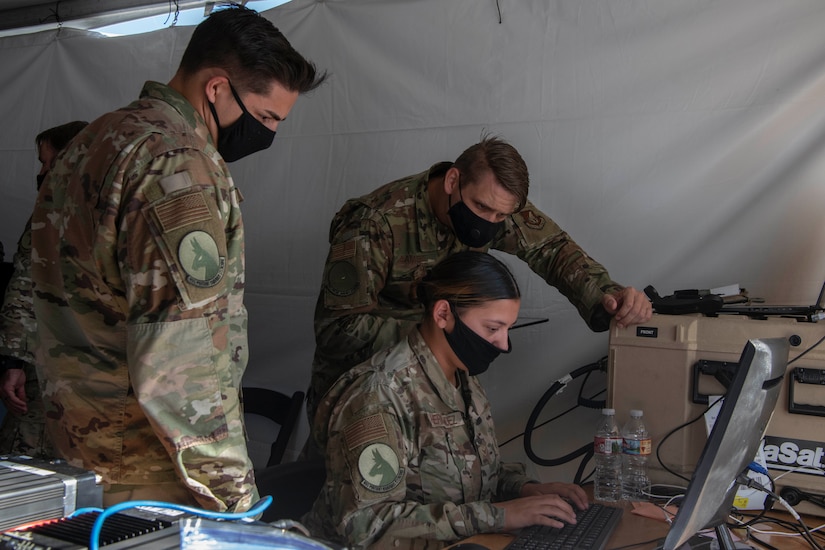
Airmen monitor computers.
A person works on a router.

David Spirk, DOD's chief data officer, identified "strategic impatience" as a characteristic of those who will end up being the best CDOs within the department.

"The right person for a leadership job in the data front in the department right now ... [is] somebody who knows when to be patient and impatient with extreme precision," Spirk said Dec. 10 during ThoughtSpot's virtual Beyond 2020 Digital conference. "We can only push these organizations so far, so fast because it is a cultural change."

As the department moves toward using more data to make better, faster decisions, organizations that have in the past been reticent to share their data will need to open up to the idea if they want to reap the benefits that come from matching data with artificial intelligence and machine learning tools, Spirk said. 

A person works on a computer.

Many organizations — with the right CDOs in place — are making such shifts now in their thinking.

"Some of the legacy concepts around 'this is my data' just naturally change when we start using data to drive some of our senior leader-most decision-making forums," Spirk said. "I think at the department level we're blasting through some of those legacy cultural tendencies."

One way that's happened, Spirk said, at least at the department level, is through the newly-created Deputies Management and Action Group, which involves the deputy secretary of defense, the vice chairman of the Joint Chiefs of Staff, the service chiefs and the service secretaries, Spirk said.

"The fact is we sit with Deputy Secretary of Defense [David] Norquist a couple times a week, as a small team, and talk him through where we're at, what data are we unlocking, what data-driven decision-making forum can we put this in front of next. This senior leader attention is [now] foot-stomping and smashing through resistance from middle management because the tactical elements are now asking for the same ," he said.

A person monitors computer screens.

Spirk said there is now a data community across the department that is growing, and this data community is helping break down barriers that have in the past prevented the sharing of data. The new data community includes chief data officers, data stewards, data custodians and data managers, he said.

"As we start stitching this team together and looking at hard problems that we can help each other out with, there's a growing team of data professionals who can go in and explain to [their] senior leaders that this isn't as scary as they might have thought in the past," he said. "Making our data visible allows us to more quickly get predictive analytics so we can create training quality data sets and really unleash the power of AI across our decision making."

What's With All the U.S. Space-Related Agencies?

 Dec. 14, 2020 , DOD News

For centuries, the U.S. military has fought wars on land and sea. For that, America has the Army, the Navy and the Marine Corps. Then, in 1909, the U.S. Army bought America's first military aircraft with a $30,000 contract awarded to the Wright brothers. Less than four decades later, in 1947, the U.S. military gave birth to the U.S. Air Force to operate in the air domain.

Now, the Defense Department sees another domain beyond land, sea and air: space. To fight and win in that domain, the DOD created the U.S. Space Force, a new service, in December 2019.

Rocket launches

The Space Force is not alone in its focus on space, however. Alongside the Space Force is the U.S. Space Command, which stood up in August 2019, and the Space Development Agency, which was created in March 2019.

All three are partners in ensuring the U.S. maintains and strengthens its leadership position in space. But all three also have different roles in that regard.

U.S. Space Force

The Space Force is the newest of the bunch, standing up in December 2019. Its current commander is Gen. John W. Raymond.

Like the Army, Navy, Air Force and Marine Corps, the Space Force is a military service, and its mission is to organize, train, equip and provide forces and capabilities to the U.S. Space Command and the other unified combatant commands around the world.

But in the same way the Marine Corps falls under the Department of the Navy rather than having its own department, the Space Force falls under the Department of the Air Force as it was originally Air Force Space Command.

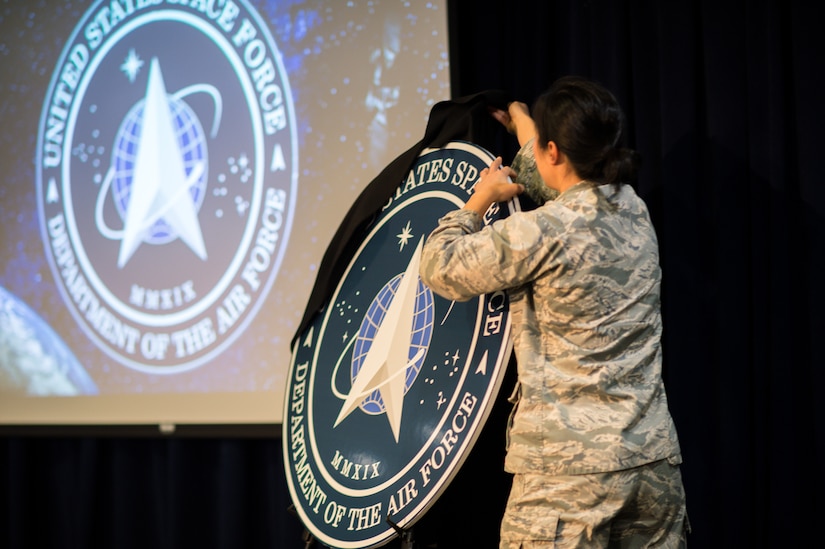
An airman pulls a black sheet off an easel that holds a circular cutout featuring the seal of the U.S. Space Force.

Like its sister services, Space Force will recruit young men and women into service and those men and women will attend basic training and wear uniforms unique to their service.

As of late 2020, there are more than 2,000 uniformed personnel in the Space Force. As with the other services, there are civilian employees as well. About 6,000 civilian professionals are working within the Space Force.

At the same time, as a brand new service, there are individuals who are not in the Space Force, but for the time being, are assigned to it while it gets on its feet. Right now this includes about 8,000 additional military and civilian personnel.

As part of America's new focus on space, the Space Force has a mandate to be both  "pathfinder and protector" of America's interests as a space-faring nation.

As the newest military service, the Space Force will partner with and lead others to further responsible actions in, and use of, space to promote security and enhance prosperity. Should an aggressor threaten U.S. interests, America's space professionals stand ready to fight and win.

U.S. Space Command

The U.S. Space Command stood up for the first time back in 1985 as a functional combatant command. In 2002, it rolled up its flag and shut its doors. At that time it'd been in existence for nearly 17 years.

On Aug. 19, 2019, however, Space Command stood up a second time. This time, Space Command is a geographic combatant command. While the U.S. European Command is meant to protect and defend U.S. interests in Europe, and U.S. Indo-Pacific Command protects and defends U.S. interests in the Pacific, U.S. Space Command protects U.S. interests in space. It's domain starts at about 60 miles above the surface of the earth and goes up from there.

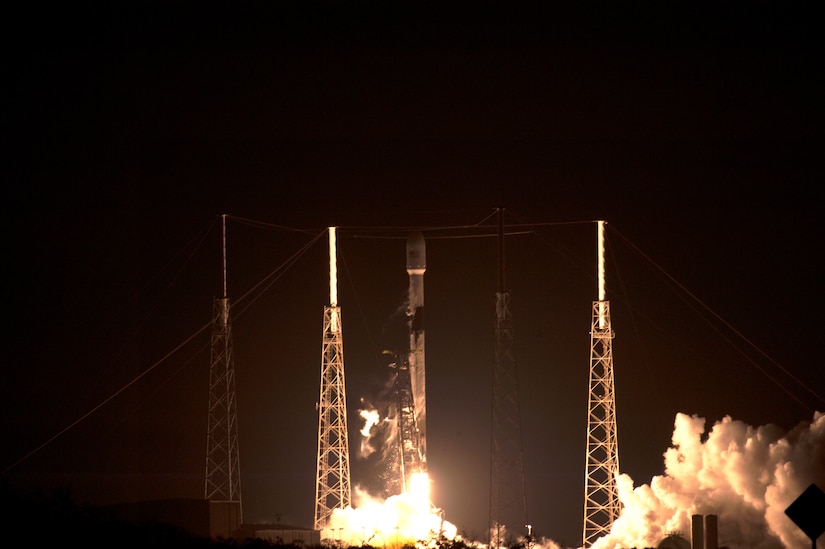
Rocket lifts off.

Army Gen. James H. Dickinson currently serves as the commander of Space Command, which includes about 1,000 people.

Like other combatant commands, the number of personnel assigned to Space Command can shrink and grow based on the nation's needs. At the request of Space Command, and in the face of potential conflict, military services including the Army, Navy, Air Force, Marine Corps and Space Force will provide ready forces to Space Command so that it may carry out its mission to protect and defend the U.S. interests in space.

Space Command also has service components provided to it. From the Navy, there is Navy Space Command or NavSpace; from the Army, there is the Space and Missile Defense Command, or SMDC; from the Marine Corps, there is Marine Forces Space Command or MARFORSPACE; and from the Space Force, there is Space Operations Command or SpOC.

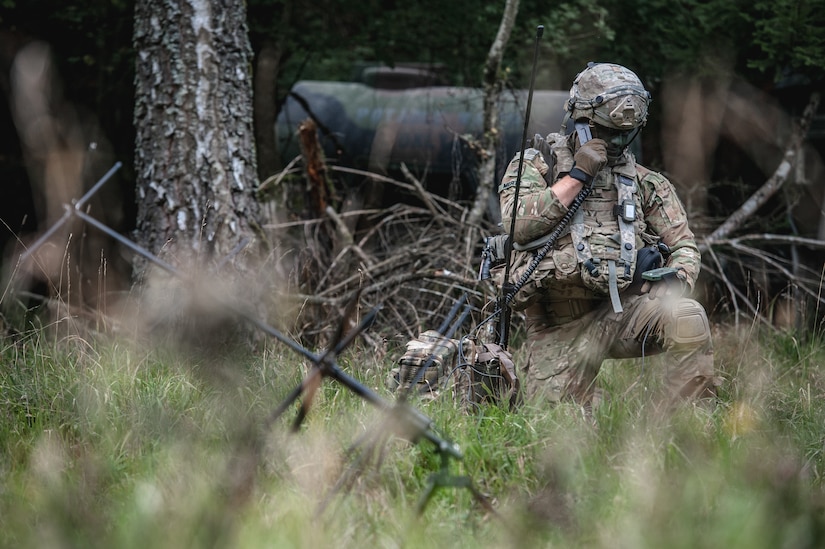
A soldier who is more than 6 feet away from other soldiers talks on a radio.

What is Space Command's mission? The command's mission focuses on four specific areas: deter aggression; defeat the nation's enemies through posture and preparedness; deliver space combat power; and defend U.S., allied and partner interests.

With warfighters represented by every service trained to seek out and deter hostile activity, Space Command is prepared to defeat threats to U.S. and allied interests. Should that deterrence fail, Space Command is ready to transition from competition to conflict and achieve space superiority.

Space Development Agency

The Space Development Agency, which stood up in March 2019, is a much, much smaller entity than either Space Force or Space Command. At about only 100 people now, and an expectation to grow to only twice that, it also has a very specific mission — but it's a big one.

The SDA, led by its director, Dr. Derek Tournear, is tasked with one thing: build the National Defense Space Architecture. When completed, the NDSA will be a collection of satellites in space — hundreds and hundreds of them — that allow for the tracking and targeting of missile threats on earth and other time-sensitive targets.

The NDSA includes seven "layers." Those are transport, tracking, custody, deterrence, navigation, battle management and support layers. The whole architecture will eventually include equipment on the ground and a lot of small satellites in low-earth orbit. Everything that makes up the NDSA, and the goal of the SDA in creating it, are focused on one thing: making sure America's warfighter has the best tools possible to do their job.

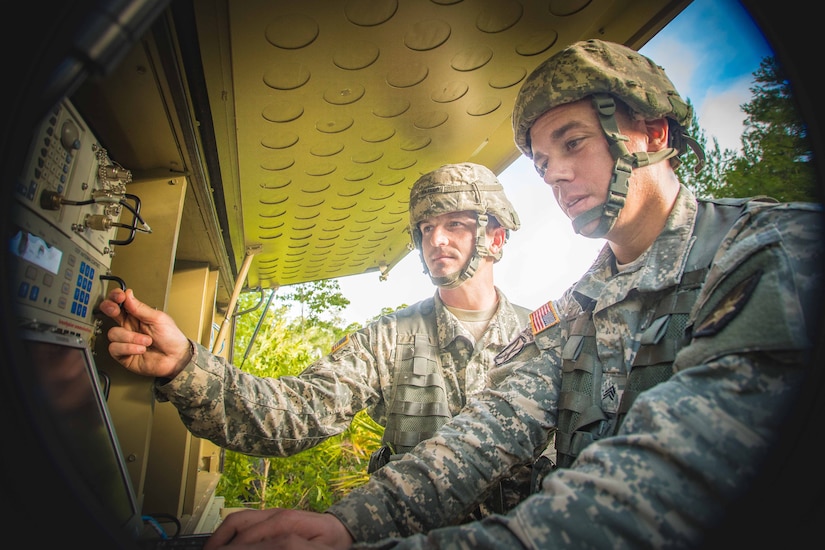
Two soldiers work with communications equipment.

The SDA is using a "proliferation" model to build the NDSA. In the case of SDA's development of the NDSA, this means to rapidly increase the number of satellites in space every other year. SDA hopes to launch hundreds of satellites into space every two years, in tranches, and to keep doing it for a long time.

To keep the pace needed by the NDSA to design, build, procure and launch so many satellites, the SDA is relying heavily on industry and is encouraging new ways of thinking within the industry about how to provide capabilities to the government. Instead of the kinds of big contracts that end up producing things like new airplanes or carriers, SDA wants the industry to understand that there will be an ongoing market for satellites — lots of them. And that if they keep making the right kind of satellite, the SDA will likely be interested.

Tranche 0 of the NDSA, to be ready in 2022, includes 28 satellites: 20 for transport and 8 for tracking. Tranche 1, due in 2024, will include a couple hundred satellites in the transport layer, and a few dozen in the tracking layer. With Tranche 2, in 2026, the SDA would continue to build out the system as needed.

A rocket launches against a blue sky.  Flames and smoke billow out underneath.

By the time Tranche 2 satellites are going up, SDA leaders say, the agency would have global coverage, ensuring that the capabilities provided by the NDSA could be available to warfighters anywhere in the world.

Ultimately, that means that the NDSA would be able to deliver information, including things like ultimately fire control solutions to the battalion level, in a very reduced timeframe over what exists today.