Showing posts with label PLoS ONE journal. Show all posts

Thursday, May 3, 2012

First-of-its-Kind Study Reveals Surprising Ecological Effects of 2010 Chile Earthquake


Long-forgotten coastal habitats reappeared, species unseen for years returned

The reappearance of long-forgotten habitats and the resurgence of species unseen for years may not be among the expected effects of a natural disaster.

Yet that's exactly what researchers found in a study of the sandy beaches of south central Chile, after an 8.8-magnitude earthquake and devastating tsunami in 2010.

Their study also revealed a preview of the problems wrought by sea level rise--a major symptom of climate change.

In a scientific first, researchers from Southern University of Chile and the University of California, Santa Barbara (UCSB) were able to document the before-and-after ecological impacts of such cataclysmic occurrences.

A paper appearing today in the journal PLoS ONE details the surprising results of their study, pointing to the potential effects of natural disasters on sandy beaches worldwide.

The study is said to be the first-ever quantification of earthquake and tsunami effects on sandy beach ecosystems along a tectonically active coastal zone.

"So often you think of earthquakes as causing total devastation, and adding a tsunami on top of that is a major catastrophe for coastal ecosystems," said Jenny Dugan, a biologist at UCSB.

"As expected, we saw high mortality of intertidal life on beaches and rocky shores, but the ecological recovery at some of our sandy beach sites was remarkable.

"Plants are coming back in places where there haven't been plants, as far as we know, for a very long time. The earthquake created sandy beach habitat where it had been lost. This is not the initial ecological response you might expect from a major earthquake and tsunami."

Their findings owe a debt to serendipity.

The researchers were knee-deep in a study supported by FONDECYT in Chile and the U.S. National Science Foundation's (NSF) Santa Barbara Coastal Long-Term Ecological Research (LTER) site of how sandy beaches in Santa Barbara and south central Chile respond, ecologically, to man-made armoring such as seawalls and rocky revetments.

By late January, 2010, they had surveyed nine beaches in Chile.

The earthquake hit in February.

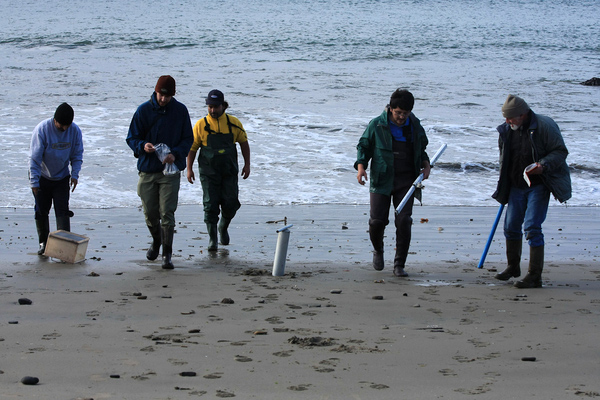
Recognizing a unique opportunity, the scientists changed gears and within days were back on the beaches to reassess their study sites in the catastrophe's aftermath.

They've returned many times since, documenting the ecological recovery and long-term effects of the earthquake and tsunami on these coastlines, in both natural and human-altered settings.

"It was fortunate that these scientists had a research program in the right place--and at the right time--to allow them to determine the responses of coastal species to natural catastrophic events," said David Garrison, program director for NSF's coastal and ocean LTER sites.

The magnitude and direction of land-level change resulting from the earthquake and exacerbated by the tsunami brought great effects, namely the drowning, widening and flattening of beaches.

The drowned beach areas suffered mortality of intertidal life; the widened beaches quickly saw the return of biota that had vanished due to the effects of coastal armoring.

"With the study in California and Chile, we knew that building coastal defense structures, such as seawalls, decreases beach area, and that a seawall results in the decline of intertidal diversity," said lead paper author Eduardo Jaramillo of the Universidad Austral de Chile.
"But after the earthquake, where significant continental uplift occurred, the beach area that had been lost due to coastal armoring has now been restored," said Jaramillo. "And the re-colonization of the mobile beach fauna was underway just weeks afterward."

The findings show that the interactions of extreme events with armored beaches can produce surprising ecological outcomes. They also suggest that landscape alteration, including armoring, can leave lasting footprints in coastal ecosystems.

"When someone builds a seawall, beach habitat is covered up with the wall itself, and over time sand is lost in front of the wall until the beach eventually drowns," said Dugan.

"The semi-dry and damp sand zones of the upper and mid-intertidal are lost first, leaving only the wet lower beach zones. This causes the beach to lose diversity, including birds, and to lose ecological function."

Sandy beaches represent about 80 percent of the open coastlines globally, said Jaramillo.

"Beaches are very good barriers against sea level rise. They're important for recreation--and for conservation."

 -NSF-

Saturday, April 28, 2012

Can Nature's Beauty Lift Citizens From Poverty?


Researchers release findings on who benefits from nature tourism

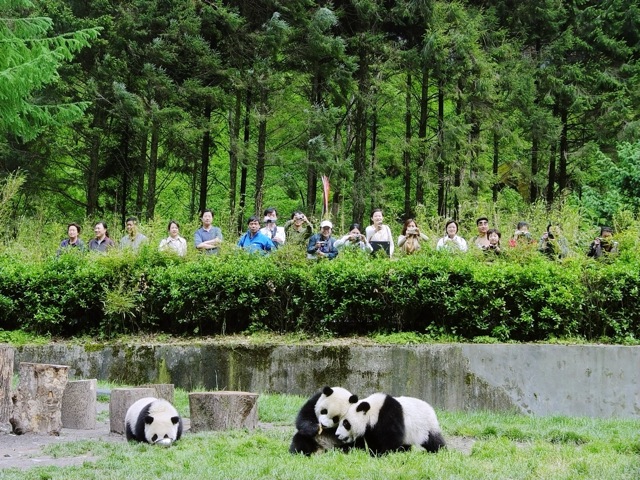
Using nature's beauty as a tourist draw can boost conservation in China's valued panda preserves, but it isn't an automatic ticket out of poverty for the humans who live there, a unique long-term study shows.

Often those who benefit most from nature-based tourism are people who already have resources. The truly impoverished have a harder time breaking into the tourism business, according to the paper, "Drivers and Socioeconomic Impacts of Tourism Participation in Protected Areas," published in the April 25 edition of PLoS One.

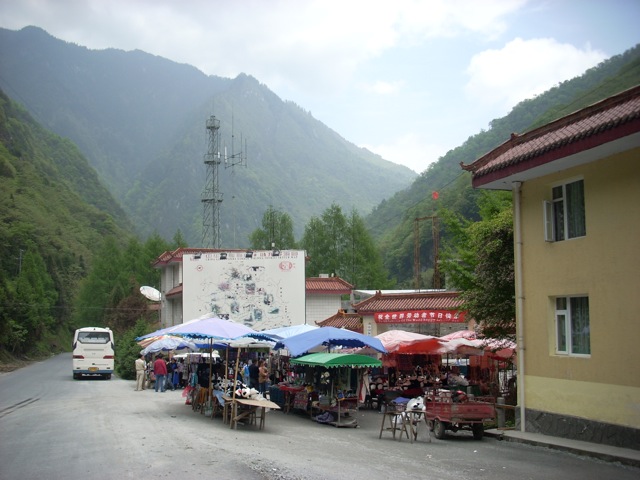
The study looks at nearly a decade of burgeoning tourism in the Wolong Nature Reserve in Southwestern China. China, like many areas in the world, banks on tourism over farming for economic viability, while attempting to preserve fragile animal habitat.

But until now, no one has taken a close look at the long-term implications for people economically.

"Long-term studies like this one give us a birds-eye view into the multifaceted connections between people and the environments they occupy," said Thomas Baerwald, a program director for the Geography and Spatial Sciences Program at the National Science Foundation (NSF), which partially funded the study.

"Finding the right balance between economics that lift people from poverty and habitat management is an important role for social and environmental scientists and will be important into the future."

Lead researcher Wei Liu is a Ph.D. candidate in the Center for Systems Integration and Sustainability (CSIS) at Michigan State University (MSU). He and his colleagues took advantage of the center's 15-year history of work in Wolong, which they call an excellent laboratory to study the complex interactions of humans and nature.

"This study shows the power of having comprehensive long-term data to understand how everything works together," Liu said. "This is the first time we've been able to put it together to understand how changes are being made."

The PLoS One paper is co-authored by Christine Vogt, MSU professor of community, agriculture, recreation and resource studies; Junyan Luo, research associate; Guangming He, research assistant; Kenneth Frank, professor of measurement and quantitative methods and fisheries and wildlife; and Jianguo "Jack" Liu, Rachel Carson Chair in Sustainability. All but Vogt are members of CSIS; Jack Liu is director.

Wei Liu and his colleagues followed 220 families in Wolong from 1999 to 2007 as they rode the wave of change in an area shifting from farming to bringing in tourists, who wanted to see the land of the giant pandas as well as experience its beauty.

That wave abruptly stopped in 2008 with the massive Sichuan earthquake that measured 8.0 on the moment magnitude scale used by seismologists to calculate the size of earthquakes. Damage to roads and buildings from Sichuan still impedes business development today.

Wei Liu and team studied the impact of having resources in Wolong. Residents who already had money, were educated, and had relationships with governmental officials had a much greater chance of being successful with the arrival of nature-based tourism.

Lacking these resources made it harder, which is significant since many of China's programs and initiatives aim to lift people out of poverty.

"The policies haven't yet reached their full potential," Wei Liu said. "But now we have the data to show what's happening.

An interesting piece of the research was learning that people who are engaged in the tourism trade were more likely to acknowledge the tradeoffs between tourism development and conservation. Wei said they acknowledged that tourism increased noise, traffic congestion and disturbance to wildlife.

Wei Liu said this research can help China--and other countries around the world--with the next steps of developing policies to balance tourism with habitat management. The area is working hard to rebuild from the earthquake, just as other developing tourism areas are challenged by natural disasters. The study, he and his colleagues say, can point to opportunities to improve policies.

The research was funded by NSF and NASA. Research on the interactions between human behavior and the environment can help guide policy, and are an important focus of NSF's Directorate for Social, Behavioral and Economic Sciences.

-NSF-

Thursday, April 26, 2012

Blood Samples Show Deadly Frog Fungus at Work in the Wild


Pathogen leads to dehydration, other ill effects

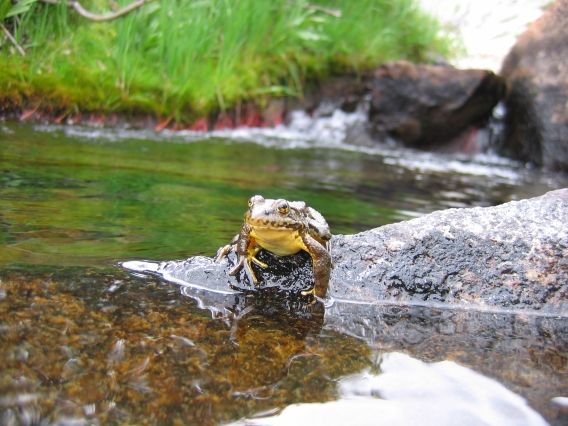
The fungal infection that killed a record number of amphibians worldwide leads to deadly dehydration in frogs in the wild, according to results of a new study.

High levels of an aquatic, chytrid fungus called Batrachochytrium dendrobatidis (Bd) disrupt fluid and electrolyte balance in wild frogs, the scientists say, severely depleting the frogs' sodium and potassium levels and causing cardiac arrest and death.

Their findings confirm what researchers have seen in carefully controlled lab experiments with the fungus, but San Francisco State University biologist Vance Vredenburg said the data from wild frogs provide a much better idea of how the disease progresses.

"The mode of death discovered in the lab seems to be what's actually happening in the field," he said, "and it's that understanding that is key to doing something about it in the future."

Results of the study are published today in the journal PLoS ONE.

"Wildlife diseases can be just as devastating to our health and economy as agricultural and human diseases," said Sam Scheiner, NSF program officer for the joint National Science Foundation-National Institutes of Health Ecology and Evolution of Infectious Diseases program, which funded the research.

At NSF, the Directorates for Biological Sciences and Geosciences support the program.

"Bd has been decimating frog and salamander species worldwide, which may fundamentally disrupt natural systems," said Scheiner. "This study is an important advance in our understanding of the disease--a first step in finding a way to reduce its effects."

At the heart of the new study are blood samples drawn from mountain yellow-legged frogs by Vredenburg and colleagues in 2004, as the chytrid epidemic swept through California's Sierra Nevada mountains.

"It's really rare to be able to study physiology in the wild like this, at the exact moment of a disease outbreak," said University of California, Berkeley ecologist Jamie Voyles, the lead author of the paper.

Unfortunately, it is a study that can't be duplicated--at least not in the Sierra Nevada.

Frog populations there have been devastated by chytrid, declining by 95 percent after the fungus was first detected in 2004.

"It's been really sad to walk around the basins and think, 'wow, they're really all gone,'" Vredenburg said.

The chytrid fungus attacks an amphibian's skin, causing it to become up to 40 times thicker in some instances.

Since frogs depend on their skin to absorb water and essential electrolytes like sodium from their environment, Voyles and her colleagues knew that the fungus would disrupt fluid balances in the infected amphibians.

But they were surprised to find that electrolyte levels were much lower than anticipated. "It's clear that this fungus has a profound effect in the wild," Voyles said.

Scientists want to learn as much as they can about how the fungus affects wild amphibians, with the hope that these findings will lead to better treatments for the infection.

"The chytrid fungus is causing these frogs to become severely dehydrated, even though they are literally surrounded by water," said Cheryl Briggs, a University of California, Santa Barbara biologist and co-author of the paper.

The new study suggests that individual frogs being treated for the infection might benefit from having electrolyte supplementation in the advanced stages of the disease.

Researchers like Vredenburg already are experimenting with different ways of treating individual frogs, such as applying antifungal therapies or inoculating the frogs with "probiotic" bacteria that produce a compound that kills the fungus.

"The disease is not very hard to treat in the lab with antifungals," Vredenburg said. "But in nature, the disease is still a moving target."

It is still unclear exactly how chytrid spreads across a region, and which frogs might be susceptible to re-infection after treatment.

Earlier this year, Vredenburg and colleagues showed that a common North American frog might be an important carrier of the infection.

The chytrid fungus has killed off more than 200 amphibian species across the globe, but Voyles said the research offers "a glimmer of hope that it might be possible to do something to mitigate the loss."

Other co-authors of the paper are Tate Tunstall and Erica Bree Rosenblum of UC Berkeley, and John Parker of University of California, San Francisco.

-NSF-