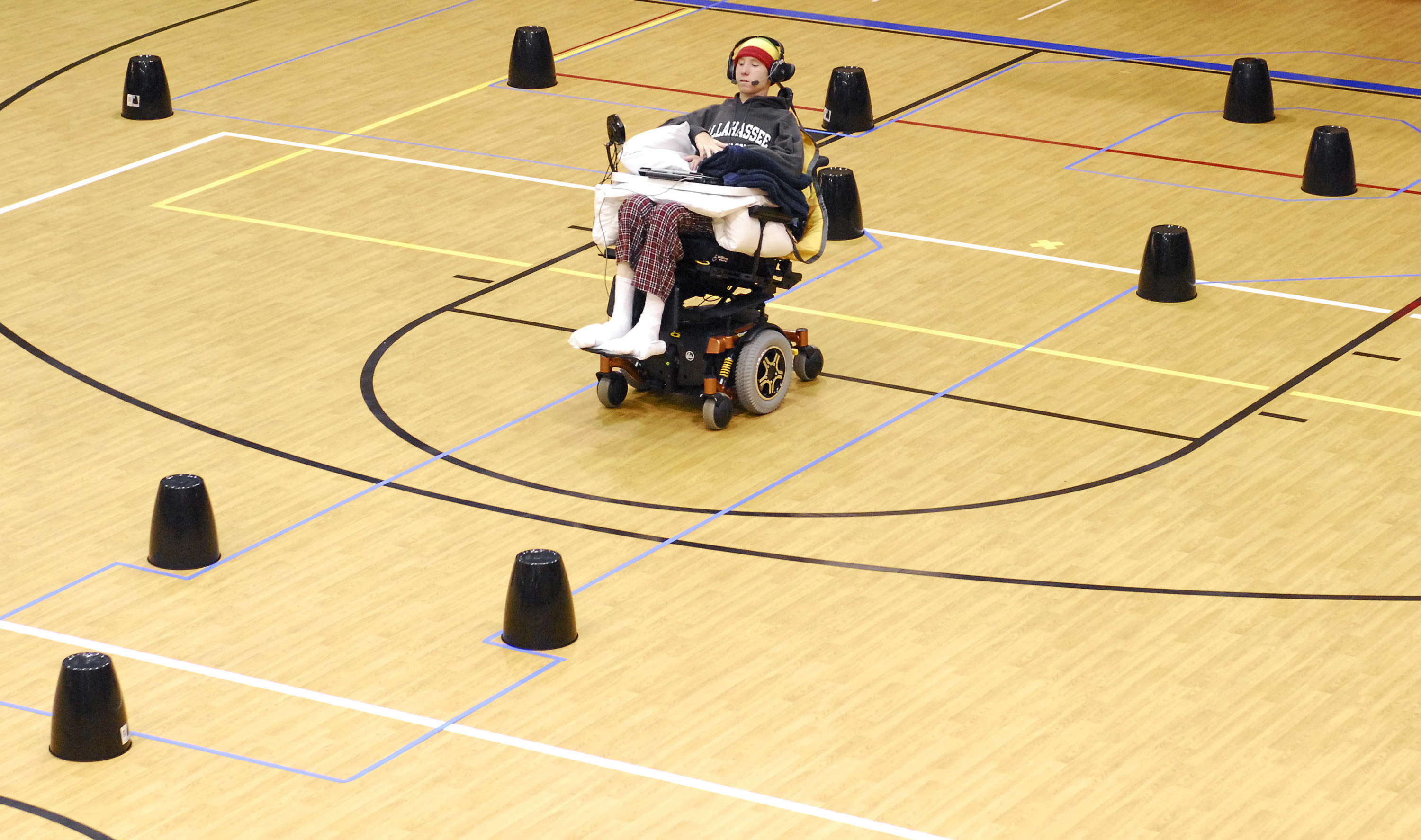
 Image 1: Cruise Bogle participates in a
clinical trial of the Tongue Drive system, an assistive technology that enables
individuals to maneuver a powered wheelchair or control a mouse cursor using
simple tongue movements. For the clinical trial, which took place at the
Atlanta-based Shepherd Center, Bogle moved his tongue to direct the Tongue
Drive system to move the powered wheelchair around an obstacle course. The
clinical trials showed that the Tongue Drive system, which was developed by
engineers at Georgia Tech, was intuitive and simple for individuals with
high-level spinal cord injuries to use.
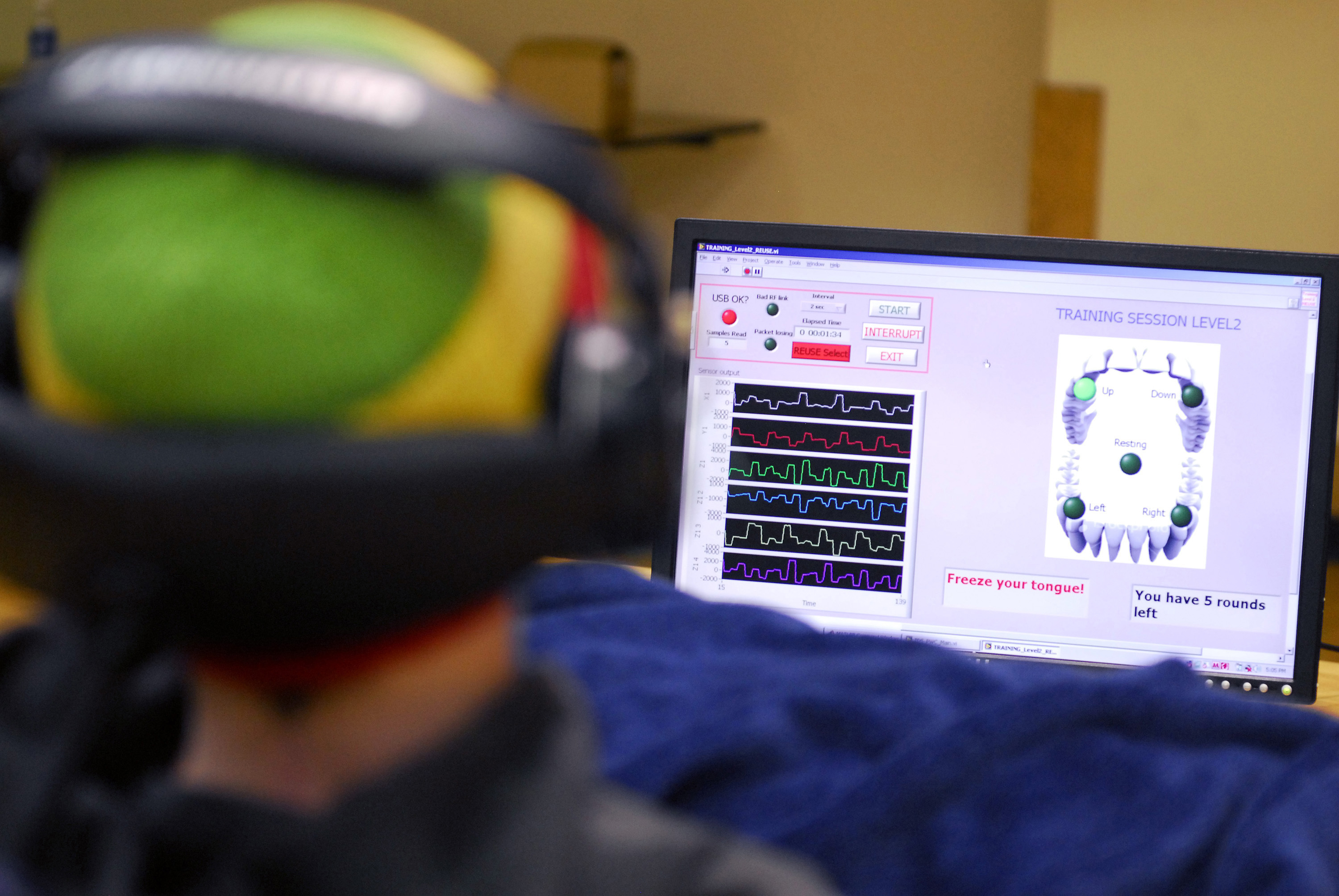 Image 2: Cruise Bogle, while
participating in a clinical trial for the Tongue Drive system, trains the
computer to understand how he will move his tongue to indicate the different
commands necessary to operate the powered wheelchair forward, backward, right,
left and stop. The Tongue Drive system is an assistive technology that enables
individuals to maneuver a powered wheelchair or control a mouse cursor using
simple tongue movements.
The clinical trials took place at the
Atlanta-based Shepherd Center. Once the computer was ready, Bogle moved his
tongue to direct the Tongue Drive system to move the powered wheelchair around
an obstacle course. The clinical trials showed that the Tongue Drive system,
which was developed by engineers at Georgia Tech, was intuitive and simple for
individuals with high-level spinal cord injuries to use.
 Image 3: Cruise Bogle, center, poses
with the Georgia Tech researchers who developed the Tongue Drive system, an
assistive technology that enables individuals to maneuver a powered wheelchair
or control a mouse cursor using simple tongue movements. Cruise sticks out his
tongue to show the small magnet that allows him to perform these tasks. Cruise
participated in clinical trials for the system, which took place at the
Atlanta-based Shepherd Center.
The research was funded by the National
Science Foundation (grant IIS 08-03184) and the Christopher and Dana Reeve
Foundation. To learn more, see the GA Tech Research News story Tongue Power:
Clinical Trial Shows Quadriplegic Individuals Can Operate Powered Wheelchairs
and Computers with Tongue Drive System. (Date of Image: June 2009)
Credit: Georgia Tech; photos by Gary Meek


 Posts

