The first plunge into icy water is a shock to the
system. For a warfighter operating in extreme cold weather environments,
a fall into near-freezing seas isn't a mishap; it's a life-or-death
battle that is won or lost in the first few minutes.
This research mission took Naval Health Research Center scientists to
the Marine Corps Mountain Warfare Training Center in Bridgeport,
California, where they spent six days doing research in the harsh Sierra
Nevada winter. Working in air temperatures hovering at 19 degrees and
with water temperatures at 34 degrees, the team focused on equipping
U.S. warfighters with practical survival skills for extreme conditions.
The project, funded by the Office of Naval Research, is directly
aimed at improving survival rates during a mass casualty incident at
sea, such as a torpedoed ship in arctic waters. Researchers from the
center's environmental and thermal physiology team are investigating
cold-environment survival to understand and combat a silent killer known
as the "cold shock response," a leading threat in sudden cold exposure
scenarios.
"Most people's first worry is hypothermia, but in order to actually
become hypothermic, you have to survive the cold shock response," said
Rebecca Weller, a research physiologist with the research center. "The
initial moments in cold water are often the most dangerous, and how you
control your breathing in those moments can determine whether you
survive."
That initial, involuntary gasp for air upon hitting cold water, the
rapid and uncontrolled breathing, and the spike in heart rate and blood
pressure are all hallmarks of the cold shock response — a series of
immediate bodily reactions to sudden cold exposure. This physiological
response can quickly lead to aspirating water, cognitive impairment and
drowning. Research suggests that this response is the cause of death in
up to 60% of accidental cold-water immersions, long before the body's
core temperature begins to drop.
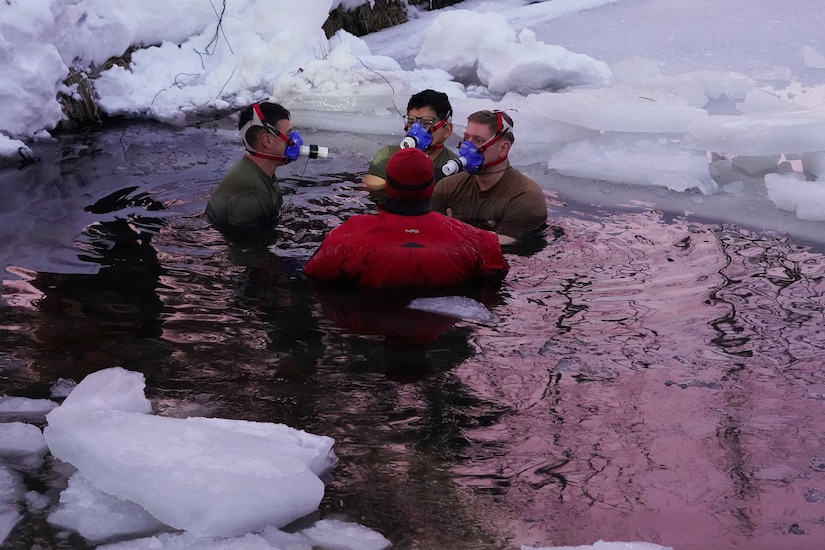
The environmental and thermal physiology team, led by principal investigator Doug Jones, partnered with the warfare training center to conduct a vital study during its cold-weather medicine course. Students, mostly Navy hospital corpsmen, enrolled in the course prepared for the rigors of cold weather operations and also had the opportunity to volunteer as subjects in an experiment designed to find a simple, effective defense against cold shock.
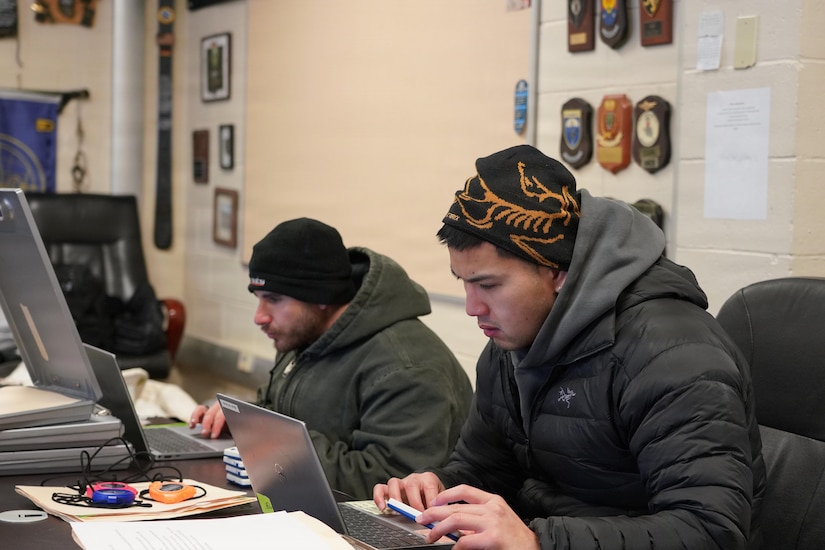
The day before a planned cold-water immersion, study participants underwent baseline testing for stress, anxiety and information recall. They also received specialized training in slow-paced breathing.
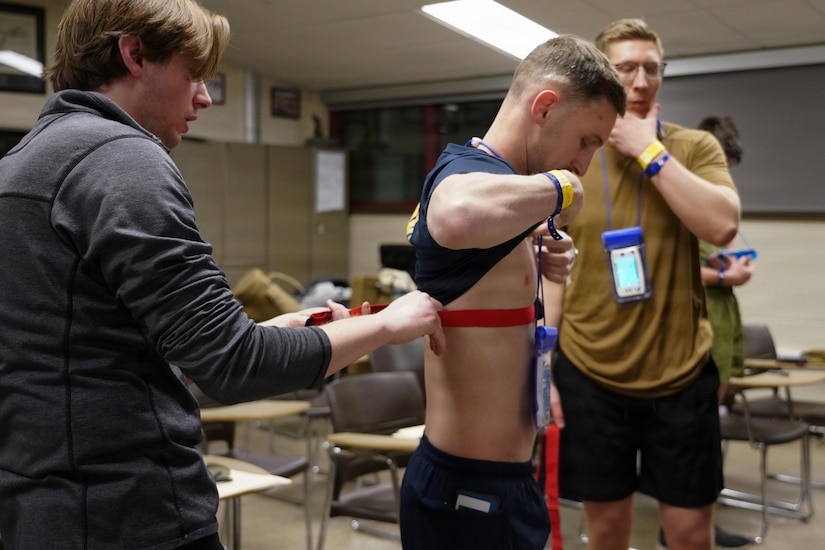
The next morning, volunteers were fitted with an array of sophisticated data-collection devices — heart rate straps and core and skin temperature monitors. The most critical piece of equipment, however, was a spirometer, which measures the volume and rate of breathing.
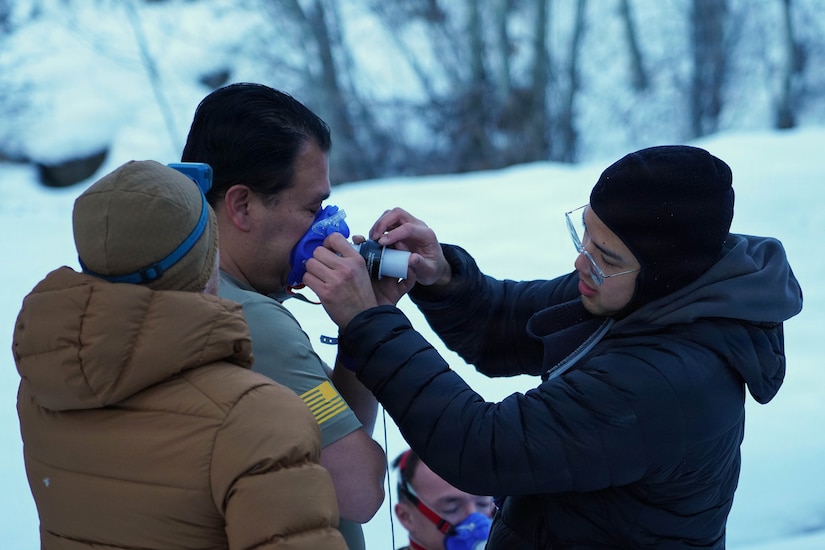
The goal was to see if a simple breathing exercise could override the body's instinct to panic.
"We are trying to develop a technique and strategy that can limit the
stress associated with accidental cold-water immersion," Jones said.
The research center is currently analyzing data from these tests. Based
on a preliminary review of the data, the group trained in slow-paced
breathing appears to have demonstrated a lower, more controlled
breathing rate during the immersion than the untrained control group.
They were actively using the technique to fight the body's involuntary
response.
The team is now analyzing how controlled breathing impacts the cold
shock response and operational performance, such as completion of the
nine-line task to determine if a patient needs to be evacuated. During
the immersion, participants were tasked with performing the test — a
standard military procedure that requires clear thinking and precise
communication. The ability to perform such a task under the intense
physiological stress of cold shock can mean the difference between life
and death for a service member.
Ultimately, the findings from this research will provide evidence-based data to validate and refine training protocols across the U.S. military. The ultimate goal is to provide the military with evidence-based tools that can be quickly taught to any service member and integrated into official guidance like the Navy's Cold Weather Handbook for Surface Ships, to add strategies for surviving the initial moments of cold-water immersion.
"How you control your breathing in those initial moments of cold-water immersion can determine whether you survive it," Weller emphasized. "By practicing these techniques in a controlled environment, service members may gain the confidence and muscle memory to execute them when it counts."
These findings will educate a new generation of warfighters — more prepared, more adaptable and more lethal — armed with the knowledge to conquer one of nature's most unforgiving environments. They are proving that in the face of the cold's deadly gasp, the most powerful weapon can be a single, controlled breath.
Through a wide range of research, including its cold-water immersion studies, the research center develops strategies that enable the warfighter to overcome the many health and performance-related challenges they face in the course of their duties. This research provides the Navy, Marine Corps and joint forces with the opportunity to develop tools to maintain cognitive function and enhance survivability in the most extreme maritime environments.


 Posts
Posts


No comments:
Post a Comment