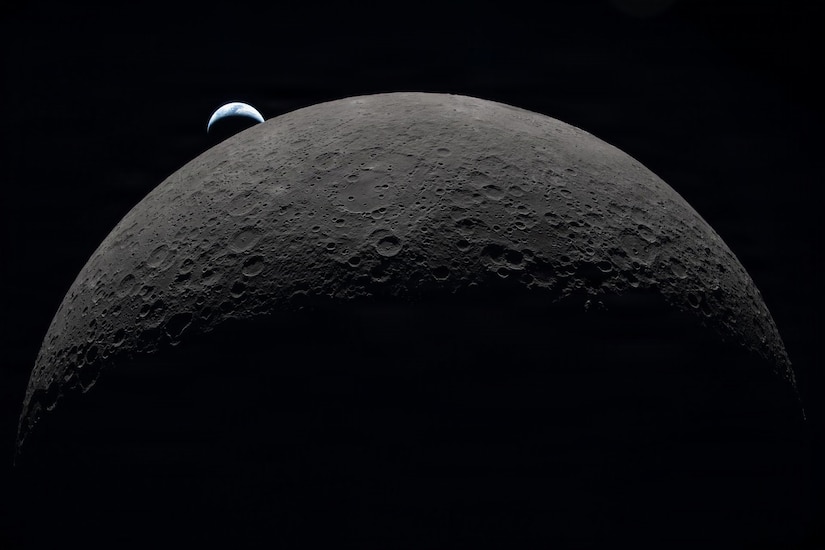
Next stop — Earth.
After a historic lunar flyby at a record-setting distance, the Artemis II crew is now on its return journey, with splashdown expected April 10 in the Pacific Ocean, approximately 50-60 miles off the coast of San Diego.
Awaiting their arrival will be the amphibious transport dock ship USS John P. Murtha, positioned to recover the astronauts and capsule.
Mission commander and Naval Postgraduate School alumnus, retired Navy Capt. Reid Wiseman, now focuses on the most critical phase of the mission — bringing the crew home safely.
"We are locked in," Wiseman said. "We are definitely excited for the second half of this mission. And we are on guard. We are the first crew to fly this vehicle. We are ready for any contingency and any scenario. We are going to stay locked in every second until we are back on that Navy ship, at home reunited with our families."
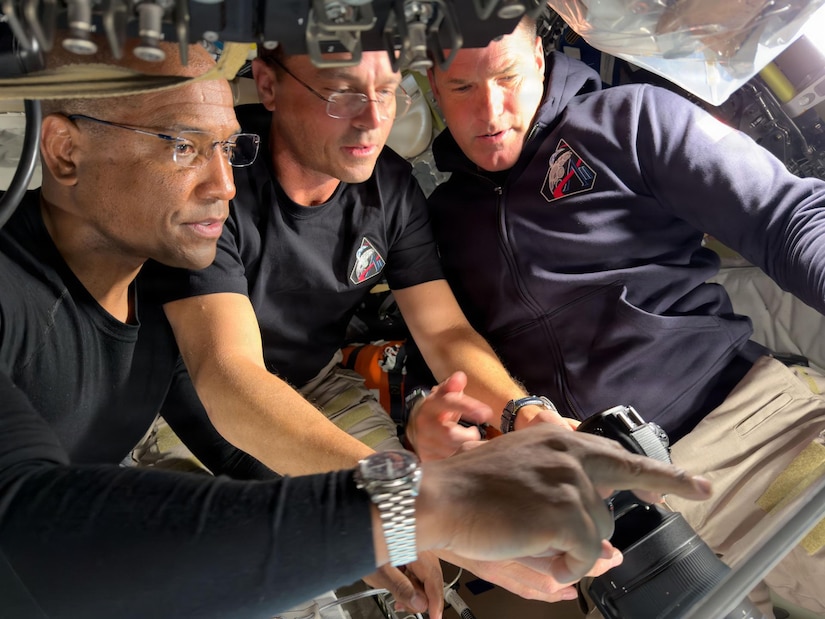
Wiseman and spacecraft pilot, Navy Capt. Victor Glover — also an NPS alumnus — use their years of experience as Navy test pilots to guide the spacecraft, coined Integrity by the crew. Their advanced education and astronaut training will ensure a safe return to Earth.
As our blue planet grows steadily larger in the capsule's windows, the mission's significance is clear. Their journey around the moon has generated critical insights that will inform future Artemis missions and advance NASA's long-term goal of human exploration beyond lunar orbit.
On the sixth day of the mission, the crew entered the moon's sphere of influence — the point at which lunar gravity overtakes Earth's pull — marking a key milestone in the mission. For hours, the astronauts conducted detailed observations of the moon's near and far sides, capturing new imagery and data.
Wiseman and Glover, alongside crewmates Christina Koch and Jeremy Hansen, passed within 4,070 miles of the lunar surface and experienced a 40-minute communications blackout, another defining moment of the mission.
That moment was made even more meaningful by a prerecorded message from Apollo 8 and Apollo 13 astronaut Jim Lovell, a fellow naval aviator and test pilot, who died in 2025 at 97.
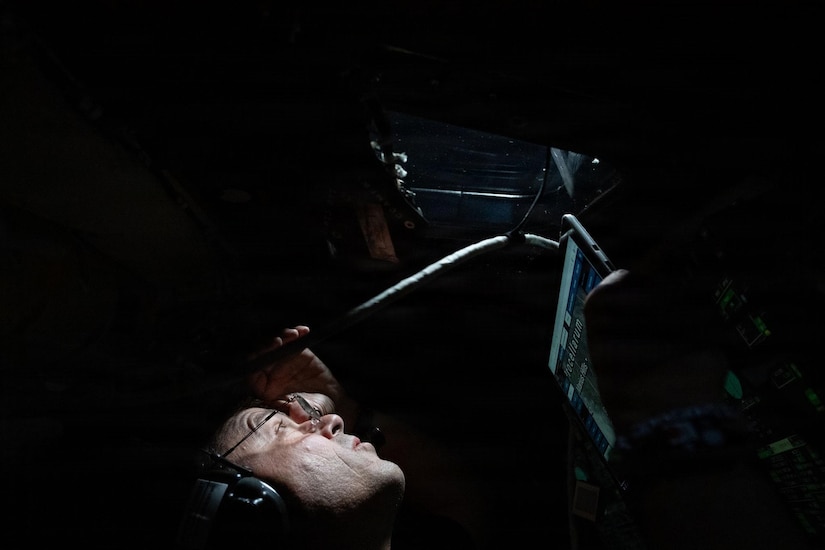
"Hello Artemis II. This is Apollo astronaut Jim Lovell. Welcome to my old neighborhood," the message read. "I'm proud to pass that torch to you as you swing around the moon and lay the groundwork for missions to Mars for the benefit of all. … Good luck and Godspeed from all those here on the good Earth."
The symbolism was powerful. Lovell, commander of Apollo 13, held the previous record for the farthest distance traveled from Earth at 248,655 miles. Artemis II surpassed that mark, reaching 252,760 miles, more than 4,000 miles farther than any human spaceflight before it.
During the moon flyby, the crew worked in rotating pairs for six hours, observing the lunar surface. They witnessed Earth set behind the moon, then rise again. They also saw an extremely rare view of a solar eclipse as the moon passed between the spacecraft and the sun, a first for human eyes.
While the Artemis II crew observed the moon, another spacecraft was watching them.
NASA's Lunar Reconnaissance Orbiter, a robotic spacecraft, captured images of the Integrity capsule as it swung around the moon. The orbiter's mission includes mapping the moon's surface, identifying potential resources such as water and ice and helping determine safe landing sites for future missions.
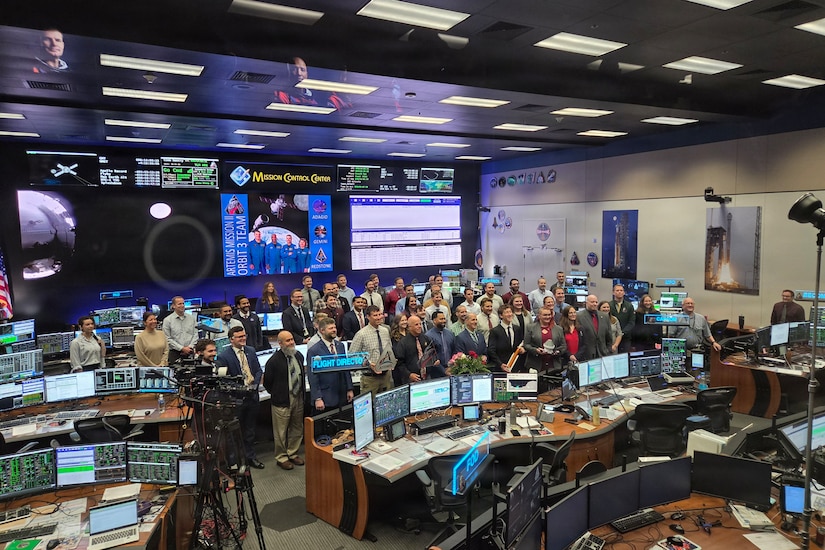
NPS faculty and students contributed to the orbiter's fast attitude maneuvering control system, which enables the spacecraft to precisely reorient, capabilities essential for tracking and imaging.
Data from the Artemis II and imagery from the orbiter are now being processed and are anticipated by researchers at NASA and partner institutions.
This collaboration reflects a broader, enduring partnership between NASA and NPS that advances both cutting-edge research and the education of future operational leaders and astronauts. The ability to connect real-world missions with graduate-level education remains a hallmark of the NPS experience.
Since first putting humans in space, the Navy, NPS and NASA have had an inseparable bond in space education and research; from naval aviators turned astronauts to Navy ships and sailors returning the astronauts home after splashdown; and to the scientists, engineers and leaders filling every space in-between.
With seven NPS alumni in the active NASA astronaut corps, the Navy and NPS remain vital contributors to America's future lunar missions and space exploration.


 Posts
Posts


No comments:
Post a Comment