Showing posts with label Air Force innovation. Show all posts

Friday, March 20, 2026

Innovation in Action: Airman-Built 3D Model Strengthens Air Traffic Controller Training

Airmen assigned to the 19th Operations Support Squadron at Little Rock Air Force Base, Arkansas, are taking a creative approach to training the next generation of air traffic controllers by developing a detailed 3D model that visually represents aircraft patterns and procedures used at the installation.
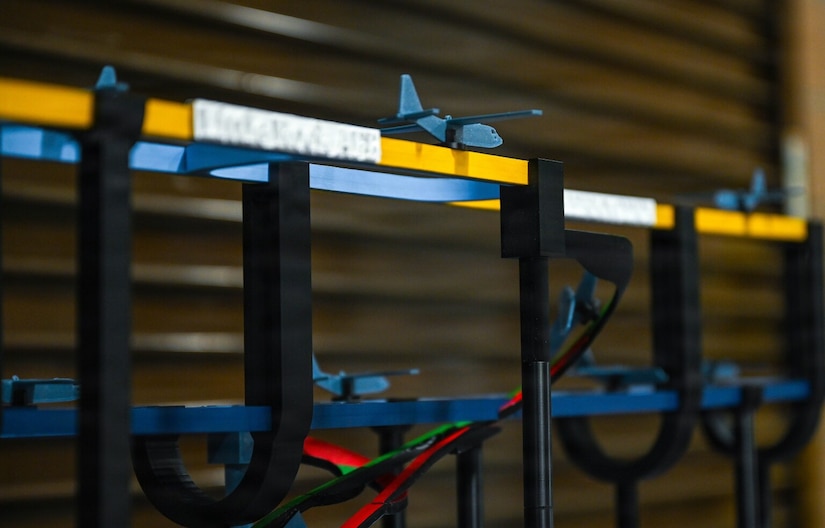
Several small 3D printed model airplanes are displayed in different flight patterns.

 
The innovation demonstrates how airmen are leveraging emerging technologies and creative problem-solving to improve training and operational readiness. 
 
The immersive training tool was designed and produced by Air Force Airman Jay Perry, 19th OSS air traffic control apprentice. It provides a scale representation of the base's airspace and flight patterns. The project was inspired by an idea from Air Force Tech. Sgt. Ryan Sanders, 19th OSS noncommissioned officer in charge of training and standardization. 
 
Traditional training methods often rely on instructors holding model aircraft or cards to demonstrate aircraft positions and movements. While effective, the approach can make it difficult for visual and tactile learners to fully imagine spacing, conflict points and maneuvering patterns.
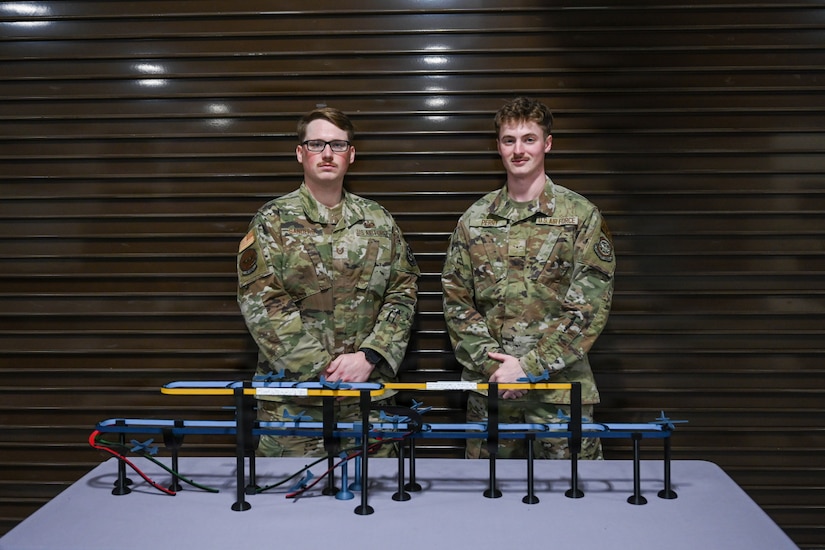
Two men in camouflage military uniforms pose for photo in front of 3D printed models of airplanes as they go through different flight patterns.

 
"This model allows us to physically show where aircraft may break in the pattern, extend downwind or maneuver differently," Sanders said. "It helps airmen understand when conflict may exist or when it doesn't, based on the flight path." 
 
The model re-creates the installation's airspace layout at scale and uses magnets to hold miniature aircraft in place, allowing instructors to demonstrate real-world scenarios more accurately. The enhanced visualization helps trainees better understand aircraft spacing, sequencing and potential conflict areas. 
 
Perry used a 3D modeling program to build his creation, but he made it by manipulating shapes to create detailed designs. After designing each component digitally, Perry prepared the parts for printing and produced them using multiple 3D printers available at the base innovation lab.
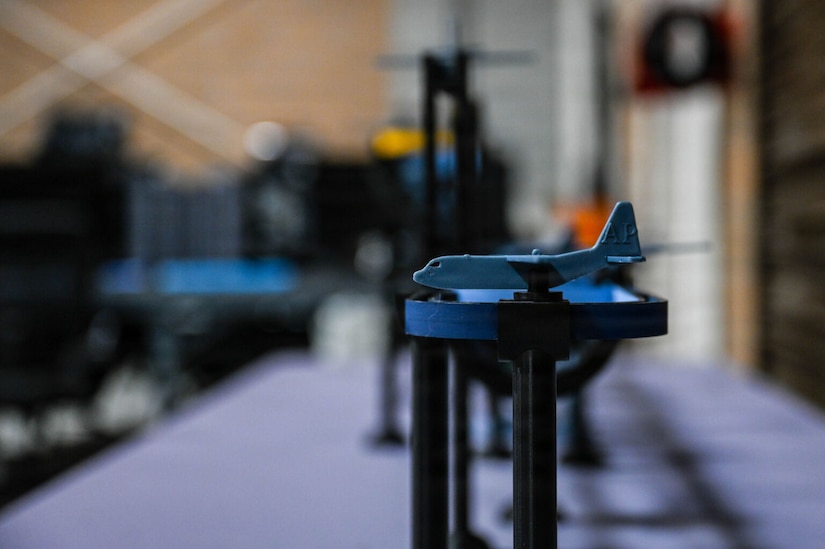
A small 3D printed model airplane is displayed on a stand.

 
The process required careful planning, preparation and experimentation. 
 
"Everything started from a single block in the design software," Perry said. "Each piece had to be separated and designed in a way that it could be printed and assembled later. It might look simple when you see the final model, but a lot of thought went into making sure the supports, slopes and connections would actually work." 
 
One of the biggest challenges was ensuring the model could support its own structure at the scale required to accurately represent the airfield. The team experimented with different stand designs and angles to create a realistic yet durable layout.
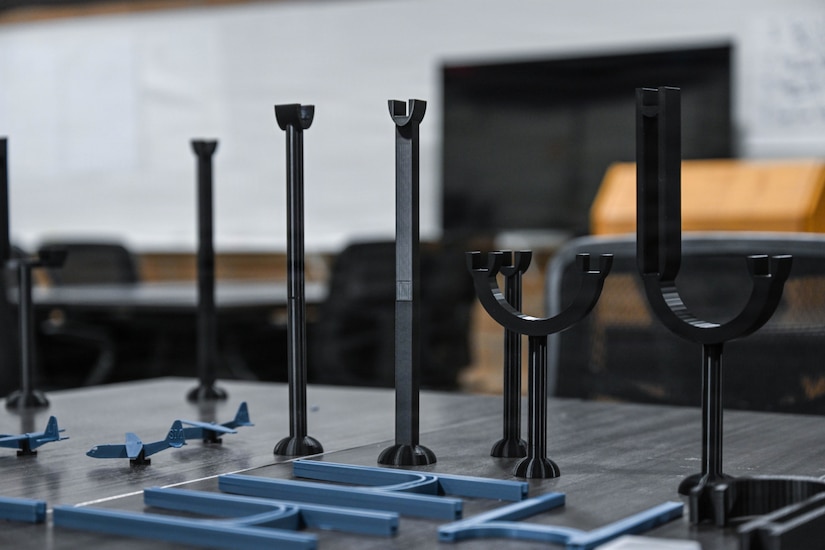
Several tools and 3D printed models are displayed on a table.

 
By transforming abstract training concepts into a physical, visual model, the 19th Operations Support Squadron is helping trainees better grasp the complexities of airfield operations. This ensures controllers are better equipped to manage the skies above the base. 
 
The project also highlights a broader culture of innovation across the installation, where airmen at every level are encouraged to identify challenges and develop solutions that enhance mission effectiveness.

Friday, November 14, 2025

Youth Program Inspires Next Generation of STEAM Leaders


STARBASE Maxwell, a War Department hands-on, youth science, technology, engineering, arts and mathematics outreach program at Maxwell Air Force Base, Alabama, is educating thousands of local students each year through immersive, inquiry-based learning.

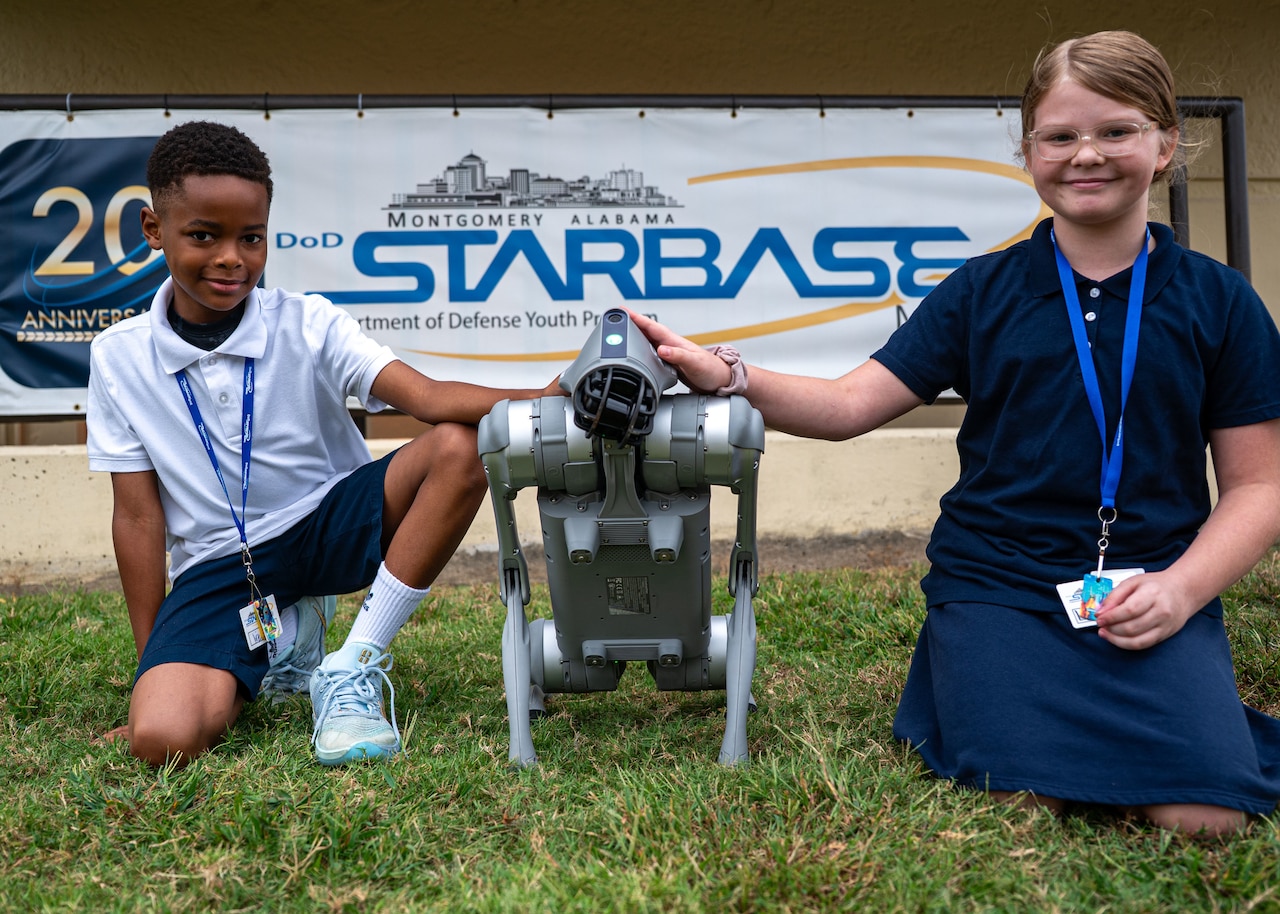
Two children wearing casual attire kneel while posing for a photo with a robotic dog.
The program bridges the gap between military and civilian communities while opening doors to technical careers that support both national defense and Alabama's growing industries. 
 
Part of a nationwide DOW initiative, STARBASE programs operate on military installations across the country to promote science, technology, engineering, arts and mathematics education and career awareness among the nation's youth. 
 
"STARBASE is about sparking curiosity," said Ted Welch, STARBASE Maxwell director. "We want students to see that science and engineering aren't just subjects in school — they're ways of thinking, creating and solving problems that shape the world around us."

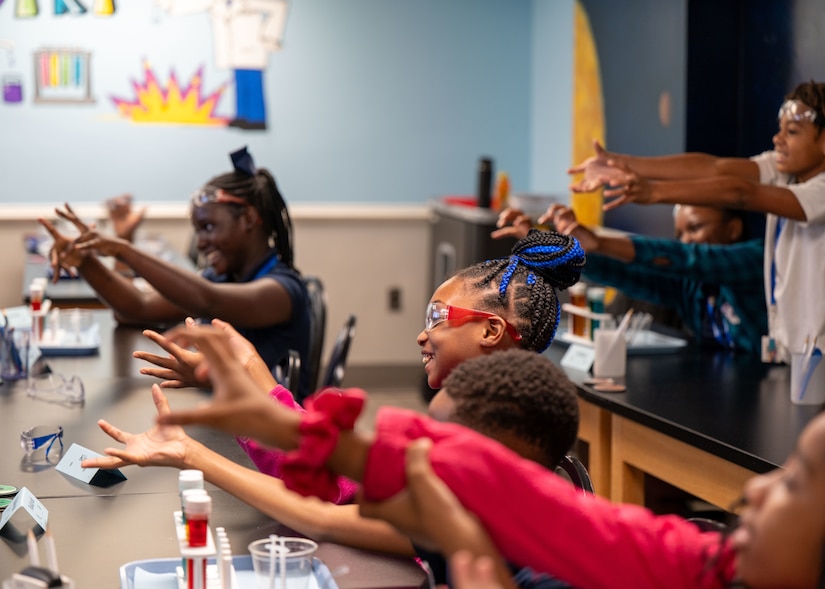
Children hold out their hands while smiling in a classroom setting.
Through partnerships with Autauga County schools, Elmore County School District, Montgomery Public Schools, Crenshaw County schools and Pike Road schools, the program provides fifth graders with 25 hours of hands-on STEAM education during a five-day session. Students attend free of charge and engage in challenging experiments and team-based learning opportunities designed to make complex scientific concepts come alive. 
 
Each day, students apply math, science and engineering principles through activities such as studying Newton's laws and Bernoulli's principle, building and coding robots and space vehicles and exploring nanotechnology and navigation. Mathematics is woven throughout the curriculum as students calculate measurements, analyze data and use geometry to solve real-world problems. 

To connect these lessons to real-world applications, STARBASE Maxwell invites service members from across the military to visit classrooms and share how STEAM supports their missions. Students hear from a variety of career fields, including pilots, air traffic controllers, firefighters, nurses, engineers and Space Force guardians, helping them understand how technical skills support the nation's defense mission. 
 
"The kids love meeting military members," said Margaret Woods, a STARBASE Maxwell instructor. "It gives them a glimpse of the teamwork, technology and service behind every uniform. It also helps them see pathways they might not have considered before." 
 
This partnership reinforces Air Education and Training Command's commitment to developing airmen and inspiring future innovators, while also building stronger relationships between Maxwell Air Force Base and the River Region community. 

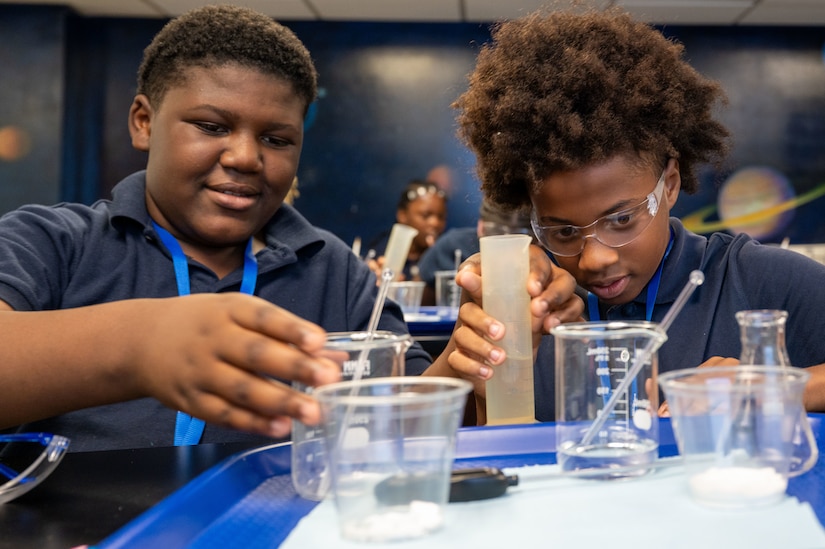
Two children wearing polo shirts hold laboratory equipment while conducting an experiment in a science lab.
Since its start in 2004, STARBASE Maxwell has grown significantly. During the 2024-2025 academic year alone, the program reached a record 3,266 students, and plans are underway to expand to more than 4,000 participants next year. As such, STARBASE Maxwell is the largest of 87 STARBASE programs around the globe and the only one in Alabama. 
 
A key part of that growth includes new technology like a robotic dog that helps students learn coding, problem-solving and advanced robotics concepts. This robot can navigate terrain, recognize colors and shapes and engage students in real-time programming exercises. 
 
"Astro brings robotics to life," Welch said. "It makes coding tangible and exciting, and students leave wanting to learn more."

The program's impact reaches far beyond the gates of Maxwell. By igniting interest in STEAM subjects early, STARBASE Maxwell helps prepare students for technical careers that support Alabama's industries, including aerospace, automotive and defense sectors. 
 
With plans to expand facilities, integrate more advanced robotics and increase participation across the region, STARBASE Maxwell continues to embody DOW's commitment to education, innovation and community partnership. 
 
"Whether these kids join the military, work in engineering or start their own tech companies, they'll carry the confidence and problem-solving skills they learned here," Welch added. "That's what STARBASE Maxwell is all about, building the next generation of innovators who will strengthen our communities and our nation."