U.S. Northern Command hosted a global information
dominance exercise and the results point to the tremendous advantages
the Defense Department would receive by applying machine learning and
artificial intelligence to all-domain information, Air Force Gen. Glen
D. VanHerck said yesterday.
VanHerck, who commands NorthCom, detailed the results of the exercise during a virtual meeting with the Defense Writers' Group.
All 11 combatant commands participated in the exercise, which was
based on a global scenario involving two peer competitors. "What we were
looking to do is show the incredible value of information and how
information can be used today," he said.
This is especially true if commanders can take information from all
domains — undersea, space, cyberspace, air, land, sea and share it
through machine-learning artificial intelligence, he said. This would
serve to make data and information available in a timely manner to
produce space for decision makers.
The decision makers could be at the tactical level all the way up to
the president of the United States, VanHerck said. "You can use it in
competition day-to-day; you can use it in crisis for de-escalation and,
obviously, in conflict for 'defeat or deny,' if needed," he said.
The exercise pointed to the fact that some of these capabilities are
already available to commanders. "I did [this exercise] with the intent
to bring all the combatant commands together to place a demand signal …
on the department to move quicker down the path of domain awareness,
information dominance and decision superiority," VanHerck said.
The general said the capability in DOD is called Joint All-Domain
Command and Control – JADCC. "We need to go faster; we can't go slow for
legacy processes to take years to build capabilities," he said. "That
was my intent: to show that capabilities exist today to go down this
path."
The exercise really demonstrated the need for military global
integration. "All competition through conflict today is global in
nature, and the tools gave us the ability to collaborate with all the
combatant commands near real-time across all domains," he said.
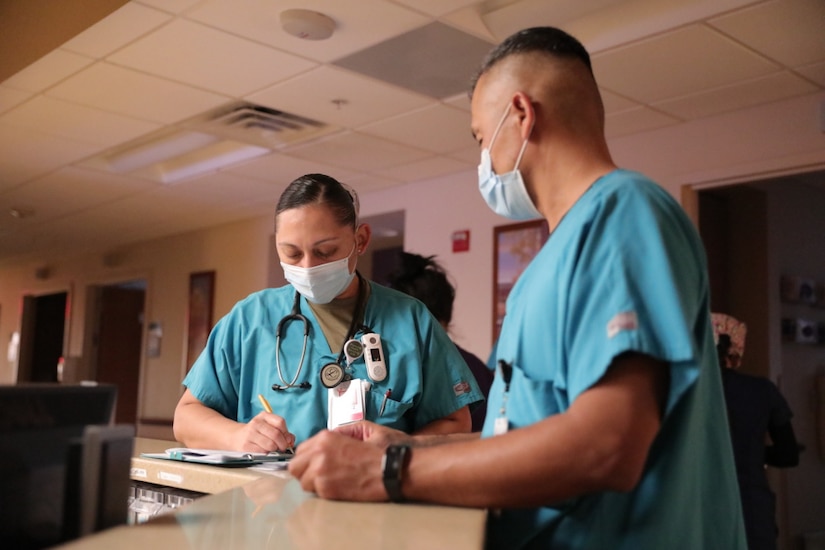
VanHerck also addressed the command's efforts to combat COVID-19.
"We're down to one hospital that we're currently embedded in right now
in Kingman, Arizona. When that mission ceases, we'll have no more
[military personnel health] providers embedded in local hospitals," he
said. "I'm encouraged by that. That's a good trend that we're not having
the mission to provide support to local and state authorities for the
treatment of COVID patients."
Northern Command is preparing to deploy more service members to
provide the Federal Emergency Management Agency with vaccine support.
There are currently 25 military teams with 3,562 personnel deployed at
multiple locations across 14 states providing vaccination support. On
March 30, the teams gave more than 60,000 vaccinations. "We just went
over 1.6 million vaccinations as we continue to move forward," the
general said.
The command will place four more teams in the first week of April.




 Posts
Posts

