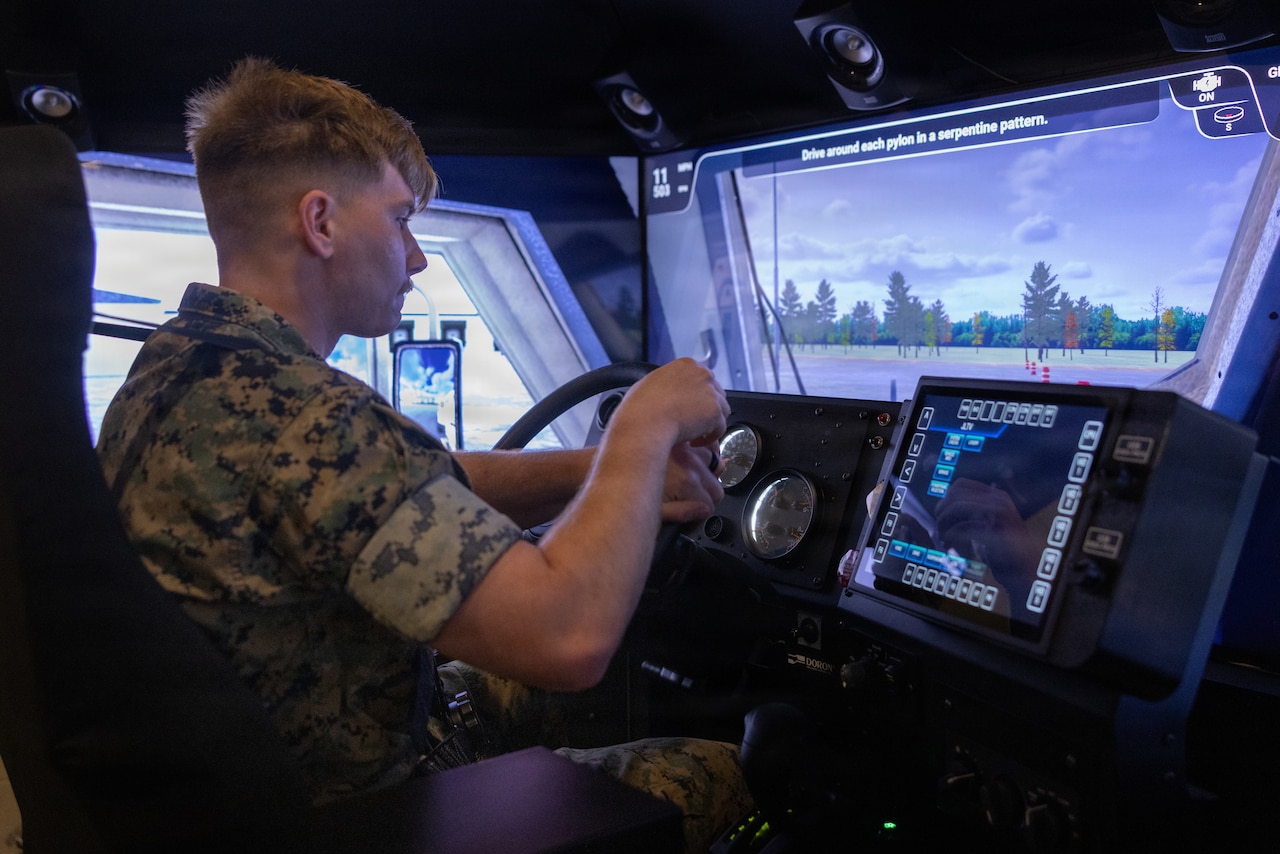
The Marine Corps is taking a leap forward in tactical vehicle training, trading unnecessary wear and tear for high-tech, immersive realism at Marine Corps Base Camp Lejeune, North Carolina. With the introduction of the multiplatform driver simulator, Marines are now able to push the limits of the joint light tactical vehicle without assuming any physical risk.
According to Shannon Ohlinger, the multiplatform driver simulator, or MPDS, training lead and a Marine Corps veteran, the shift in technology is monumental. The new system is designed to build confidence and critical thinking skills more quickly while addressing the challenges of fuel costs and vehicle maintenance.
"The operator driving simulator used prior to the MPDS was all over the place with training," Ohlinger said. "This entire system is much more advanced than the ODS, and it still has the mobility to mimic the movement of the actual vehicle over different types of terrain."
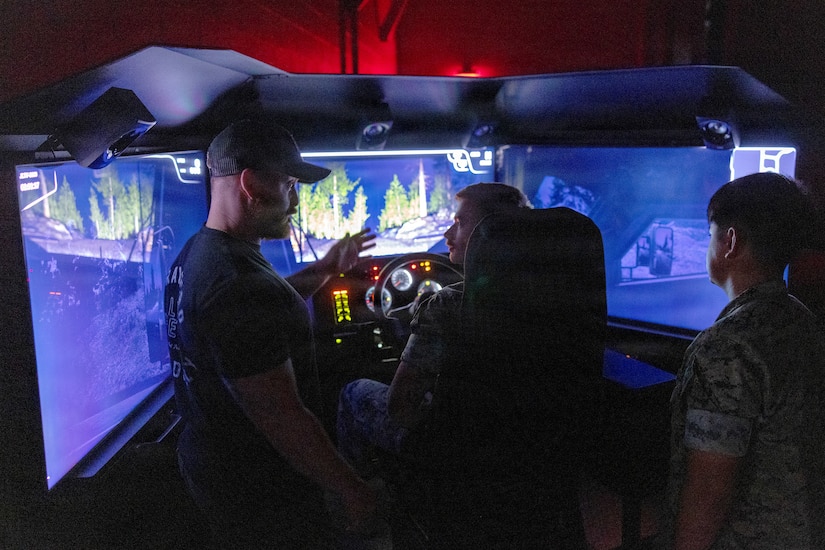
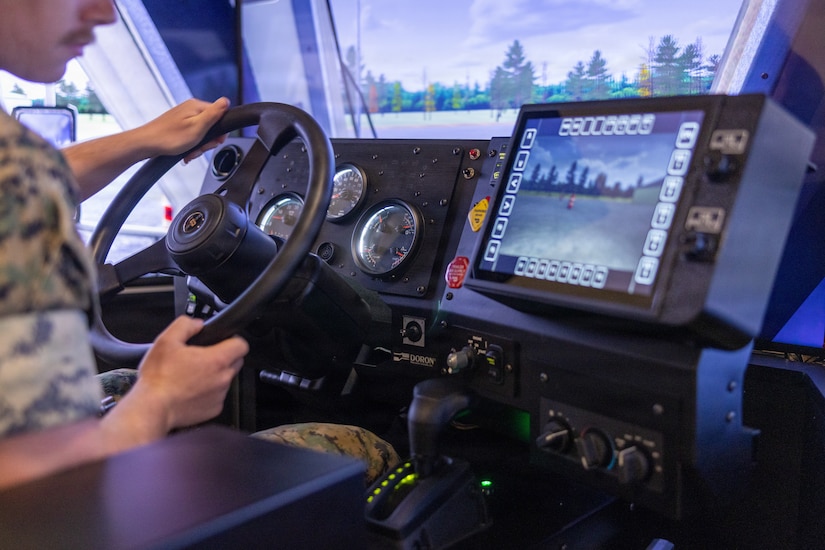
The MPDS is broken into three distinct parts: the cab itself, made with authentic industry parts; the situation screen for viewing analytics and a third-person perspective; and the instructor workstation. While not replacing the actual physical training Marines get in a live joint light tactical vehicle or medium tactical vehicle replacement, it provides a seamless transition from the classroom to the dirt.
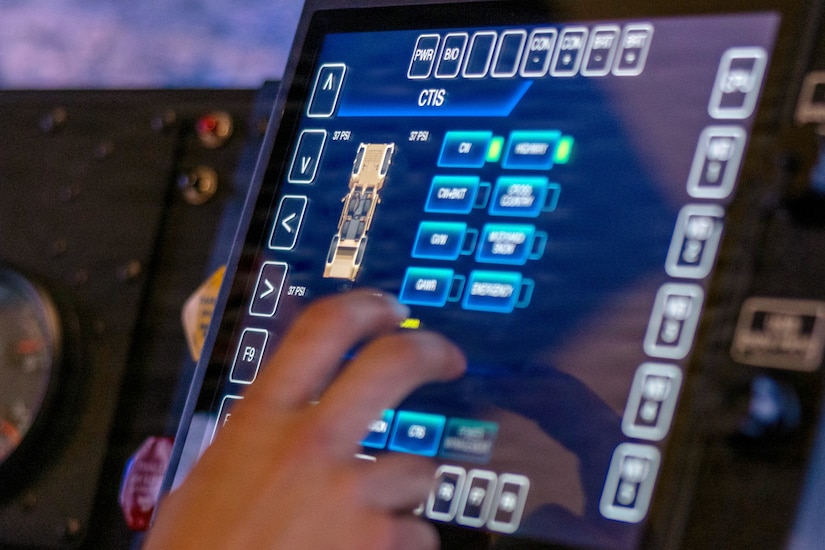
"Everything inside the simulator is an exact copy of what you would see in a real live [joint light tactical vehicle]," Ohlinger explained. "From the switches and functionality to the smart user interface, startup procedures and pre-op checks, everything is a one-for-one match."
Where the MPDS truly outperforms previous training methods is at the instructor workstation. From this console, instructors can manipulate the environment in real time, testing a driver's ability to adapt to sudden, catastrophic changes.
"Through the instructor workstation, I have the ability to throw obstacles at them. I can add rain and thunderstorms, and you will see puddles form and the mud get slick," Ohlinger said. "You're going to start having slippage to where operators need to use their [central tire inflation system] and anything else you would need to incorporate in order to adapt."
For Ohlinger, this capability hits close to home. Having driven more than 3,100 miles in Afghanistan, he understands the stakes of tactical driving.
"As a prior enlisted Marine, I can confidently say that if I had training like this, there are situations I experienced that I wouldn't have ever found myself in," he said. "Marines adapt and overcome when they face the unknown, but the MPDS gives them the critical thinking and experience they need ahead of time."
Ultimately, the Marine Corps modernization efforts are about keeping warfighters lethal and safe. The MPDS ensures that by the time a Marine gets behind the wheel of a real joint light tactical vehicle, they have already survived the worst conditions their instructors could throw at them.
"Being in this position gives me the opportunity to help mitigate the accidents that lead to losing service members," Ohlinger said. "I know if I save one life, I have done my job."


 Posts
Posts


No comments:
Post a Comment