Showing posts with label brigham young university. Show all posts

Saturday, June 2, 2012

Nematode Makes "Antifreeze" to Survive (Image 7)


A light micrograph of an adult Antarctic nematode worm Plectus murrayi in its hydrated, ecologically active state. The worm was found in soil samples collected by researchers working in Antarctica under the McMurdo Dry Valleys Long Term Ecological Research (LTER) project, funded by the National Science Foundation (NSF). Following their study, the LTER researchers published a report in which they described a nematode worm they found that could withstand its cold Antarctic climate by creating a sort of antifreeze.

When water inside a living thing freezes, ice crystals pierce cell membranes and kill them (which causes frostbite). But the nematode creates a protein that probably prevents the ice from forming sharp crystals or coats them so they don't puncture anything. Identifying the genes the worm uses to kick in its antifreeze system could have potential in future research such as engineering frost-resistant crops.

The researchers also reported that when its environment runs dry, the nematode dries itself out and goes into suspended animation until liquid water brings it back to life. Adams says this unique genetic response to its environment indicates the nematode will likely flourish as Antarctica gets wetter due to climate change, while other nematode species diminish.

The samples collected and data generated for this research were done under the auspices of the McMurdo Dry Valleys LTER (under NSF grant OPP 98-10219) and administered under NSF's Office of Polar Programs. Adhikari received funding from NSF.

To read more about this study, see the BYU news release BYU study: How an Antarctic worm makes antifreeze and what that has to do with climate change.

(Date of Image: 2009)

Credit: Bishwo Adhikari, Department of Biology, Brigham Young University

Nematode Makes "Antifreeze" to Survive (Images 5 and 6)


(Left to right) Anna Bramucci, an undergraduate student at Montana State University, Nicholas Demetras, a graduate student at the University of Waikato in New Zealand, and Bishwo Adhikari, a graduate student at Brigham Young University, take permafrost measurements at one of the McMurdo Dry Valleys Long Term Ecological Research (LTER) project field sites near Lake Fryxell, Taylor Valley, Antarctica. The Canada Glacier can be seen in the background. Following their study, LTER researchers published a report in which they described a nematode worm they found that could withstand its cold Antarctic climate by creating a sort of antifreeze.

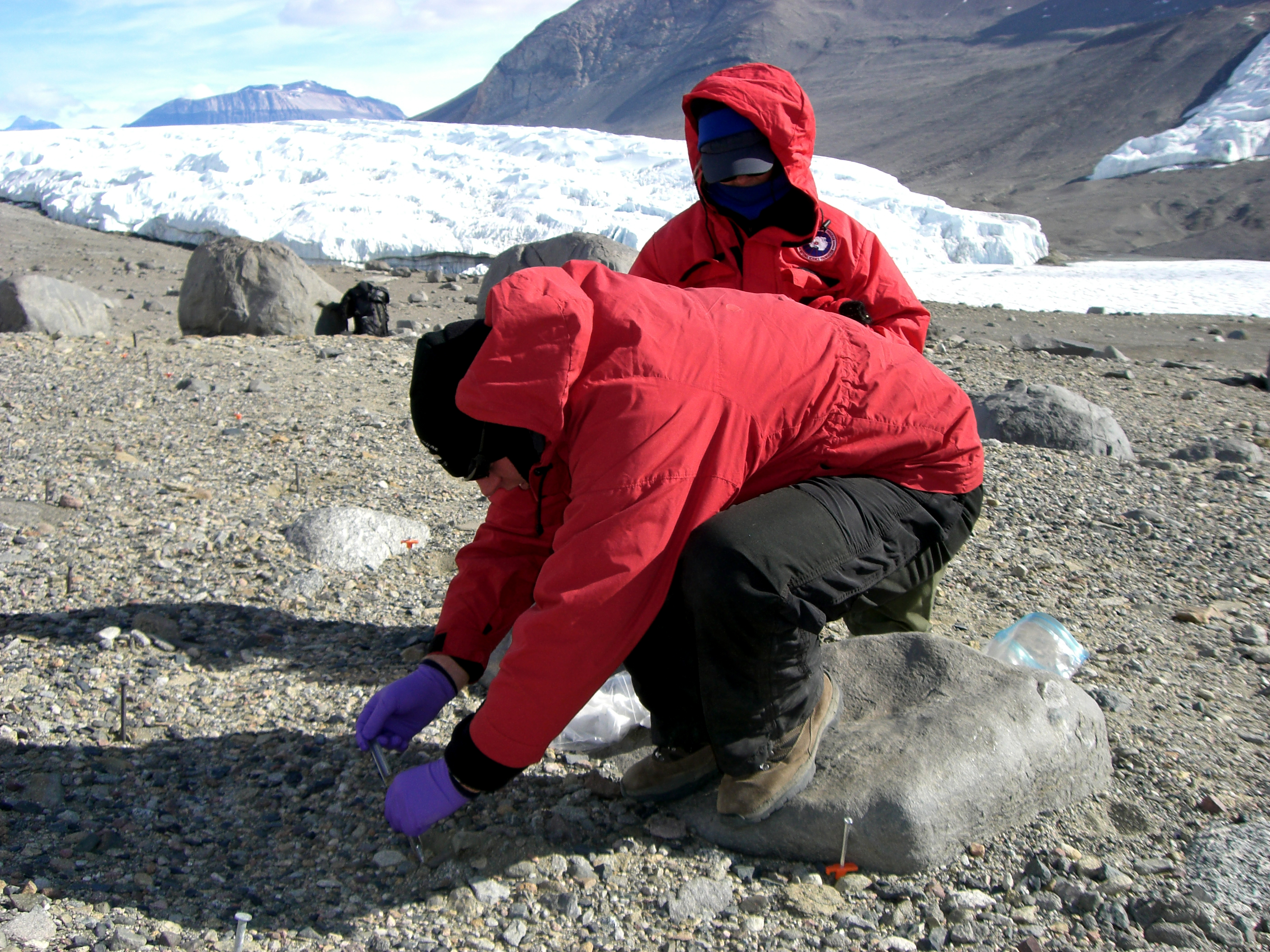
Brigham Young University graduate student Bishwo Adhikari collects soil samples at one of the McMurdo Dry Valleys Long Term Ecological Research (LTER) project field sites near Lake Fryxell, Taylor Valley, Antarctica. The samples will be returned to the lab where the soil animals can be removed, identifiied and explored using genomic and phylogenetic tools. LTER is funded by the National Science Foundation (NSF). Following their study, the LTER researchers published a report in which they described a nematode worm they found that could withstand its cold Antarctic climate by creating a sort of antifreeze.

When water inside a living thing freezes, ice crystals pierce cell membranes and kill them (which causes frostbite). But the nematode creates a protein that probably prevents the ice from forming sharp crystals or coats them so they don't puncture anything. Identifying the genes the worm uses to kick in its antifreeze system could have potential in future research such as engineering frost-resistant crops.

The researchers also reported that when its environment runs dry, the nematode dries itself out and goes into suspended animation until liquid water brings it back to life. Adams says this unique genetic response to its environment indicates the nematode will likely flourish as Antarctica gets wetter due to climate change, while other nematode species diminish.

The samples collected and data generated for this research were done under the auspices of the McMurdo Dry Valleys LTER (under NSF grant OPP 98-10219) and administered under NSF's Office of Polar Programs. Adhikari received funding from NSF and Demetras received funding from New Zealand and NSF.

To read more about this study, see the BYU news release BYU study: How an Antarctic worm makes antifreeze and what that has to do with climate change.

(Date of Images: 2008)

Credit: Judit Hersko, California State University San Marcos

Friday, June 1, 2012

Nematode Makes "Antifreeze" to Survive (Images 3 and 4)


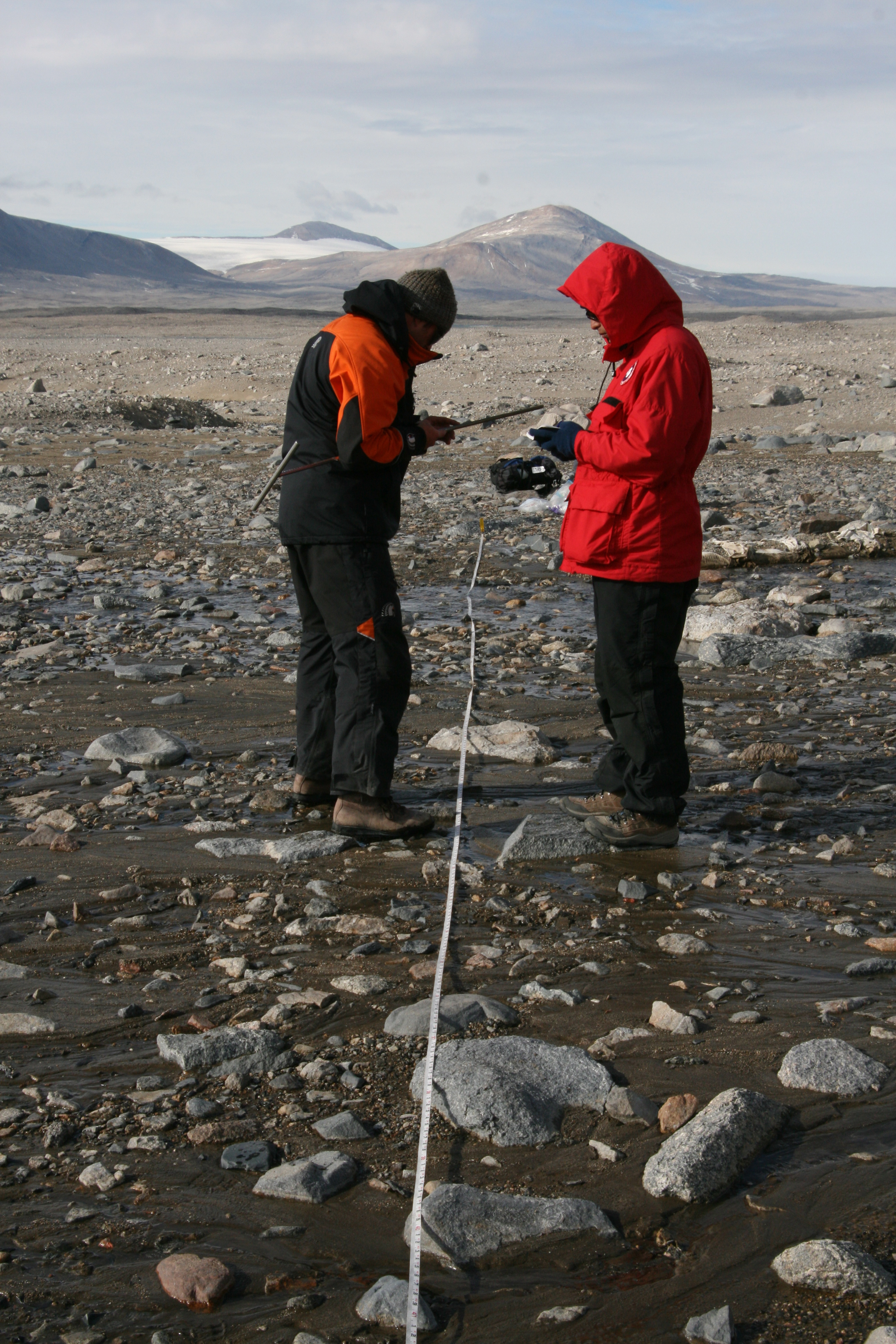
University of Waikato graduate student Nicholas Demetras (on the left), and Bishwo Adhikari, a graduate student at Brigham Young University (BYU), collaborate on a soil transect experiment as part of the McMurdo Dry Valleys Long Term Ecological Research (LTER) project. LTER is funded by the National Science Foundation (NSF). Following their study, the LTER researchers published a report in which they described a nematode worm they found that could withstand its cold Antarctic climate by creating a sort of antifreeze.

Diana Wall, director, School of Global Environmental Sustainability, Colorado State University (CSU) (left); Claire Ojima, an undergraduate student at CSU; and Byron Adams, an associate professor at Brigham Young University, maintain "worm farms" near Lake Hoare, Taylor Valley, Antarctica--a field stie of the McMurdo Dry Valleys Long Term Ecological Research (LTER) project. LTER is funded by the National Science Foundation (NSF). The opaque chambers are part of a long-term soil warming experiment. Adams is lifting the lid on a box that houses a data logger that stores meteorological and soil temperature data. Following their study, the LTER researchers published a report in which they described a nematode worm they found that could withstand its cold Antarctic climate by creating a sort of antifreeze.

When water inside a living thing freezes, ice crystals pierce cell membranes and kill them (which causes frostbite). But the nematode creates a protein that probably prevents the ice from forming sharp crystals or coats them so they don't puncture anything. Identifying the genes the worm uses to kick in its antifreeze system could have potential in future research such as engineering frost-resistant crops.

The researchers also reported that when its environment runs dry, the nematode dries itself out and goes into suspended animation until liquid water brings it back to life. Adams says this unique genetic response to its environment indicates the nematode will likely flourish as Antarctica gets wetter due to climate change, while other nematode species diminish.

The samples collected and data generated for this research were done under the auspices of the McMurdo Dry Valleys LTER project (under NSF grant OPP 98-10219) and administered under NSF's Office of Polar Programs. Adhikari received funding from NSF and Demetras received funding from New Zealand and NSF.

To read more about this study, see the BYU news release BYU study: How an Antarctic worm makes antifreeze and what that has to do with climate change.

(Date of Image: 2009)

Credit: Judit Hersko, California State University San Marcos

Thursday, May 31, 2012

Nematode Makes "Antifreeze" to Survive (Images 1 and 2)


Diana Wall, director of the School of Global Environmental Sustainability at Colorado State University, assists Brigham Young University associate professor Byron Adams in collecting soil samples near Lake Bonney, Taylor Valley, Antarctica. The researchers, who were part of the McMurdo Dry Valleys Long Term Ecological Research (LTER) project team, funded by the National Science Foundation (NSF), will take the samples back to the Crary Lab at McMurdo Station to analyze them for their microbial and metazoan diversity.

Following their study, the LTER researchers published a report in which they described a nematode worm they found that could withstand its cold Antarctic climate by creating a sort of antifreeze.

Bishwo Adhikari, a graduate student at Brigham Young University (BYU), sets up equipment at one of the McMurdo Dry Valleys Long Term Ecological Research (LTER) project field sites near Lake Fryxell, Taylor Valley, Antarctica. The LTER program is funded by the National Science Foundation (NSF). Following their study, the LTER researchers published a report in which they described a nematode worm they found that could withstand its cold Antarctic climate by creating a sort of antifreeze.

When water inside a living thing freezes, ice crystals pierce cell membranes and kill them (which causes frostbite). But the nematode creates a protein that probably prevents the ice from forming sharp crystals or coats them so they don't puncture anything. Identifying the genes the worm uses to kick in its antifreeze system could have potential in future research such as engineering frost-resistant crops.

The researchers also reported that when its environment runs dry, the nematode dries itself out and goes into suspended animation until liquid water brings it back to life. Adams says this unique genetic response to its environment indicates the nematode will likely flourish as Antarctica gets wetter due to climate change, while other nematode species diminish.

The samples collected and data generated for this research were done under the auspices of the McMurdo Dry Valleys LTER (under NSF grant OPP 98-10219) and administered under NSF's Office of Polar Programs. To read more about this study, see the BYU news release BYU study: How an Antarctic worm makes antifreeze and what that has to do with climate change.

(Date of Image: 2006)

Credit: Breana Simmons, Colorado State University