Showing posts with label nsf. Show all posts

Tuesday, October 2, 2012

National Science Foundation Awards $24.4 Million to Upgrade Financial Accounting System


Accenture Federal Services LLC tasked with installing commercial-off-the-shelf system to improve business accountability

The National Science Foundation has awarded a $24.4 million contract to Accenture Federal Services LLC of Chicago, Ill, to modernize the agency's 25 year-old financial accounting system.

Accenture will transition NSF's legacy financial accounting system to a fully integrated, commercial-off-the-shelf financial system hosted in a shared service environment.

The system upgrade is part of a foundation-wide initiative called iTRAK, designed to improve tracking and reporting of financial information across NSF systems for more efficient and effective funds management.

"In order to continue to nurture transformation and discoveries at the cutting edge of science and engineering, NSF is pleased to embark on a new era of financial management capabilities," said NSF Director Subra Suresh. "This is one of the most complex projects NSF has undertaken. It is necessary to ensure that the agency has the tools it needs for informed operational and programmatic decision-making, and that it has superior financial and business accountability, integrity and compliance."

iTRAK has been in the planning and pre-acquisition phase for the last four years. The award to Accenture kicks off its implementation phase, which program managers expect to pursue aggressively during the next 24 months.

"Award of the implementation contract is a significant milestone for the iTRAK project," said Marty Rubenstein, NFS's chief financial officer. "It was made possible by the outstanding efforts of many staff across NSF who participated in working groups to support every aspect of the project."

"Going forward," she said, "the pace and volume of project activities will substantially increase and be filled with challenges, but I'm confident we have the right team in place to make the project an overwhelming success."

Successful implementation of iTRAK will result in increased automation, improved data quality, enhanced analytical capabilities and greater transparency. In addition, NSF users will experience improved access to and availability of near real-time financial information, improved business processes and enhanced program management reporting.

The new financial management system is scheduled to go live on Oct. 1, 2014, the start of the 2015 fiscal year.

 -NSF-

Thursday, September 27, 2012

Ocean Acidification: Finding New Answers Through National Science Foundation Research Grants


Projects address concerns for acidifying marine ecosystems

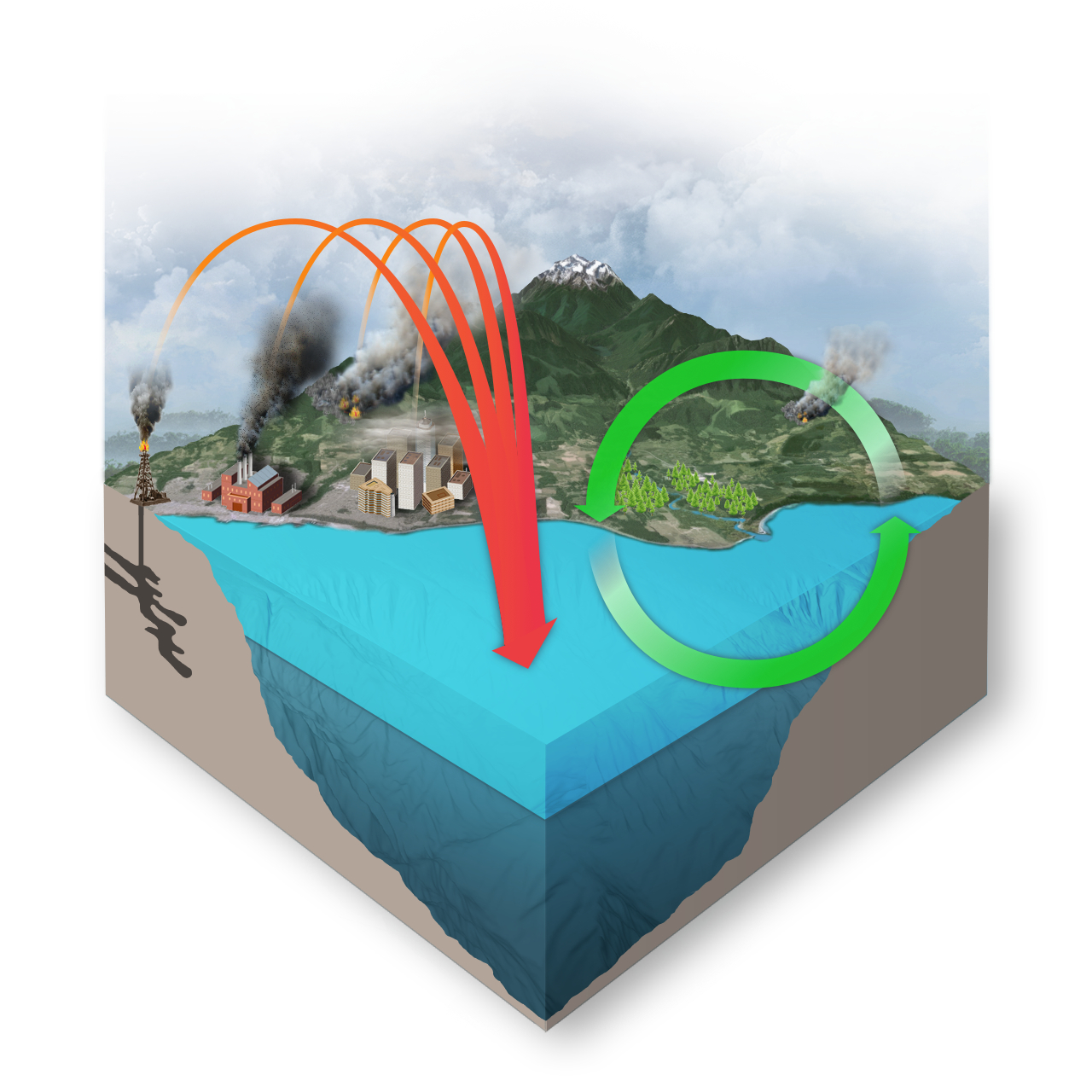
With increasing levels of carbon dioxide accumulating in the atmosphere and moving into marine systems, the world's oceans are becoming more acidic.

The oceans may be acidifying faster today than at anytime in the past 300 million years, scientists have found.

To address the concern for acidifying marine ecosystems, the National Science Foundation (NSF) recently awarded new grants totaling $12 million in its Ocean Acidification program. 

The program is part of NSF's Science, Engineering and Education for Sustainability (SEES) investment.

The awards, the second round in this program, are supported by NSF's Directorates for Geosciences and Biological Sciences, and Office of Polar Programs.

From tropical oceans to icy seas, the projects will foster research on the nature, extent and effects of ocean acidification on marine environments and organisms in the past, present and future.

"With this round of awards, NSF has an increasingly diverse portfolio of research projects on ocean acidification," says David Garrison, program director in NSF's Directorate for Geosciences and chair of NSF's Ocean Acidification Working Group.

"These scientists will make major contributions to understanding this serious environmental threat," says Garrison.

"We look forward to building on this effort over the next few years, and expect that ocean acidification research will be a major contribution to SEES efforts at NSF."

Ocean acidification affects marine ecosystems, organisms' life histories, ocean food webs and biogeochemical cycling, scientists have discovered.

The researchers believe there is a need to understand the chemistry of ocean acidification and its interplay with marine biochemical and physiological processes before Earth's seas become inhospitable to life as it is known today.

Animal species from pteropods--delicate, butterfly-like planktonic drifters--to hard corals are affected by ocean acidification. So, too, are the unseen microbes that fuel ocean productivity and influence the chemical functioning of ocean waters.

As the oceans become more acidic, the balance of molecules needed for shell-bearing organisms to manufacture shells and skeletons is altered.

The physiology of many marine species, from microbes to fish, may be affected.  A myriad of chemical reactions and cycles are influenced by the pH, or acidity, of the oceans.

"The Ocean Acidification awards address how organisms detect carbon dioxide and levels of acidity, and regulate these variables in their cells and body fluids," says William Zamer, program director in NSF's Directorate for Biological Sciences.

"These projects include studies of whether populations of animals have the genetic capacity to adapt to ocean acidification. The findings will yield new insights about how a future more acidic ocean will affect marine life."

Has ocean life faced similar challenges in our planet's past?

Earth system history informs our understanding of the effects of ocean acidification in the present and the future, says Garrison. 

For a true comprehension of how acidification will change the oceans, he says, we must integrate paleoecology with marine chemistry, physics, ecology and an understanding of the past environmental conditions on Earth.

Overall, Ocean Acidification grantees will ask questions such as will regional differences in marine chemistry and physics increase acidification? Are there complex interactions, cascades and bottlenecks that will emerge as the oceans acidify, and what are their ecosystem implications? And if current trends continue, how far-reaching will the changes be?

-NSF-

Finding New Paths Forward for Sustainable Energy


NSF announces first round of awards for novel energy research program

In 2011, the National Science Foundation (NSF) created the Sustainable Energy Pathways (SEP) program to spark innovative energy solutions that meet societal needs without creating burdens for future generations.

NSF envisions such solutions being domestically generated, at a reasonable cost, and not dependent on rare resources--while avoiding adverse environmental or societal consequences, not contributing to greenhouse gas emissions and preserving essential ecosystems.

Following a peer review evaluation process, NSF has now selected 20 multi-disciplinary SEP teams that will carry out highly integrated basic science and engineering research to introduce new and sustainable energy solutions.

"SEP is the first NSF program to generate basic scientific research and innovation on sustainable energy in the context of environmental, economic and societal acceptance," says SEP co-Chair George Maracas. "This life cycle, or systems, approach is implemented by forming research teams with expertise in several disciplines that collaborate on a plan for sustainable energy.

"Critically, the basic science is coupled to knowledge of how the innovations can be developed, adopted, and possibly scaled up to be incorporated into society."

The SEP award portfolio is highly diverse. Its projects include: development of novel solar cells, such as those that replace rare earth elements with earth abundant elements; energy storage solutions including innovative battery technology; novel catalysis approaches to generate renewable fuels; wind turbine, wave and geothermal energy conversion technologies; and new approaches to building design and human behavior studies that will allow designers to maximize energy efficiency without significantly affecting comfort level.

Each of the SEP projects addresses three fundamental considerations: fundamental scientific knowledge; social, economic and environmental factors; and education and workforce development.

"The SEP program is unique in how it broadly crosses disciplines to find sustainable energy solutions," says Zeev Rosenzweig, SEP co-chair. "The projects bring together mathematicians; chemists and materials scientists; geoscientists; computer scientists; chemical, electrical, mechanical and bioengineers; and social, behavioral and economics scientists in unique combinations.

"Because of the program's emphasis on integrating the social sciences and education components, we are able to support teams that tackle not just scientific and technological challenges, but also address societal, economic, behavioral, and environmental factors. The SEP teams will also introduce novel public outreach approaches to inform the public why sustainable energy pathways are needed and train a new generation of students that will be better equipped to handle the complexity of sustainable energy systems."

The SEP teams are led by a diverse group of experienced and beginning investigators who are inspired by both the challenges of sustainable energy and the broadly cross-disciplinary approaches that those challenges require.

Reflecting the multidisciplinary nature of the effort, the grantees are supported by 17 NSF divisions, part of a broader portfolio of cross-cutting programs within the agency's Science, Engineering, and Education for Sustainability (SEES) initiative.

The grants collectively address several core goals: 

•Create fundamental knowledge to characterize and understand existing energy systems and their limitations and form a basis to imagine, invent and deploy novel energy systems;
•Explore alternative energy sources, technologies and systems that can sustain a high quality of life for Earth's inhabitants;
•Investigate novel pathways for human energy futures built on a comprehensive understanding of risks and stressors associated with environmental, biospheric and societal responses associated with new energy pathways;
•Develop human capital to address the trans-disciplinary challenge of building a sustainable energy future;
•Foster the critically important public understanding of sustainable energy.

"We are proud to offer our strong support for the launch of the SEP program, which epitomizes both NSF's commitment to funding transformative fundamental research and to meeting the global challenges of the 21st century," says Celeste Rohlfing, acting assistant director for NSF's Mathematical and Physical Sciences Directorate. "The program's strong educational component will ensure that the next generation of the scientific workforce is prepared to continue the work of building a sustainable energy future."

The projects each receive up to four years of NSF funding at a rate of up to $500,000 per year, for a total program allocation of $37,000,000.

- NSF -

National Science Foundation Selects University of Wisconsin-Madison Professor F. Fleming Crim to Head Mathematical & Physical Sciences Directorate


The National Science Foundation (NSF) has selected F. Fleming Crim to serve as assistant director for the Directorate of Mathematical and Physical Sciences (MPS). Crim will lead a staff of 160 and an annual budget of $1.3 billion. MPS supports core research in astronomy, chemistry, physics, material science and mathematics

Currently, Crim is the John E. Willard and Hilldale Professor in the Department of Chemistry at the University of Wisconsin-Madison. His research group uses lasers to understand chemical reaction dynamics occurring in gases and in liquids.

"Dr. Crim will lead a directorate that has diverse and robust investments in fundamental research," said NSF Director Subra Suresh. "We greatly look forward to his contributions to NSF. We have tremendous confidence in his ability to keep MPS and the agency at the cutting edge of research and technology in the 21st century."

The scope of scientific and educational activity supported in MPS is enormous, ranging from phenomena at cosmological distances, to chemistry of life processes, through quantum mechanical processes in atomic and subatomic physics, to nanomaterials, to mathematics. MPS funds the operations and management of 14 major multi-user facilities, allowing thousands of scientists and students to press the bounds of scientific knowledge, and to invest in potential future projects needed to remain at the cutting-edge of research. MPS provides about 51 percent of the federal funding for basic research at academic institutions in the mathematical and physical sciences.

Crim has lectured around the world and published more than 150 papers. He received his bachelor's degree from Southwestern University and his doctorate from Cornell University. His research and teaching have earned many awards throughout his career. These include the Plyler Prize of the American Physical Society, the Langmuir Award of the American Chemical Society, and the Centenary Medal of the Royal Society of Chemistry (London).

He is an Honorary Fellow of the Chemical Research Society of India and an Honorary Professor of the Dalian Institute of Chemical Physics of the Chinese Academy of Sciences. He is a Fellow of the American Physical Society, American Chemical Society, and the American Association for the Advancement of Science. Crim is a member of both the National Academy of Sciences and the American Academy of Arts and Sciences.

Crim will begin his NSF appointment in January 2013.

 -NSF-

Wednesday, September 26, 2012

NSF Invests $50 Million in Research to Secure Our Nation's Cyberspace


Multiple awards include two large "Frontier" collaborative projects totaling $15 million

The National Science Foundation (NSF) today awarded $50 million for research projects to build a cybersecure society and protect the United States' vast information infrastructure.

The investments were made through the NSF's Secure and Trustworthy Cyberspace (SaTC) program, which builds on the agency's long-term support for a wide range of cutting edge interdisciplinary research and education activities to secure critical infrastructure that is vulnerable to a wide range of threats that challenge its security.

"Securing cyberspace is key to America's global economic competitiveness and prosperity," said NSF Director Subra Suresh. "NSF's investment in the fundamental research of cybersecurity is core to national security and economic vitality that embraces efficiency while also maintaining privacy."

In response to the SaTC call for proposals, more than 70 new research projects were funded, with award amounts ranging from about $100,000 to $10 million. This SaTC funding portfolio invests in state-of-the-art research in incentives that reduce the likelihood of cyber attacks and mitigate the negative effects arising from them. Together, these SaTC awards aim to improve the resilience of operating systems, software, hardware and critical infrastructure while preserving privacy, promoting usability and ensuring trustworthiness through foundational research and prototype deployments.

Two of the SaTC funded projects are Frontier awards, which are large, multi-institution projects that aim to provide high-level visibility to grand challenge research areas.

The SaTC program supports research from a number of disciplinary perspectives with investments from NSF's Directorates for Computer and Information Science and Engineering (CISE); Mathematical and Physical Sciences; and Social, Behavioral and Economic Sciences, as well as the Office of Cyberinfrastructure.

"We are excited that the SaTC award portfolio contains many interdisciplinary projects, including these two Frontier projects at the scale and complexity of research centers," said Farnam Jahanian, assistant director of NSF's CISE directorate. "The challenges they address--the technical and economic elements of Internet security and the issues associated with sharing of data in cyberspace while protecting individual privacy--are fundamental; addressing them will help establish a scientific basis for developing and operating computing and communications infrastructure that can resist attacks and be tailored to meet a wide range of technical and policy requirements."

What follows are descriptions of the two Frontier awards.

Beyond Technical Security: Developing an Empirical Basis for Socio-Economic Perspectives

University of California-San Diego - Stefan Savage
International Computer Science Institute - Vern Paxson
George Mason University - Damon McCoy

This project will receive a five-year grant totaling $10 million to tackle the technical and economic elements of Internet security: how the motivations and interactions of attackers, defenders and users shape the threats we face, how they evolve over time and how they can best be addressed.

While security is mediated by the technical workings of computers and networks, a commensurate level of scrutiny is driven by conflict between economic and social issues. Today's online attackers are commonly profit-seeking, and the implicit social networks that link them together play a critical role in fostering underlying cybercrime markets. By using a socio-economic lens, this project seeks to gain insights for understanding attackers, as well as victims, in order to help consumers, corporations and governments make large investments in security technology with greater understanding of their ultimate return-on-investment.

Security research has tended to focus only on the technologies that enable and defend against attacks. This project also emphasizes the economic incentives that motivate the majority of Internet attacks, the elaborate marketplaces that support them, and the relationships among cyber criminals who rely upon each other for services and expertise.

Grappling with both the economic and technical dimensions of cybersecurity is of fundamental importance for achieving a secure future information infrastructure, and developing a sound understanding requires research grounded in observation and experiment. Accordingly, the research will focus on four key components to:
1.Pursue in-depth empirical analyses of a range of online criminal activities.
2.Map out the evolving attacker ecosystem that preys on online social networks, and the extent to which unsafe online behavior is itself adopted and transmitted.
3.Study how relationships among these criminals are established, maintained and evolve over time.
4.Measure the efficacy of today's security interventions, both at large and at the level of individual users.

Consequently, this research has the potential to dramatically benefit society by undermining entire cybercrime ecosystems by, for example, disrupting underground activities, infrastructure and social networks.

Privacy Tools for Sharing Research Data

Harvard University - Salil Vadhan

A multi-disciplinary team of researchers at Harvard University will receive a four-year grant totaling nearly $5 million to develop tools and policies to aid the collection, analysis and sharing of data in cyberspace, while protecting individual privacy.

Today, information technology, advances in statistical computing and the deluge of data available through the Internet are transforming all areas of science and engineering. However, maintaining the privacy of human subjects is a major challenge. Given the complexities involved in ensuring privacy for shared research data, Vadhan will be joined by a team of professors with expertise in areas such as mathematics and statistics, government, technology and law. Together they will engage in a multi-disciplinary approach to refine and develop definitions and measures for privacy and data utility. They will also design an array of technological, legal and policy tools that can be used when dealing with sensitive data.

These tools will be tested and deployed at the Harvard Institute for Quantitative Social Science's Dataverse Network, an open-source digital repository that offers the largest catalogue of science datasets in the world. The ideas and tools developed in this project will have a significant broad impact on society since the issues addressed in the work arise in many other important domains, including public health and electronic commerce.

 -NSF-