A battery-powered small unmanned aircraft system recently shattered a
world endurance record, flying for more than eight hours in the desert
heat — a milestone achieved using critical propulsion components
assembled by the Army's organic industrial base.
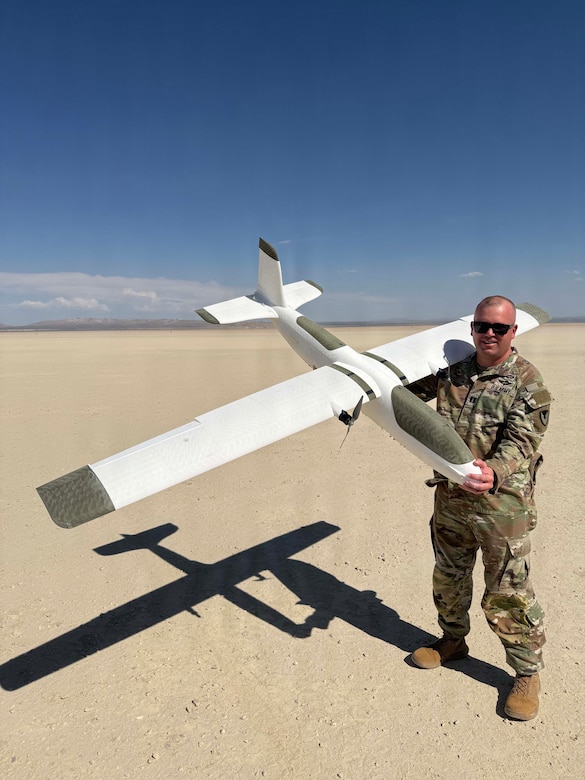
During the Game of Drones 26-2 demonstration at Edwards Air Force
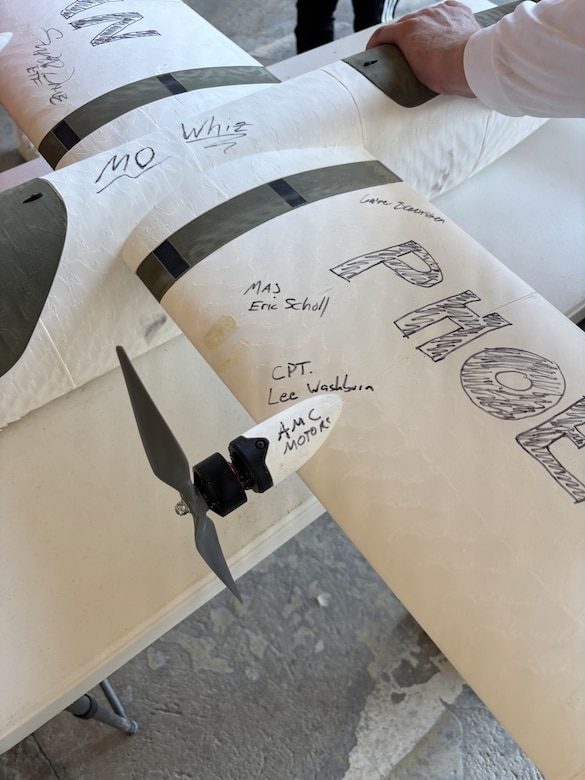
Base, California, July 15-17, two brushless direct current motors
assembled at Tobyhanna Army Depot, Pennsylvania, successfully powered a
Group 1 small UAS to a record-breaking flight time of eight hours, 41
minutes and 43 seconds. The aircraft flew for approximately 300 miles
before safely landing, surpassing the previous record by 50 minutes.
The record-breaking flight represents a major milestone for Army
Materiel Command and its efforts to build secure, domestic supply chains
for critical defense technologies. The demonstration served as the
first major outdoor operational test of the Tobyhanna-assembled motors
on an active aircraft.
"AMC is proud to provide materiel solutions to support innovation
across the uncrewed systems spectrum," said Army Capt. Lee Washburn, AMC
military liaison for advanced manufacturing of small UAS. "From
providing components to soldiers at innovation labs, to providing
industry clean supply chain solutions in support of drone dominance, it
is our goal to continue to participate in events that demonstrate our
capabilities and help refine our components for the warfighter based
upon realistic testing."
Rapid, collaborative on-site manufacturing made the achievement
possible. The drone was designed in less than 10 minutes using computer
prompts via adaptability software. Within 24 hours of takeoff, the
aircraft was fabricated inside a mobile containerized production factory
using commercial 3D printers, integrated with the Tobyhanna brushless
motors and a battery from an industry partner and assembled on-site by a
three-person team.
The event, sponsored by the Defense Contract Management Agency blue
list team, highlighted a strategic shift toward domestic production. By
establishing manufacturing capabilities within the Army's organic
industrial base, the service is working to eliminate foreign
dependencies for critical parts.
"This is a huge milestone for AMC and Tobyhanna, considering the fact
that we just cut the ribbon on the new brushless motor line on June
30," said Jon Strzelec, the AMC advanced manufacturing lead for small
UAS.
AMC recently began transforming the organic industrial base to
produce and assemble various critical small UAS components, including
frames at Rock Island Arsenal-Joint Manufacturing and Technology Center,
Illinois, and batteries at Red River Army Depot, Texas.
A key focus of this initiative is developing organic industrial base
capabilities to help government, industry and academic partners secure
Defense Contract Management Agency approval for systems and components
to be included on the blue list. The blue list is an aggregated
reference portal of compliant, cybersecure and U.S.-manufactured UAS
platforms and components, facilitating safer, faster procurement for
defense users. AMC is already seeing positive results through this
initiative, having sent small UAS that the organic industrial base fully
assembled to several Army units for use in training events.
Additionally, two brushless motor form factors and multiple lithium-ion
battery configurations from Tobyhanna are being tested on various
platforms at Redstone Test Center's new UAS test operations center.
"Game of Drones was proof that industry and the government can work
together in creative ways to produce exceptional results," Strzelec
said. "The event showcases exactly what the Army set out to do — provide
opportunities for industry to partner with the Army and let the Army
leverage the innovation and technical depth of industry."
As AMC continues to scale its advanced manufacturing capabilities
including chassis, circuit card assemblies and propellers, its
coordination with Defense Contract Management Agency remains vital.
"As AMC's production efforts across the [organic industrial base]
continue to expand, we will continue to work with [the Defense Contract
Management Agency] in not only blue listing these components but also
providing them to the experimental test force for Game of Drones events
to innovate and break other performance and endurance records," Washburn
said.
The small UAS performance data from Edwards Air Force Base has been
officially submitted to the Guinness Book of World Records for
verification.






 Posts
Posts

