Showing posts with label SEES-RCN program. Show all posts

Thursday, September 27, 2012

Ocean Acidification: Finding New Answers Through National Science Foundation Research Grants


Projects address concerns for acidifying marine ecosystems

With increasing levels of carbon dioxide accumulating in the atmosphere and moving into marine systems, the world's oceans are becoming more acidic.

The oceans may be acidifying faster today than at anytime in the past 300 million years, scientists have found.

To address the concern for acidifying marine ecosystems, the National Science Foundation (NSF) recently awarded new grants totaling $12 million in its Ocean Acidification program. 

The program is part of NSF's Science, Engineering and Education for Sustainability (SEES) investment.

The awards, the second round in this program, are supported by NSF's Directorates for Geosciences and Biological Sciences, and Office of Polar Programs.

From tropical oceans to icy seas, the projects will foster research on the nature, extent and effects of ocean acidification on marine environments and organisms in the past, present and future.

"With this round of awards, NSF has an increasingly diverse portfolio of research projects on ocean acidification," says David Garrison, program director in NSF's Directorate for Geosciences and chair of NSF's Ocean Acidification Working Group.

"These scientists will make major contributions to understanding this serious environmental threat," says Garrison.

"We look forward to building on this effort over the next few years, and expect that ocean acidification research will be a major contribution to SEES efforts at NSF."

Ocean acidification affects marine ecosystems, organisms' life histories, ocean food webs and biogeochemical cycling, scientists have discovered.

The researchers believe there is a need to understand the chemistry of ocean acidification and its interplay with marine biochemical and physiological processes before Earth's seas become inhospitable to life as it is known today.

Animal species from pteropods--delicate, butterfly-like planktonic drifters--to hard corals are affected by ocean acidification. So, too, are the unseen microbes that fuel ocean productivity and influence the chemical functioning of ocean waters.
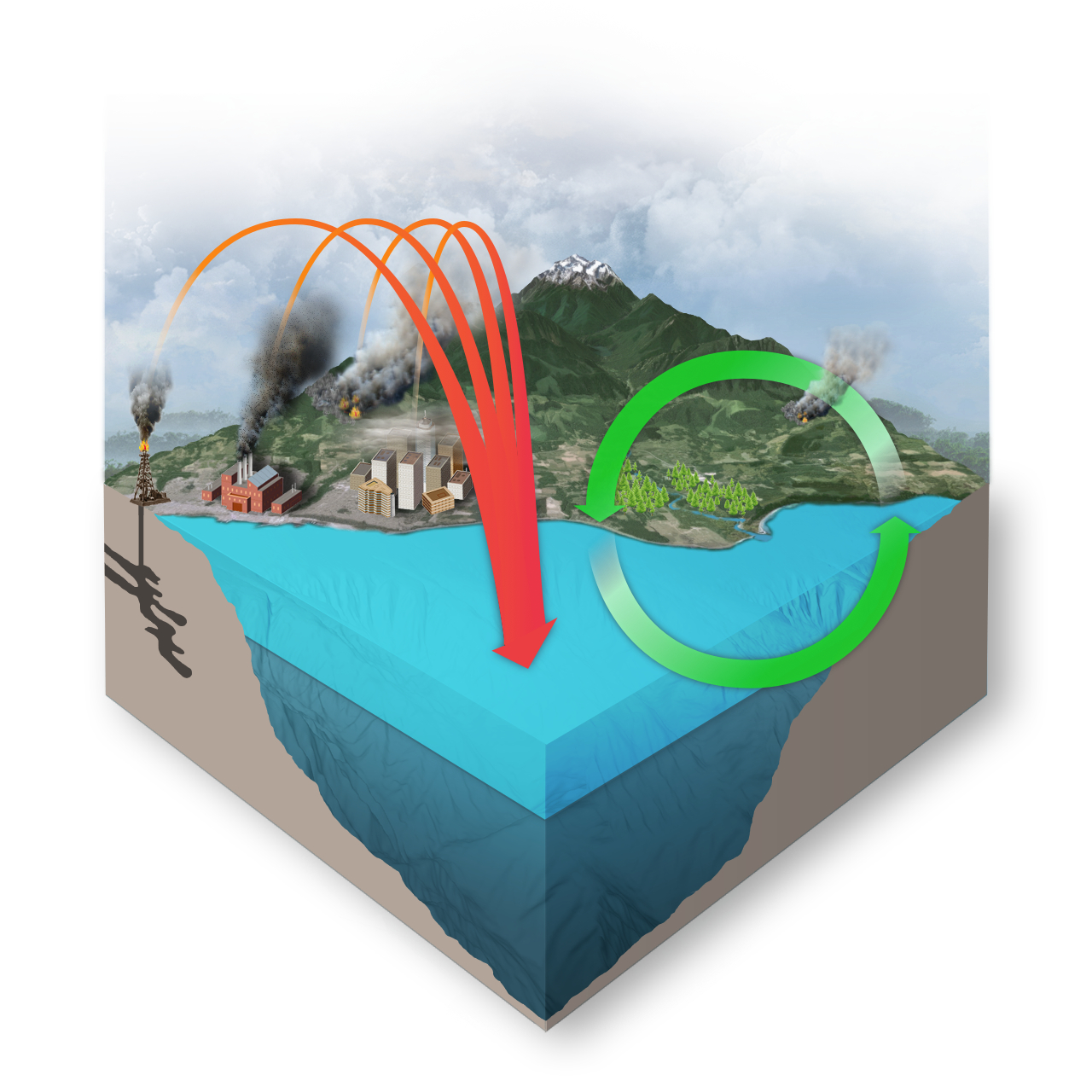
As the oceans become more acidic, the balance of molecules needed for shell-bearing organisms to manufacture shells and skeletons is altered.

The physiology of many marine species, from microbes to fish, may be affected.  A myriad of chemical reactions and cycles are influenced by the pH, or acidity, of the oceans.

"The Ocean Acidification awards address how organisms detect carbon dioxide and levels of acidity, and regulate these variables in their cells and body fluids," says William Zamer, program director in NSF's Directorate for Biological Sciences.

"These projects include studies of whether populations of animals have the genetic capacity to adapt to ocean acidification. The findings will yield new insights about how a future more acidic ocean will affect marine life."

Has ocean life faced similar challenges in our planet's past?

Earth system history informs our understanding of the effects of ocean acidification in the present and the future, says Garrison. 

For a true comprehension of how acidification will change the oceans, he says, we must integrate paleoecology with marine chemistry, physics, ecology and an understanding of the past environmental conditions on Earth.

Overall, Ocean Acidification grantees will ask questions such as will regional differences in marine chemistry and physics increase acidification? Are there complex interactions, cascades and bottlenecks that will emerge as the oceans acidify, and what are their ecosystem implications? And if current trends continue, how far-reaching will the changes be?

-NSF-

Wednesday, September 19, 2012

Maintaining Earth's Sustainability: Scientists, Engineers, Educators Take Coordinated Approach


National Science Foundation makes second set of awards in sustainability Research Coordination Networks program

Coordinating phosphorus research to create a sustainable food system; studying urban heat islands; and advancing social and environmental understanding of mountain landscapes are all topics of new grants totaling $5 million recently made through the National Science Foundation's (NSF) Science, Engineering and Education for Sustainability (SEES) portfolio.

The awards are through NSF's SEES-Research Coordination Networks (RCN) program.

Grants also include building a research network for promoting Arctic urban sustainability in Russia; multidisciplinary approaches to carbon capture, utilization and storage; creating an engineering research collaboratory for sustainable infrastructure in a changing climate; and developing an integrated network for social sustainability concepts, language and assessment.

"These collaborative projects address difficult challenges that threaten the sustainability of our country's natural resources and built environment," says Thomas Peterson, NSF assistant director for Engineering.

"With a sound base in science and engineering, sustainable development can benefit society, the economy and the environment over the long term."

SEES activities span the range of scientific domains at NSF.

SEES RCN awards are supported by NSF's Directorates for Biological Sciences; Computer & Information Science & Engineering; Education and Human Resources; Engineering; Geosciences; Mathematical & Physical Sciences; Social, Behavioral & Economic Sciences; Office of Cyberinfrastructure; Office of International Science and Engineering; and Office of Polar Programs.

These NSF directorates and offices support interdisciplinary research and education projects that will move society toward global sustainability; build new links among existing projects and partners; add new participants in sustainability research; and develop the workforce needed to understand and address the complex issues of environmental sustainability.

"An important metric of the success of a program like SEES RCN is the legacy it will leave long after the program has been completed," says Marge Cavanaugh, NSF acting assistant director for Geosciences.

"The interdisciplinary partnerships that SEES RCN projects will create, along with the broadly educated and creative students and young researchers they will produce, are just as important as the new processes and links that will be discovered."

Sustainability science and engineering goes beyond adaptation to and mitigation of environmental change.  A sustainable world is one in which human needs are met without harm to the environment, and without sacrificing the ability of future generations to meet their needs in turn.

This formidable task requires understanding the integrated system of society and the natural world, along with the alterations humans are making on Earth, scientists, engineers and educators believe.

NSF's SEES activities are addressing this need by supporting interdisciplinary research and education leading to a better understanding of, predictive capability for, and solutions to environmental challenges.

The RCN program's goal is to advance a scientific field or create new directions in research and education. Groups of investigators coordinate their research, training and education activities across disciplinary, organizational, geographic and international boundaries.

The program fosters new collaborations, including international partnerships, and addresses interdisciplinary topics.

By linking U.S. and international scientists in research on sustainable cities, energy, water, engineering and manufacturing sustainability, and related subjects, SEES RCNs are creating new directions in sustainability science and engineering.

NSF SEES RCN 2012 awardees and their institutions and projects are:

James Elser, Arizona State University: RCN-SEES: Coordinating Phosphorus Research to Create a Sustainable Food System

James Gosz, University of Idaho: RCN-SEES: Advancing our social and environmental understanding of complex mountain landscapes and their vulnerability to environmental change

Jennifer Jacobs, University of New Hampshire: RCN-SEES: Engineering Research Collaboratory for Sustainable Infrastructure in a Changing Climate

Robert Orttung, George Washington University: RCN-SEES: Building a Research Network for Promoting Arctic Urban Sustainability in Russia

Ah-Hyung Park, Columbia University: RCN-SEES: Multidisciplinary Approaches to Carbon Capture, Utilization and Storage

Nicole Peterson, University of North Carolina at Charlotte: RCN-SEES: Integrated Network for Social Sustainability: Concepts, Language, and Assessment

Peter Snyder, University of Minnesota-Twin Cities: RCN-SEES: Urban Heat Island Network

 -NSF-