Showing posts with label grants. Show all posts

Thursday, September 27, 2012

Ocean Acidification: Finding New Answers Through National Science Foundation Research Grants


Projects address concerns for acidifying marine ecosystems

With increasing levels of carbon dioxide accumulating in the atmosphere and moving into marine systems, the world's oceans are becoming more acidic.

The oceans may be acidifying faster today than at anytime in the past 300 million years, scientists have found.

To address the concern for acidifying marine ecosystems, the National Science Foundation (NSF) recently awarded new grants totaling $12 million in its Ocean Acidification program. 

The program is part of NSF's Science, Engineering and Education for Sustainability (SEES) investment.

The awards, the second round in this program, are supported by NSF's Directorates for Geosciences and Biological Sciences, and Office of Polar Programs.

From tropical oceans to icy seas, the projects will foster research on the nature, extent and effects of ocean acidification on marine environments and organisms in the past, present and future.

"With this round of awards, NSF has an increasingly diverse portfolio of research projects on ocean acidification," says David Garrison, program director in NSF's Directorate for Geosciences and chair of NSF's Ocean Acidification Working Group.

"These scientists will make major contributions to understanding this serious environmental threat," says Garrison.

"We look forward to building on this effort over the next few years, and expect that ocean acidification research will be a major contribution to SEES efforts at NSF."

Ocean acidification affects marine ecosystems, organisms' life histories, ocean food webs and biogeochemical cycling, scientists have discovered.

The researchers believe there is a need to understand the chemistry of ocean acidification and its interplay with marine biochemical and physiological processes before Earth's seas become inhospitable to life as it is known today.

Animal species from pteropods--delicate, butterfly-like planktonic drifters--to hard corals are affected by ocean acidification. So, too, are the unseen microbes that fuel ocean productivity and influence the chemical functioning of ocean waters.
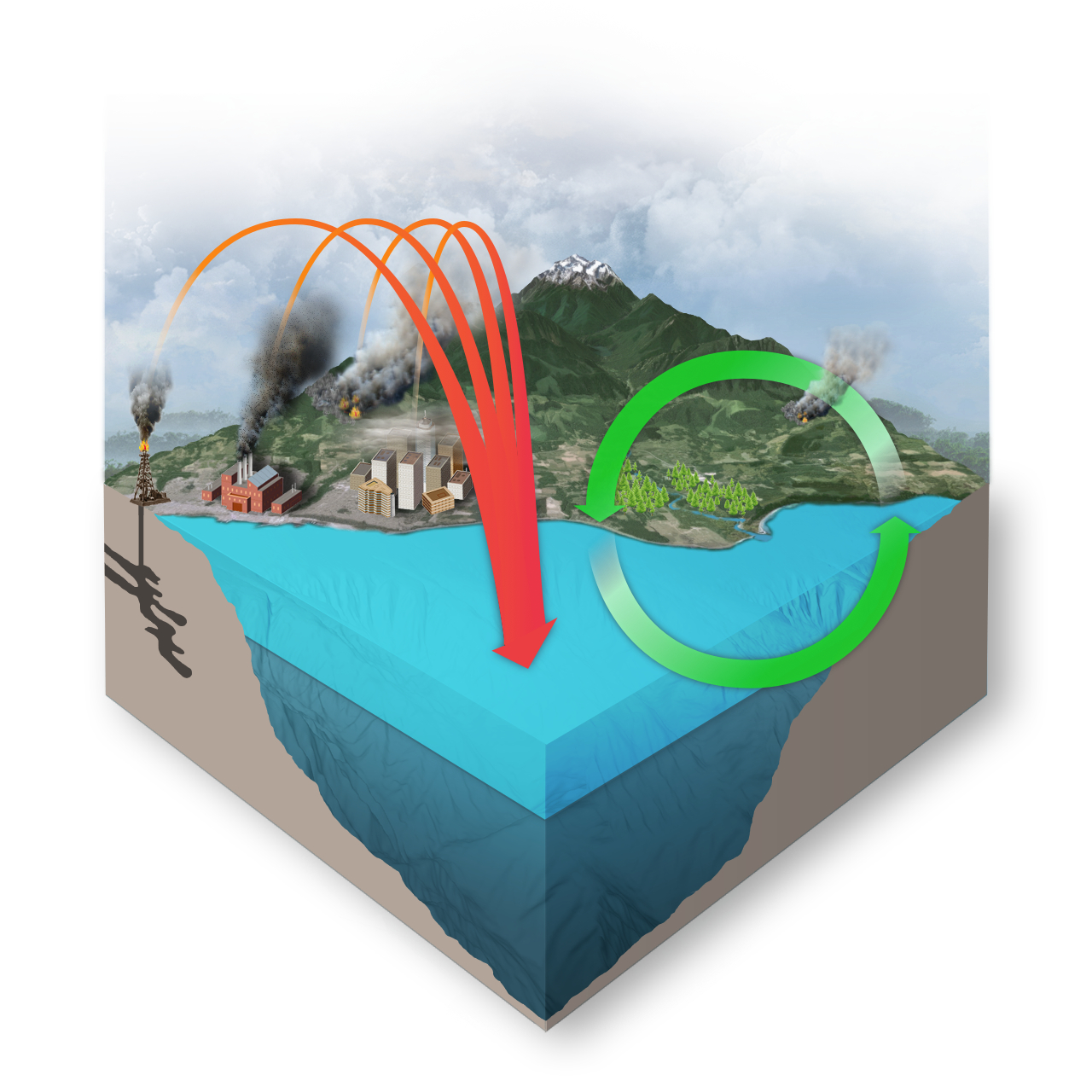
As the oceans become more acidic, the balance of molecules needed for shell-bearing organisms to manufacture shells and skeletons is altered.

The physiology of many marine species, from microbes to fish, may be affected.  A myriad of chemical reactions and cycles are influenced by the pH, or acidity, of the oceans.

"The Ocean Acidification awards address how organisms detect carbon dioxide and levels of acidity, and regulate these variables in their cells and body fluids," says William Zamer, program director in NSF's Directorate for Biological Sciences.

"These projects include studies of whether populations of animals have the genetic capacity to adapt to ocean acidification. The findings will yield new insights about how a future more acidic ocean will affect marine life."

Has ocean life faced similar challenges in our planet's past?

Earth system history informs our understanding of the effects of ocean acidification in the present and the future, says Garrison. 

For a true comprehension of how acidification will change the oceans, he says, we must integrate paleoecology with marine chemistry, physics, ecology and an understanding of the past environmental conditions on Earth.

Overall, Ocean Acidification grantees will ask questions such as will regional differences in marine chemistry and physics increase acidification? Are there complex interactions, cascades and bottlenecks that will emerge as the oceans acidify, and what are their ecosystem implications? And if current trends continue, how far-reaching will the changes be?

-NSF-

Wednesday, September 26, 2012

NSF Invests $50 Million in Research to Secure Our Nation's Cyberspace


Multiple awards include two large "Frontier" collaborative projects totaling $15 million

The National Science Foundation (NSF) today awarded $50 million for research projects to build a cybersecure society and protect the United States' vast information infrastructure.

The investments were made through the NSF's Secure and Trustworthy Cyberspace (SaTC) program, which builds on the agency's long-term support for a wide range of cutting edge interdisciplinary research and education activities to secure critical infrastructure that is vulnerable to a wide range of threats that challenge its security.

"Securing cyberspace is key to America's global economic competitiveness and prosperity," said NSF Director Subra Suresh. "NSF's investment in the fundamental research of cybersecurity is core to national security and economic vitality that embraces efficiency while also maintaining privacy."

In response to the SaTC call for proposals, more than 70 new research projects were funded, with award amounts ranging from about $100,000 to $10 million. This SaTC funding portfolio invests in state-of-the-art research in incentives that reduce the likelihood of cyber attacks and mitigate the negative effects arising from them. Together, these SaTC awards aim to improve the resilience of operating systems, software, hardware and critical infrastructure while preserving privacy, promoting usability and ensuring trustworthiness through foundational research and prototype deployments.

Two of the SaTC funded projects are Frontier awards, which are large, multi-institution projects that aim to provide high-level visibility to grand challenge research areas.

The SaTC program supports research from a number of disciplinary perspectives with investments from NSF's Directorates for Computer and Information Science and Engineering (CISE); Mathematical and Physical Sciences; and Social, Behavioral and Economic Sciences, as well as the Office of Cyberinfrastructure.

"We are excited that the SaTC award portfolio contains many interdisciplinary projects, including these two Frontier projects at the scale and complexity of research centers," said Farnam Jahanian, assistant director of NSF's CISE directorate. "The challenges they address--the technical and economic elements of Internet security and the issues associated with sharing of data in cyberspace while protecting individual privacy--are fundamental; addressing them will help establish a scientific basis for developing and operating computing and communications infrastructure that can resist attacks and be tailored to meet a wide range of technical and policy requirements."

What follows are descriptions of the two Frontier awards.

Beyond Technical Security: Developing an Empirical Basis for Socio-Economic Perspectives

University of California-San Diego - Stefan Savage
International Computer Science Institute - Vern Paxson
George Mason University - Damon McCoy

This project will receive a five-year grant totaling $10 million to tackle the technical and economic elements of Internet security: how the motivations and interactions of attackers, defenders and users shape the threats we face, how they evolve over time and how they can best be addressed.

While security is mediated by the technical workings of computers and networks, a commensurate level of scrutiny is driven by conflict between economic and social issues. Today's online attackers are commonly profit-seeking, and the implicit social networks that link them together play a critical role in fostering underlying cybercrime markets. By using a socio-economic lens, this project seeks to gain insights for understanding attackers, as well as victims, in order to help consumers, corporations and governments make large investments in security technology with greater understanding of their ultimate return-on-investment.

Security research has tended to focus only on the technologies that enable and defend against attacks. This project also emphasizes the economic incentives that motivate the majority of Internet attacks, the elaborate marketplaces that support them, and the relationships among cyber criminals who rely upon each other for services and expertise.

Grappling with both the economic and technical dimensions of cybersecurity is of fundamental importance for achieving a secure future information infrastructure, and developing a sound understanding requires research grounded in observation and experiment. Accordingly, the research will focus on four key components to:
1.Pursue in-depth empirical analyses of a range of online criminal activities.
2.Map out the evolving attacker ecosystem that preys on online social networks, and the extent to which unsafe online behavior is itself adopted and transmitted.
3.Study how relationships among these criminals are established, maintained and evolve over time.
4.Measure the efficacy of today's security interventions, both at large and at the level of individual users.

Consequently, this research has the potential to dramatically benefit society by undermining entire cybercrime ecosystems by, for example, disrupting underground activities, infrastructure and social networks.

Privacy Tools for Sharing Research Data

Harvard University - Salil Vadhan

A multi-disciplinary team of researchers at Harvard University will receive a four-year grant totaling nearly $5 million to develop tools and policies to aid the collection, analysis and sharing of data in cyberspace, while protecting individual privacy.

Today, information technology, advances in statistical computing and the deluge of data available through the Internet are transforming all areas of science and engineering. However, maintaining the privacy of human subjects is a major challenge. Given the complexities involved in ensuring privacy for shared research data, Vadhan will be joined by a team of professors with expertise in areas such as mathematics and statistics, government, technology and law. Together they will engage in a multi-disciplinary approach to refine and develop definitions and measures for privacy and data utility. They will also design an array of technological, legal and policy tools that can be used when dealing with sensitive data.

These tools will be tested and deployed at the Harvard Institute for Quantitative Social Science's Dataverse Network, an open-source digital repository that offers the largest catalogue of science datasets in the world. The ideas and tools developed in this project will have a significant broad impact on society since the issues addressed in the work arise in many other important domains, including public health and electronic commerce.

 -NSF-

Science Board Concerned About Declines in Public Research University Funding


Decade of diminishing funding could impact research and education

Declines in state funding threaten the ability of major public research universities to educate new scientists and engineers, recruit and retain the best faculty and students, and continue performing top-quality research, according to a new report released today by the National Science Board, the governing body of the National Science Foundation. The NSB said it is concerned with the long-term financial health of these institutions.

State per-student funding for the nation's 101 major public research universities declined by an average of 20 percent in inflation-adjusted dollars between 2002 and 2010, with 10 states experiencing declines ranging from 30 to as high as 48 percent.  In addition to the declines in state funding, increases in enrollment contributed to this national trend.  Enrollment grew nationally by 13 percent--or nearly 320,000 more students--between 2002 and 2010.

Seven states bucked the national trend and did not cut per-student funding for their major public research universities between 2002 and 2010.  New York and Wyoming increased funding per student 72 percent and 62 percent, respectively, and Wyoming led the nation in 2010 in funding per student at $16,986 for its single major public research university.

The National Science Board's report states that it "is concerned with the continued ability of these universities to provide affordable, quality education and training to a broad range of students, conduct basic science and engineering research that leads to innovations, and perform their public service missions."

It cautions that a continued decline in state funding "threatens [the major public research universities'] continued capacity to attract the best talent, to provide quality education and training for the next generation of scientists and engineers, and to compete with their private counterparts, and is likely to result in an ongoing increase in tuition and fees."

The report expanded on data from the 2012 edition of Science and Engineering Indicators that examined 101 public research universities that were either among the top recipients of academic R&D funding in the country or the leading recipients in their state.  Highlighting the importance of these universities, the companion report noted that they educate and train the next generation of scientists and engineers--awarding more than half of the nation's doctoral and a third of baccalaureate degrees in these fields--and perform a substantial portion of basic science and engineering research.

"These premier universities are the envy of the world," said Dan Arvizu, the chairman of the National Science Board and director of the National Renewable Energy Laboratory in Colorado. "They play a central role in ensuring that the nation can innovate and compete globally, and they contribute to the economic vitality of their states and to the nation's future prosperity."

Public research universities perform more than 60 percent of the academic science and engineering R&D funded by the federal government. Of the 25 universities with the highest academic R&D expenditures in 2009, 17 were public institutions.  In 2010 alone, research at public universities led to 436 new start-up companies and 2,625 patents.

"At a time of increasing global competition, public research universities are drivers of economic development," said NSB member Ray Bowen, a visiting distinguished professor at Rice University and president emeritus of Texas A&M University.  "All of us should be concerned about their continued strength and ability to educate and conduct cutting-edge research."

The deep state cuts contributed to increases in tuition and fees that have outpaced both inflation and the comparable increases at private universities.  At public research universities, revenue from tuition increased by 50 percent between 1999 and 2009.  Many public research universities are trying to recruit more students who pay a higher tuition rate, such as out-of-state and international students.

Growing public-private gap
The companion report also warns of a widening gap between public and private research universities in key areas.  From 1999 to 2009, instructional spending per full-time student increased by 9.9 percent, to $9,986, at public research institutions, while it grew by 24.5 percent, to $20,232, at private institutions. And faculty salaries, already higher at private institutions, grew three times faster at private research universities than at public research universities over the last decade.

"Reductions in revenue of public universities and gaps in salary between public and private universities have the potential to lead to an outflow of talent at public research universities and reduced research capacity," the report warned. That could result in a "greater concentration of talent and R&D in fewer geographical locations and at fewer universities with smaller and less diverse student bodies."

Access to quality, affordable education
The report noted the importance of these institutions in providing access to affordable, quality education for all students, particularly underrepresented minorities and students from lower socioeconomic backgrounds. The issue of access will take on a heightened importance as increased enrollment in higher education is projected to come from traditionally underrepresented minorities, primarily Hispanic students.  Because more minority students are attending community colleges and private for-profit institutions, the NSB said public research universities should place a greater emphasis on recruiting these students and facilitating successful transfers from community colleges.

"We are also concerned about cuts and tuition hikes that could hinder large populations of students with limited financial means from pursuing science and engineering education at world-class institutions.  We need the talent of all students from all backgrounds, and we need it nationwide," said José-Marie Griffiths, former NSB member and vice president for Academic Affairs at Bryant University.

The National Science Board is the governing body for the National Science Foundation and serves as independent advisors to Congress and the President. The report released today--Diminishing Funding and Rising Expectations: Trends and Challenges for Public Research Universities--is a policy companion report to Science and Engineering Indicators 2012, the NSB's biennial report that provides a broad base of policy-neutral, quantitative information on the U.S. and international science and engineering enterprise.

 -NSF-

Tuesday, September 11, 2012

Engineering Research Centers Awarded $55.5M to Innovate in Nanoscale Science and Engineering


Three new centers to address significant national needs: health and environmental monitoring, mobile computing and energy technologies, and electromagnetic components

The National Science Foundation (NSF) recently awarded $55.5 million to university consortia to establish three new Engineering Research Centers (ERCs) that will advance interdisciplinary nanosystems research and education in partnership with industry.

Over the next five years, these Nanosystems ERCs, or NERCS, will advance knowledge and create innovations that address significant societal issues, such as the human health and environmental implications of nanotechnology. At the same time, they will advance the competitiveness of U.S. industry. The centers will support research and innovation in electromagnetic systems, mobile computing and energy technologies, nanomanufacturing, and health and environmental sensing.

"The Nanosystems ERCs will build on more than a decade of investment and discoveries in fundamental nanoscale science and engineering," said Thomas Peterson, NSF's assistant director for engineering. "Our understanding of nanoscale phenomena, materials and devices has progressed to a point where we can make significant strides in nanoscale components, systems and manufacturing."

Since 1985, NSF's ERC program has fostered extensive collaborations to create technological breakthroughs for new products and services and to prepare U.S. engineering graduates for successful participation in the global economy.

The three centers launched this year, as part of the third generation of NSF ERCs, place increased emphasis on innovation and entrepreneurship, partnerships with small research firms in translational research, education of an innovative engineering workforce, and international collaboration and cultural exchange.

The NERCs are expected to create transformational science and engineering platforms for the respective fields of nanoscale research, education, and innovation. As appropriate to its particular areas of research, each NERC will include the societal and environmental implications of the nano-enabled scientific and technological breakthroughs.

"The Nanosystems ERCs will help bring the technological advantages that nanotechnology offers to a broad array of U.S. industries," said Lynn Preston, the leader of the ERC program, "and they will provide young engineers with valuable experience in research and entrepreneurship, positioning them to be leaders in emerging areas of the global economy."

Including the new awards, NSF supports 20 ERCs in the areas of biotechnology and health care; energy, sustainability and infrastructure; manufacturing; and microelectronics, sensing and information technology. Brief descriptions of the new centers follow.

The NSF Nanosystems Engineering Research Center for Advanced Self-Powered Systems of Integrated Sensors and Technology (ASSIST), led by North Carolina State University, will create self-powered wearable systems that simultaneously monitor a person's environment and health, in search of connections between exposure to pollutants and chronic diseases.

The NSF Nanosystems Engineering Research Center for Nanomanufacturing Systems for Mobile Computing and Mobile Energy Technologies (NASCENT), led by the University of Texas at Austin, will pursue high-throughput, reliable, and versatile nanomanufacturing process systems, and will demonstrate them through the manufacture of mobile nanodevices.

The NSF Nanosystems Engineering Research Center for Translational Applications of Nanoscale Multiferroic Systems (TANMS), led by the University of California Los Angeles, will seek to reduce the size and increase the efficiency of components and systems whose functions rely on the manipulation of either magnetic or electromagnetic fields.

The NERCs will link with the resources of NSF's Network for Computational Nanotechnology as the main cyber-platform for dissemination of computational and simulation tools and educational materials. Additionally, the centers will leverage the experimental resources of the NSF National Nanotechnology Infrastructure Network.

The NERCs will be a part of NSF's contributions to the National Nanotechnology Initiative, which is a government-wide activity designed to ensure that investments in this area are made in a coordinated and timely manner and to accelerate the pace of revolutionary nanotechnology discoveries. A long-term view for nanotechnology research and education needs is documented in the 2010 NSF/WTEC report, "Nanotechnology Research Directions for Societal Needs in 2020."

 -NSF-