Showing posts with label electricity. Show all posts

Friday, June 29, 2012

Working On Full Charge


We all know the routine.

You buy the battery pack of 150 thinking you’ll never need another battery ever again!  Then three months later you’re cursing the universe because your XBOX 360 remote needs two batteries and the only one you’ve managed to find is a suspicious-looking, partially gnawed AA you found under the couch.

And let us not even get into the arduous process of actually having to dispose of them.

And sure, you could make the argument that rechargeable batteries are the more responsible way to go, but I find that I have trust issues when it comes to those things.  The more they get used, the less useful they seem to be.

Ah, but fear not, battery-users!  Scientists from the Army Research Laboratory (ARL) are working to improve the life and power of batteries.  How are they doing that?  It all comes down to the science of energy.

ARL researchers have developed a substance that increases the life of a battery by 30% without increasing the weight.  The new technology deals with the electrolyte part of lithium-ion batteries.  By modifying the liquid electrolytes, the battery is able to tolerate higher voltages.

So why are they doing this?  Well, the Army wants to increase the cell voltage of lithium ion batteries, but still maintain their reliability.  Get the best of both worlds, so to speak.  Sounds too good to be true?

Surprisingly, it isn’t.

“The idea is with higher voltage batteries we can increase the energy density, which means that the soldiers can carry less weight into the field, but still have the same amount of energy carrying with them,” said Dr. Arthur Von Cresce, materials scientist with the U.S. Army Research Laboratory.  Cresce is a part of the team that helped develop the substance that helped improve the electrolyte performance in batteries.

And that’s no small feat.

“Electrolytes are a very vulnerable component to the battery,” Dr. Cresce explains.  “We are modifying the electrolytes so we can tolerate higher voltages.  Through that, we accomplish the goal of higher energy density.”

This is a holistic approach to restructuring the way a battery works that goes beyond the military.  Battery use is an everyday part of our lives.  There’s a movement in the military to “go green”– and lithium batteries would be “definitely the way to go” with that, according to Dr. Cresce.

However, lithium batteries do have certain problems.  They don’t work well at low temperatures, and they’re heavy.  If you buy a hybrid car, that thing has a 600 pound battery pack.  Changing the weight of batteries, and eventually how they work, could make a world of difference (pun intended, of course).

Making this a reality across the global board is more than just tweaking a little piece here or improving an electrolyte there, it’s a team effort.  And by that I mean when it comes to batteries, all the components work in unison.  That means they have to be engineered together.

“We work as a team.  I’m working with Kang Xu [a scientist at the Army Research Laboratory] on the liquid electrolytes.  But we work together with other departments and specialists.  We all advance, but we only advance together,” said Dr. Cresce.

The environmental impact of these batteries remains the same as it would for its lesser efficient counterparts, but having a more efficient and lighter battery on the battlefield could actually improve the life and health of service members.

“It’s my understanding that soldiers have to carry between 16-30 pounds of batteries, and that’s because they have a lot of different battery operated devices, like a GPS, communicator, laser sight, night vision, etc.   If we increase the energy density, we can reduce the amount of weight that they carry,” Cresce says.

Researchers estimate that they could reduce the payload carry of a service member by about ten pounds, and if anyone’s carted around 80-90 lbs of weight in blistering heat and scorching desert, ten pounds off could make a big difference.

“It’s a big deal to take some weight off their backs,” Cresce adds.  “We’re trying to shrink the overall bulk size of batteries [as well], while maintaining safety and reliability.  Reliability is the big one for us.  These guys are using these in abusive conditions.”

Right now, they’re limited in the shapes of sizes of cells, but Cresce is hopeful for the future.  “In the future I see really small or conformal, even flexible batteries.”

As amazing as this all is, I still find myself skeptical when the words “rechargeable” are coupled with the word “battery”.

I thought you said you would be there for me! *sob*

Dr. Cresce is no stranger to my hesitancy.   “We all suffer from this.  As our laptops and cell phones age, the batteries hold less charge.  So typically the soldiers don’t trust these batteries.  What we’re finding is with our modifications, the batteries can have more cycles at a higher voltage.  They retain their charge. If they’re left alone, if they’re charged many times, they’re still reliable.”

And the conceptual energy-efficient ideas don’t stop with the battery.

“ARL does a lot of fundamental research, so a lot of these issues of finding fuel wherever you can or using these very simple systems comes down to what kind of fundamentals and materials you understand, and we’re very good at that here,” he says.

Some of this sustainable energy technology is already being implemented in the field with the warfighter.  There are blanket solar cells and portable solar cells currently being used on posts and bases in Afghanistan, and the ARL is looking into developing fuel cell electric generation technology that could revolutionize the way the military harnesses energy in the future.

When it comes down to it, this goes way beyond having a more convenient battery for video games controllers or equipment in the field.  This kind of science could shape the future of energy-efficiency.

“I think it’s kind of interesting that we [the Army] have the chance to affect the world and the science of batteries.  We’re really at the cutting edge of lithium ion and fuel cell and solar research,” Dr. Cresce said with an upbeat lift in his tone.  “This is a really cool place to be.”

———- Information for this blog post provided by the Army Research Laboratory

Thursday, June 21, 2012

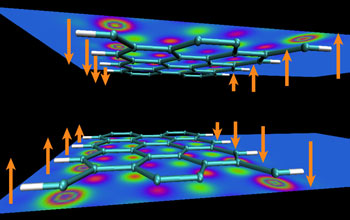
Effects of Stacking Graphene Nanoribbons


A new study from researchers at Rensselaer Polytechnic Institute details how stacking nanoribbons of graphene can boost a material's ability to transmit electrical charges. The discovery further supports the idea that graphene could one day replace traditional copper as the best material for interconnects that transmit data and power around computer chips.

The research was supported in part by the New York State Interconnect Focus Center at Rensselaer, the Semiconductor Research Corporation, and the National Science Foundation's (NSF) Division of Electrical, Communications, and Cyber Systems, as well as an anomymous donor. To learn more about this research, see the Rensselaer news release, Researching Graphene Nanoelectronics for a Post-Silicon World.

(Date of Image: November 2011)

Credit: Rensselaer Polytechnic Institute/Nayak

Thursday, June 14, 2012

NRL Charges Marine Corps Expeditionary Power Requirements


Researchers at the U.S. Naval Research Laboratory Electronics Science and Technology Division  are working to help the U.S. Marine Corps  (USMC) reduce expeditionary energy supply needs and risks and increase the effectiveness of forward deployed forces.

“One of the most significant challenges currently facing the Marine Corps is the need to supply sufficient electricity to individual Marines in forward operating bases,” said Robert Walters, head, NRL Solid State Devices Branch. “Mobile photovoltaics are a technology that can address these needs by leveraging emerging, flexible, high efficiency photovoltaic technology.”

The military’s need to reduce both fuel and battery resupply is a real time requirement for increasing combat effectiveness and decreasing vulnerability.  The overarching objective of the USMC Expeditionary Energy Strategy is to increase operational energy efficiency on the battlefield through the combination of on-installation alternative energy production and energy demand reduction.

This subsequently is projected to reduce fuel consumed, per Marine, per day, by 50 percent and reduce total weight of batteries carried by nearly 200 thousand pounds.

It has been recognized that photovoltaic (PV) cells are essentially the only renewable energy source that can meet this challenge. NRL, in collaboration with MicroLink Devices, Design Intelligence Incorporated, and the USMC Expeditionary Energy Office (E2O), have developed and prototyped a new photovoltaic system to meet the unique needs of USMC Expeditionary Power for robust, high-efficiency solar panels suitable for adaptation to rechargeable batteries in the field.

The mobile solar power (MSP) prototype, capitalizing on recent advances in solar cell technology that allow the manufacture of high-efficiency, flexible solar cells, consists of an array of single-junction solar cells with a power conditioning circuit that maximizes array power production and charges a standard, military issue, high capacity rechargeable lithium-ion battery (BB-2590).

Flexible solar cells with light to electricity conversion efficiency as high as 30 percent have been demonstrated in multi-cell panels and although field tests are still in progress, initial modeling, simulation, and experimentation of the nearly 150 square-inch deployed array have shown considerable promise toward future progress, producing more than 11 Watts per 1-sun air mass (AM) 1.5 illumination.

Story provided by the Naval Research Laboratory

Tuesday, May 15, 2012

Berkeley Lab Scientists Generate Electricity From Viruses


New approach is a promising first step toward the development of tiny devices that harvest electrical energy from everyday tasks

Imagine charging your phone as you walk, thanks to a paper-thin generator embedded in the sole of your shoe. This futuristic scenario is now a little closer to reality. Scientists from the U.S. Department of Energy’s Lawrence Berkeley National Laboratory (Berkeley Lab) have developed a way to generate power using harmless viruses that convert mechanical energy into electricity.

The scientists tested their approach by creating a generator that produces enough current to operate a small liquid-crystal display. It works by tapping a finger on a postage stamp-sized electrode coated with specially engineered viruses. The viruses convert the force of the tap into an electric charge.

Their generator is the first to produce electricity by harnessing the piezoelectric properties of a biological material. Piezoelectricity is the accumulation of a charge in a solid in response to mechanical stress.

The milestone could lead to tiny devices that harvest electrical energy from the vibrations of everyday tasks such as shutting a door or climbing stairs.

It also points to a simpler way to make microelectronic devices. That’s because the viruses arrange themselves into an orderly film that enables the generator to work. Self-assembly is a much sought after goal in the finicky world of nanotechnology.


The scientists describe their work in a May 13 advance online publication of the journal Nature Nanotechnology.

“More research is needed, but our work is a promising first step toward the development of personal power generators, actuators for use in nano-devices, and other devices based on viral electronics,” says Seung-Wuk Lee, a faculty scientist in Berkeley Lab’s Physical Biosciences Division and a UC Berkeley associate professor of bioengineering.

He conducted the research with a team that includes Ramamoorthy Ramesh, a scientist in Berkeley Lab’s Materials Sciences Division and a professor of materials sciences, engineering, and physics at UC Berkeley; and Byung Yang Lee of Berkeley Lab’s Physical Biosciences Division.

The piezoelectric effect was discovered in 1880 and has since been found in crystals, ceramics, bone, proteins, and DNA. It’s also been put to use. Electric cigarette lighters and scanning probe microscopes couldn’t work without it, to name a few applications.

But the materials used to make piezoelectric devices are toxic and very difficult to work with, which limits the widespread use of the technology.

Lee and colleagues wondered if a virus studied in labs worldwide offered a better way. The M13 bacteriophage only attacks bacteria and is benign to people. Being a virus, it replicates itself by the millions within hours, so there’s always a steady supply. It’s easy to genetically engineer. And large numbers of the rod-shaped viruses naturally orient themselves into well-ordered films, much the way that chopsticks align themselves in a box.

These are the traits that scientists look for in a nano building block. But the Berkeley Lab researchers first had to determine if the M13 virus is piezoelectric. Lee turned to Ramesh, an expert in studying the electrical properties of thin films at the nanoscale. They applied an electrical field to a film of M13 viruses and watched what happened using a special microscope. Helical proteins that coat the viruses twisted and turned in response—a sure sign of the piezoelectric effect at work.

Next, the scientists increased the virus’s piezoelectric strength. They used genetic engineering to add four negatively charged amino acid residues to one end of the helical proteins that coat the virus. These residues increase the charge difference between the proteins’ positive and negative ends, which boosts the voltage of the virus.

The scientists further enhanced the system by stacking films composed of single layers of the virus on top of each other. They found that a stack about 20 layers thick exhibited the strongest piezoelectric effect.

The only thing remaining to do was a demonstration test, so the scientists fabricated a virus-based piezoelectric energy generator. They created the conditions for genetically engineered viruses to spontaneously organize into a multilayered film that measures about one square centimeter. This film was then sandwiched between two gold-plated electrodes, which were connected by wires to a liquid-crystal display.

When pressure is applied to the generator, it produces up to six nanoamperes of current and 400 millivolts of potential. That’s enough current to flash the number “1” on the display, and about a quarter the voltage of a triple A battery.

“We’re now working on ways to improve on this proof-of-principle demonstration,” says Lee. “Because the tools of biotechnology enable large-scale production of genetically modified viruses, piezoelectric materials based on viruses could offer a simple route to novel microelectronics in the future.”

Berkeley Lab’s Laboratory Directed Research and Development fund and the National Science Foundation supported this work.

###

Lawrence Berkeley National Laboratory addresses the world’s most urgent scientific challenges by advancing sustainable energy, protecting human health, creating new materials, and revealing the origin and fate of the universe. Founded in 1931, Berkeley Lab’s scientific expertise has been recognized with 13 Nobel prizes. The University of California manages Berkeley Lab for the U.S. Department of Energy’s Office of Science. For more, visit www.lbl.gov.