Showing posts with label pennsylvania state university. Show all posts

Wednesday, September 5, 2012

NSF Interdisciplinary Program Takes on Critical National Research Priorities


Nobel laureate, first-time institutions among 18 NSF IGERT awards for 2012
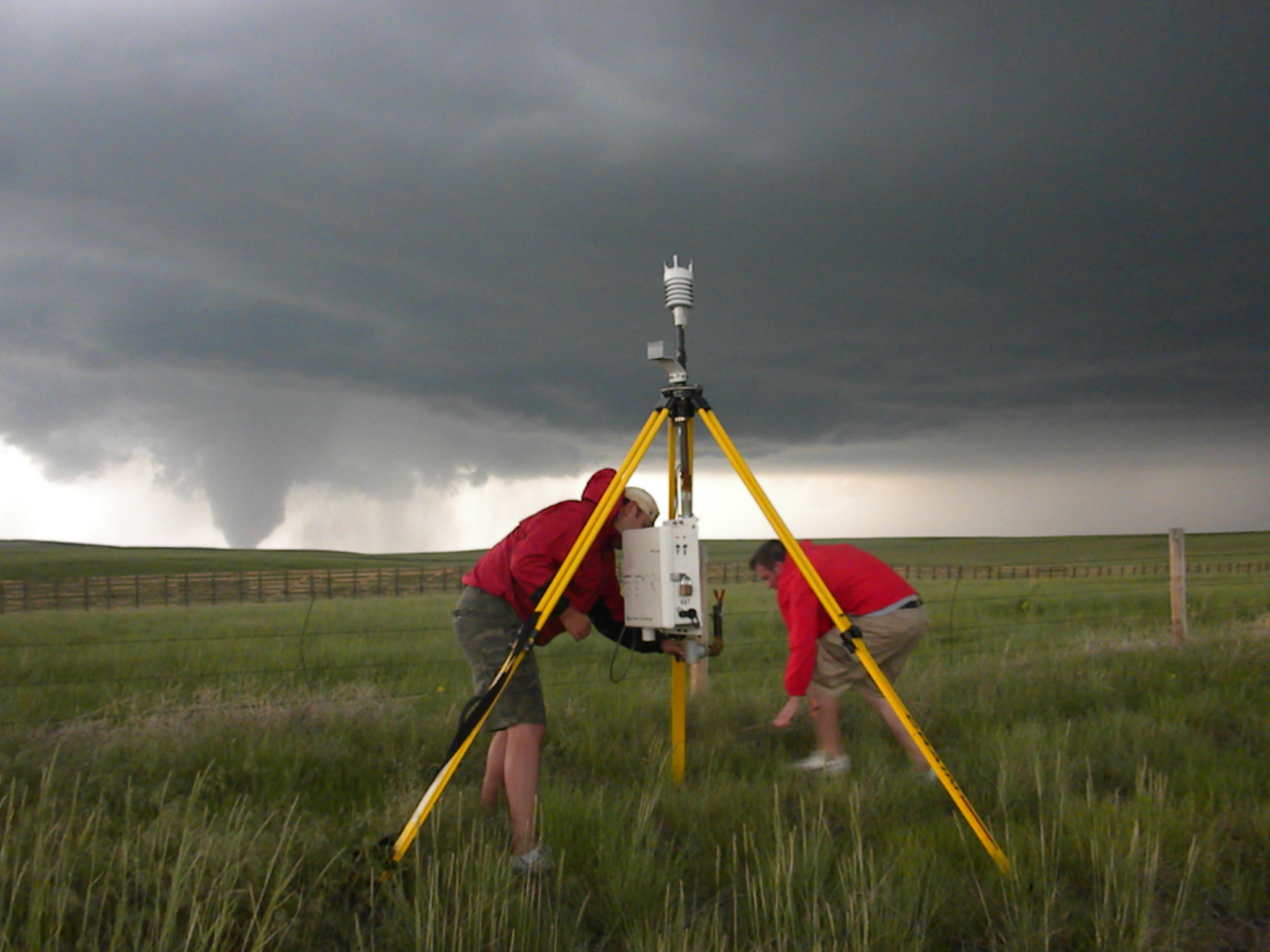
The National Science Foundation's Integrative Graduate Education and Research Traineeship (IGERT) program announces 18 new awards to develop transformative interdisciplinary research and training programs for Ph.D. students at institutions across the country. Among the new principal investigators is Thomas Cech, a University of Colorado, Boulder, professor and winner of the 1989 Nobel Prize in chemistry. In addition to the 123 institutions that have hosted an IGERT to date, the program welcomes five new institutions: Tulane University, Worcester Polytechnic Institute, University of Connecticut, West Virginia University and the University of Vermont.

In keeping with the IGERT program's community-driven, cutting-edge research at the interfaces of disciplines, this year's awards tackle critical national priority research areas that require interdisciplinary approaches. From Big Data to biofabrication, advanced manufacturing to nanotechnology, energy to sustainability, 18 IGERT PIs, hundreds of faculty, and more than 400 Ph.D. students will collaborate across disciplines to solve the world's toughest research problems.

Complementary projects at Penn State and Columbia University will investigate the technical, social, legal and ethical considerations associated with the world's growing collection of data. Professor of Computer Science Julia Hirschberg at Columbia is bringing together an impressive group of researchers to better extract knowledge and information from text, audio and video data. At Penn State, Professor of Political Science Burt Monroe and colleagues are aiming to understand the social contexts and behaviors behind collected data, and advance social science research, by developing the next generation of researchers with technical and theoretical expertise.

At Purdue University, PI Carol Handwerker and her team of engineers, physical scientists and social scientists, are aiming to solve the greatest challenges in creating sustainable electronics. With the United Nations estimating that e-waste will grow globally by 40 million tons each year, the IGERT team hopes to partner with industry to produce talented and capable leaders to holistically approach a sustainable life-cycle process in the manufacturing, shipping, consumption and disposal of computers, mobile devices and appliances.

IGERT is an NSF-wide program intended to meet the challenges of educating U.S. Ph.D. scientists and engineers with the interdisciplinary background, deep knowledge in a chosen discipline, and the technical, professional, and personal skills needed for the career demands of the future. The program is intended to establish new models for graduate education and training in a fertile environment for collaborative research that transcends traditional disciplinary boundaries, and to engage students in understanding the processes by which research is translated to innovations for societal benefit.

 -NSF-

Tuesday, August 14, 2012

Acoustic Tweezers


"Acoustic tweezers," a technique developed by engineers at Penn State University that enables flexible, on-chip manipulation and patterning of cells using standing surface acoustic waves.

Unlike optical tweezers, which are large, expensive, use a lot of energy and can damage or kill living cells, acoustic tweezers are smaller than a dime and can be fabricated on a chip using standard chip manufacturing processes, as well as manipulate living cells without damaging or killing them. Acoustic tweezers can position many tiny objects simultaneously and place them equidistant from each other in either parallel lines or on a grid--a technique that will be useful in biological applications where researchers can place stem cells on a grid for testing or skin cells on a grid to grow new skin. Scientists predict that the acoustic tweezers technique will benefit many fields of biomedical research, including drug discovery and artificial organ development. The research was supported by the National Science Foundation (grant ECCS 08-24183).

To learn more, see the ScienceDaily story Acoustic Tweezers Can Position Tiny Objects.

(Date of Image: June 2009)

Credit: Tony Jun Huang, Jinjie Shi; Penn State University

Wednesday, April 25, 2012

Technology Teacher Launches Experiment (Image 13 and 14)


Aerial view looking down at the Juniata River in Pennsylvania. This picture was taken by a Canon digital camera attached to a weather balloon and launched by Randy Edelman, a technology education teacher at the Philipsburg-Osceola area junior high school in Pennsylvania, and his students. The balloon carried the camera, which sat inside a foam cooler, 60,000 to 90,000 feet in the air in an attempt to capture photos of the curvature of the Earth, the thin veil of its atmosphere and the darkness of space.

Randy Edelman, a technology education teacher at the Philipsburg-Osceola area junior high school in Pennsylvania, retrieves the payload from his weather balloon launch. The orange cooler that was attached to the balloon carried a Canon digital camera in an attempt to capture photos of the curvature of the Earth, the thin veil of its atmosphere and the darkness of space.

Edelman came up with the idea after reading about students at MIT who accomplished a similar experiment. Edelman planned the project with Seth Wilberding, a doctoral student from Pennsylvania State University who volunteers at the school one day a week through a National Science Foundation partnership.

While in the classroom, Edelman had his students calculate how the altitude, pressure and climate would affect the rate of ascent and descent of the balloon. Then the group placed a Canon digital camera inside a Styrofoam cooler and surrounded it with newspaper and hand warmers to keep the electronics warm at 90,000 feet, where temperatures can go below 50 degrees Fahrenheit. The camera was programmed to take photos every 12 seconds. They painted the cooler bright orange so it would be easier to spot and attached a parachute to it for safe landing.

The cooler was launched on a windy day from the high-school baseball field in Philipsburg. It stayed aloft for 72 minutes, after which it landed about 90 miles away in the town of Newport, between Lewistown and Harrisburg. Edelman was able to safely retrieve the cooler from its landing spot in a tree 70 feet in the air.

The experiment was a success, yielding 388 pictures, some of which were snapped at 60,000 to 90,000 feet--two or three times as high as planes fly. Other shots included aerial views of Interstate 99, U.S. Route 322, Philipsburg, State College and other local landmarks.

Edelman funded most of the project with a $500 education grant from the McDonalds Corporation.

Credit: Philipsburg-Osceola School District.

Technology Teacher Launches Experiment (Image 11 and 12)


In this aerial picture, the weather balloon from which it was taken is beginning its descent. The picture was taken by a Canon digital camera attached to the balloon and launched by Randy Edelman, a technology education teacher at the Philipsburg-Osceola area junior high school in Pennsylvania, and his students. The balloon carried the camera, which sat inside a foam cooler, 60,000 to 90,000 feet in the air in an attempt to capture photos of the curvature of the Earth, the thin veil of its atmosphere and the darkness of space.

Aerial view looking down on Bloomfield, Pa. This picture was taken by a Canon digital camera attached to a weather balloon and launched by Randy Edelman, a technology education teacher at the Philipsburg-Osceola area junior high school in Pennsylvania, and his students. The balloon carried the camera, which sat inside a foam cooler, 60,000 to 90,000 feet in the air in an attempt to capture photos of the curvature of the Earth, the thin veil of its atmosphere and the darkness of space.

Edelman came up with the idea after reading about students at MIT who accomplished a similar experiment. Edelman planned the project with Seth Wilberding, a doctoral student from Pennsylvania State University who volunteers at the school one day a week through a National Science Foundation partnership.

While in the classroom, Edelman had his students calculate how the altitude, pressure and climate would affect the rate of ascent and descent of the balloon. Then the group placed a Canon digital camera inside a Styrofoam cooler and surrounded it with newspaper and hand warmers to keep the electronics warm at 90,000 feet, where temperatures can go below 50 degrees Fahrenheit. The camera was programmed to take photos every 12 seconds. They painted the cooler bright orange so it would be easier to spot and attached a parachute to it for safe landing.

The cooler was launched on a windy day from the high-school baseball field in Philipsburg. It stayed aloft for 72 minutes, after which it landed about 90 miles away in the town of Newport, between Lewistown and Harrisburg. Edelman was able to safely retrieve the cooler from its landing spot in a tree 70 feet in the air.

The experiment was a success, yielding 388 pictures, some of which were snapped at 60,000 to 90,000 feet--two or three times as high as planes fly. Other shots included aerial views of Interstate 99, U.S. Route 322, Philipsburg, State College and other local landmarks.

Edelman funded most of the project with a $500 education grant from the McDonalds Corporation. (Date of Images: June 2011)

Credit: Philipsburg-Osceola School District.

Technology Teacher Launches Experiment (Image 9 and 10)


This picture was taken about 40 minutes into flight by a Canon digital camera attached to a weather balloon. The balloon was launched by Randy Edelman, a technology education teacher at the Philipsburg-Osceola area junior high school in Pennsylvania, and his students. The balloon carried the camera, which sat inside a foam cooler, 60,000 to 90,000 feet in the air in an attempt to capture photos of the curvature of the Earth, the thin veil of its atmosphere and the darkness of space.

Aerial view with the Susquehanna River in Pennsylvania below. Note the curvature of the Earth. This picture was taken by a Canon digital camera attached to a weather balloon and launched by Randy Edelman, a technology education teacher at the Philipsburg-Osceola area junior high school in Pennsylvania, and his students. The balloon carried the camera, which sat inside a foam cooler, 60,000 to 90,000 feet in the air in an attempt to capture photos of the curvature of the Earth, the thin veil of its atmosphere and the darkness of space.

Edelman came up with the idea after reading about students at MIT who accomplished a similar experiment. Edelman planned the project with Seth Wilberding, a doctoral student from Pennsylvania State University who volunteers at the school one day a week through a National Science Foundation partnership.

While in the classroom, Edelman had his students calculate how the altitude, pressure and climate would affect the rate of ascent and descent of the balloon. Then the group placed a Canon digital camera inside a Styrofoam cooler and surrounded it with newspaper and hand warmers to keep the electronics warm at 90,000 feet, where temperatures can go below 50 degrees Fahrenheit. The camera was programmed to take photos every 12 seconds. They painted the cooler bright orange so it would be easier to spot and attached a parachute to it for safe landing.

The cooler was launched on a windy day from the high-school baseball field in Philipsburg. It stayed aloft for 72 minutes, after which it landed about 90 miles away in the town of Newport, between Lewistown and Harrisburg. Edelman was able to safely retrieve the cooler from its landing spot in a tree 70 feet in the air.

The experiment was a success, yielding 388 pictures, some of which were snapped at 60,000 to 90,000 feet--two or three times as high as planes fly. Other shots included aerial views of Interstate 99, U.S. Route 322, Philipsburg, State College and other local landmarks.

Edelman funded most of the project with a $500 education grant from the McDonalds Corporation. (Date of Images: June 2011)

Credit: Philipsburg-Osceola School District.

Technology Teacher Launches Experiment (Image 7 and 8)


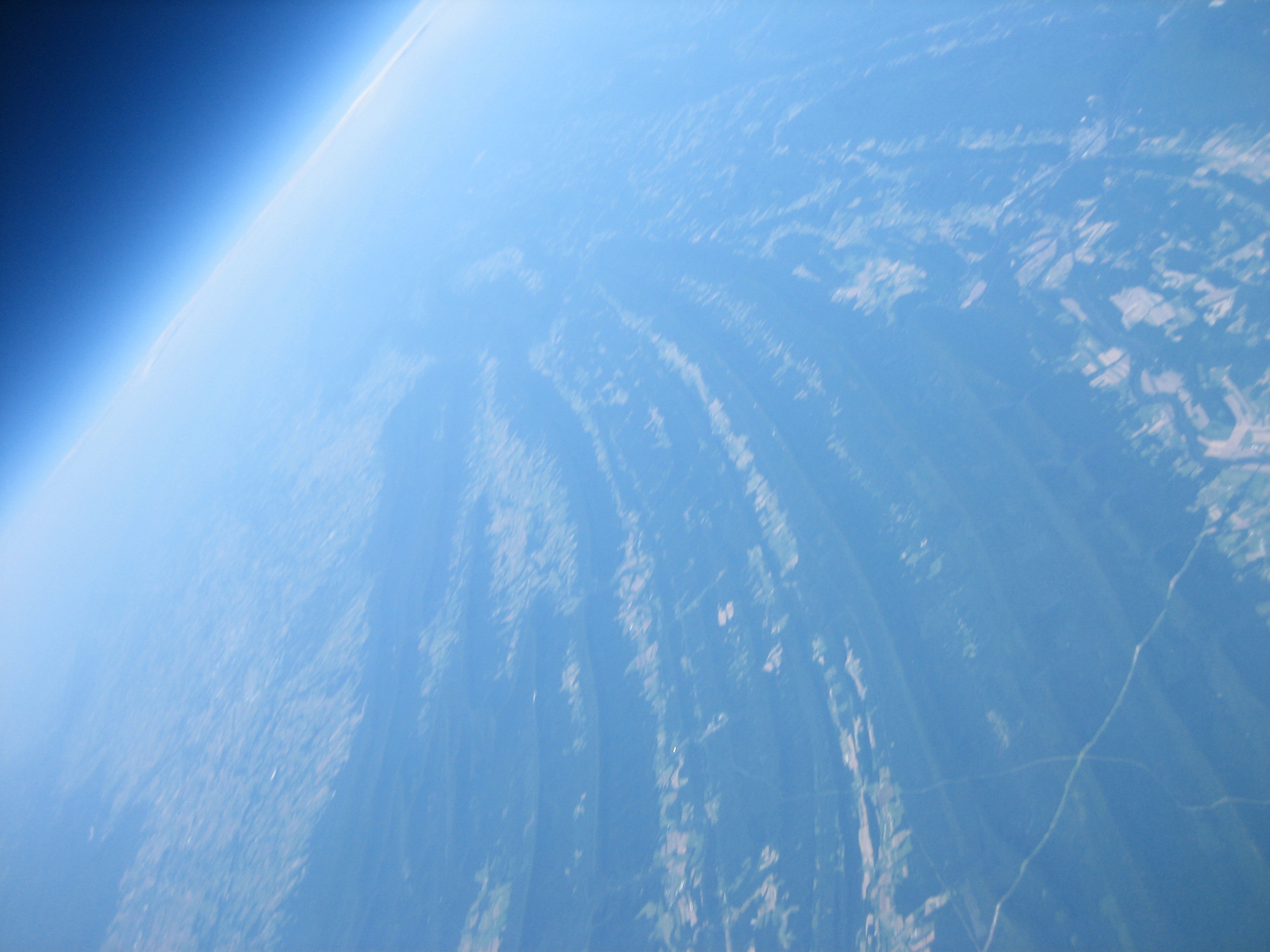
In this aerial photo, you can see the curvature of the Earth. This picture was taken by a Canon digital camera attached to a weather balloon and launched by Randy Edelman, a technology education teacher at the Philipsburg-Osceola area junior high school in Pennsylvania, and his students. The balloon carried the camera, which sat inside a foam cooler, 60,000 to 90,000 feet in the air in an attempt to capture photos of the curvature of the Earth, the thin veil of its atmosphere and the darkness of space.

Aerial picture showing the mountain ridges and valleys of central Pennsylvania. At the top, you can see the curvature of the Earth. This picture was taken by a Canon digital camera attached to a weather balloon and launched by Randy Edelman, a technology education teacher at the Philipsburg-Osceola area junior high school in Pennsylvania, and his students. The balloon carried the camera, which sat inside a foam cooler, 60,000 to 90,000 feet in the air in an attempt to capture photos of the curvature of the Earth, the thin veil of its atmosphere and the darkness of space.

Edelman came up with the idea after reading about students at MIT who accomplished a similar experiment. Edelman planned the project with Seth Wilberding, a doctoral student from Pennsylvania State University who volunteers at the school one day a week through a National Science Foundation partnership.

While in the classroom, Edelman had his students calculate how the altitude, pressure and climate would affect the rate of ascent and descent of the balloon. Then the group placed a Canon digital camera inside a Styrofoam cooler and surrounded it with newspaper and hand warmers to keep the electronics warm at 90,000 feet, where temperatures can go below 50 degrees Fahrenheit. The camera was programmed to take photos every 12 seconds. They painted the cooler bright orange so it would be easier to spot and attached a parachute to it for safe landing.

The cooler was launched on a windy day from the high-school baseball field in Philipsburg. It stayed aloft for 72 minutes, after which it landed about 90 miles away in the town of Newport, between Lewistown and Harrisburg. Edelman was able to safely retrieve the cooler from its landing spot in a tree 70 feet in the air.

The experiment was a success, yielding 388 pictures, some of which were snapped at 60,000 to 90,000 feet--two or three times as high as planes fly. Other shots included aerial views of Interstate 99, U.S. Route 322, Philipsburg, State College and other local landmarks.

Edelman funded most of the project with a $500 education grant from the McDonalds Corporation. (Date of Image: June 2011)

Credit: Philipsburg-Osceola School District.