Showing posts with label robotics. Show all posts

Tuesday, February 10, 2026

From Backpacks to Bird's-Eye: Drones Are Transforming EOD

Across a stretch of open terrain at Hurlburt Field, Florida, two airmen assigned to the 1st Special Operations Wing began a race between machines. One guided a ground robot toward a simulated casualty, its treads working across dirt and grass. The other launched a small unmanned aerial system, or drone, which reached the site within seconds.
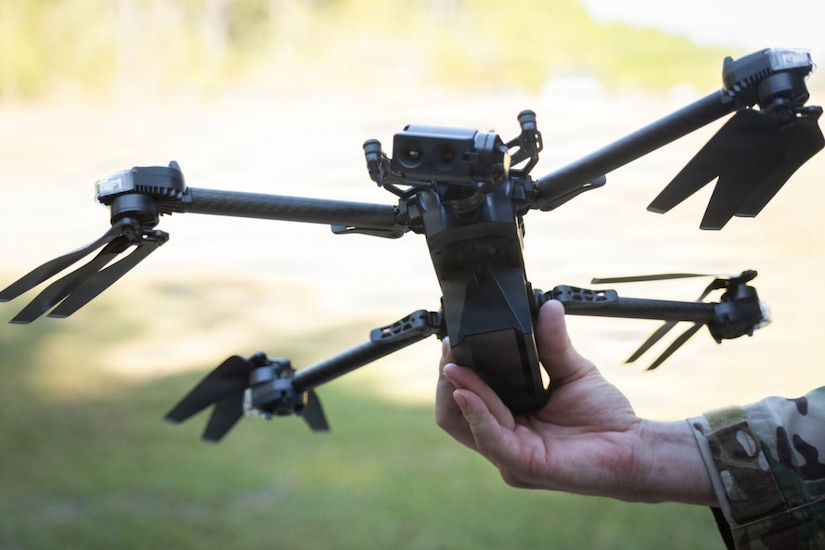
A close-up view of a drone as it’s held by a person in a camouflage military uniform.

From above, the drone's camera streamed a clear view of the scene before the robot made it halfway there. It's a new kind of flight reshaping how explosive ordnance disposal airmen execute their mission — and how the Air Force strengthens readiness through innovation.  

Before the adoption of modernized drones, EOD teams relied primarily on heavy robotic platforms to inspect potential explosive threats. The systems still provide valuable standoff capability but require vehicle transport and setup time, limiting their use during operations on foot. In those scenarios, airmen may have to approach hazards themselves. 

Compact and portable drones can be carried in a backpack and launched within minutes. Operated from a safe distance, they stream real-time imagery that helps airmen assess hazards without approaching them. The drones give teams an unmatched view of any environment. They combine optical and thermal cameras for day or night operations with advanced 3D scanning that produces precise digital models in minutes, whether documenting blast sites or mapping entire airfields. 

Drones can be used to establish a visual reference of a runway and to collect updated imagery after an incident. The data helps civil engineers quickly identify changes or damage, supporting timely clearance actions and repair planning to resume air operations.

Built-in artificial intelligence also allows drones to operate with a high degree of autonomy. The system can identify and track targets, hold position, and navigate around obstacles with minimal operator input. These capabilities boost mission tempo and efficiency while augmenting the work of airmen, keeping them out of harm's way and allowing them to focus on critical decision-making.

Drones have not yet replaced every function of traditional robots, but the two technologies currently complement one another on the battlefield.
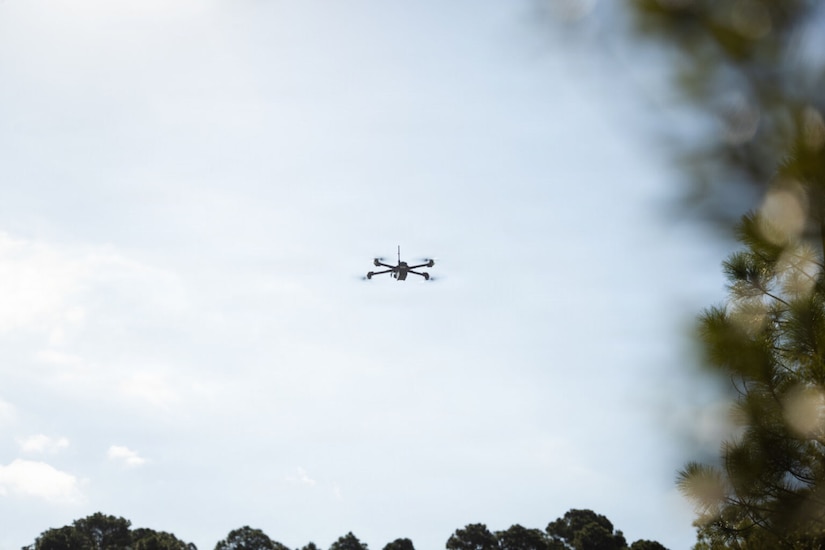
A drone flies in the air with blurry trees in the foreground.

"The big thing doesn't currently have is manipulation," an EOD airman explained. "I can't pull a battery off something or flip something over [with a drone], but a robot can."  

Still, drones are increasingly assuming tasks once limited to ground platforms, expanding options for commanders and reinforcing the Air Force's ability to adapt faster than its adversaries. 

Introducing any new technology brings challenges, but EOD airmen at Hurlburt Field have moved quickly to overcome them. Through local innovation projects, the team acquired and tested drones early, giving them a head start in integrating the capability into daily operations.  

"We've had the ability to work through a lot of the growing pains much faster," said an airman assigned to the 1st Special Operations Wing. "Now we're able to disseminate those lessons throughout the career field." 

That progress continues as airmen refine training and certification standards while identifying where drones provide the most operational value.  

"A lot of this is going to fluctuate based on use cases, because we all have a general idea of how we'd want to use this ... but there's still a lot to learn," said another EOD airman.
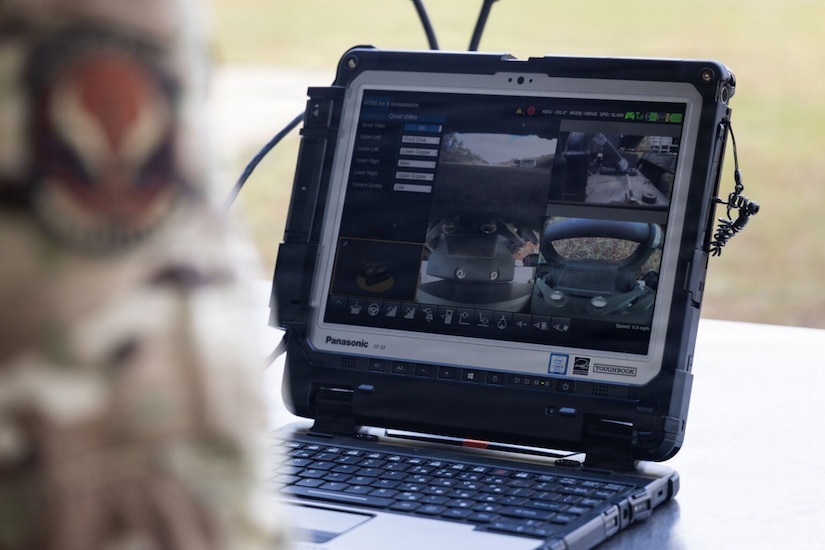
A person in a camouflage military uniform looks at a computer screen that displays the live view from multiple drones.

Wing airmen emphasized that the success of drone integration depends as much on institutional understanding as on technology itself. They said progress requires high-level advocacy to navigate the policies and risk assessments that come with operating in shared airspace, along with trust between ground units employing the systems and aviation communities managing them.  

As one airman explained, the future fight will rely on an enterprise that adapts quickly and learns from those already proving what's possible. 

At Hurlburt Field, EOD airmen are showing how small systems can yield big results. The shift from large ground robots to backpack-sized drones is transforming how they detect, respond and recover — bringing speed, precision and safety to every mission.  

"These are coming. This is the way of the future," said another airman. "If it's not in your shop currently, it probably will be in the very near future. Get ready." 

Sunday, March 17, 2024

Navigating the Risks: The Convergence of Robotics and Artificial Intelligence

 As technology advances at an unprecedented pace, the convergence of robotics and artificial intelligence (AI) holds tremendous promise for revolutionizing industries and improving human lives. However, with this convergence comes a host of potential dangers and ethical considerations that must be carefully navigated. In this article, we delve into the risks associated with the merging of robotics and AI and explore ways to mitigate these dangers.

  1. Loss of Human Control: One of the primary concerns surrounding the convergence of robotics and AI is the potential loss of human control. As AI systems become increasingly autonomous and capable of making decisions without human intervention, there is a risk that they may act in ways that are unpredictable or contrary to human values and objectives.

  2. Ethical Dilemmas: The use of AI in robotics raises a myriad of ethical dilemmas. For example, autonomous robots equipped with AI may face situations where they must make decisions that have ethical implications, such as prioritizing one individual's safety over another's. Without clear guidelines and ethical frameworks in place, these decisions may lead to unintended consequences or ethical violations.

  3. Job Displacement: The integration of AI into robotics has the potential to automate many tasks currently performed by humans, leading to widespread job displacement across various industries. While automation can increase efficiency and productivity, it also raises concerns about unemployment and economic inequality, particularly for workers in low-skilled or routine-based jobs.

  4. Safety and Security Risks: AI-powered robots may pose safety and security risks if they malfunction or are hacked by malicious actors. For example, autonomous vehicles equipped with AI could be vulnerable to cyberattacks that manipulate their behavior, leading to accidents or other dangerous situations. Similarly, AI-powered robotic systems used in healthcare or manufacturing may pose risks to human safety if they malfunction or make errors.

  5. Bias and Discrimination: AI algorithms used in robotics may exhibit biases inherent in the data used to train them, leading to discriminatory outcomes. For example, facial recognition systems powered by AI have been found to exhibit racial and gender biases, leading to misidentification and discriminatory treatment. These biases can perpetuate existing inequalities and injustices in society.

Mitigating the Risks: While the convergence of robotics and AI presents numerous challenges, there are steps that can be taken to mitigate these risks and ensure the responsible development and deployment of AI-powered robotic systems:

  • Ethical Guidelines: Establish clear ethical guidelines and frameworks for the development and use of AI-powered robotics, ensuring that these systems adhere to ethical principles and respect human values.

  • Transparency and Accountability: Promote transparency and accountability in AI algorithms and robotic systems, ensuring that developers and users understand how these systems make decisions and are held accountable for their actions.

  • Bias Mitigation: Implement measures to mitigate bias in AI algorithms, such as diverse and representative training data, algorithmic audits, and bias-aware design practices.

  • Human Oversight: Maintain human oversight and control over AI-powered robotic systems, particularly in critical decision-making scenarios where human judgment and values are essential.

  • Cybersecurity Measures: Implement robust cybersecurity measures to protect AI-powered robotic systems from cyberattacks, including encryption, authentication, and intrusion detection mechanisms.

Conclusion: The convergence of robotics and artificial intelligence offers tremendous potential for innovation and advancement, but it also poses significant risks and challenges. By addressing ethical, safety, and security concerns proactively and implementing measures to mitigate these risks, we can harness the benefits of AI-powered robotics while minimizing the potential dangers associated with their convergence. As we navigate this transformative technological landscape, it is essential to prioritize responsible development and deployment practices to ensure that AI-powered robotics serve the collective good and uphold human values.

Wednesday, August 5, 2015

Pentagon, DIUx Officials Discuss DoD, Industry Innovation


By Terri Moon Cronk
DoD News, Defense Media Activity

PLEASANTON, Calif., Aug. 5, 2015 – In an ongoing effort to create innovative partnerships to benefit national security and industry, Deputy Defense Secretary Bob Work met yesterday with senior leaders at the new Defense Innovation Unit Experimental “point of presence” here.

Work and Frank Kendall, undersecretary of defense for acquisition, technology and logistics, met with newly appointed DIUx Director George Duchak and military deputy Navy Rear Adm. Brian Hendrickson to discuss key areas of the pilot program, intended to produce dual-use technology between the Defense Department and Silicon Valley.

The leaders discussed preserving the nation’s technological superiority, the rapid evolution of emerging commercial technologies and integrating those ideas within military systems and concepts of operations, Work said.

“We’re very interested in maintaining and expanding that superiority,” he added.

DIUx to Expand Private, DoD Partnerships

DIUx, Work said, is part of Defense Secretary Ash Carter’s Defense Innovation Initiative, which complements DoD’s long-standing relationships with industry leaders while simultaneously exploring new opportunities for innovative companies and business leaders.

“Innovation in areas such as big data, analytics, autonomy and robotics is going on in [Silicon Valley] and we want to tap into it,” Work said.

DIUx leaders will mediate ideas and opportunities to help innovators and point them toward areas that can help solve significant national security problems, he explained.

DIUx a ‘Hub’ of innovation Access

Last month, DoD called for a concerted effort to focus on innovation in commercial technology. DIUx will be a hub for DoD’s core initiative to increase DoD’s access to innovative, leading-edge technologies from high-tech, start-up companies and entrepreneurs.

The DIUx office will be situated at Moffett Airfield in Mountain View, California, and similar units could be stood up in other U.S. centers of innovation, Work said.

Innovative technology in the 1970s centered on government-specific technologies such as precision-guided munitions, long-range sensors and the Stealth bomber, the deputy secretary said.

“There was no commercial market for those things,” he said. “We were we were controlling the technology and we were successful at it.”

Dual-Use Technology

DoD is no less innovative today, Work said, but “now there are many dual-use technologies that are being driven by the commercial sector.” He cited examples such as robotics, used in both the private sector and DoD, and cyberdefense, which is an area of concern in both sectors.

Work and Kendall emphasized that the world and sources of innovation are changing, and DoD must rapidly innovate and continue to be a smart customer of commercial technology.

Tuesday, September 18, 2012

Math And Science Summer Fun


Alex Taylor went back to school this week geared up to appreciate her math and science classes even more than before, all thanks to a Robotics Summer Day Camp held Aug. 13-17, at Wiesbaden High School.

“I like to learn new things and robotics seemed like a really good program,” Taylor said on the last day of the camp. “I have a better understanding of science as it is right now and I’d say that’s great.”

Taylor was one of 31 students to participate in the camp, which taught participants how to build a robot and program it, said Frank Pendzich, instructor of engineering technology at Wiesbaden High School and the camp’s organizer.

He is also adviser to the school’s RoboWarriors team, which competes in the FIRST Robotics Competition each year.

Campers, who were in grades 7-9, also learned the beginning steps of the engineering design process, Pendzich said.

This was the camp’s second year, Pendzich said, and members of the RoboWarriors team acted as camp counselors. In addition, members of the Air Force 485th Intelligence Squadron volunteered, as well as parents.

Taylor, 13, said she was glad to learn not only how to build a robot, but how to program it as well.

Max Johnson, 12, said he enjoyed the camp because he got to build a robot and compete against other campers with it. “I’m interested in robots and computers,” he said, and he plans to learn more about robots in the future.

The camp culminated in a game on the last day called “Not in My Backyard,” where teams of two students each had to try and shove balls and robots from one side of a playing field to another, all while navigating seesaw bridges at mid-field, Pendzich said.

The game is based on the social observation that when people do not like something, they often try to move it into someone else’s back yard, Pendzich said.

In order to play the game, students had to program the robots to act autonomously for 30 seconds and then switch to remote control mode, Pendzich said.

At the end of the three-minute match, teams could receive points if they were successful in balancing their robot on a seesaw bridge, Pendzich said. Winning teams had the fewest balls in their yard.

The game was a scaled-down version of some of the games at the FIRST Robotics Competition, and the room was packed with campers and their parents during the event. Campers laughed, called out and sometimes shook their heads as they first watched the robots during autonomous mode and then controlled the robots from laptops.

Demi Colon-Rios, 12, said she liked being able to program the robot to make it do what she wanted.

She has always liked robots and electronics, Colon-Rios said, and she and her father built a robot together when they lived in Georgia. She hopes to work on them more in the future.

Matthew Taylor, 13, said he decided to participate in the camp because he thought it would be a challenge and he wanted to earn the Robotics Merit Badge for Boy Scouts. “It was great,” he said.

He particularly liked it because the camp organizers focused on what campers could do with the robots, and not what they could not do, Taylor said.

Air Force Tech. Sgt. Ryan Hunter said he and four other volunteers from the 485th helped build robots, supervise students and make sure everyone was operating safely.

Hunter said he was interested in volunteering for the camp because computers and technology are a hobby for him, and he was happy to help the campers learn about those subjects.

“It helps students develop teamwork skills and learn how to overcome obstacles,” Hunter said. “It’s a good outlet for learning and applying new skills.”

By Wendy Brown, USAG Wiesbaden
 From www.army.mil

Saturday, August 25, 2012

NASA'S 2013 Lunabotics Competition Open For Registration


Ann Marie Trotta
Headquarters, Washington
202-358-1601
ann.marie.trotta@nasa.gov
 
Tracy Young
Kennedy Space Center, Fla.
321-867-2468
tracy.g.young@nasa.gov

WASHINGTON -- NASA is accepting applications from teams of U.S. and international undergraduate and graduate students for the fourth annual Lunabotics Mining Competition. The event will be held at NASA's Kennedy Space Center in Florida May 20-24, 2013.

Participants in the competition will design and build a remote controlled or autonomous robot. During the competition, the teams' designs, known as lunabots, will go head-to-head to determine which machine can excavate and deposit the most simulated lunar dirt within 10 minutes.

Registration is limited to the first 50 teams submitting applications.

The competition is designed to engage and retain students in the science, technology, engineering and math, or STEM, disciplines critical to NASA's missions.

For information on the competition and to apply online, visit http://www.nasa.gov/lunabotics.

For more information on NASA's education programs, visit http://www.nasa.gov/education.

- end -