Showing posts with label sports. Show all posts

Saturday, July 14, 2012

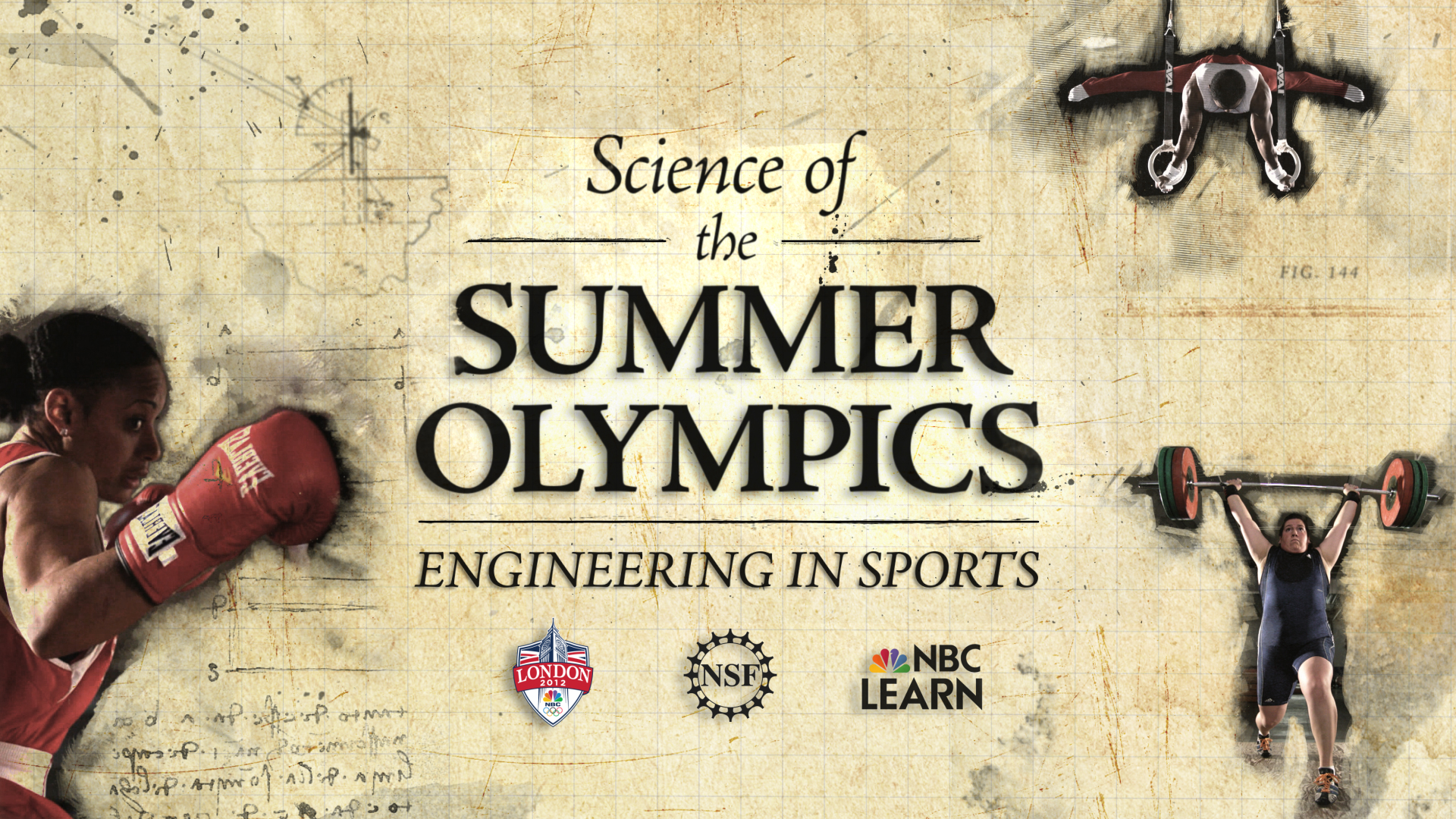
Science of the Summer Olympics: Engineering in Sports


National Science Foundation, NBC News and NBC Olympics launch video series highlighting top Olympic athletes and the technology that impacts their games
The Olympians from Team USA heading to London in July represent not only an American commitment to athletic achievement, but also the pervasive impact of innovation.

From the devices that protect the athletes, to the mechanisms that track their races, to the systems that help them train, technologies created and guided by engineers are critical components of the Olympic experience.

For the London 2012 Olympic Games, the National Science Foundation (NSF), NBC Learn (the educational arm of NBC News) and NBC Olympics, a division of the NBC Sports Group, are launching a series of ten videos highlighting the engineering that is part of the Olympics, as told by top athletes and engineers. Watch all ten videos on the NSF website and on NSF's Science360 website.

Titled Science of the Summer Olympics: Engineering in Sports, the series is a continuation of the Emmy-winning NSF-NBC "Science of ... " partnership.

"The work of engineers not only affects Olympic sports, it also helps us perform ordinary activities in better ways," said Thomas Peterson, NSF assistant director for Engineering. "This series will illustrate how engineers can impact both sports and society, and we hope it will inspire young people to pursue engineering."

Each segment features a top athlete sharing his or her sports experiences, paired with perspectives from leading engineers about the technologies that aid the athletes or the mechanics that explain their craft.
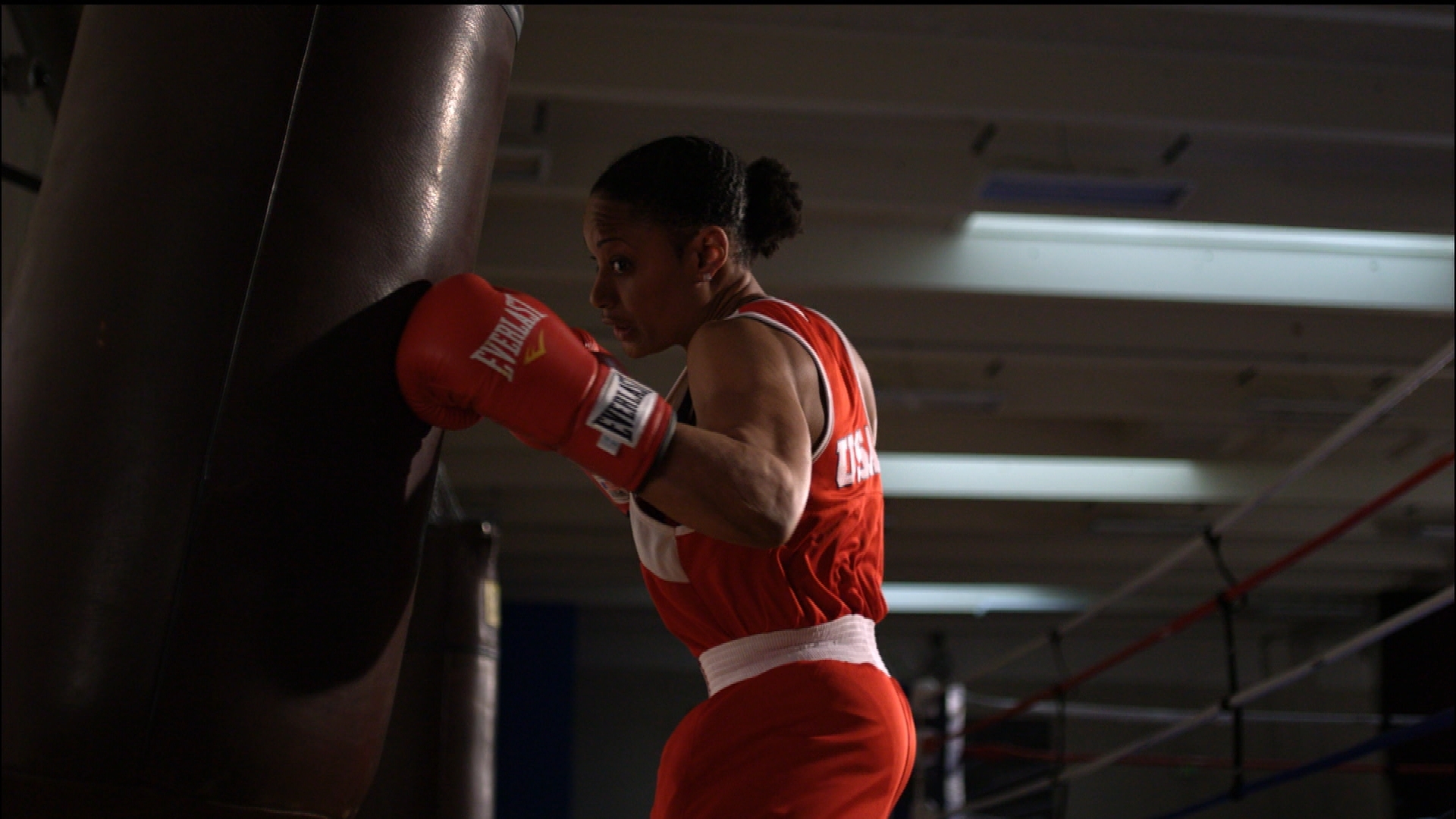
The series is narrated by NBC Sports Group's Liam McHugh, and covers a range of events and topics. Viewers will learn how Missy Franklin cuts through water faster thanks to specially-engineered pools, how a stereoscopic camera system helps Olympic champion decathlete Bryan Clay improve his long jump, how "blades" technology helps Paralympian Oscar Pistorius compete--for the first time--against able-bodied runners in the Olympic Games, and how a pressurized treadmill system helped runner Jenny Simpson heal from injury.

The series also delves into the unique biomechanics of athletes--from the world's fastest man, Usain Bolt, to superheavyweight weightlifter Sarah Robles--and how technology still has much to learn from human achievement.

Each video segment will be available to NBC affiliate stations, and for free on the Web accompanied by an engineering-focused lesson plan for middle- and high-school teachers developed by the National Science Teachers Association.

"The Olympic Games are a time when the world gathers to watch the best athletes compete for gold, and with this new video series, people can see and learn exactly what it takes to reach the top," said Soraya Gage, executive producer of NBC Learn.  "We're thrilled to continue this successful partnership with NSF and NBC Sports, to provide students and teachers with engaging content that makes learning about engineering both relevant and fun."

The segments feature some of the world's top athletes and record holders, including:

Missy Franklin, swimmer
Queen Underwood, boxer
Sarah Robles, weightlifter
Jenny Simpson, runner
Oscar Pistorius, runner
Usain Bolt, runner
Bryan Clay, decathlete

Each segment also features engineers from some of the world's top universities and institutions:

Timothy Wei, University of Nebraska-Lincoln
Anette (Peko) Hosoi, MIT
Rory Cooper, University of Pittsburgh and 1988 Paralympics bronze medalist
Nikhil Gupta, NYU-Poly
Linda Milor, Georgia Tech
Brian Zenowich, Barrett Technologies
Samuel Hamner, Stanford University
Cris Pavloff, Advanced Technology Engineer for BMW
Melvin Ramey, University of California-Davis and Biomechanist for USA Track & Field
Phil Cheetham, Senior Sport Technologist for the US Olympic Committee

The videos are archived on Science360.gov.

For more videos from the NSF-NBC partnership, see: Science of the Winter Olympics, Science of NFL Football, Science of NHL Hockey, Science Behind The News, Changing Planet and Chemistry Now.

 -NSF-

Thursday, January 26, 2012

NBC News, NBC Sports and National Science Foundation Launch "Science of NHL Hockey"

NBC News' educational arm, NBC Learn, and the NBC Sports Group recently teamed up with the National Hockey League (NHL) and National Science Foundation (NSF) to release "Science of NHL Hockey"--an informative 10-part video series exploring the science behind the fastest game on ice.

Made especially for students and teachers to use in the classroom, the videos will be aligned to lesson plans and national state education standards, and are available to the public cost-free on NBCLearn.com, NBCSports.com and Science360.gov. NBC News' Lester Holt narrates the series.  NBCUniversal will distribute the videos across several  platforms.

The "Science of NHL Hockey" videos will debut during NBC Sports Network's all-encompassing coverage of the 2012 NHL All-Star Weekend from Ottawa January 26-29, including a select number of videos airing throughout the Honda SuperSkills Competition on Saturday, January 28, from 7-9:30 p.m. ET. The NHL will feature the videos on NHL.com, NHL Network in the United States and Canada and in a number of arenas throughout the league. The series will also appear in retail venues across the country, on American Airlines in-flight entertainment and on NBC's affiliate stations.

This collaboration between NBC Learn, NBC Sports and NSF uses the universal appeal of hockey to drive an understanding of complicated scientific concepts. Students and teachers see how the principles of science enable players to perform actions such as quickly stopping on ice, passing the puck to a teammate, shooting a slap shot and making a great save.

The science is broken down by capturing the athletes' movements with a state-of-the-art, high-speed Phantom camera, which has the ability to capture movement at rates of up to 10,000 frames per second. These dynamic visuals allow for frame-by-frame illustrations of specific scientific principles such as Newton's Three Laws of Motion, kinematics and velocity. Other video episodes analyze the hockey science behind reflexes and reaction time, statistics, vectors, linear motion, geometry and more.

NBC Sports Group oversaw the Phantom video shoot in September 2011 during the yearly media tour sponsored by the NHL and its players association. NBC Sports Group also provided research and technical support throughout the project.

Current NHL players who participated in the video series include:

•Jaroslav Halak, Goaltender, St. Louis Blues
•Erik Johnson, Defenseman, Colorado Avalanche
•Brenden Morrow, Left Wing, Dallas Stars
•Matt Moulson, Left Wing, New York Islanders
•Pekka Rinne, Goaltender, Nashville Predators

In each video, an NSF-supported scientist explains a selected scientific principle, while NHL athletes describe how the principle applies to their respective positions. Series scientists supported by NSF are: Edward Burger, Williams College; Irene Fonseca, Carnegie Mellon; Jim Gates, University of Maryland; Robert Gehrz, University of Minnesota; and Patricia Shewokis, Drexel University. The videos also include actual game footage provided by the NHL, and the lesson plans that accompany the videos will be provided by the National Science Teachers Association.

"Science of NHL Hockey" follows in the footsteps of the "Science of NFL Football" and "Science of the Olympic Winter Games" collections, which are part of an ongoing "Science of Sports" collaboration with the NSF that was awarded a 2010 Sports Emmy for "Outstanding New Approaches Sports Programming."

"Wayne Gretzky once said, 'The only way a kid is going to practice is if it's total fun for him ... and it was for me,'" said Morris Aizenman, Senior Scientist for NSF's Directorate for Mathematical and Physical Sciences. "'Science of NHL Hockey' is an NSF and NBC Learn project that continues our effort to make science total fun for students. We hope, after watching these videos that students will also want to learn and practice science."

"Building on the innovative partnership that NBC Learn has with NSF and NBC Sports, we are thrilled to expand the 'Science of Sports' franchise to include hockey," said Soraya Gage, Executive Producer of NBC Learn. "These one-of-a-kind videos have set a new precedent for teaching science in the classroom, by literally breaking down concepts and illustrating their real life application through sports."

"The NHL is excited to partner with NBC and the National Science Foundation on this special project," said Charles Coplin, Executive Vice President of Content for the NHL. "Students, teachers and NHL fans everywhere will experience hockey in a unique way through the spectacular footage captured during filming with the players."

"It was exciting to be part of a unique project that utilizes hockey to help educate students on science and physics," said Brenden Morrow of the Dallas Stars. "It was fun to participate in and was very interesting. I learned a lot myself."

-NSF-

Wednesday, April 6, 2011

NASA Announces Spaced Out Sports Challenge Winners

Ann Marie Trotta
Headquarters, Washington     
 
Rebecca Strecker
Stennis Space Center, Bay St. Louis, Miss.

BAY ST. LOUIS, Miss. -- NASA has announced three winners in the Spaced Out Sports competition, which challenged U.S. students in fifth through eighth grades to create games for astronauts to play aboard the International Space Station. The challenge is part of a broader agency education effort to engage students in science, technology, engineering and mathematics (STEM) activities.

Students at K.W. Barrett Elementary School in Arlington, Va., got the top prize for creating a game entitled "Save the World." Second-place honors went to students at Kinser Elementary School, a Department of Defense Education Activity (DoDEA) School in Okinawa, Japan, for their "Alligator Clip Capture" game. Third-place was awarded to students at Manhattan Beach Middle School in Manhattan Beach, Calif., for their "Independence Day" game.

"Save the World" features teams gathering objects and building devices to save Earth from incoming meteorites. In "Alligator Clip Capture," players race around the station's Destiny Lab retrieving alligator clips of varying point values. "Independence Day" challenges players to throw batons through 'Liberty Rings' to gain points. All three games will be played aboard the station.

"I was delighted to see this level of engagement from the student teams, and I want to congratulate all three winning teams on their hard work and creativity," said NASA Associate Administrator for Education Leland Melvin. "I am especially pleased to note that one of the winning teams is from a DoDEA school. April is the Month of the Military Child, and NASA is kicking off a new initiative to engage military families in our education programs."

NASA will kick off its Military Families Initiative at an education summit in Orlando later this month.

The Spaced Out Sports challenge, a Teaching from Space project, was unveiled last fall and focused on helping students learn and apply Sir Isaac Newton's Laws of Motion. Using the accompanying curriculum, teachers led students through a study of Newton's laws, highlighted by hands-on activities and video podcasts featuring NASA scientists and engineers explaining how the laws are used in the space program.

The videos also feature celebrity athletes explaining the science behind their sports. Contributors include Olympic gymnast Nastia Liukin; NASCAR driver Juan Pablo Montoya; Women's National Basketball Association player Temeka Johnson; National Hockey League player Ryan O'Reilly and members of the National Football League's New Orleans Saints. Astronauts Melvin and Nicole Stott also are featured.

Students learned the differences in a game played in the gravity environment of Earth and the same game played in a microgravity environment, such as the space station. They used the knowledge to design or redesign a game to illustrate and apply Newton's laws.

"Response to the challenge was very encouraging, with more than 55 submissions," said Katie Wallace, director of NASA's Stennis Space Center's Office of Education in Bay St. Louis, Miss., where the challenge and accompanying curriculum were developed. "Even more encouraging was seeing students excited about, and involved in, learning science. Hopefully, they will continue in these studies and consider STEM careers."

For information about the Science and Sports curriculum and related resources, visit http://education.ssc.nasa.gov/spacedoutsports.

For information about NASA education programs, visit http://www.nasa.gov/education.

For information about Stennis, visit http://www.nasa.gov/stennis.

- end -