Showing posts with label technology. Show all posts

Thursday, May 28, 2026

War Department Signs $9.7B Technology Deal With Dell for Microsoft Services

The War Department announced today a five-year agreement to purchase Microsoft Services — a move expected to save the department $422 million annually. 

"The Department of War is taking a definitive step forward to advance our digital infrastructure to deter near-peer adversaries by awarding a five-year, $9.7 billion Core Enterprise Technology Agreement to Dell Federal Systems," said Kirsten A. Davies, DOW chief information officer. "This second-generation blanket purchase agreement will streamline and consolidate critical Microsoft software and services across the Department of War, the intelligence community and the U.S. Coast Guard." 

The agreement provides the department with access to Microsoft 365, advanced cloud subscriptions and critical on-premises licensing; it's the department's largest to date. 

"This CETA acts as part of the digital connective tissue essential for Combined Joint All-Domain Command and Control ... this ensures our warfighters have the tools for just-in-time data sharing, supports our pivot to [artificial intelligence] and data analytics, and undergirds uninterrupted operational continuity for our most sensitive and disconnected environments," Davies said. 

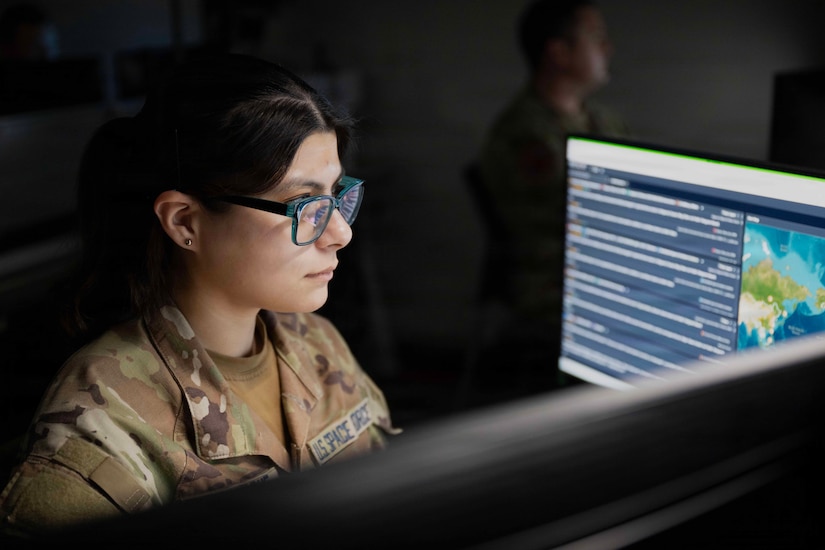
A woman wearing a camouflage military uniform uses a computer in a dark room.

Previously, across the department, dozens of separate contracts provided services to the same groups who will now receive the services under a single enterprisewide contract. The consolidation of contracts ensures service members and department civilians continue to have access to the same services, but now those services will cost less and save taxpayer dollars. 

"This enterprise approach is not just about capability, it's also about delivering on [Secretary of War Pete Hegseth's] promise to be responsible stewards of the American people's resources — taxpayer money," Davies said, noting that the new agreement is not new funding. 

Because the new contract and old contracts are with the same vendor, the funding does not change; the transition will be seamless for those involved. 

"We are achieving unprecedented scale and cost efficiency," Davies said. "This blanket purchase agreement is expected to save the department an initial $422 million annually, a figure we actually expect to rise as we fully consolidate our IT services." 

The new contract also allows warfighters to focus on what matters, she said. 

"This puts the tools in a warfighter's hands, where they need them," Davies said. "They don't need to worry about an enterprise software capability — they can worry about warfighting. They can focus on the mission, and we focus on the tools to support them in the mission." 

The agreement is scheduled to begin June 1 and includes Microsoft products such as Windows Enterprise Operating System and Office Professional Plus, along with cloud and hybrid capabilities. It also provides the digital foundation for Combined Joint All-Domain Combined Command and Control, the overarching concept to link sensors, weapons and decision-makers, as well as seamlessly share data across the armed forces and with coalition partners.

Tuesday, April 9, 2024

Balancing Security and Privacy: The Role of Digital Identification in Local Policing

Digital identification systems have revolutionized the landscape of law enforcement agencies at the local level, offering both opportunities and challenges in equal measure. These systems, which encompass a range of technologies and platforms, including biometric recognition, facial recognition, and digital databases, have profoundly impacted various aspects of policing operations and procedures.

One of the most significant impacts of digital identification on local law enforcement is the enhancement of investigative capabilities. Biometric recognition technologies, such as fingerprint scanners and facial recognition software, enable law enforcement agencies to quickly and accurately identify individuals involved in criminal activities. This has streamlined the process of apprehending suspects and solving crimes, leading to higher clearance rates and improved public safety outcomes.

Moreover, digital identification systems have facilitated information sharing and collaboration among different law enforcement agencies. Through centralized databases and interoperable systems, local police departments can access and share critical information about suspects, criminal records, and other relevant data more efficiently. This seamless exchange of information enables law enforcement agencies to coordinate their efforts more effectively, leading to greater success in apprehending criminals and preventing crime.

However, the widespread adoption of digital identification systems has also raised concerns about privacy, civil liberties, and potential misuse of technology by law enforcement agencies. Facial recognition technology, in particular, has come under scrutiny due to its potential for misuse and its inherent biases. Critics argue that facial recognition algorithms may disproportionately target minority groups and perpetuate racial profiling, leading to unfair treatment and violations of civil rights.

Additionally, the proliferation of digital identification systems has raised questions about data security and the protection of sensitive information. Centralized databases containing vast amounts of biometric data and personal information are vulnerable to hacking and unauthorized access, posing significant risks to individuals' privacy and security. Furthermore, the use of facial recognition technology in public spaces has sparked debates about surveillance and the erosion of privacy rights in society.

Despite these challenges, the benefits of digital identification in local law enforcement cannot be overlooked. By leveraging advanced technologies and digital platforms, law enforcement agencies can enhance their ability to combat crime, safeguard communities, and ensure public safety. However, it is essential to strike a balance between leveraging the capabilities of digital identification systems and safeguarding individual privacy rights and civil liberties. Through transparent policies, robust oversight mechanisms, and responsible use of technology, local law enforcement agencies can harness the power of digital identification to uphold justice and protect the public interest.


Tuesday, March 26, 2024

Transforming Law Enforcement: Ten Technologies Shaping the 21st Century

In the 21st century, law enforcement agencies are increasingly turning to technology to enhance their capabilities, improve public safety, and adapt to the evolving landscape of crime. From advanced surveillance systems to data analytics tools, here are ten technologies that are revolutionizing law enforcement in the modern era.

  1. Body-Worn Cameras (BWCs): Body-worn cameras have become standard equipment for many police officers, providing a valuable tool for accountability, transparency, and evidence collection. These cameras capture interactions between law enforcement officers and the public, helping to resolve disputes, document evidence, and improve officer training and performance.

  2. Predictive Policing: Predictive policing uses data analysis and machine learning algorithms to identify patterns and predict where and when crimes are likely to occur. By analyzing historical crime data, socio-economic factors, and other relevant information, law enforcement agencies can allocate resources more effectively and proactively prevent crime.

  3. License Plate Recognition (LPR) Systems: License plate recognition systems use optical character recognition technology to automatically read license plate numbers. These systems are deployed on patrol cars, fixed cameras, and toll booths, allowing law enforcement agencies to quickly identify stolen vehicles, locate suspects, and track the movements of vehicles involved in criminal activity.

  4. Artificial Intelligence (AI) and Machine Learning: Artificial intelligence and machine learning algorithms are being used to analyze vast amounts of data collected by law enforcement agencies, such as crime reports, surveillance footage, and social media activity. These technologies can identify patterns, detect anomalies, and provide valuable insights to support criminal investigations and intelligence gathering efforts.

  5. Crime Mapping and GIS: Geographic information systems (GIS) and crime mapping software enable law enforcement agencies to visualize crime data on maps, identify crime hotspots, and analyze spatial trends. This information helps agencies deploy resources strategically, develop targeted crime prevention strategies, and engage with communities to address specific concerns.

  6. Drone Technology: Drones have emerged as a versatile tool for law enforcement, providing aerial surveillance, search and rescue capabilities, and tactical support in various situations. Equipped with high-resolution cameras and sensors, drones can gather real-time intelligence, monitor large crowds, and assist in the documentation of crime scenes from above.

  7. Biometric Identification: Biometric identification technologies, such as facial recognition, fingerprint scanning, and iris recognition, enable law enforcement agencies to quickly and accurately identify individuals. These technologies are used to match suspects to criminal databases, verify identities during arrests, and enhance security at border crossings and high-profile events.

  8. Social Media Monitoring: Law enforcement agencies are increasingly using social media monitoring tools to gather intelligence, monitor public sentiment, and detect potential threats. By analyzing posts, comments, and other user-generated content, agencies can identify individuals involved in criminal activity, track the spread of misinformation, and respond to emerging threats in real-time.

  9. Cybercrime Investigation Tools: With the rise of cybercrime, law enforcement agencies require specialized tools and expertise to investigate digital crimes such as hacking, fraud, and online exploitation. These tools include forensic software, network analysis tools, and digital evidence management systems, enabling investigators to trace digital footprints, recover deleted data, and prosecute cybercriminals.

  10. Virtual Reality (VR) and Augmented Reality (AR): Virtual reality and augmented reality technologies are being used to recreate crime scenes, provide immersive training experiences for law enforcement personnel, and enhance courtroom presentations. By visualizing complex scenarios in three-dimensional space, these technologies improve investigative techniques, enhance witness testimony, and facilitate the administration of justice.

Conclusion: As technology continues to evolve, law enforcement agencies must adapt and embrace new tools and techniques to effectively combat crime and protect public safety. By harnessing the power of advanced technologies such as body-worn cameras, predictive policing algorithms, and artificial intelligence, law enforcement agencies can stay ahead of the curve and ensure a safer and more secure future for communities around the world.

Thursday, June 29, 2023

Navigating the Skies: The History, Development, and Current Technology of GPS Satellites


GPS (Global Positioning System) satellites have revolutionized the way we navigate and locate ourselves on Earth. This article delves into the intriguing history, development, and the cutting-edge technology behind GPS satellites, which have become an indispensable part of our modern lives.

The Origins of GPS: 

The story of GPS begins with the launch of the first satellite, Sputnik, by the Soviet Union in 1957, sparking the Space Age. The United States Department of Defense (DoD) recognized the potential of satellites for navigation and initiated the development of a global positioning system.

Development and Early Deployments:

The development of GPS spanned several decades, involving collaborations between the military, scientific institutions, and industry. In 1978, the U.S. launched the first experimental Block-I GPS satellite. Over time, the system evolved, and by 1993, it reached Initial Operational Capability (IOC), providing accurate positioning and timing information.

The Three Segments of GPS: 

GPS comprises three main segments: the Space Segment, the Control Segment, and the User Segment. The Space Segment consists of a constellation of satellites orbiting Earth, transmitting signals that receivers on the ground use to determine their position. The Control Segment monitors and manages the satellites, ensuring their accuracy and reliability. The User Segment includes the GPS receivers that individuals and industries utilize for navigation and various applications.

GPS Satellite Technology:

GPS satellites employ advanced technology to provide accurate positioning and timing information. They utilize atomic clocks for precise timekeeping and multiple onboard atomic clocks provide redundancy. The satellites transmit signals in various frequencies, including L1 and L2 bands, which are received by GPS receivers on the ground.

The Modernization of GPS:

To enhance performance and provide better services, the U.S. government has been modernizing the GPS system. This includes the development and deployment of new generations of satellites, such as the Block IIF and Block III satellites, which offer improved accuracy, signal strength, and anti-jamming capabilities. Additionally, the introduction of new civilian signals, like L5, further enhances the system's capabilities.

GPS Augmentation Systems: 

GPS augmentation systems complement the core GPS system, enhancing accuracy and reliability. These systems, such as WAAS (Wide Area Augmentation System) and EGNOS (European Geostationary Navigation Overlay Service), utilize ground-based reference stations and additional satellites to provide differential corrections, improving positioning accuracy.

Applications of GPS Technology: 

GPS has transformed numerous industries and daily life. It enables precise navigation for aviation, maritime, and land-based transportation. GPS is crucial for surveying, mapping, and precision agriculture. It plays a vital role in emergency services, disaster response, and asset tracking. GPS has become integral to smartphone navigation apps, fitness tracking devices, and geolocation-based services.

From its humble origins to the current state-of-the-art technology, GPS satellites have revolutionized how we navigate and interact with the world. The continuous advancements and modernization efforts ensure that GPS remains a crucial tool for accurate positioning, timing, and a myriad of applications across industries. As we rely on GPS for our everyday activities, we can marvel at the remarkable history and development that has brought us the seamless navigation system we use today.

Wednesday, September 30, 2015

DoD Official Acclaims Transcom’s Cyber, Innovation, Acquisitions Strides


By Amaani Lyle DoD News, Defense Media Activity

NATIONAL HARBOR, Md., September 30, 2015 — The defense logistics program is “doing what it was built to do,” showing cost savings in recent years despite budgetary restraints, the principal undersecretary of defense for acquisition, technology and logistics said at the National Defense Transportation Association’s fall meeting here today.

At the event, co-hosted with U.S. Transportation Command, Alan F. Estevez praised Transcom’s “unparalleled” ability to deploy and sustain forces across long distances with a continued focus on acquisitions, innovation and cyber, even though fiscal year 2017-2021 budget plans could be built on the precarious 2016 budget, still in wet cement and pending congressional approval.

“We’re building off a ‘16 budget that doesn’t exist, … and whatever we get in the ‘16 budget is probably going to be lower than that $538 billion,” Esteves said of current defense funding that sequestration cuts could pare by $38 billion.

Estevez warned that the Defense Department could end up with funding less than sequestration levels, at about $498 billion, under a yearlong continuing resolution. “Over the last six years, we’ve gone into a continuing resolution every first quarter,” he noted.

“All these things to save money for the budget actually cost the American people dollars and they cost your military combat power, and that is not a good place to be,” Estevez said. “But that’s the reality we’re living in today.”

Readiness, Force Structure, Modernization

In the meantime, he said, DoD and Transcom will build on the budget foundation the department has, with a lens on force readiness, force structure and modernization.

“The hollow force is not something we want to revisit,” Estevez said. “If we trade away our modernization, that means we end up fighting in the ‘20s and ‘30s with the tools that were bought in the ‘80s and ‘90s.”

Moreover, he said, competitors could suddenly nose ahead with better capabilities and acquisitions, depriving the United States of the battlefield edge it has enjoyed for decades. “One of the things we have lived with for the last 30 to 40 years is we never go into it in a fair fight, because we have better stuff,” he said.

Developing Cyber and Innovation

Transcom’s cyber networks, similarly to those of the Office of Personnel Management, are prime targets for network breaches, Estevez said. The military and industrial base comprise the logistics realm, he added, but a reliance on the commercial sector – particularly Silicon Valley -- will increase as Transcom bolsters its innovation and cyber capabilities. DoD has since set up a Defense Unit Innovation Experimental in Silicon Valley, where he said “great things” are going on.

“One thing we’re not going to get from Silicon Valley is a weapons system,” Estevez said. But there are some great tools that we can build into our weapons system,” he added, such as robotics and other technology in development there.

Acquisitions Improvements

Estevez also described improvements in Transcom’s acquisitions. “More programs are showing cost savings over the last five years in their acquisition than have gone up, which is a dynamic number,” he said.

Ultimately, he said, DoD senior leaders perceive logistics as one of the differentiators in readiness. “There’s always a risk of cutting too much on the logistics side, and we’ve got to watch out for that.” That logistics capability, he added, is what creates the capacity to go into combat.

As Transcom continues support of operations to thwart the Islamic State of Iraq and the Levant, with concurrent attention to logistics capabilities in Europe and across the Asia Pacific region, Estevez emphasized the command’s importance.

Importance of Logistics

“When Defense Secretary Ash Carter was undersecretary of defense for acquisition, technology and logistics, Estevez said, Carter told him in an amusing way how important logistics is, saying, “Logistics is like oxygen: when you got it, you don’t think about it. When you don’t got it, that’s all you think about.”

To keep the U.S. advantage, Estevez said, a Joint Staff and combatant command leadership summit is scheduled in the coming months. “We are going to have a contractor force out there no matter what fight we’re in,” he added, “and we’ve got to plan for how that contractor force is going to operate with us.”

Wednesday, September 9, 2015

Russian Agent Pleads Guilty to Leading Scheme to Illegally Export Controlled Technology to Russian Military


Alexander Fishenko, 49, of Houston, and a dual citizen of the United States and Russia, pleaded guilty today to acting as an agent of the Russian government within the United States without prior notification to the Attorney General, conspiring to export and illegally exporting controlled microelectronics to Russia, conspiring to launder money and obstruction of justice.

The plea was announced by Assistant Attorney General for National Security John P. Carlin and Acting U.S. Attorney Kelly T. Currie of the Eastern District of New York.

“Alexander Fishenko illegally acted as an agent of the Russian government in the United States and evaded export laws by sending microelectronics and other technology with military applications to Russia,” said Assistant Attorney General Carlin.  “By purposefully circumventing U.S. law, including the International Emergency Economic Powers Act and the Arms Export Control Act, the defendant jeopardized our national security.  I would like to thank the many members of law enforcement whose tireless efforts led to this guilty plea.”

“Fishenko lined his pockets at the expense of our national security,” said Acting U.S. Attorney Currie.  “This prosecution highlights the importance of vigorously enforcing United States export control laws.”

As alleged in the indictment and reflected in court filings, between approximately October 2008 and October 2012, Fishenko led a conspiracy to obtain advanced, technologically cutting-edge microelectronics from manufacturers and suppliers located within the United States and to export those high-tech goods to Russia, while carefully evading the government licensing system set up to control such exports.  The microelectronics shipped to Russia included analog-to-digital converters, static random access memory chips, microcontrollers and microprocessors.  These commodities have applications in and are frequently used in a wide range of military systems, including radar and surveillance systems, missile guidance systems and detonation triggers.  Russia does not produce many of these sophisticated goods domestically.

According to the indictment and other court filings, in 1998, Fishenko founded Arc Electronics Inc. (Arc), which was also indicted, in Houston.  Between 2002 and the present, Arc has shipped approximately $50 million worth of microelectronics and other technologies to Russia.  Fishenko also served as an executive of co-defendant Apex System L.L.C. (Apex) a Moscow-based procurement firm.  Apex, working through subsidiaries, served as a certified supplier of military equipment for the Russian government.  Fishenko exported many of these high-tech goods, frequently through intermediary procurement firms, to Russian end users, including Russian military and intelligence agencies.  To induce manufacturers and suppliers to sell them these high-tech goods and to evade applicable export controls, Fishenko and his co-conspirators often provided false end user information in connection with the purchase of the goods, concealed the fact that they were exporters and falsely classified the goods they exported on export records submitted to the Department of Commerce.  For example, Arc falsely claimed to be a traffic light manufacturer on its website.  In fact, Arc manufactured no goods and operated exclusively as an exporter.

Despite this ploy, the investigation revealed that the defendants were supplying Russian government agencies with sophisticated microelectronics.  For example, the investigation uncovered a letter sent by a specialized electronics laboratory of Russia’s Federal Security Service (FSB), Russia’s primary domestic intelligence agency, to an Apex affiliate regarding certain microchips that Arc obtained for the FSB.  The letter stated that the microchips were faulty and demanded that the defendants supply replacement parts.

The guilty plea took place before U.S. District Judge Sterling Johnson Jr. of the Eastern District of New York.  At sentencing, Fishenko faces up to 20 years in prison for each violation of the International Emergency Economic Powers Act and the Arms Export Control Act, up to 20 years in prison for money laundering conspiracy and obstruction of justice and up to 10 years in prison for acting as a Russian agent.  The defendant will also face potential criminal forfeiture and fines.

Ten other individuals and two corporations were originally charged in October 2012.  Four members of the conspiracy have pleaded guilty and three are scheduled to commence trial on Sept. 21, 2015.

The case is being investigated by the FBI and the Department of Commerce.  The case is being prosecuted by Assistant U.S. Attorneys Daniel Silver, Una Dean, Richard Tucker and Claire Kedeshian of the Eastern District of New York, as well as Trial Attorney David Recker of the National Security Division’s Counterintelligence and Export Control Section.