Showing posts with label customs and border protection. Show all posts

Friday, September 14, 2012

Dulles CBP Global Entry Surpasses 250,000 User Sessions


Trusted Travelers Can Apply for Membership at GlobalEntry.gov

Sterling, Va. – Global Entry, a U.S. Customs and Border Protection (CBP) initiative to speed pre-approved trusted travelers through international arrivals processing, surpassed 250,000 user sessions at Washington Dulles International Airport Sunday.

Washington Dulles International Airport, where Global Entry launched on June 6, 2008, ranks seventh nationally in user sessions.

The program, popular with the international travel community, continues to grow in membership. More than 414,000 members have enrolled in Global Entry. Another 750,000 travelers enjoy the expedited processing benefits of Global Entry through other trusted traveler programs such as NEXUS (Northern border) and SENTRI (Southern border). Interested travelers can learn more about Global Entry membership.

“Global Entry works. It has proven to be a winner for frequent, low-risk international travelers, such as business professionals, travel industry representatives, U.S. diplomats and airline employees,” said Christopher Hess, CBP Port Director for the Port of Washington (DC). “Global Entry at Washington Dulles International Airport continues to set significant milestones in user sessions and continues as one of our nation’s pace setters for trusted traveler processing,” said Hess.

Global Entry members also automatically qualify for participation in the TSA Pre™ expedited passenger screening program for domestic travel.

Washington Dulles, with its 250,918 Global Entry user sessions, ranks behind New York’s John F. Kennedy International Airport, Houston’s George Bush Intercontinental Airport, Newark (N.J.) Liberty International Airport, Miami International Airport, Hartsfield-Jackson Atlanta International Airport and Chicago O’Hare International Airport.

Trusted travelers with Global Entry benefits have processed their international arrivals a combined 2,959,578 times at self-help kiosks located in 37 airports in the United States and at pre-clearance stations overseas.

The most significant benefit to Global Entry is time saved waiting in primary inspection lines. Average processing time for Global Entry members is about one minute. Wait times for passengers without trusted traveler memberships can be lengthy during peak arrival times. View your local airport wait times on CBP.gov.

Participation in Global Entry is voluntary. Participants must possess a machine-readable U.S. passport or permanent resident card, pay a non-refundable $100 application fee, submit an online application, pass a law enforcement check, and complete an interview at a CBP enrollment center.

Washington Dulles was one of three original airports to deploy Global Entry in June 2008; JFK and Houston Intercontinental were the others. More than 3.2 million international travelers arrived to Washington Dulles during 2011.

For more information on other CBP Trusted Traveler opportunities, please visit CBP.gov.

U.S. Customs and Border Protection is the unified border agency within the Department of Homeland Security charged with the management, control and protection of our nation's borders at and between the official ports of entry. CBP is charged with keeping terrorists and terrorist weapons out of the country while enforcing hundreds of U.S. laws.

Sunday, August 12, 2012

CBP Detroit Donates Seized Fossils to University of Michigan


Detroit – U.S. Customs and Border Protection in the Port of Detroit announced the donation of hundreds of seized pre-historic fossils to the University of Michigan.

Some of the seized fossils donated by U.S. Customs and Border Protection to the University of Michigan.

A CBP officer working at a primary lane of the Ambassador Bridge on March 28, 2011, encountered two Canadian citizens who claimed they were attending a fossil trade show in Illinois. The two travelers had several boxes containing over 1,100 fossils.

Secondary inspection revealed that the fossils were actually for sale and the individuals did not properly declare their goods. The fossils were seized after a lengthy forfeiture process, which afforded the individuals the opportunity to pay associated penalties, however the violators did not respond to CBP efforts to assist them in reclaiming their property.

“This interception is an excellent example of CBP’s commitment at our ports of entry to the surrounding community,” said Roderick Blanchard, Detroit port director. “CBP not only stopped the illegal entry, but was able to contribute to the University of Michigan. This seizure highlights the diversity of the CBP mission.”

This donated fossils will be used for research and/or teaching by the University of Michigan Paleontology Department, which maintains a repository for fossil specimens.

U.S. Customs and Border Protection (CBP) is the unified border agency within the Department of Homeland Security charged with the management, control, and protection of our Nation's borders at and between the official ports of entry. CBP is charged with keeping terrorists and terrorist weapons out of the country while enforcing hundreds of U.S. laws.

Tuesday, July 17, 2012

CBP Launches Border Radio Pilot


AM Radio System Installed to Inform Land Border Crossers

Washington– U.S. Customs and Border Protection today announced the installation of a pilot AM radio broadcast system, aimed to better inform the border crossing public. CBP has installed AM radio frequency transmitters at two ports of entry on the southwest border, Ysleta in El Paso, Texas and Lincoln-Juarez in Laredo, Texas in order to communicate important border crossing information to travelers.

CBP has transformed the way it does business at land ports of entry over the last few years and one of the key elements is the concept of active lane management. This concept allows infrastructure enhancements such as improved license plate readers and radio frequency identification (RFID) technology coupled with new Ready Lanes, light emitting diode (LED) signage and Trusted Traveler lanes (NEXUS, SENTRI, FAST) to facilitate the entry process for travelers.

Furthering this concept CBP believes an informed and educated traveler is an efficient traveler.

CBP is always looking for new and effective ways to communicate with the traveling public and the model of the AM transmitter, used by many highway and traffic authorities, hopes to prove an effective tool for CBP.

Information broadcast will include reminders of document requirements and how to use high-tech travel cards, information about CBP’s Trusted Traveler Programs, basic border crossing rules and regulations, and will allow the ability for each port of entry to update with emergency travel information or updates.

While in a pilot phase, CBP will monitor the effectiveness of this new tool in a few locations on the northern and southern borders. Analysis of the pilot will inform further system installations and messaging.

U.S. Customs and Border Protection is the unified border agency within the Department of Homeland Security charged with the management, control and protection of our nation's borders at and between the official ports of entry. CBP is charged with keeping terrorists and terrorist weapons out of the country while enforcing hundreds of U.S. laws.

Thursday, June 14, 2012

CBP Border Patrol Technology Disrupts Smuggling Efforts


Tucson, Ariz. – U.S. Customs and Border Protection Tucson Sector Border Patrol agents recently seized an abandoned vehicle loaded with 74 bundles of marijuana with a total weight of 1,657 pounds. 

Use of CBP detection technology assisted the Casa Grande Station Border Patrol agents working near Stanfield, Ariz., in the identification of a suspected drug smuggling vehicle. Further observation by agents revealed five subjects fleeing from the vehicle. Upon arrival to the location, agents discovered an abandoned Chevrolet Tahoe containing 74 bundles of marijuana. No subjects were located with the vehicle and the marijuana was seized. The narcotics, worth an estimated $828,500, was turned over to the Drug Enforcement Administration.

The Tucson Sector, employing targeted enforcement tactics, is determined to prevent smuggling organizations from operating along the Arizona/Sonora border. The use of detection technology enhances the Border Patrol’s ability to gain situational awareness in remote areas causing smugglers to abandon their drug loads rather than risk apprehension and federal prosecution.

CBP welcomes assistance from the community. Citizens can report suspicious activity to the Border Patrol and remain anonymous by calling (877) 872-7435 toll free.

U.S. Customs and Border Protection is the unified border agency within the Department of Homeland Security charged with the management, control and protection of our nation's borders at and between the official ports of entry. CBP is charged with keeping terrorists and terrorist weapons out of the country while enforcing hundreds of U.S. laws.
Tuesday, March 13, 2012

Technology, Coordinated Efforts Apprehend Large Group of Illegal Aliens


Tucson, Ariz. – Tucson Sector Border Patrol agents apprehended 44 illegal aliens attempting to illegally enter the United States in the west desert Saturday.

Casa Grande agents, utilizing imaging technology, detected a group of illegal aliens staging to cross the international border into the United States. Agents were able to coordinate and responded and apprehended the group two miles north of the border west of Sasabe, Ariz.

These combined enforcement efforts demonstrate unprecedented levels of cooperation, coordination and communication among Border Patrol agents to disrupt and dismantle smuggling organizations. The Border Patrol continues to deploy proven technology, such as imaging technology that facilitates rapid response to illicit activity within the Tucson Sector.

Customs and Border Protection welcomes assistance from the community. Citizens can report suspicious activity to the Border Patrol and remain anonymous by calling (877) 872-7435 toll free.

U.S. Customs and Border Protection is the unified border agency within the Department of Homeland Security charged with the management, control and protection of our nation's borders at and between the official ports of entry. CBP is charged with keeping terrorists and terrorist weapons out of the country while enforcing hundreds of U.S. laws.

Thursday, March 1, 2012

Ship Cargo Containers – Finding Out What’s In Them Before There’s Trouble

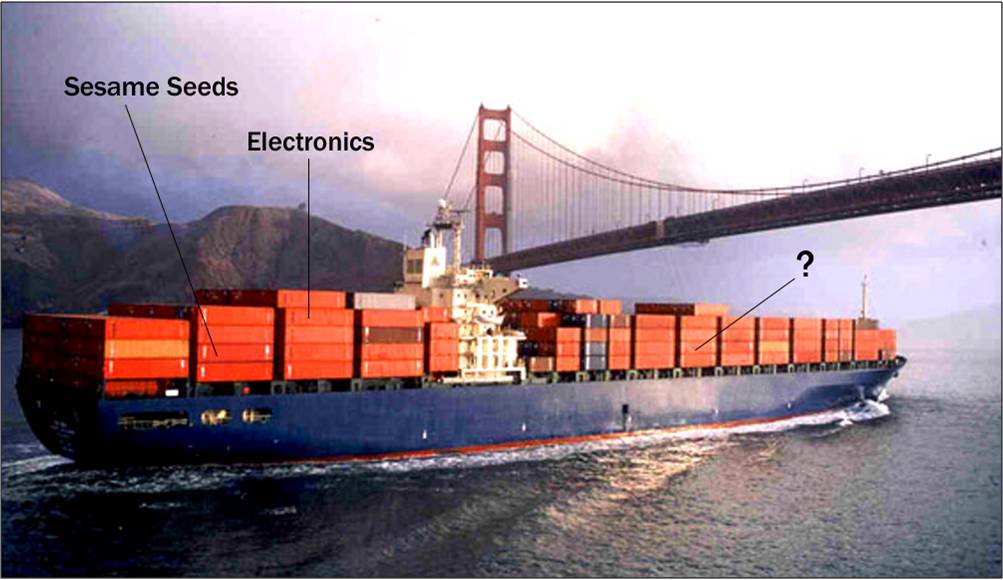
Every day, thousands of cargo containers from around the world pass through our nation’s sea ports carrying items we need, and possibly some that are not so welcome: drugs, explosives, chemical, biological, or radiological weapons – even human cargo. The possible concealment of such items in containers led lawmakers to call for the screening of all ocean cargo containers—thousands per port per day.

The Department of Homeland Security’s (DHS) U.S. Customs and Border Protection (CBP) is charged with the critical task of securing the country from terrorists and their weapons while facilitating legitimate trade and travel, including the monitoring of what’s in thousands of sea cargo containers as they pass through CBP screening. These containers must be inspected quickly and accurately, and without the business at each port grinding to a halt when they do so.

The DHS Science and Technology Directorate (S&T) and its Transportation Security Laboratory (TSL) in Atlantic City, NJ, have developed a way to test technical solutions to this need: the Container Security Test Bed (CSTB) – an outdoor “laboratory” allowing researchers and developers from government, academia, and industry to explore novel ways to detect threats in a cargo container.

The CSTB is run by TSL engineers and simulates exactly the cantilever cranes used to unload container ships. The CSTB allows a container to be picked up, moved, and put down in minutes, mimicking both the way and the timeframe in which each container is taken off a ship and put onto the dock.

“Give me the right tools – a gas chromatograph, a mass spectrometer, and an hour’s time – and I can tell you what’s in a 40-foot container,” said Dave Masters, the S&T Program Manager who oversaw the creation of the Test Bed. “But a maritime container terminal can’t spare an hour. It needs its cranes to move goods, not run experiments. The CSTB gives any new sensor system a real-world workout that replicates both screening the items in a shipping container, as well as the standard loading/unloading operations at a seaport. Sensors must survive the container being hoisted up, moved quickly, and slammed down – they cannot be so delicate that they cannot survive gritty port conditions.”

S&T researchers are encouraging technology developers to test any kind of sensor at the CSTB. Detection technologies constantly undergo improvements in order to detect trace amounts of substances ­­— and do so very quickly. Chemical-based sensors, currently in use for aviation security, may find trace amounts of explosives, drugs, or other illicit substances, while laser-based methods that can “read” the physical properties of target molecules detection methods are also in development.

What is the specific challenge? S&T researchers are collaborating on techniques to get a representative sample of the air inside the container to the sensor itself. Representative samples of air inside a cargo container must be captured through an air vent standard containers have, and then that sample will pass through several variations of detection sensors. This technology was demonstrated to S&T by a joint effort between MIT and Lincoln Labs in 2010.

Alternatively, sensors may be built into the cargo container and programmed to send information on any illicit content to the receiving seaport while the container is still en route. In October 2011, ConSearch, LLC conducted a feasibility demonstration of their in-situ chemical and radiological detection capability. The demonstration consisted of simulating a trans-oceanic voyage of a 40-foot container that contained several threat types and employed a method of using multiple sensors to obtain a comprehensive view of the chemical/radiological content.

To evaluate explosive detection methods, TSL scientists are also are testing methods to present samples to sensors more quickly and accurately.

“We’re exploring the art of the possible. The things we’re doing, you can’t do on paper. You need to get your hands dirty,” says Masters.

The S&T Container Security Test Bed provides a unique opportunity for public and private sector partners to research and collaborate on novel ways to detect threats in a cargo containers—working together to make our shipping industry more safe, secure and resilient.

Monday, December 19, 2011

CSPO Moves Social

To increase the public awareness of the Customs and Border Protection (CBP), specifically Cargo Systems Program Office (CSPO), CSPO has moved into social media. A photostream for CSPO has been created on Flickr, an image and video hosting Web site, and online community. The CSPO site can be accessed by the public domain via CBP.gov .
 
Smartphone users can scan one of the following CSPO Quick Response (QR) codes to navigate to the site: