Showing posts with label police technology. Show all posts

Tuesday, August 28, 2012

Rapid Fire Investigations – The Real NCIS


Television has a funny habit of making things appear…somewhat strange on screen.

Like hamburgers that look plump and juicy on the commercials, but are usually a lump of meat stuck to a bun.  Or a hair care product that’s designed to make your locks flowing and silky, but you end up with a strange greasy-stringy combo that makes you lose a little faith in reality.

There is no spoon. So eat with your hands.

Or the Matrix.  In general.

In any event, I think most people can assume that what you see on TV is not always an accurate representation of what you get in reality.  For the real-life folks at the Naval Criminal Investigative Service, the disconnect between what’s seen on screen and what they really do is relatively distinct.

“I’ve worked at headquarters for the last ten years and I have yet to find our morgue,” says Lou N. Eliopulos, division chief for the forensic sciences divisions at NCIS.  Oh and he literally wrote the book on death investigations.   “We don’t have a medical examiner.  We utilize the Armed Forces Medical Examiner out of Dover.”

Okay so there might not be any well-lit glass tables or plucky scientists with zany hair at NCIS headquarters, but in all honesty the real organization is far more impressive and amazing than you might think.

“We have a unique situation at NCIS because we conduct investigations around the world,” Lou explains.

All.  Over.  The.  World.  Now that’s a large area of operation.

“We encounter some unique problems trying to cover the world,” he says with a sense of patient understanding that leaves me floored.  I mean, I have a hard enough time maintaining my cubicle on a weekly basis (the nerd stuff just piles up) but to be responsible for the whole planet?

There are only seven forensic investigators to cover the Earth.  Seven.  That’s like one agent per world wonder.  It also goes without saying that the equipment has to be travel-worthy.  Sometimes that travel requires the agents to go into extreme situations to gather evidence.  And by extreme I mean deadly.

Like, say, in an active theater environment.

In a regular setting, other civilian-based agencies could have days to process a crime scene, but in a combat zone?  These guys have mere minutes.  Well, that adds new meaning to the phrase “fast and efficient”, don’t you think?

“We call it a ten minute crime scene but typically it’s more like 30-40 minutes,” Eliopulos explains.  “When the Marines tell you it’s time to go then it’s time to go.  The mortars are coming in.”

And equipment is an issue as well.  “Having the forensic gear necessary to work a scene is very important.  With the expense of some of the equipment, we can’t have it in every office.  So it’s a challenge from a budgetary standpoint and a situational standpoint in many types of cases.”  But that doesn’t stop the agents from getting the job done or the mission from being completed.  Simply put, NCIS knows how to be faster and more efficient with lighter carry-ons.

And they have advanced crime scene investigation on the battlefield.

They use NASA laser beams on their cameras.  Agents are trained to see evidence, grab it, photograph it, and then get out of dodge in a short amount of time.  That’s why I’m calling it rapid fire investigation.  They have to get it right quickly, and the first time.  A regular police station could take a day or two days to process a scene, but these guys get less than a day to make this happen.

“It’s a unique challenge to process a crime scene in theater when your life might be in jeopardy.”

So I know you might be thinking: Well sure, it’s dangerous but that’s what they’re trained for right?  They’re in the military aren’t they?

Well if you thought that then you’d be wrong.  These NCIS agents that are solving crimes in record time and jet-setting across the globe are all civilians.  Every one of them.

I’d wear mine inside a jacket and make a dramatic show of displaying it to as many people as I could. Which is probably why I don’t get to have one.

“We’re the investigative arm for the Navy and Marine Corps as civilian investigators.  Which is unusual, considering the fact that the other branches have folks in the Army [for example] doing CID.  We’re civilian employees,” says Eliopulos.

And they don’t just deal with homicides, either.  Many of the crimes NCIS deals with are typical of what you might see in most police departments: burglaries, death cases, assault, etc.  The same things that police departments do and then some.  The difference is that NCIS is involved in almost all types of cases involving Navy and Marines.  They are the international police force for the military, and Eliopulos says that’s a part of the charm.

“The job is challenging, it’s rewarding and it’s interesting.  It’s something different every time.”

But there are some elements of truth to be found in the TV version of NCIS.  Technology, for example, plays a big role in the show and in real life.  Whether it’s internet capabilities or the ability to communicate and analyze, technology is a driving force for the future of death investigations.


“There are three things that solve homicides,” says Eliopulos, “witness statements, confessions, and physical evidence.”

It’s that physical evidence that is such a critical part of solving a homicide, he says.  Technology has helped to progress the process of obtaining and analyzing physical evidence.   Interestingly, it has also helped clear people who have been wrongly convicted.

“We used to think in conventional law enforcement that, no matter how tough the investigation, someone would never confess to something they didn’t do.  We know that isn’t true anymore through DNA and physical evidence.”

And speaking of physical evidence, NCIS has the unique opportunity to analyze samples and investigate cases that have gone on unresolved as well.  And by that I mean that NCIS is the only federal agency with an established cold case program.  So why is that, exactly?

“It stems from the fact that they can actually work on a homicide – for example – from start to finish,” Eliopulos explains.  NCIS has the resources and ability to make that happen.  “Whereas the FBI has a multitude of responsibilities associated with various investigations.”

So NCIS is a rapid-fire, international, jet-setting investigation unit that solves crimes for the Navy, the Marines, and beyond.  If you ask me, I’d say that truth is more interesting than fiction in this case.

When it comes down to it, it’s this small but mighty group of investigators that make reality so much more magnificent than the myth.  And that’s a good thing.  I think everyone who works in a field like this needs to have a passion for the job and a sense of accomplishment in what they do.  Eliopulos is no exception to that.

When asked about what keeps Lou in pursuit of the scientific truth?

“To have an opportunity to work on a homicide case that was unresolved, and to bring some resolution to a family’s anguish…That’s pretty rewarding.”

Well said, sir.  Well said.

Jessica L. Tozer is a blogger for DoDLive and Armed With Science.  She is an Army veteran and an avid science fiction fan, both of which contribute to her enthusiasm for technology in the military.

Monday, August 27, 2012

The Army Wants YOU…To Be A Special Agent


The Army’s Criminal Investigation Command, commonly known as CID, is looking for qualified applicants to become highly-trained criminal investigators.

Special agents within Criminal Investigation Command, commonly known as CID, are responsible for investigating numerous types of felony-level crimes, conducting protective-service operations, and working with other federal, state and local law enforcement agencies to solve crimes and combat terrorism.

Those accepted into the program to become agents will receive training at the U.S. Army Military Police School. They will also receive advanced training in specialized investigative disciplines. Selected agents may also receive advanced training at the FBI National Academy, the Metropolitan Police Academy at Scotland Yard, the DOD Polygraph Institute and the Canadian Police College.

Additionally, agents also have the opportunity to pursue a master’s degree in Forensic Science from George Washington University.

In the Army, taking care of soldiers and their families is often at the forefront of every leader’s mind. From the fire team leader to the Army chief of staff, the health and welfare of the force is of the utmost importance.

It is an unfortunate fact that crime in the ranks can occur. When it does, commanders, soldiers, civilians and victims throughout the Army community turn to the men and women of the Army CID. The main purpose of the CID is to investigate criminal acts and to help victims in their time of need.

Special Agents from CID are very proud of that fact and are actively seeking qualified soldiers with the integrity and dedication to join them to become CID special agents, while helping to keep the Army safe.

“When something bad happens, when a commander needs to discover the truth, when a soldier or family member has been wronged, we are the folks they go to for help,” said Special Agent David Rudd, an operations officer with CID Headquarters. “We exist to keep our Army safe and protect our fellow soldiers, civilians, and family members.”

The special agents with CID are responsible for investigating felony-level crimes worldwide and especially where there is a concentration of Army personnel. The agents of CID are some of the most highly trained criminal investigators in law enforcement today.

“Many people don’t realize the impact we have on a person’s life and the impact we have on the Army,” said Special Agent Edgar Collins, the assistant operations officer for the CID Washington Battalion. “In a sense, we are defending the honor of the United States Army.”

The Army’s CID serves a population of more than one million soldiers, civilians, contractors and family members. At home and while deployed, CID provides an invaluable resource to the Army and commanders at posts, camps and stations. CID special agents not only investigate crimes, but they also conduct logistics security operations and assessments.

Agents also conduct criminal intelligence and economic crime/extremist criminal activity threat assessments.

“It’s unfortunate, but with most communities of one million plus, crime is going to happen,” said Special Agent Jennifer Bryan, the special agent-in-charge of the Pacific Fraud Field Office. “Because of that, we ensure that the Army and its interests are protected. Whether it’s a soldier, a government contractor or a family member, we are always here to help.”

On the battlefield, criminal investigations are expanded to include war crimes, as well as anti-terrorism and force protection missions. Throughout its proud history, CID has maintained an extremely high operational tempo and continues to support Army missions and operations around the world.

“Unlike some other Army units, who have a specific mission deployed and then a training mission at home; our mission never stops,” Collins said. “It’s an unfortunate truth, but we often meet people on possibly the worst day of their life.”

To serve as a CID special agent is more than just a career; it’s a way of life. The amount of responsibility placed on agents is immense, often working independently and assigned missions that may have a significant impact on not just the local command, but the Army at large.

“Being a special agent is an opportunity to be a part of something significantly larger than oneself,” said Special Agent David Eller, a special sexual assault investigator with the Fort Carson CID Office. “You are often placed in a position of great responsibility, whether it’s protecting a dignitary at a foreign summit, to working a murder case, you have to be on your ‘A’ game every day.”

Eller said the CID is looking for agents who will take ownership of investigations, but more importantly, the agency is looking for “unquestionable integrity.”

Prospective agents attend the CID Special Agent Course at the U.S. Army Military Police School, Fort Leonard Wood, Mo. For 15 weeks, candidates receive advanced training in various specialized investigative disciplines and upon graduation become federal law enforcement officers.

The training is fast-paced and thought-provoking, said CID Command Sgt. Maj. Thomas Seaman. The training covers everything from crime-scene processing to interviews and interrogations. It is also accredited by the Federal Law Enforcement Training Accreditation Board.

“As an apprentice agent, new agents at their first duty assignment receive mentorship and field training by senior agents and are given an opportunity to apply a multitude of felony investigative techniques in real-life scenarios while learning to master their craft,” said Seaman.

Many within the federal law enforcement community, both military and civilian agencies, view the course as the best basic agent training program in the United States.

“Our program is the best there is,” said Special Agent Ronald Meyer, Chief of Physical Evidence Branch at USAMPS. “At other institutions, their prospective special agents spend maybe two days learning how to process a crime scene, our students here at Fort Leonard Wood spend about two weeks.”

During a career at CID, agents have the opportunity to attend advanced training at some of the most prestigious law enforcement programs in the world. Included among those institutions are the FBI National Academy, the Metropolitan Police Academy at Scotland Yard, the Defense Academy of Credibility Assessment, and the Canadian Police College.

A unique aspect of these programs for CID special agents is that they are offered to those who need it most, the agent in the field. Some other law enforcement agencies and major police departments often reserve this type of training for just their senior investigators or chiefs of police.

Agents also have the opportunity to pursue a master’s degree in forensic science from George Washington University. Enlisted agents have tremendous opportunities to become warrant officers.

To qualify to become part of CID, applicants must be a U.S. citizen and must be at least 21-years-old. Applicants must be no more than an E-5 (non-promotable). Those E-5s who are promotable, or those who have achieved E-6 but have one year or less time-in-grade, may apply with waiver. All applicants must have at least two years, but not more than 10 years time-in-service, have an ST score of 107 or higher (110 or higher if tested prior to January 2, 2002), have at least 60 college credit hours (waiver of up to half of this prerequisite may be considered), have normal color vision and no record of mental or emotional disorders.

Applicants must be able to speak and write clearly and attain and maintain a top secret-single scope background investigation security clearance. They must also have no record of unsatisfactory credit and no felony or court-martial convictions. Lastly, applicants must be able to complete 36 months of service obligation upon completion of the CID Special Agent Course. The complete listing of qualifications can be found on the CID website.

To apply to become a CID Special Agent, prospective applicants should contact their local CID office or go to www.cid.army.mil for additional information.

———–

By Colby Hauser, CID Public Affairs
 From www.army.mil

Tuesday, July 17, 2012

CBP Launches Border Radio Pilot


AM Radio System Installed to Inform Land Border Crossers

Washington– U.S. Customs and Border Protection today announced the installation of a pilot AM radio broadcast system, aimed to better inform the border crossing public. CBP has installed AM radio frequency transmitters at two ports of entry on the southwest border, Ysleta in El Paso, Texas and Lincoln-Juarez in Laredo, Texas in order to communicate important border crossing information to travelers.

CBP has transformed the way it does business at land ports of entry over the last few years and one of the key elements is the concept of active lane management. This concept allows infrastructure enhancements such as improved license plate readers and radio frequency identification (RFID) technology coupled with new Ready Lanes, light emitting diode (LED) signage and Trusted Traveler lanes (NEXUS, SENTRI, FAST) to facilitate the entry process for travelers.

Furthering this concept CBP believes an informed and educated traveler is an efficient traveler.

CBP is always looking for new and effective ways to communicate with the traveling public and the model of the AM transmitter, used by many highway and traffic authorities, hopes to prove an effective tool for CBP.

Information broadcast will include reminders of document requirements and how to use high-tech travel cards, information about CBP’s Trusted Traveler Programs, basic border crossing rules and regulations, and will allow the ability for each port of entry to update with emergency travel information or updates.

While in a pilot phase, CBP will monitor the effectiveness of this new tool in a few locations on the northern and southern borders. Analysis of the pilot will inform further system installations and messaging.

U.S. Customs and Border Protection is the unified border agency within the Department of Homeland Security charged with the management, control and protection of our nation's borders at and between the official ports of entry. CBP is charged with keeping terrorists and terrorist weapons out of the country while enforcing hundreds of U.S. laws.

Tuesday, June 26, 2012

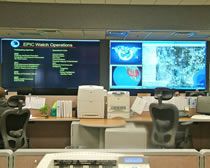
El Paso Intelligence Center turns raw data into actionable intelligence


A U.S. Immigration and Customs Enforcement's Homeland Security Investigations (HSI) special agent contacted the El Paso Intelligence Center to place a nationwide alert on a vehicle of interest. The next day, the special agent received notice on his BlackBerry that a camera at a southwest border port of entry had captured an image of the vehicle's license plate. Border authorities stopped the vehicle, which was en route to Mexico, because of the nationwide alert. They discovered and seized an array of weapons in the vehicle's trunk.

The El Paso Intelligence Center is an information focal point, collecting and analyzing interdiction reports and multi-source intelligence to identify and track trafficking activities and organizations, identify and fill intelligence gaps, and provide tactical intelligence to law enforcement officers in the field.

The multi-agency center is hosted by the Drug Enforcement Agency and has grown to include more than 26 federal, state, local, tribal and foreign enforcement agencies. Foreign partners include Mexico and Colombia.

Located within a stone's throw of the Mexican border — in El Paso, Texas — its mission is not limited to only border activity. In fact, its scope is vast, covering activity within the United States, on both sides of the U.S./Mexican border, across the Caribbean and from other points of origin within the Western Hemisphere.
 
"The center's mission evolved after Sept. 11 when then center's multi-agency environment was called upon to support terrorism investigations," said Louie Garcia, the center's deputy director and the first ICE employee to hold this position in the center's 38-year history. "The mission evolved from its experience in supporting interdiction efforts and investigating drug trafficking, alien, weapon and bulk currency smuggling by adding anti-terrorism to its efforts."

Garcia calls it an "all-threat center."