Showing posts with label university of california santa barbara. Show all posts

Thursday, July 5, 2012

When Protons Collide: New Particle Observed at Large Hadron Collider


Search for Higgs boson reveals new particle

Physicists on experiments at the Large Hadron Collider have oberved a new particle that future analysis may show to be the long-sought Higgs boson, the missing piece in the Standard Model of particle physics.

Last December, the CMS and ATLAS experiments announced seeing tantalizing hints of a new particle in their hunt for the Higgs. Since then, they have more than doubled their collected data, which has led to today's announcement. Involved in this international effort were more than 1,700 scientists, engineers, technicians and graduate students from U.S. institutions, who helped design, build and operate the LHC accelerator and its four particle detectors.

Scientists on experiments at the LHC announced their latest results at a seminar at the home of the LHC, the CERN laboratory, on the border of Switzerland and France. Physicists from across the United States gathered at laboratories and universities in the middle of the night to watch a live-stream of the seminar online. Scientists will give more detailed presentations about the results this week at the biannual International Conference on High Energy Physics, held this year in Melbourne, Australia.

"What has been announced today could not have been accomplished without the cooperation of scientists and nations throughout the world in seeking an understanding of the fundamental laws of nature," said Ed Seidel, NSF's assistant director for the Mathematical and Physical Sciences. "If the particle announced today at CERN is confirmed to be the Higgs boson, this represents a keystone in our knowledge of the elementary forces and particles that exist in our universe."

Through more than four decades of experimental tests, researchers have found that the Standard Model of particle physics has correctly predicted and explained the elementary particles and forces of nature. But the Standard Model cannot, without the Higgs boson, explain how most of these particles acquire their mass, a key ingredient in the formation of our universe.

In 1964 scientists proposed the existence of a new particle, now known as the Higgs boson, whose coupling with other particles would determine their mass. Many experiments have searched for the Higgs boson, but it has eluded detection. Only now, after decades of developments in accelerator and detector technology and computing--not to mention advancements in the understanding of the rest of the Standard Model--are scientists approaching the moment of knowing whether the Higgs was the right solution to this problem.

"Up until now, we've been guided by theory," said University of California Santa Barbara physicist Joe Incandela, spokesperson of the CMS experiment. "If we start to see something in our experiment, we have a new guide. It's nature. It's the real thing."

When protons collide in the Large Hadron Collider, their energy can convert into mass, often creating short-lived particles. These particles quickly decay into lighter, more stable particles that scientists can record with their detectors.

Theoretical physicists have predicted the rate at which the Higgs boson will be produced in high energy proton-proton collisions at the LHC, and also how it decays into certain combinations of observable particles. Experimental physicists at ATLAS and CMS have been studying the collisions and have seen evidence of a new particle that decays in a manner consistent with the predictions for the Higgs. They will need to collect more data and run further analysis to determine the properties of the new particle.

"If the Higgs boson is discovered, attention will turn to a new set of important questions," said University of California Irvine physicist Andy Lankford, deputy spokesperson of ATLAS. "Is this new particle a Standard Model Higgs, or is it a variant that indicates new physics and other new particles?"

Discovery of the Higgs--or another new particle--would represent only the first step into a new realm of understanding of the world around us.

 -NSF-

Saturday, June 2, 2012

A Legacy of the Race to the South Pole: New Scientific Discoveries in Antarctica


Forbidding though Antarctica is, the stations located there are nevertheless irresistibly inviting to scientists, as Antarctica supports a cornucopia of unique life forms, geologic wonders, and marine and atmospheric conditions

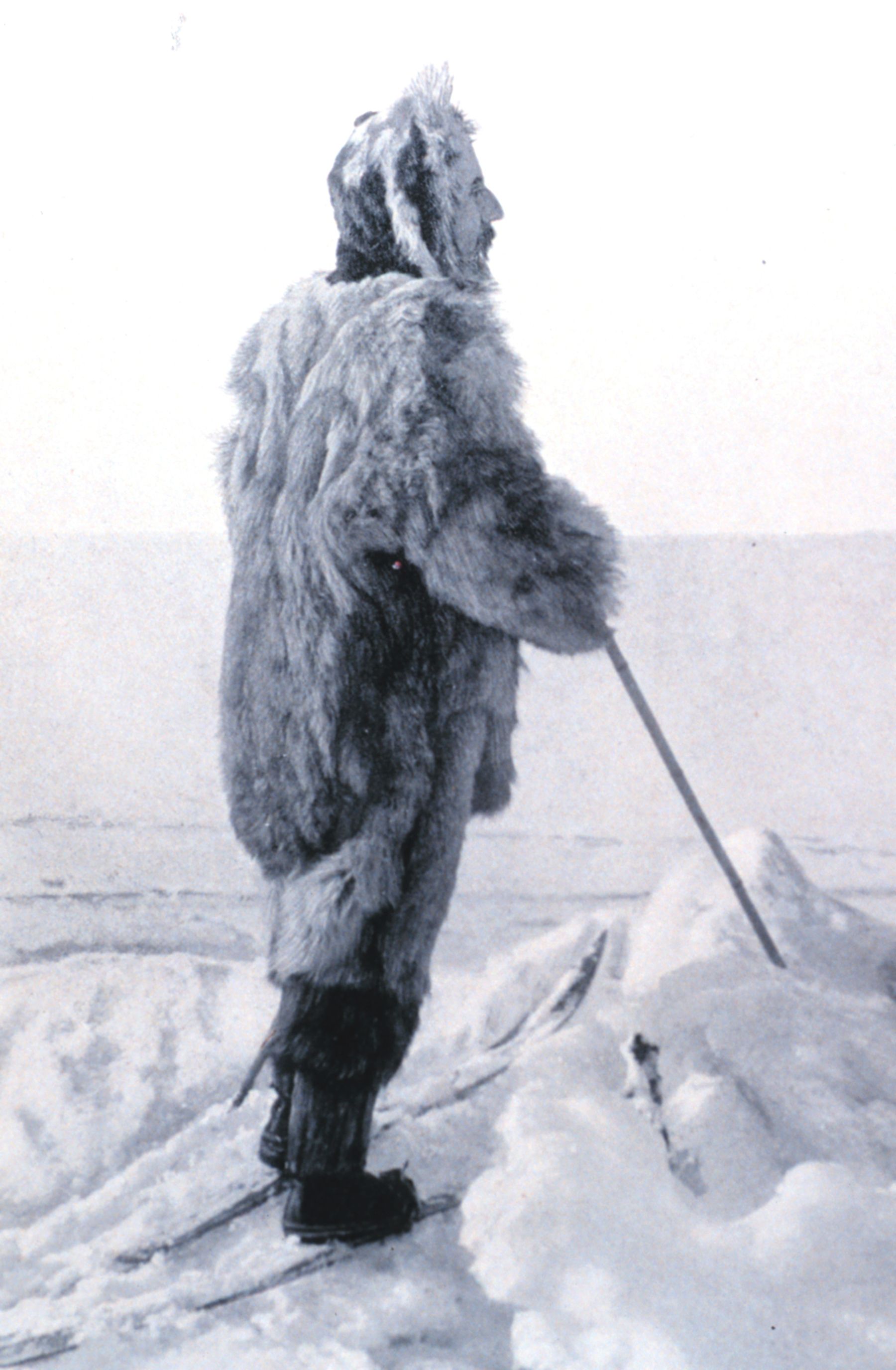
This winter marks the 100th anniversary of the race to the South Pole. After crossing Antarctica-the coldest, windiest, driest continent on Earth-the Norwegian explorer Roald Amundsen and his team arrived at the geographic South Pole on Dec. 14, 1911, the first people in history to reach the bottom of the Earth.

About one month later, on January 17, 1912, the British explorer Navy Captain Robert Falcon Scott and his party arrived at the South Pole to discover that Amundsen had beaten them there. Sadly, Scott died on the ice while attempting to return from the Pole. Nevertheless, the work of the Scott team on their trek to and from the Pole-including hauling 35 pounds of rock and fossil specimens on their return journey-helped lay the foundation for modern Antarctic science.

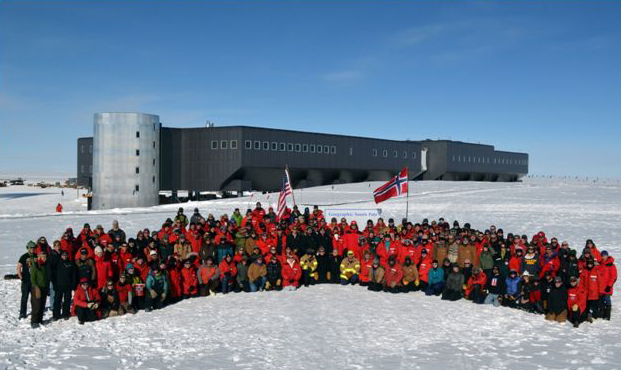
If Amundsen and Scott could somehow magically be transported back to the South Pole now, they would probably be amazed and honored to discover that the National Science Foundation's (NSF) Amundsen-Scott South Pole Station, a massive, two-story, science-support structure, overlooks the spot they worked so hard to reach. Nearby is a 10-meter radio telescope that is currently being used to study the nature of mysterious dark matter.  Below the surface of the ice sheet ice is a cube-shaped detector--a kilometer on each side--searching for elusive subatomic particles called neutrinos.

Amundsen-Scott is one of three year-round stations operated by the U.S. Antarctic Program (USAP), which is managed by NSF under terms of Presidential Memorandum 6646. The other stations are McMurdo Station on Ross Island and Palmer Station on Anvers Island in the Antarctic Peninsula Region.

Forbidding though Antarctica is, the Amundsen-Scott South Pole Station, McMurdo Station and Palmer Station are nevertheless irresistibly inviting to scientists because Antarctica supports a cornucopia of fantastic life forms, geologic wonders, and marine and atmospheric conditions that are found nowhere else on Earth.

For example, researchers are studying adaptations that enable various life-forms-from microorganisms to penguins to seals-to survive in Antarctica, and how research into those adaptations may ultimately benefit human health. Researchers are even looking at the living and working conditions of research teams already in Antarctica to get a better understanding for how people can survive in such extreme ecosystems.

Some Antarctic species, despite their adaptations, are under particular stress. The retreat of sea ice in some parts of Antarctica are critically affecting two penguin species with particularly restricted ranges, and recent warming of water temperatures may be influencing the proliferation of undersea giants, including extremely large sea stars, jellyfish and sea spiders.

Scientists are also investigating global changes for which Antarctica provides an ideal study site, such as the current state of our planet's ozone layer, which protects us from ultraviolet radiation, and the impacts that are emerging as global climate changes. Observations of Antarctica's response to a warming globe-such as ocean acidification and the calving of glaciers off of continental ice sheets-are important for understanding such factors as the effects of ice retreat on global sea level and, more broadly, serve as bellwethers for the planet as a whole.

You can learn more about today's research in Antarctica by reading the text from an online chat that took place on Jan. 19 about NSF-funded Antarctic discoveries. The chat was hosted by the journal Science at ScienceLive, and featured Scott Borg, the director of the Division of Antarctic Sciences in NSF's Office of Polar Programs, and Gretchen Hofmann, a professor at the University of California, Santa Barbara, who specializes in polar organisms. You can also learn more from NSF's multimedia special report on the Amundsen-Scott South Pole Station.

-- Lily Whiteman, National Science Foundation, lwhitema@nsf.gov

Thursday, May 3, 2012

First-of-its-Kind Study Reveals Surprising Ecological Effects of 2010 Chile Earthquake


Long-forgotten coastal habitats reappeared, species unseen for years returned

The reappearance of long-forgotten habitats and the resurgence of species unseen for years may not be among the expected effects of a natural disaster.

Yet that's exactly what researchers found in a study of the sandy beaches of south central Chile, after an 8.8-magnitude earthquake and devastating tsunami in 2010.

Their study also revealed a preview of the problems wrought by sea level rise--a major symptom of climate change.

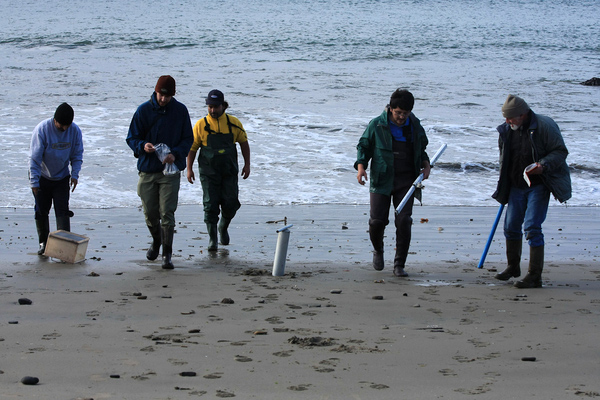
In a scientific first, researchers from Southern University of Chile and the University of California, Santa Barbara (UCSB) were able to document the before-and-after ecological impacts of such cataclysmic occurrences.

A paper appearing today in the journal PLoS ONE details the surprising results of their study, pointing to the potential effects of natural disasters on sandy beaches worldwide.

The study is said to be the first-ever quantification of earthquake and tsunami effects on sandy beach ecosystems along a tectonically active coastal zone.

"So often you think of earthquakes as causing total devastation, and adding a tsunami on top of that is a major catastrophe for coastal ecosystems," said Jenny Dugan, a biologist at UCSB.

"As expected, we saw high mortality of intertidal life on beaches and rocky shores, but the ecological recovery at some of our sandy beach sites was remarkable.

"Plants are coming back in places where there haven't been plants, as far as we know, for a very long time. The earthquake created sandy beach habitat where it had been lost. This is not the initial ecological response you might expect from a major earthquake and tsunami."

Their findings owe a debt to serendipity.

The researchers were knee-deep in a study supported by FONDECYT in Chile and the U.S. National Science Foundation's (NSF) Santa Barbara Coastal Long-Term Ecological Research (LTER) site of how sandy beaches in Santa Barbara and south central Chile respond, ecologically, to man-made armoring such as seawalls and rocky revetments.

By late January, 2010, they had surveyed nine beaches in Chile.

The earthquake hit in February.

Recognizing a unique opportunity, the scientists changed gears and within days were back on the beaches to reassess their study sites in the catastrophe's aftermath.

They've returned many times since, documenting the ecological recovery and long-term effects of the earthquake and tsunami on these coastlines, in both natural and human-altered settings.

"It was fortunate that these scientists had a research program in the right place--and at the right time--to allow them to determine the responses of coastal species to natural catastrophic events," said David Garrison, program director for NSF's coastal and ocean LTER sites.

The magnitude and direction of land-level change resulting from the earthquake and exacerbated by the tsunami brought great effects, namely the drowning, widening and flattening of beaches.

The drowned beach areas suffered mortality of intertidal life; the widened beaches quickly saw the return of biota that had vanished due to the effects of coastal armoring.

"With the study in California and Chile, we knew that building coastal defense structures, such as seawalls, decreases beach area, and that a seawall results in the decline of intertidal diversity," said lead paper author Eduardo Jaramillo of the Universidad Austral de Chile.

"But after the earthquake, where significant continental uplift occurred, the beach area that had been lost due to coastal armoring has now been restored," said Jaramillo. "And the re-colonization of the mobile beach fauna was underway just weeks afterward."

The findings show that the interactions of extreme events with armored beaches can produce surprising ecological outcomes. They also suggest that landscape alteration, including armoring, can leave lasting footprints in coastal ecosystems.

"When someone builds a seawall, beach habitat is covered up with the wall itself, and over time sand is lost in front of the wall until the beach eventually drowns," said Dugan.

"The semi-dry and damp sand zones of the upper and mid-intertidal are lost first, leaving only the wet lower beach zones. This causes the beach to lose diversity, including birds, and to lose ecological function."

Sandy beaches represent about 80 percent of the open coastlines globally, said Jaramillo.

"Beaches are very good barriers against sea level rise. They're important for recreation--and for conservation."

 -NSF-

Monday, April 23, 2012

Site Visit Review of the Nanoscale Science and Engineering Center (NSEC)


Event at University of Santa Barbara, by the Division of Social and Economic Sciences (SES)

May 6, 2012 7:00 AM  to
May 8, 2012 3:30 PM
University of California, Santa Barbara

PURPOSE OF MEETING:   To provide advice and recommendations concerning further support of the NSEC at Arizona State University.

AGENDA:     

Sunday, May 6, 2012
7:00 PM - 9:00 PM              Closed - Executive Session

Monday, May 7, 2012
8:00 AM - 4:00 PM              Open - Review of the NSEC
4:00 PM - 5:30 PM              Closed - Executive Session
5:30 PM - 9:00 PM              Open - Poster Session; Dinner

Tuesday, May 8, 2012
8:00 AM - 9:00 AM              Closed - Executive Session


REASON FOR CLOSING: The work being reviewed may include information of a proprietary or confidential nature, including technical information; financial data, such as salaries and personal information concerning individuals associated with the MRSEC.  These matters are exempt under 5 U.S.C. 552 b(c), (4) and (6) of the Government in the Sunshine Act.

Meeting Type
Other

Contacts
 Frederick M. Kronz, (703) 292-7283 fkronz@nsf.gov

NSF Related Organizations
Directorate for Social, Behavioral & Economic Sciences
Division of Social and Economic Sciences