Showing posts with label south pole. Show all posts

Sunday, August 19, 2012

NSF's South Pole Telescope Discovers a Galaxy Cluster Creating Stars at a Record Pace


Researchers say Phoenix Cluster activity may cause scientists to rethink how galaxies evolve

A National Science Foundation-funded radio telescope in Antarctica has found an extraordinary galaxy cluster that may force astronomers to rethink how galaxy clusters and the galaxies that inhabit them evolve.

The galaxy cluster was discovered some 5.7 billion light years from Earth by the 10-meter wide South Pole Telescope (SPT) located at NSF's Amundsen-Scott South Pole Station in Antarctica, which is funded by NSF's Office of Polar Programs.

NSF manages the U.S. Antarctic Program, through which it coordinates all U.S research and required logistical support on the continent as well as aboard ships in the Southern Ocean.

Officially known as SPT-CLJ2344-4243, the cluster has been dubbed the "Phoenix Cluster" because it is located in the constellation of the Phoenix and because of its remarkable properties. Scientists taking part in the SPT collaboration found the cluster using the Sunyaev-Zel'dovich (SZ) effect, the result of high energy electrons distorting the cosmic microwave background (CMB) radiation through inverse Compton scattering, in which the low energy CMB photons receive an average energy boost during collision with the high energy cluster electrons.

Galaxy clusters, which are among the largest objects in the universe, contain enough hot gas to create detectable "shadows" in the light left over from the Big Bang, which also is known as CMB radiation.

"The mythology of the Phoenix--a bird rising from the dead--is a perfect way to describe this revived object," said Michael McDonald, a Hubble Fellow at the Massachusetts Institute of Technology and the lead author of a paper appearing in the August 16 issue of the journal Nature. "While galaxies at the center of most clusters have been dead for billions of years, the central galaxy in this cluster seems to have come back to life."

Observations made by NASA's Chandra X-ray Observatory in space and by the NSF-managed Gemini Observatory and the Blanco 4-meter and Magellan telescopes in Chile corroborate the SPT discovery and show that stars are forming in this object at the highest rate ever seen in the middle of a galaxy cluster. The object also is the most powerful producer of X-rays of any known cluster, and among the most massive of clusters. The data also suggest that the rate of hot gas cooling in the central regions of the cluster is the largest ever observed.

This light has travelled for 14 billion years across the entire observable universe to get to Earth. If it passes through a massive cluster on its way, then a tiny fraction of the light gets scattered to higher energies--the SZ effect.

Predicted in 1972, the SZ effect was first demonstrated to detect previously unknown clusters of galaxies by the SPT collaboration in 2009. Observations of the effect have since opened a new window for astronomers to discover the most massive, distant clusters in the universe.

"The beauty of the SZ effect for cosmology is that it is as easy to detect a cluster of galaxies in the distant reaches of the observable universe as it is for one nearby," said John Carlstrom, the S. Chandrasekhar Distinguished Service Professor in Astronomy & Astrophysics at the University of Chicago and the SPT's principal investigator. "The magnitude of the effect depends on the mass of the object and not its distance from Earth."

Like other galaxy clusters, Phoenix contains a vast reservoir of hot gas, containing more normal matter than all of the galaxies in the cluster combined. The emission from this reservoir can only be detected with X-ray telescopes like NASA's Chandra X-ray Observatory. The prevailing wisdom had once been that this hot gas should cool over time and sink to the center of the cluster, forming huge numbers of stars.

However, central galaxies in the cluster have formed very few stars over the last few billion years. Astronomers think that the super-massive black hole in the central galaxy of a cluster pumps energy into the system, preventing cooling of gas from causing a burst of star formation. The famous Perseus Cluster is an example of a black hole bellowing out energy and preventing the gas from cooling to form stars at a high rate.

With the black hole not producing powerful enough jets to halt cooling, the center of the Phoenix cluster is buzzing with stars that are forming 20 times faster than in the Perseus Cluster. This rate is the highest seen in the center of a galaxy cluster and is comparable to the highest seen anywhere in the universe.

The frenetic pace of star birth and cooling of gas in Phoenix are causing both the galaxy and the black hole to add mass very quickly--an important phase that the researchers predict will be relatively short-lived.


"The galaxy and its black hole are undergoing unsustainable growth," said co-author Bradford Benson, of the University of Chicago. "This growth spurt can't last longer than about a hundred million years; otherwise the galaxy and black hole would become much bigger than their counterparts in the nearby universe."

Remarkably, the Phoenix Cluster and its central galaxy and super-massive black hole are already among the most massive known objects of their type. Because of their tremendous size, galaxy clusters are crucial objects for studying cosmology and galaxy evolution, so finding one with such extreme properties as the Phoenix Cluster is significant.

The SPT collaboration has now completed an SZ survey of the 2500 square degrees of the southern sky that began in February 2007. It has found approximately 500 "SZ effect" galaxy clusters and published more than 20 papers in peer-reviewed journals. Further analysis of the collected data could reveal the existence of additional galaxy clusters.

The NSF-funded Physics Frontier Center of the University of Chicago's Kavli Institute for Cosmological Physics, the Department of Energy's Argonne National Laboratory, the Kavli Foundation, and the Gordon and Betty Moore Foundation also provide partial support for the SPT.

 -NSF-

Saturday, June 2, 2012

A Legacy of the Race to the South Pole: New Scientific Discoveries in Antarctica


Forbidding though Antarctica is, the stations located there are nevertheless irresistibly inviting to scientists, as Antarctica supports a cornucopia of unique life forms, geologic wonders, and marine and atmospheric conditions

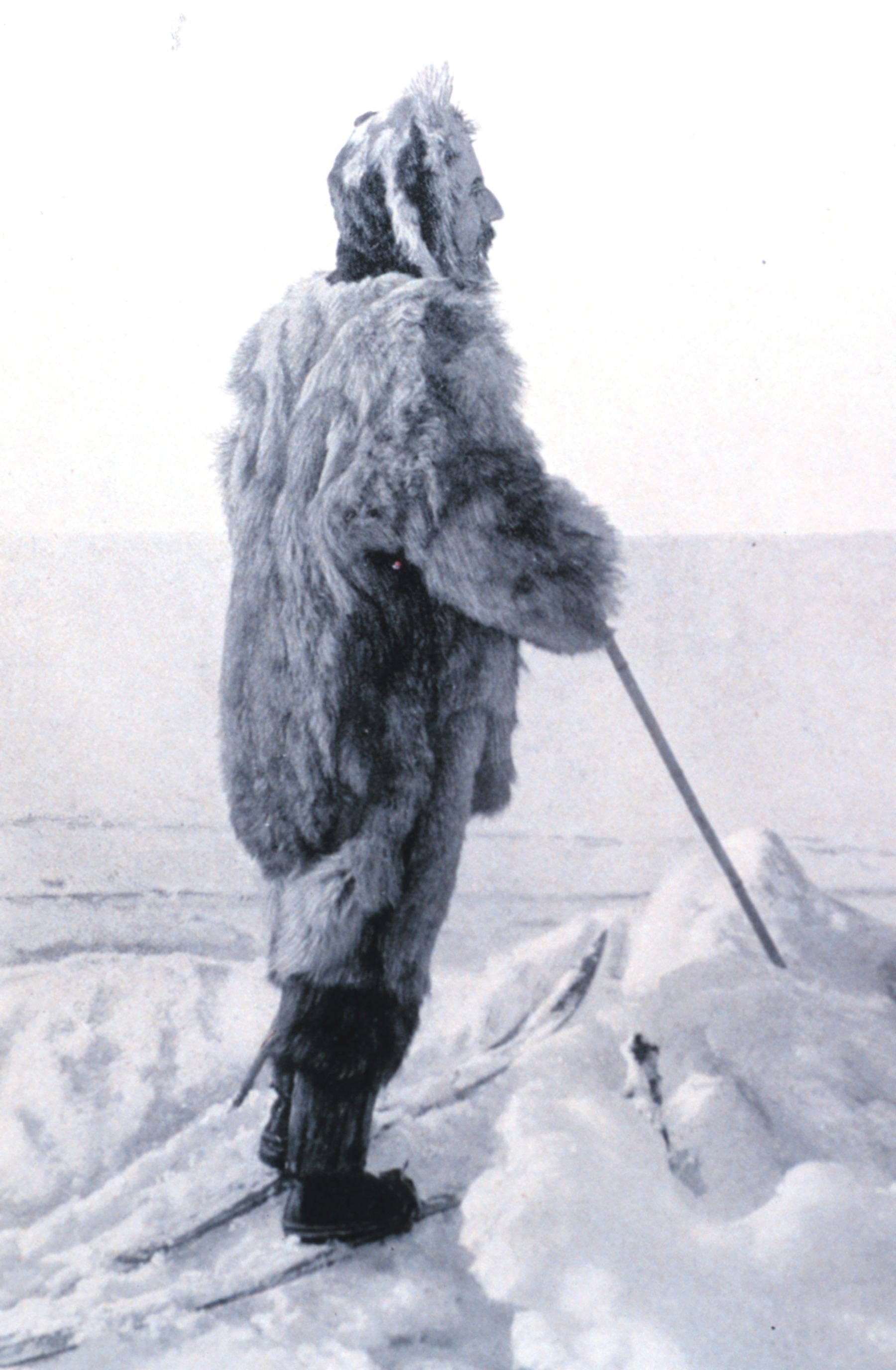
This winter marks the 100th anniversary of the race to the South Pole. After crossing Antarctica-the coldest, windiest, driest continent on Earth-the Norwegian explorer Roald Amundsen and his team arrived at the geographic South Pole on Dec. 14, 1911, the first people in history to reach the bottom of the Earth.

About one month later, on January 17, 1912, the British explorer Navy Captain Robert Falcon Scott and his party arrived at the South Pole to discover that Amundsen had beaten them there. Sadly, Scott died on the ice while attempting to return from the Pole. Nevertheless, the work of the Scott team on their trek to and from the Pole-including hauling 35 pounds of rock and fossil specimens on their return journey-helped lay the foundation for modern Antarctic science.

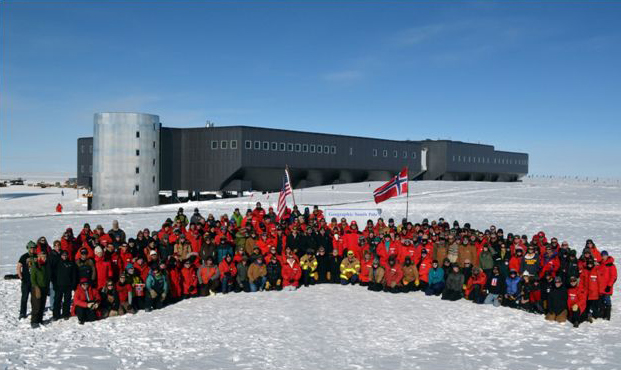
If Amundsen and Scott could somehow magically be transported back to the South Pole now, they would probably be amazed and honored to discover that the National Science Foundation's (NSF) Amundsen-Scott South Pole Station, a massive, two-story, science-support structure, overlooks the spot they worked so hard to reach. Nearby is a 10-meter radio telescope that is currently being used to study the nature of mysterious dark matter.  Below the surface of the ice sheet ice is a cube-shaped detector--a kilometer on each side--searching for elusive subatomic particles called neutrinos.

Amundsen-Scott is one of three year-round stations operated by the U.S. Antarctic Program (USAP), which is managed by NSF under terms of Presidential Memorandum 6646. The other stations are McMurdo Station on Ross Island and Palmer Station on Anvers Island in the Antarctic Peninsula Region.

Forbidding though Antarctica is, the Amundsen-Scott South Pole Station, McMurdo Station and Palmer Station are nevertheless irresistibly inviting to scientists because Antarctica supports a cornucopia of fantastic life forms, geologic wonders, and marine and atmospheric conditions that are found nowhere else on Earth.

For example, researchers are studying adaptations that enable various life-forms-from microorganisms to penguins to seals-to survive in Antarctica, and how research into those adaptations may ultimately benefit human health. Researchers are even looking at the living and working conditions of research teams already in Antarctica to get a better understanding for how people can survive in such extreme ecosystems.

Some Antarctic species, despite their adaptations, are under particular stress. The retreat of sea ice in some parts of Antarctica are critically affecting two penguin species with particularly restricted ranges, and recent warming of water temperatures may be influencing the proliferation of undersea giants, including extremely large sea stars, jellyfish and sea spiders.

Scientists are also investigating global changes for which Antarctica provides an ideal study site, such as the current state of our planet's ozone layer, which protects us from ultraviolet radiation, and the impacts that are emerging as global climate changes. Observations of Antarctica's response to a warming globe-such as ocean acidification and the calving of glaciers off of continental ice sheets-are important for understanding such factors as the effects of ice retreat on global sea level and, more broadly, serve as bellwethers for the planet as a whole.

You can learn more about today's research in Antarctica by reading the text from an online chat that took place on Jan. 19 about NSF-funded Antarctic discoveries. The chat was hosted by the journal Science at ScienceLive, and featured Scott Borg, the director of the Division of Antarctic Sciences in NSF's Office of Polar Programs, and Gretchen Hofmann, a professor at the University of California, Santa Barbara, who specializes in polar organisms. You can also learn more from NSF's multimedia special report on the Amundsen-Scott South Pole Station.

-- Lily Whiteman, National Science Foundation, lwhitema@nsf.gov

Monday, April 2, 2012

South Pole Telescope Provides New Insights Into Dark Energy and Neutrinos


Analysis of data from the National Science Foundation- (NSF) funded 10-meter South Pole Telescope (SPT) in Antarctica provides new support for the most widely accepted explanation of dark energy, the source of the mysterious force that is responsible for the accelerating expansion of the universe.

The results begin to hone in on the tiny mass of the neutrinos, the most abundant particles in the universe, which until recently were thought to be without mass.

The SPT data strongly support Albert Einstein's cosmological constant--the leading model for dark energy--even though researchers base the analysis on only a fraction of the SPT data collected and only 100 of the over 500 galaxy clusters detected so far.

"With the full SPT data set we will be able to place extremely tight constraints on dark energy and possibly determine the mass of the neutrinos," said Bradford Benson, an NSF-funded postdoctoral scientist at the University of Chicago's Kavli Institute for Cosmological Physics.

Benson presented the SPT collaboration's latest findings, Sunday, April 1, at the American Physical Society meeting in Atlanta.

These most recent SPT findings are only the latest scientifically significant results produced by NSF-funded researchers using the telescope in the five years since it became active, noted Vladimir Papitashvili, Antarctic Astrophysics and Geospace Sciences program director in NSF's Office of Polar Programs.

"The South Pole Telescope has proven to be a crown jewel of astrophysical research carried out by NSF in the Antarctic," he said. "It has produced about two dozen peer-reviewed science publications since the telescope received its 'first light' on Feb. 17, 2007. SPT is a very focused, well-managed, and amazing project."

The 280-ton SPT stands 75 feet tall and is the largest astronomical telescope ever built in the clear and dry air of Antarctica. Sited at NSF's Amundsen-Scott South Pole station at the geographic South Pole, it stands at an elevation of 9,300 feet on the polar plateau. Because of its location at the Earth's axis, it can conduct long-term observations.

NSF manages the U.S. Antarctic Program through which it coordinates all U.S. scientific research on the southernmost continent and aboard ships in the Southern Ocean as well as providing the necessary related logistics support.

An international research collaboration led by the University of Chicago manages the South Pole Telescope. The collaboration includes research groups at Argonne National Laboratory; Cardiff University in Wales; Case Western Reserve University; Harvard University; Ludwig-Maximilians-Universität in Germany; the Smithsonian Astrophysical Observatory; McGill University in Canada; the University of California, Berkeley; the University of California, Davis; the University of Colorado Boulder; and the University of Michigan, as well as individual scientists at several other institutions.

SPT specifically was designed to tackle the dark-energy mystery. The 10-meter telescope operates at millimeter wavelengths to make high-resolution images of Cosmic Microwave Background (CMB) radiation, the light left over from the big bang.

Scientists use the CMB to search for distant, massive galaxy clusters that can be used to pinpoint the properties of dark energy and also help define the mass of the neutrino.

"The CMB is literally an image of the universe when it was only 400,000 years old, from a time before the first planets, stars and galaxies formed in the universe," Benson said. "The CMB has travelled across the entire observable universe, for almost 14 billion years, and during its journey is imprinted with information regarding both the content and evolution of the universe."

The new SPT results are based on a new method that combines measurements taken by the telescope and by NASA and European Space Agency X-ray satellites, and extends these measurements to larger distances than previously achieved.

The most widely accepted property of dark energy is that it leads to a pervasive force acting everywhere and at all times in the universe. This force could be the manifestation of Einstein's cosmological constant that assigns energy to space, even when it is free of matter and radiation.

Einstein considered the cosmological constant to be one of his greatest blunders after learning that the universe is not static, but expanding.

In the late 1990s, astronomers discovered the universe's expansion appears to be accelerating according to cosmic distance measurements based on the relatively uniform luminosity of exploding stars. The finding was a surprise because gravity should have been slowing the expansion, which followed the big bang.

Einstein introduced the cosmological constant into his theory of general relativity to accommodate a stationary universe, the dominant idea of his day. But his constant fits nicely into the context of an accelerating universe, now supported by countless astronomical observations.

Others hypothesize that gravity could operate differently on the largest scales of the universe. In either case, the astronomical measurements point to new physics that have yet to be understood.

As the CMB passes through galaxy clusters, the clusters effectively leave "shadows" that allow astronomers to identify the most massive clusters in the universe, nearly independent of their distance.

"Clusters of galaxies are the most massive, rare objects in the universe, and therefore they can be effective probes to study physics on the largest scales of the universe," said John Carlstrom, the S. Chandrasekhar Distinguished Service Professor in Astronomy & Astrophysics, who heads the SPT collaboration.

"The unsurpassed sensitivity and resolution of the CMB maps produced with the South Pole Telescope provides the most detailed view of the young universe and allows us to find all the massive clusters in the distant universe," said Christian Reichardt, a postdoctoral researcher at the University of California, Berkeley and lead author of the new SPT cluster catalog paper.

The number of clusters that formed over the history of the universe is sensitive to the mass of the neutrinos and the influence of dark energy on the growth of cosmic structures.

"Neutrinos are amongst the most abundant particles in the universe," Benson said. "About one trillion neutrinos pass through us each second, though you would hardly notice them because they rarely interact with 'normal' matter."

The existence of neutrinos was proposed in 1930. They were first detected 25 years later, but their exact mass remains unknown. If they are too massive they would significantly affect the formation of galaxies and galaxy clusters, Benson said.

The SPT team has been able to improve estimates of neutrino masses, yielding a value that approaches predictions stemming from particle physics measurements.

"It is astounding how SPT measurements of the largest structures in the universe lead to new insights on the evasive neutrinos," said Lloyd Knox, professor of physics at the University of California at Davis and member of the SPT collaboration. Knox will also highlight the neutrino results in his presentation on Neutrinos in Cosmology at a special session of the APS on Tuesday, April 3.

NSF's Office of Polar Programs primarily funds the SPT. The NSF-funded Physics Frontier Center of the Kavli Institute for Cosmological Physics, the Kavli Foundation and the Gordon and Betty Moore Foundation provide partial support.

 -NSF-

Wednesday, December 14, 2011

South Pole Website Celebrates a Century of Science

A century ago, two groups of explorers crossed the Antarctic continent, competing for the distinction of being the first to stand at the geographic South Pole. Norwegian native Roald Amundsen and his men won that race. His British rival, Robert Falcon Scott, and his party arrived roughly a month later, only to perish on the way back to their base camp.

To mark this centennial and the century of scientific exploration of Antarctica that began with these expeditions, the National Science Foundation (NSF) revised and updated its award-winning website: "U.S. South Pole Station: Supporting Science."

The site, which was honored by the National Association of Government Communicators when it first launched, has been updated to reflect the dedication in 2008 of the latest Amundsen-Scott South Pole station. This state-of-the-art science-support facility consists of two massive scientific experiments: the 10-meter South Pole Telescope--the largest radiotelecsope ever built in Antarctica--and the IceCube Neutrino Observatory--a device a kilometer on a side built into the ice sheet below the station.

The revamped website traces the history of human habitation of the South Pole, from Amundsen's pyramidal tent through the three successive U.S. scientific stations that have occupied the Pole since the 1950s.

The site also includes new Education and Outreach content that reflects NSF's mission as an agency that supports both scientific research and science-educationIncluded are a recorded lecture about the Amundsen-Scott rivalry by Ross MacPhee, who curated Race to the End of the Earth, an NSF-funded exhibit at New York's American Museum of Natural History.

It also includes a question and answer session with Pulitzer-Prize Winner Ed Larson, a participant in NSF's Antarctic Artists & Writers Program and the author of An Empire of Ice: Scott, Shackleton, and the Heroic Age of Antarctic Science.

In addition, the site contains downloadable copies of a cross-section poster of the elevated South Pole station as well as graphics that outline the challenges, both technological and physical, of building the station.

The website may be found on the National Science Foundation's website.

-NSF-