Tuesday, May 1, 2012

Scientists Find Night-Warming Effect Over Large Wind Farms in Texas


Large wind farms in certain areas in the United States appear to affect local land surface temperatures, according to a paper published today in the journal Nature Climate Change.

The study, led by Liming Zhou, an atmospheric scientist at the State University of New York- (SUNY) Albany, provides insights about the possible effects of wind farms.

The results could be important for developing efficient adaptation and management strategies to ensure long-term sustainability of wind power.

"This study indicates that land surface temperatures have warmed in the vicinity of large wind farms in west-central Texas, especially at night," says Anjuli Bamzai, program director in the National Science Foundation's (NSF) Division of Atmospheric and Geospace Sciences, which funded the research.

"The observations and analyses are for a relatively short period, but raise important issues that deserve attention as we move toward an era of rapid growth in wind farms in our quest for alternate energy sources."

Considerable research has linked the carbon dioxide produced by burning fossil fuels with rising global temperatures.

Consequently, many nations are moving toward cleaner sources of renewable energy such as wind turbines. Generating wind power creates no emissions, uses no water and is likely "green."

"We need to better understand the system with observations, and better describe and model the complex processes involved, to predict how wind farms may affect future weather and climate," said Zhou.

There have been a growing number of studies of wind farm effects on weather and climate, primarily using numerical models due to the lack of observations over wind farms.

As numerical models are computationally intensive and have uncertainties in simulating regional and local weather and climate, said Zhou, remote sensing is likely the most efficient and effective way to study wind farm effects over larger spatial and longer temporal scales.

To understand the potential impact of wind farms on local weather and climate, Zhou's team analyzed satellite-derived land surface temperatures from regions around large wind farms in Texas for the period 2003-2011.

The researchers found a night-time warming effect over wind farms of up to 0.72 degrees Celsius per decade over the nine-year-period in which data were collected.

Because the spatial pattern of warming mirrors the geographic distribution of wind turbines, the scientists attribute the warming primarily to wind farms.

The year-to-year land surface temperature over wind farms shows a persistent upward trend from 2003 to 2011, consistent with the increasing number of operational wind turbines with time.

"This warming effect is most likely caused by the turbulence in turbine wakes acting like fans to pull down warmer near-surface air from higher altitudes at night," said Somnath Baidya Roy of the University of Illinois at Urbana-Champaign, a co-author of the paper.

While the warming effect reported is local and small compared to the strong background year-to-year land surface temperature variation, the authors believe that this work draws attention to an important scientific issue that requires further investigation.

"The estimated warming trends only apply to the study region and to the study period, and thus should not be interpolated into other regions, globally or over longer periods," Zhou said. "For a given wind farm, once there are no new wind turbines added, the warming effect may reach a stable level."

The study represents a first step in exploring the potential of using satellite data to quantify the possible effects of the development of big wind farms on weather and climate, said Chris Thorncroft of SUNY-Albany, a co-author of the paper.

"We're expanding this approach to other wind farms," said Thorncroft, "and building models to understand the physical processes and mechanisms driving the interactions of wind turbines and the atmosphere boundary layer near the surface."

Other authors of the paper include Lance Bosart at SUNY-Albany, Yuhong Tian of NOAA, and Yuanlong Hu at Terra-Gen Power LLC in San Diego, Calif.

 -NSF-

Lethal Technology


Imagine a warhead with fragments that flare and burn when the warhead detonates.

Now imagine the potential destruction of an artillery shell  made almost entirely of that stuff.

Such a theoretical weapon is one of the goals behind the research being conducted by Picatinny Arsenal  engineers working at the Advanced Materials Lab.

In conventional artillery shells, the explosive force generated upon detonation causes the warhead to break apart. The resulting fragments flung out in all directions are great speed explains how these weapons cause their damage.

But the potential destructive force is increased dramatically with capabilities of reactive materials that can be formed and strengthened to replace the inert materials that make up the rest of the warhead.

The reactive materials form the structure of the warhead rather than simply being loaded into the warhead.

“Structured reactive materials , or SRM, will enhance the lethality of current and future weapons while maintaining or reducing the payload,” said Paul Redner, a materials engineer with the Advanced Materials Lab.

“Unlike with more traditional (reactive materials), SRM will be a direct one-to-one replacement of inert components.”

The engineers have already made progress in the research, yet challenges remain.

“Despite all of the positive results and lofty goals mentioned above, nothing is ever that simple,” said Redner. Among the challenges that researchers are working to overcome, the greatest is how to process components to form more complex shapes.

Through collaboration with other labs, including the Office of Naval Research , researchers are seeking solutions to these technical challenges.

Advances in structured reactive materials are made possible through the continued development of nanomaterials at Picatinny’s state-of-the-art lab, which was established to make viable technologies ready for transition to development programs.

“We wish that people would ask to see how we fabricate nanoscaled and nanostructured powders, and how we establish the pedigree for our materials,” Redner said.

“We have a wide variety of capabilities and we are open to talk to the ARDEC, PEO Ammunition and the project management communities any time.”

Written by Jason Kaneshiro from www.army.mil.

Global Warming Refuge Discovered Near At-Risk Pacific Island Nation of Kiribati


Ocean currents may mitigate warming near handful of equatorial islands

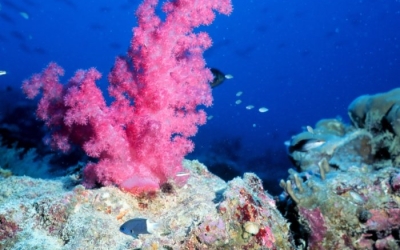
Scientists predict ocean temperatures will rise in the equatorial Pacific by the end of the century, wreaking havoc on coral reef ecosystems.

But a new study shows that climate change could cause ocean currents to operate in a way that mitigates warming near a handful of islands right on the equator.

Those islands include some of the 33 coral atolls that form the nation of Kiribati. This low-lying country is at risk from sea-level rise caused by global warming.

Surprisingly, these Pacific islands within two degrees north and south of the equator may become isolated climate change refuges for corals and fish.

"The finding that there may be refuges in the tropics where local circulation features buffer the trend of rising sea surface temperature has important implications for the survival of coral reef systems," said David Garrison, program director in the National Science Foundation's (NSF) Division of Ocean Sciences, which funded the research.

Here's how it could happen, according to the study by Woods Hole Oceanographic Institution (WHOI) scientists Kristopher Karnauskas and Anne Cohen, published today in the journal Nature Climate Change.

At the equator, trade winds push a surface current from east to west.

About 100 to 200 meters below, a swift countercurrent develops, flowing in the opposite direction.

This, the Equatorial Undercurrent (EUC), is cooler and rich in nutrients. When it hits an island, like a rock in a river, water is deflected upward on an island's western flank.

This upwelling process brings cooler water and nutrients to the sunlit surface, creating localized areas where tiny marine plants and corals flourish.

On color-enhanced satellite maps showing measurements of global ocean chlorophyll levels, these productive patches of ocean stand out as bright green or red spots--for example, around the Galapagos Islands in the Eastern Pacific.

But as you gaze west, chlorophyll levels fade like a comet tail, giving scientists little reason to look closely at scattered low-lying coral atolls in that direction.

These islands are easy to overlook because they are tiny, remote, and lie at the far left edge of standard global satellite maps that place continents in the center.

Karnauskas, a climate scientist, was working with coral scientist Cohen to explore how climate change would affect central equatorial Pacific reefs.

When he changed the map view on his screen in order to view the entire tropical Pacific at once, he saw that chlorophyll concentrations jumped up again exactly at the Gilbert Islands on the equator.

Satellite maps also showed cooler sea surface temperatures on the west sides of these islands, part of Kiribati.

"I've been studying the tropical Pacific Ocean for most of my career, and I had never noticed that," he said. "It jumped out at me immediately, and I thought, 'there's probably a story there.'"

So Karnauskas and Cohen began to investigate how the EUC would affect the equatorial islands' reef ecosystems, starting with global climate models that simulate effects in a warming world.

Global-scale climate models predict that ocean temperatures will rise nearly 3 degrees Celsius (5.4 degrees Fahrenheit) in the central tropical Pacific.

Warmer waters often cause corals to bleach, a process in which they lose the tiny symbiotic algae that live in them and provide vital nutrition.

Bleaching has been a major cause of coral mortality and loss of coral reef area during the last 30 years.

Even the best global models, with their planet-scale views and lower resolution, cannot predict conditions in areas as small as these small islands, Karnauskas said.

So the scientists combined global models with a fine-scale regional model to focus on much smaller areas around minuscule islands scattered along the equator.

To accommodate the trillions of calculations needed for such small-area resolution, they used the new high-performance computer cluster at WHOI called "Scylla."

"Global models predict significant temperature increases in the central tropical Pacific over the next few decades, but in truth conditions can be highly variable across and around a coral reef island," Cohen said.

"To predict what the coral reef will experience in global climate change, we have to use high-resolution models, not global models."

The model predicts that as air temperatures rise and equatorial trade winds weaken, the Pacific surface current will also weaken by 15 percent by the end of the century.

The then-weaker surface current will impose less friction and drag on the EUC, so this deeper current will strengthen by 14 percent.

"Our model suggests that the amount of upwelling will actually increase by about 50 percent around these islands and reduce the rate of warming waters around them by about 0.7 C (1.25 F) per century," Karnauskas said.

A handful of coral atolls on the equator, some as small as 4 square kilometers (1.54 square miles) in area, may not seem like much.

But Karnauskas' and Cohen's results say that waters on the western sides of the islands will warm more slowly than at islands 2 degrees, or 138 miles, north and south of the equator that are not in the path of the EUC.

That gives the Gilbert Islands a significant advantage over neighboring reef systems.

"While the mitigating effect of a strengthened Equatorial Undercurrent will not spare corals the perhaps-inevitable warming expected for this region, the warming rate will be slower around these equatorial islands," Karnauskas said.

"This may allow corals and their symbiotic algae a better chance to adapt and survive."

If the model holds true, even if neighboring reefs are hard-hit, equatorial island coral reefs may survive to produce larvae of corals and other reef species.

Like a seed bank for the future, they might be a source of new corals and other species that could re-colonize damaged reefs.

"The globe is warming, but there are things going on underfoot that will slow that warming for certain parts of certain coral reef islands," said Cohen.

"These little islands in the middle of the ocean can counteract global trends and have a big effect on their own future," Karnauskas said, "which I think is a beautiful concept."

 -NSF-

New Software Matches More Kidney Donations, Faster


Game theory and market dynamics inspire new software that streamlines complicated matches

Jack Burns and his wife, Adele, welcomed Doug Robertson with open arms. It was a very special reunion!

"I didn't know whether I was ever going to meet my recipient and I was just thrilled that we could get together," said Doug, who had traveled from his home in Portsmouth, N.H., to meet Jack and his wife. Doug came into Jack and Adele's lives in 2010 when Jack, who has diabetes and high blood pressure, needed a new kidney. Adele wanted to give him one of her own. "I wanted to have my husband around and I knew that we didn't have a lot of options," says Adele.

Jack gets choked up thinking about what his wife sacrificed. "I was grateful to have someone who loved me that much." But, Adele was not a good medical match to her husband. So, they joined a live-donor kidney exchange program. She donated one of her kidneys to a suitable recipient and Jack got a kidney from Doug. It can be much quicker than getting an organ from a deceased donor.

"The deceased donor wait list can be very long for people," explains Ruthanne Hanto, director of the Organ Procurement and Transplantation Network (OPTN) Kidney Paired Donation pilot program, which is operated under the United Network for Organ Sharing (UNOS). "If somebody brings a living donor with them, then they have a great chance of getting transplanted sooner."

With support from the National Science Foundation (NSF), Harvard University economist Alvin Roth helped develop a suite of computer programs that match living kidney donors with recipients. His team includes market designer Itai Ashlagi and operations researcher David Gamarnik at MIT and economists Utku Unver and Tayfun Sonmez at Boston College. Together, they developed an optimization program which looks at all the donors and recipients in the program. "You look for ways to arrange those exchanges so as to get as many of them as possible," says Roth.

"A combination of tools from the optimization theory, theory of graphs and probabilistic methods enable building models which provide a unique insight into the fascinating challenge of finding the right matches," explains Gamarnik. "Without these techniques, the practitioners face the proverbial 'finding-a-needle-in-a-haystack problem' of searching through the astronomic number of potential matches."

"This research is making it possible for one altruistic person to spark a chain of donations, whereas before one kidney donor helped one person," says Nancy Lutz, program director for the Social and Economic Sciences (SES) Division of NSF's Directorate for Social, Behavioral and Economic Sciences (SBE). "Now, someone associated with the first kidney recipient then donates to someone else, and so on, kicking off a domino effect of donations and matches. In addition, it's especially rewarding to see such a clear and immediate benefit to the public. This research moved from abstract, academic theory to real world, direct impact very quickly."

Transplant surgeon Michael Rees at the University of Toledo Medical center is CEO of the Alliance for Paired Donation (see www.paireddonation.org). "When I first got involved with kidney paired donation in 2000, I was sitting at my kitchen table with the medical charts of 10 incompatible transplant patients and it took me four hours to find just one 2-way exchange. I knew then that I needed a computer to help find the matches," recalls Rees.

"But, then Al and his team showed me that with just 600 incompatible patient pairs, the maximum number of possible 2-way exchanges is about 180,000! And, if you include multi-way exchanges and chains of transplants, the best supercomputers in the world cannot find the best solution," continues Rees. "So, game theory and market design have come together to find practical solutions for kidney disease patients. Their matching software is the engine that has allowed us to help transplant centers in 30 states work together to create over 125 paired exchange kidney transplants since 2007."

So what are economists doing organizing kidney transplants? It turns out that an understanding of game theory and market dynamics is key to optimizing pairings. "If you're trying to organize an exchange, you need a marketplace and a clearinghouse, and that's what we tried to help our surgical colleagues put together," explains Roth. "Game theory turns out to be a giant thing for thinking about big systems in which there are lots of different incentives. The care of patients with kidney disease is a $100 billion a year industry so there are lots of interests in it."

"When we started working on market design for kidney exchange, ad hoc exchanges were being conducted sparsely in the country," says Unver. "Our experience in studying other allocation and exchange problems such as dormitory room allocation in colleges helped us tremendously in the design of centralized clearinghouses for kidney exchange. With the help of health professionals, the ideas we developed were adopted, tested and got refined in the field in various programs over the years. We eventually hope to help thousands of patients per year."

Think of it as a medical version of match-dot-com, linking donors and recipients, making chains of transplants possible across the country. It's all about streamlining complicated matches using the science of the marketplace.

"Kidney exchange is a powerful example of how research transforms into services which have profound impact on our lives," says Sonmez.

The software is comprehensive, matching participants with compatible blood types and antibodies. "It can put together an amazing string of different potential transplants that you just could not do manually. It is an amazing computer system," explains OPTN's Hanto.

"It is the combination of research and practice that led us to understand that using chains, exchanges that begin with an altruistic donor, vastly increase the number of transplants for highly sensitized patients who are difficult to match," notes Ashlagi.

Jack, Adele and Doug talk about how the live kidney exchange program changed their lives. "I'm just grateful and lucky that this person was out there," says Jack, as he smiles at Doug. The two joke with each other. "How are you doing with my old spare part," asks Doug. "Your kidney is probably the healthiest thing in my body!" chuckles Jack. "I was just hoping someone could use an old kidney like mine," laughs Doug.

Miles O'Brien, Science Nation Correspondent
Ann Kellan, Science Nation Producer.