Showing posts with label social science. Show all posts

Wednesday, March 28, 2012

Alone Together: Technology as the Architect of Our Intimacies


CISE Distinguished Lecture Series

April 4, 2012 2:00 PM  to
April 4, 2012 3:00 PM
Room 110, NSF

Abstract: Technology proposes itself an architect of our intimacies. And these days, technology offers us substitutes for direct face-to-face connection with people in a world of machine-mediated relationships on networked devices. As we instant message, e-mail, text, and Twitter, technology redraws the boundaries between intimacy and solitude. As we instant message, e-mail, text, and Twitter, technology redraws the boundaries between intimacy and solitude. We talk of getting "rid" of our e-mails, as though these notes were so much excess baggage. Besides, it takes too long; across the generations, we would rather text than talk.

The world of our connections comes with so many bounties. But we begin to see that some things are amiss: sometimes we are too busy communicating to think, too busy communicating to create, and paradoxically, too busy communicating to connect with the people who matter. This has implications for children as they grow up, for grownups as they form relationships, and for institutions as they try to do their work.

The goals of this presentation is to sketch out the most important challenges facing both individuals and institutions as we face the new challenges of our digital age and to provide new tools for thinking through and addressing these issues. It is time to start a new kind of conversation - in our families, in our places of business, in our political institutions.

Bio: Sherry Turkle is  the Abby Rockefeller Mauzé Professor of the Social Studies of Science and Technology at MIT and the founder and director of the MIT Initiative on Technology and Self.   Prof. Turkle has published eight books, including "Alone Together: Why We Expect More from Technology and Less from Each Other." Prof. Turkle writes on the "subjective side" of people's relationships with technology, is an expert on mobile technology, social networking, and sociable robotics.  She has been named "woman of the year" by Ms. Magazine and among the "forty under forty" who are changing the nation by Esquire.

Meeting Type
Lecture

Contacts
Amanda Shea, (703) 292-4384 ashea@nsf.gov

NSF Related Organizations
Directorate for Computer & Information Science & Engineering

Monday, February 27, 2012

New Studies Determine Which Social Class More Likely to Behave Unethically

Unethical behavior tied to attitudes toward greed

A series of studies conducted by psychologists at the University of California, Berkeley and the University of Toronto in Canada reveal something the well off may not want to hear. Individuals who are relatively high in social class are more likely to engage in a variety of unethical behaviors.

That is the finding of new research published in today's Proceedings of the National Academy of Sciences and it's a doozy.

"Our studies suggest that more positive attitudes toward greed and the pursuit of self-interest among upper-class individuals, in part, drive their tendencies toward increased unethical behavior," said lead researcher Paul Piff of UC Berkeley.

The research revealed that relative to the lower class, upper-class individuals are more likely to break the law while driving, more likely to exhibit unethical decision-making tendencies, more likely to take valued goods from others, more likely to lie in a negotiation, more likely to cheat to increase their chances of winning a prize and more likely to endorse unethical behavior at work.

"The relative privilege and security enjoyed by upper-class individuals give rise to independence from others and a prioritization of the self and one's own welfare over the welfare of others--what we call 'greed,'" explained Piff, whose research was funded in part by a National Science Foundation Graduate Research Fellowship.

"This is likely to cause someone to be more inclined to break the rules in his or her favor, or to perceive themselves as, in a sense, being 'above the law,'" he said and therefore become more prone to committing unethical behavior.

Piff and colleagues conducted seven survey, experimental and naturalistic studies to determine which social class is more likely to behave in unethical ways--to engage in behaviors that have important consequences for society such as cheating, deception or breaking the law.

In two naturalistic field studies that examined unethical behavior on the road, researchers were surprised by the differences between upper and lower class individuals. They found "upper-class drivers" were significantly more likely to pursue their own self-interests and break the law while driving than were "lower-class drivers."

Piff and his team found drivers of higher-end automobiles were four times more likely to cut off other vehicles before waiting their turn at a busy, four-way intersection with stop signs on all sides. In addition, they found upper-class drivers were significantly more likely to drive through a crosswalk without yielding to a waiting pedestrian.

For these studies, the researchers defined social class by an observable cultural symbol of social class--namely, the car one drives.

In another laboratory study more directly related to greed, researchers found upper-class individuals were more likely to cheat in a game to improve their chances of winning a cash prize. In this study, Piff and colleagues measured social class using the MacArthur scale of subjective socioeconomic status, where participants rank themselves on a 10-rung ladder relative to others in society in terms of their wealth, education and the prestige of their jobs.

Participants then played a "game of chance" in which a computer "randomly" presented them with one side of a six-sided die on five separate rolls. Researchers told participants higher rolls would increase their chances of winning a cash prize and were asked to report their total score at the end of the game. In fact, die rolls were pre-determined to sum up to 12. The extent to which participants reported a total exceeding 12 served as a direct behavioral measure of cheating.

Greed "is a robust determinant of unethical behavior," the researchers write in the report. "Plato and Aristotle deemed greed to be at the root of personal immorality, arguing that greed drives desires for material gain at the expense of ethical standards." For this study, the researchers conclude that, in part, due to their more favorable beliefs about greed, upper-class individuals are more willing to deceive and cheat others for personal gain.

"Study 4 is also intriguing," said Piff. Study 4 sought to provide experimental evidence that the experience of higher social class has a causal effect on unethical decision-making and behavior. It was the only study in which researchers manipulated participants into temporarily feeling either higher or lower in social class rank to test whether these feelings actually caused people to behave more or less unethically.

At the end of the study, the experimenter presented participants with a jar of individually wrapped candies, ostensibly for children in a nearby laboratory, but informed them that they could take some if they wanted. This task served as a measure of unethical behavior because taking candy would reduce the amount that would otherwise be given to children.

People in this study, who were made to feel higher in social class rank, took approximately two times as much candy from children than did people who were made to feel lower in social class rank.

"Across all seven studies, the general pattern we find is that as a person's social class increases, his or her tendency to behave unethically also increases," said Piff.

Joining Piff in the research were Daniel M. Stancato, Rodolfo Mendoza-Denton and Dacher Keltner of UC Berkeley and Stéphane Côté of the University of Toronto.

-NSF-

Tuesday, December 20, 2011

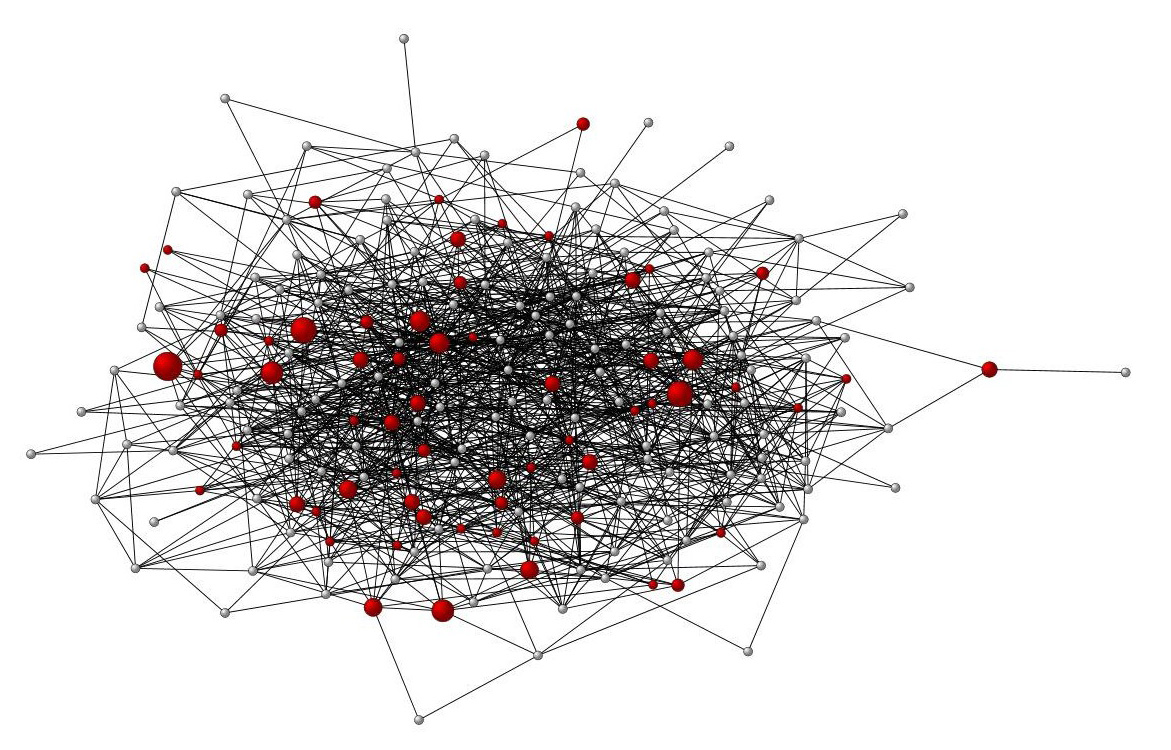
Facebook Helps Researchers See How Friendships Form

New research funded by the National Science Foundation and published this week in the Proceedings of the National Academy of Sciences by three Harvard University social scientists examines how we select our friends and the role that friendship plays in transmitting tastes and new ideas.

Relationships are basic building blocks of society, and understanding who befriends whom can therefore provide insight into patterns of social segregation, mechanisms for the reproduction of inequality, social support (including mental and emotional health), and access to job opportunities. Some have even viewed these relationships as a means to influence behavior whether to control obesity or target advertising. But is it really that easy, even on the Internet, to make friends with people who have different cultural upbringings, different interests, different backgrounds and different tastes in movies, music and books?

"At the end of the day, we have to ask ourselves how much of online interaction--and friendship formation in general--really is about reaching out to new people and learning about totally new ideas and perspectives that don't really interest us," said Ph.D. candidate and coauthor Kevin Lewis, "as opposed to seeking out those perspectives and ideas we already like?"

Lewis and another Ph.D. candidate, Marco Gonzalez, coauthored a paper along with principal investigator Jason Kaufman, which used Facebook to examine whether people become friends because they resemble one another or whether people become more like their friends over time.

They found people's individual tastes influence the formation of friendships much more than a person's individual, pre-existing tastes spread through his or her friendships.

"One feature of Internet relationships that is particularly amenable to our research question is the extent to which it fosters users to communicate their own taste preferences and consumption patterns," said Kaufman. "Such self-presentation is a normal part of everyday life, but sites like Facebook encourage and codify it."

Using a unique, four-year, longitudinal study based on the Facebook activity of a cohort of college students, the researchers studied whether tastes in music, movies and books spread among friends over time. They discovered that students who like certain kinds of music and movies are indeed more likely to become friends on Facebook, but the "diffusion" of tastes through friendship ties was extremely rare.

Friends befriended others with whom they shared interests; they did not generally adopt new interests because had developed new friends.

The finding challenges other, recent, highly-publicized research about the importance of peer influence.

"Given the prior research on social epidemics, we found the nearly complete absence of peer influence effects to be rather striking," said Lewis, the project's first author and a fellow at the Berkman Center for Internet and Society at Harvard.

"Some of the prior social epidemic research has also recently come under fire on methodological grounds," said Lewis. "The researchers may be finding so much peer influence because the kinds of models they are running aren't appropriate and they are misinterpreting their findings."

"Though many prior studies have attempted to disentangle these two mechanisms [selection and influence], their respective importance is still very poorly understood," the researchers write in the report "Social Selection and Peer Influence in an Online Social Network."

"In contrast, the method we used is basically the first tool that is able to disentangle the two processes in a statistically adequate fashion," Lewis said.

"Our research is unique in that it uses data on a complete social network of respondents--a cohort of students from the same college," said Kaufman, "and tracks the evolution of that network over time. Because members of the network were, at the same time, listing what they perceived to be their 'favorite' music, movies and books, we were able to closely examine the co-evolution of both their social networks and their cultural tastes."

Then, using state of the art statistical methods, the researchers were able to tease apart the contrasting effects of selection and influence. And they also discovered that simple generalizations don't always hold. For example, the role books played in friendship formation was different from other forms of media.

The researchers found tastes in books don't seem to influence Facebook friendship formation in the same way as tastes in music and movies.

Watching a movie and listening to music are things that can be done with peers, allowing opportunities for social interaction, bonding and meeting new people, but reading typically is a solitary pursuit.

But if a student's friends liked "indie/alt" music, the student was less likely to adopt the same tastes, presumably because the value of "indie/alt" taste comes precisely from being the only person among one's friendship group that likes it.

In contrast, though, the researchers also found that students whose friends expressed tastes in "classical/jazz" were significantly more likely to adopt such tastes themselves, so interest in some musical genres diffused among friends. With these few exceptions, though, preferences did not generally appear to be "contagious" among Facebook friends over the duration of college.

-NSF-

Friday, December 2, 2011

"Mosaic Report" Outlines Strategies and Priorities for Future Social, Behavioral and Economic Sciences

The National Science Foundation's (NSF) Directorate for Social, Behavioral and Economic (SBE) Sciences, on Thursday, announced the findings of a year-long study that may chart the course of federally-funded social science research for the near future and beyond.

Called Rebuilding the Mosaic: Fostering Research in the Social, Behavioral, and Economic Sciences at the National Science Foundation in the Next Decade, the report results from a visioning process launched by the directorate in August 2010. It concludes NSF's existing programs serve the social science communities well and new topics, especially multidisciplinary ones, may invite a more flexible structure for future funding.

"'Rebuilding the Mosaic' is a commendable outcome of a herculean and very timely effort," said NSF Director Subra Suresh. "The information and thinking within the community--and reflected in the report--promise significant impact on science, NSF, and the nation's wellbeing."

More than 240 authors and teams of authors from the wider SBE community responded to an open invitation from NSF to contribute white papers that set forth the big questions that are likely to drive next generation research in social, behavioral and economic sciences; drive the kinds of skills and training future scholars will need to undertake this research; and drive the infrastructure of data, services and support required to enable future social research.

Within the rich diversity topics described in the 252 white papers received, the report finds SBE scientists share of a vision of research that is interdisciplinary, data-intensive and collaborative. It also finds the social science community looks to NSF's SBE directorate to provide the leadership and direction in building the capacity and infrastructure that will make future research possible.

The report includes definitive work on how behavioral, social and economic sciences can contribute significantly to understanding critical issues ranging from brain and behavior; creativity and innovation; crisis and disaster prevention/management; education and learning; social network dynamics; and to many other topics of critical importance to increasingly interconnected world communities.

"We have the opportunity to transform SBE over the next decade by creating a new generation of researchers and by providing them with the research programs, data and working environments in which to answer critical questions," said Myron P. Gutmann, NSF assistant director for SBE.

"'Rebuilding the Mosaic' is a remarkable report, said AnnaLee Saxenian, a professor and dean of University of California, Berkeley's School of Information. "It summarizes crowd sourced input from the diverse communities served by the NSF's SBE directorate [and] it recognizes that the directorate needs to reinvent itself and the research enterprise for new technological and global realities."

"This is a genuinely refreshing reorientation and refocusing that bodes well for social science research in the 21st Century," said Saxenian, who chairs NSF's Board of Advisors for SBE.

Beginning in 2012, the SBE directorate will move forward on three parallel tracks: refining priorities for the content of SBE science; exploring ways to develop the capacity to conduct this work through fellowships, mentoring, and training programs; and advancing the infrastructure of services, facilities and data that forms the platform from which the science can be undertaken.

The "Rebuilding the Mosaic" report is available online at NSF's website together with all 252 white papers, supporting materials and an archived copy of the town hall webcast today, in which Gutmann discusses the report and its implications.

-NSF-