Showing posts with label harvard university. Show all posts

Tuesday, August 14, 2012

The 3-D Structure of Human Genome Deciphered (Image 11)


Discovered by Giuseppe Peano in 1890, Peano curves are one-dimensional curves that densely fill higher-dimensional space. A published 3-D map of the genome suggests that long stretches of DNA fold into Peano, curve-like structures.

A team of researchers from Harvard University, the Broad Institute of Harvard and the Massachusetts Institute of Technology (MIT), the University of Massachusetts Medical School, and MIT deciphered the 3-D structure of the human genome, paving the way for new insights into genomic function and expanding our understanding of how cellular DNA folds at scales that dwarf the double helix.

The research was supported in part by the National Science Foundation. To learn more, see the story in the online Harvard Gazette the A look inside Scientists have deciphered 3-D structure of the human genome.

(Date of Image: 2009)

Credit: Leonid A. Mirny and Erez Lieberman-Aiden

The 3-D Structure of Human Genome Deciphered (Images 9 and 10)


Discovered by Giuseppe Peano in 1890, Peano curves are one-dimensional curves that densely fill higher-dimensional space. A published 3-D map of the genome suggests that long stretches of DNA fold into Peano, curve-like structures.

A team of researchers from Harvard University, the Broad Institute of Harvard and the Massachusetts Institute of Technology (MIT), the University of Massachusetts Medical School, and MIT deciphered the 3-D structure of the human genome, paving the way for new insights into genomic function and expanding our understanding of how cellular DNA folds at scales that dwarf the double helix.

The research was supported in part by the National Science Foundation. To learn more, see the story in the online Harvard Gazette the A look inside Scientists have deciphered 3-D structure of the human genome.

(Date of Image: 2009)

Credit: Leonid A. Mirny and Erez Lieberman-Aiden

The 3-D Structure of Human Genome Deciphered (Images 7 and 8)


In this image, nearby regions on a chain of DNA are indicated using similar colors. The fractal globule has a hierarchical organization; regions nearby along the chain are also nearby in 3-D.

Image 8: Discovered by Giuseppe Peano in 1890, Peano curves are one-dimensional curves that densely fill higher-dimensional space. A published 3-D map of the genome suggests that long stretches of DNA fold into Peano, curve-like structures.

A team of researchers from Harvard University, the Broad Institute of Harvard and the Massachusetts Institute of Technology (MIT), the University of Massachusetts Medical School, and MIT deciphered the 3-D structure of the human genome, paving the way for new insights into genomic function and expanding our understanding of how cellular DNA folds at scales that dwarf the double helix.

The research was supported in part by the National Science Foundation. To learn more, see the story in the online Harvard Gazette the A look inside Scientists have deciphered 3-D structure of the human genome.

(Date of Image: 2009)

Credit: Leonld A. Mirny and Maxim Imakaev

The 3-D Structure of Human Genome Deciphered (Images 5 and 6)


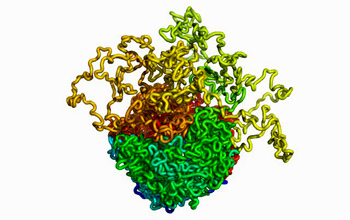
In Image 5, nearby regions on a chain of DNA are indicated using similar colors. The fractal globule has a hierarchical organization; regions nearby along the chain are also nearby in 3-D. Part of this globule is cut out. In the resulting cross-section, the internal spatial clustering is evident.

Image 6 shows the result of reversing the force constraining a subchain of a fractal globule. The subchain unravels easily because the globule lacks knots, making the subchain accessible.

A team of researchers from Harvard University, the Broad Institute of Harvard and the Massachusetts Institute of Technology (MIT), the University of Massachusetts Medical School, and MIT deciphered the 3-D structure of the human genome, paving the way for new insights into genomic function and expanding our understanding of how cellular DNA folds at scales that dwarf the double helix.

The research was supported in part by the National Science Foundation. To learn more, see the story in the online Harvard Gazette the A look inside Scientists have deciphered 3-D structure of the human genome. (Date of Image: 2009)

Credit: Leonid A. Mirny, Maxim Imakaev and Alexnader N. Mirny

The 3-D Structure of Human Genome Deciphered (Images 3 and 4)


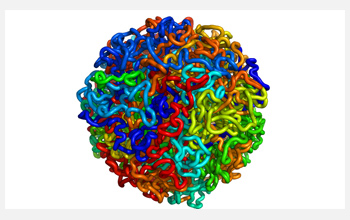
In Image 3, nearby regions on a chain of DNA are indicated using similar colors. The fractal globule has a hierarchical organization; regions nearby along the chain are also nearby in 3-D.

Image 4: A contiguous stretch of DNA chain inside a fractal globule packs into a compact, unknotted structure, making it easy to pack and unpack.

A team of researchers from Harvard University, the Broad Institute of Harvard and the Massachusetts Institute of Technology (MIT), the University of Massachusetts Medical School, and MIT deciphered the 3-D structure of the human genome, paving the way for new insights into genomic function and expanding our understanding of how cellular DNA folds at scales that dwarf the double helix.

The research was supported in part by the National Science Foundation. To learn more, see the story in the online Harvard Gazette the A look inside Scientists have deciphered 3-D structure of the human genome. (Date of Image: 2009)

Credit: Leonld A. Mirny and Maxim Imakaev

The 3-D Structure of Human Genome Deciphered (Images 1 and 2)


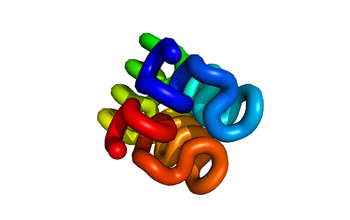
A contiguous stretch of DNA chain inside an equilibrium globule generates an extended, highly knotted shape.


In Image 2, nearby regions on a chain of DNA are indicated using similar colors. The equilibrium globule is highly entangled; regions nearby along the chain are far apart in 3-D.

A team of researchers from Harvard University, the Broad Institute of Harvard and the Massachusetts Institute of Technology (MIT), the University of Massachusetts Medical School, and MIT deciphered the 3-D structure of the human genome, paving the way for new insights into genomic function and expanding our understanding of how cellular DNA folds at scales that dwarf the double helix.

The research was supported in part by the National Science Foundation. To learn more, see the story in the online Harvard Gazette the A look inside Scientists have deciphered 3-D structure of the human genome.

(Date of Image: 2009)

Credit: X. Robert Bao, Leonid A. Mirny and Maxim Imakaev

Monday, April 16, 2012

RoboBees Project


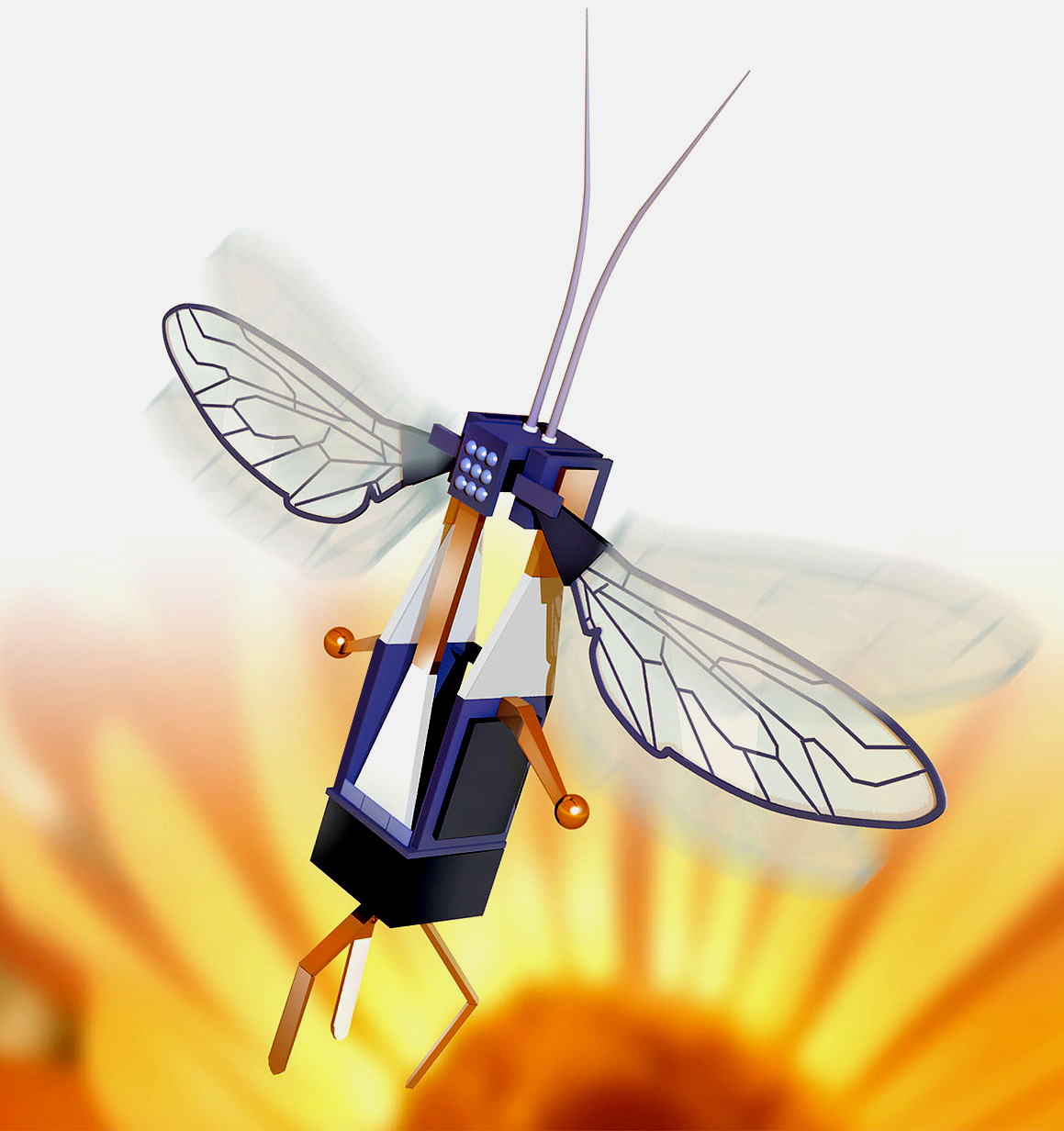
An artist's conception of a robotic bee, created as part of the Harvard University RoboBees Project, one of three new Expeditions in Computing awards made by the National Science Foundation's (NSF) Directorate for Computer and Information Science and Engineering in the summer of 2009.

Funded at $2 million per year for five years, these projects represent some of the largest single investments made by the directorate. The projects allow academic researchers and their collaborators to explore ideas that promise significant advances in the understanding of the computing frontier, while also yielding great benefits to society.

Bees and bee colonies have long been held up as models of efficiency and coordination. Using a host of different sensors, unique communication protocols, and a precise hierarchy of task delegation, thousands of bees can work independently on different tasks while all working toward a common goal--keeping their colony alive. Researchers in this Expedition will create robotic bees that fly autonomously and coordinate activities amongst themselves and the hive, much like real bees. The research team aims to drive research in compact, high-energy power sources, ultra-low-power computing and the design of distributed algorithms for multi-agent systems. Furthermore, the RoboBees created will provide unique insights into how Mother Nature conjures such elegant solutions to solve complex problems.

To learn more about the RoboBees Project, visit the project's website. (Research supported by NSF grant IIS 09-26148.) (Date of Image: 2009)

Credit: Harvard University

Thursday, March 8, 2012

NSF to Honor Two Early Career Researchers in Computational Science With Alan T. Waterman Award


Today the National Science Foundation (NSF) named two young scientists, Robert Wood of Harvard University and Scott Aaronson of the Massachusetts Institute of Technology (MIT), to receive this year's Alan T. Waterman Award.

The annual award recognizes an outstanding researcher under the age of 35 in any field of science or engineering NSF supports.

In addition to a medal, each of this year's awardees will receive a $1 million grant--twice the amount of last year's award--over a five year period for further advanced study in his field.

"Robert and Scott embody the best in young, bold and talented researchers in computing," said NSF Director Subra Suresh noting that computing is central to both of their research pursuits. "I have no doubt that these two researchers will continue to have an extraordinary impact on our nation and the world in the years to come."

Robert Wood, Harvard University
Wood is an associate professor in Harvard's School of Engineering and Applied Sciences and a core faculty member of the Wyss Institute for Biologically Inspired Engineering. He is founder of the Harvard Microrobotics Lab which leverages expertise in microfabrication for the development of biologically-inspired robots with feature sizes on the micrometer to centimeter scale.

His team's project to develop Robotic Flying Insects received an NSF Expeditions in Computing Award in 2009. A recent aspect of that work resulted in an innovative fabrication technique inspired by a children's pop-up book. The technique cheaply and efficiently produces devices on a scale of just a few millimeters.

Wood is the winner of multiple awards and honors, including in 2008 being named to MIT's TR35--MIT Technology Review magazine's annual list of the world's top 35 innovators under the age of 35--and in 2010 receiving the Presidential Early Career Award for Scientists and Engineers (PECASE) from President Obama. Wood's group is also dedicated to STEM education by using novel robots to motivate young students to pursue careers in science and engineering.

"I am thrilled to receive this honor and humbled to be in the company of past winners," Wood said. "This award will enable us to pursue novel topics in microfabrication and bio-inspired robotics, along with new application areas for our fabrication techniques outside of robotics. Ultimately this award will also provide invaluable material for our outreach efforts."

"Rob Wood's research is an intriguing example of the growing interplay of biology and engineering, as well as the power of university research both to advance our basic understanding of how things work and to envision potential solutions to real-world challenges," said Harvard President Drew Faust. "We're pleased that NSF has recognized his uncommonly imaginative work."

Scott Aaronson, MIT
Scott Aaronson is an associate professor of Electrical Engineering and Computer Science at MIT, affiliated with MIT's Computer Science and Artificial Intelligence Laboratory, the largest Interdepartmental lab at MIT. Aaronson, a theoretical computational scientist, pursues research interests that focus on the limitations of quantum computers and computational complexity theory more generally.

His research addresses a variety of topics, including the information content of quantum states, the physical resources needed for quantum computers to surpass classical computers, and the barriers to solving computer science's vexing P versus NP question, that is whether every problem whose solution can be quickly verified by a computer can also be quickly solved by a computer.

Aaronson is a founder of the Complexity Zoo wiki which catalogs over 500 computational complexity classes and the author of the much-read blog "Shtetl-Optimized" and the essay Who Can Name The Bigger Number?. This recipient of a G.E.D. from New York State went on to study at Cornell and the University of California, Berkeley, and win best paper awards and honors, including both the DARPA Young Faculty Award and PECASE Award in 2009.

"By illuminating the fundamental limits on what can be computed in the physical world, and the potential implications of those limits, Scott Aaronson has staked out important new ground in computational theory," said MIT President Susan Hockfield, "I am delighted that the National Science Foundation has recognized his dual abilities, both to articulate key research questions and to offer new methods and ideas for addressing them, with the Alan T. Waterman Award."

"I'm surprised, excited and grateful to receive this award," said Aaronson, "It will obviously be an enormous help to me in supporting my students and postdocs, so we can continue our work on quantum computing and the fundamental limits of computation."

The Waterman Award will be presented to Wood and Aaronson at a dinner ceremony held in Washington, D.C., on May 3. Both awardees also will deliver lectures at NSF.

 -NSF-

Friday, February 3, 2012

Castaway Lizards Offer New Look at Evolutionary Processes

Biologists who released lizards on tiny uninhabited islands in the Bahamas have uncovered a seldom-observed interaction between evolutionary processes.

Jason Kolbe, a biologist at the University of Rhode Island (URI)--along with colleagues at Duke University, Harvard University and the University of California, Davis--found that the lizards' genetic and morphological (form and structural) traits were determined by both natural selection and a phenomenon called the founder effect.

Their research results are published online today in the journal Science.

The founder effect is the loss of genetic variation that occurs when a new population is established by a very small number of individuals from a larger population. It often results in the new population becoming genetically or morphologically different from the original population.

"We rarely observe the founder effect as it happens in nature, but we know that it occurs because islands are colonized by new species over time," said Kolbe.

"What we didn't know was how these evolutionary mechanisms [natural selection and the founder effect] interact with each other."

The scientists learned that differences caused by the founder effect persist even as populations adapt to new environments.

"Evolutionary biologists have been debating the importance of founder effects for more than 70 years," said Sam Scheiner, program director in the National Science Foundation (NSF)'s Division of Environmental Biology, which funded the research. "This study is the first to definitively demonstrate those effects for ecologically important traits."

Kolbe and colleagues randomly collected brown anole lizards from a large island near Great Abaco in the Bahamas, and released one pair on each of seven nearby islands whose lizard populations had been cleared by a recent hurricane.

The source island is forested, while the other islands have short, scrubby vegetation.

Previous research had found that anole lizards living in forests had longer hind limbs than those found in scrub habitat.

Lizards with longer limbs can run faster on the broad perches available in forests, while short-limbed lizards are more adept at moving on the narrower perches found in lower vegetation.

The scientists revisited each of the islands over the next four years to measure the lizards' limb length and collect tissue samples for genetic analysis.

All the new populations survived and increased an average of 13-fold in the first two years, before leveling off.

"We noticed a founder effect one year after starting the experiment, which resulted in differences among the lizards on the seven islands," Kolbe said.

"Some of the islands had lizards with longer limbs and some had lizards with shorter limbs, but that was random with respect to the vegetation on the new islands."

Because the structure of the vegetation on the islands differed from that of the source island, the scientists predicted that natural selection would lead the lizards to develop shorter limbs.

"Over the next four years, the lizards on all the islands experienced a decrease in leg length that is attributable to natural selection," Kolbe explained. "But those that started out with the longest hind limbs still had the longest hind limbs."

The fact that the populations maintained their order from longest to shortest limbs throughout the experiment means that both the founder effect and natural selection contributed to their current differences.

According to Kolbe, the founder effect is rarely observed in nature, with most previous research conducted in the laboratory.

"Ours is the first to study this process experimentally in a natural setting, and we were able to account for multiple evolutionary mechanisms through time," he said. "We manipulated the founding of these islands, but everything else about it was natural."

The next step in the research will be to determine how long the founder effect persists before other factors erase its signature.

Co-authors of the paper are Kolbe; Manuel Leal of Duke University; Thomas Schoener and David Spiller of the University of California, Davis; and Jonathan Losos of Harvard.

The study was also funded by the National Geographic Society.

-NSF-

Tuesday, December 20, 2011

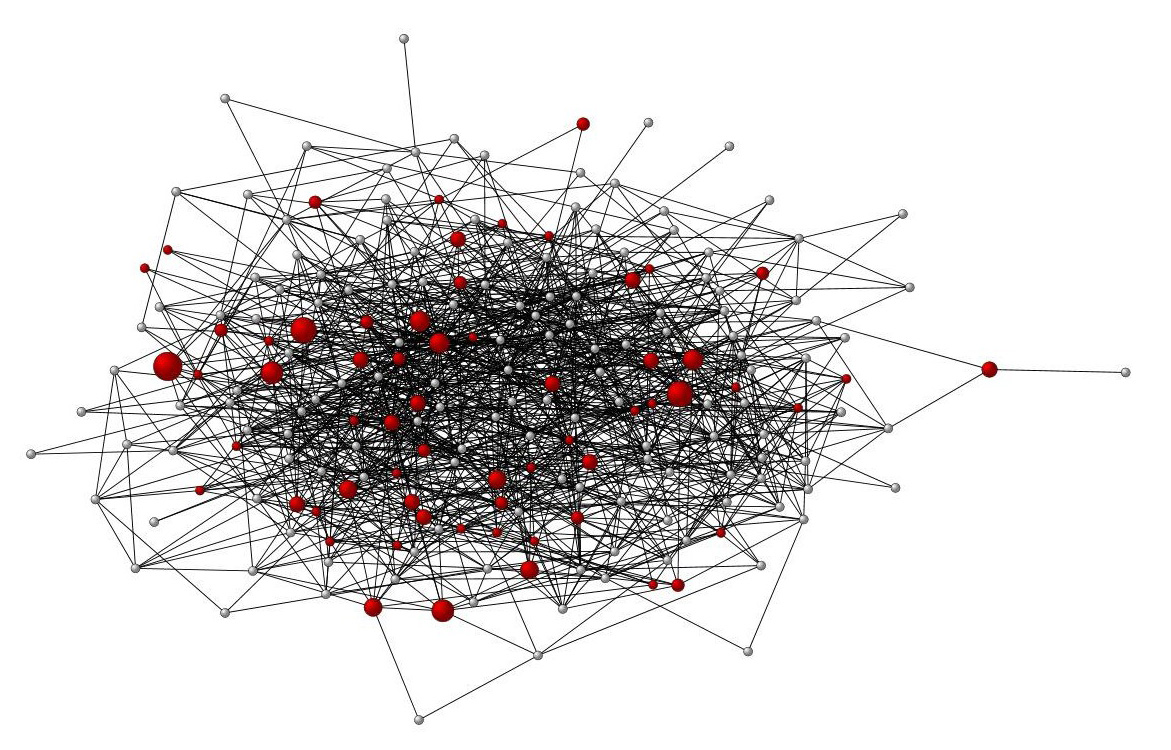
Facebook Helps Researchers See How Friendships Form

New research funded by the National Science Foundation and published this week in the Proceedings of the National Academy of Sciences by three Harvard University social scientists examines how we select our friends and the role that friendship plays in transmitting tastes and new ideas.

Relationships are basic building blocks of society, and understanding who befriends whom can therefore provide insight into patterns of social segregation, mechanisms for the reproduction of inequality, social support (including mental and emotional health), and access to job opportunities. Some have even viewed these relationships as a means to influence behavior whether to control obesity or target advertising. But is it really that easy, even on the Internet, to make friends with people who have different cultural upbringings, different interests, different backgrounds and different tastes in movies, music and books?

"At the end of the day, we have to ask ourselves how much of online interaction--and friendship formation in general--really is about reaching out to new people and learning about totally new ideas and perspectives that don't really interest us," said Ph.D. candidate and coauthor Kevin Lewis, "as opposed to seeking out those perspectives and ideas we already like?"

Lewis and another Ph.D. candidate, Marco Gonzalez, coauthored a paper along with principal investigator Jason Kaufman, which used Facebook to examine whether people become friends because they resemble one another or whether people become more like their friends over time.

They found people's individual tastes influence the formation of friendships much more than a person's individual, pre-existing tastes spread through his or her friendships.

"One feature of Internet relationships that is particularly amenable to our research question is the extent to which it fosters users to communicate their own taste preferences and consumption patterns," said Kaufman. "Such self-presentation is a normal part of everyday life, but sites like Facebook encourage and codify it."

Using a unique, four-year, longitudinal study based on the Facebook activity of a cohort of college students, the researchers studied whether tastes in music, movies and books spread among friends over time. They discovered that students who like certain kinds of music and movies are indeed more likely to become friends on Facebook, but the "diffusion" of tastes through friendship ties was extremely rare.

Friends befriended others with whom they shared interests; they did not generally adopt new interests because had developed new friends.

The finding challenges other, recent, highly-publicized research about the importance of peer influence.

"Given the prior research on social epidemics, we found the nearly complete absence of peer influence effects to be rather striking," said Lewis, the project's first author and a fellow at the Berkman Center for Internet and Society at Harvard.

"Some of the prior social epidemic research has also recently come under fire on methodological grounds," said Lewis. "The researchers may be finding so much peer influence because the kinds of models they are running aren't appropriate and they are misinterpreting their findings."

"Though many prior studies have attempted to disentangle these two mechanisms [selection and influence], their respective importance is still very poorly understood," the researchers write in the report "Social Selection and Peer Influence in an Online Social Network."

"In contrast, the method we used is basically the first tool that is able to disentangle the two processes in a statistically adequate fashion," Lewis said.

"Our research is unique in that it uses data on a complete social network of respondents--a cohort of students from the same college," said Kaufman, "and tracks the evolution of that network over time. Because members of the network were, at the same time, listing what they perceived to be their 'favorite' music, movies and books, we were able to closely examine the co-evolution of both their social networks and their cultural tastes."

Then, using state of the art statistical methods, the researchers were able to tease apart the contrasting effects of selection and influence. And they also discovered that simple generalizations don't always hold. For example, the role books played in friendship formation was different from other forms of media.

The researchers found tastes in books don't seem to influence Facebook friendship formation in the same way as tastes in music and movies.

Watching a movie and listening to music are things that can be done with peers, allowing opportunities for social interaction, bonding and meeting new people, but reading typically is a solitary pursuit.

But if a student's friends liked "indie/alt" music, the student was less likely to adopt the same tastes, presumably because the value of "indie/alt" taste comes precisely from being the only person among one's friendship group that likes it.

In contrast, though, the researchers also found that students whose friends expressed tastes in "classical/jazz" were significantly more likely to adopt such tastes themselves, so interest in some musical genres diffused among friends. With these few exceptions, though, preferences did not generally appear to be "contagious" among Facebook friends over the duration of college.

-NSF-

Friday, December 16, 2011

Tool Enables Scientists to Uncover Patterns in Vast Data Sets

With support from the National Science Foundation, researchers from the Broad Institute and Harvard University recently developed a tool that can uncover patterns in large data sets in a way that no other software program can.

Called Maximal Information Coefficient or MIC, the tool can can tease out multiple, recurring events or sets of data hidden in health information from around the globe, or in the changing bacterial landscape of the gut or even in statistics amassed from a season of competitive sports--and much more. The researchers report their findings in the Dec. 16th issue of the journal Science.

Part of a suite of statistical tools called MINE for Maximal Information-based Nonparametric Exploration, MIC has the ability to sort through today's mass of research variables--from attempts to track hurricanes, efforts to model earthquakes, endeavors to identify the Higgs Boson and efforts to glean insights from affecting the world economy and social networking interaction.

Researchers currently use advanced technology to gather big, complex, data sets, which may be incredibly useful in enhancing system understanding, if, in fact, vast amounts of data can be organized so that telling information may be extracted. Sophisticated computer programs research these data sets with great speed, but fall short in even-handedly detecting different kinds of patterns in large data collections, essential for more sophisticated analysis.

One of the greatest strengths of this newly discovered tool within MINE is its ability to detect and analyze a broad spectrum of patterns and characterize them according to a number of different parameters a researcher might be interested in. Other statistical tools work well for searching for a specific pattern in a large data set, but cannot score and compare different kinds of possible relationships. Researchers can also use MINE to generate new ideas and connections.

Learn more about MINE, MIC and patterns identified in biological and health data, as well as statistics from the 2008 baseball season by visiting the Broad Institute website. A video about this work also is available on the website.

-NSF-

Tuesday, September 13, 2011

New Supernova Remnant Lights Up

Using the Hubble Space Telescope, astronomers are witnessing the unprecedented transition of a supernova to a supernova remnant, where light from an exploding star in a neighboring galaxy, the Large Magellanic Cloud, reached Earth in February 1987. Named Supernova 1987A, it was the closest supernova explosion witnessed in almost 400 years. The supernova's close proximity to Earth allows astronomers to study it in detail as it evolves. Now, the supernova debris, which has faded over the years, is brightening. This means that a different power source has begun to light the debris. The debris of SN 1987A is beginning to impact the surrounding ring, creating powerful shock waves that generate X-rays observed with NASA's Chandra X-ray Observatory. Those X-rays are illuminating the supernova debris and shock heating is making it glow in visible light. Since its launch in 1990, the Hubble telescope has provided a continuous record of the changes in SN 1987A.

Image Credit: NASA, ESA, and P. Challis (Harvard-Smithsonian Center for Astrophysics)

Wednesday, May 25, 2011

Kepler at AAS

New findings from NASA's Kepler mission were presented at the 218th American Astronomical Society meeting

Kepler-10c and a New Method to Validate Planets
Today the Kepler team is announcing another member of the Kepler-10 family, called Kepler-10c (larger foreground object in the image on this page). It has a radius of 2.2 times that of Earth's, and it orbits the star every 45 days. Both Kepler-10b and 10c would be blistering hot worlds.

Kepler’s Astounding Haul of Multiple Planet Systems
Cambridge, MA — NASA’s Kepler spacecraft is proving itself to be a prolific planet hunter. Within just the first four months of data, astronomers have found evidence for more than 1,200 planetary candidates. Of those, 408 reside in systems containing two or more planets, and most of those look very different than our solar system.
- Harvard Smithsonian Center for Astrophysics Press Release 2011-14 of May 23, 2011

Thursday, March 3, 2011

Wired for War: The Science Fiction/Science Reality of Robots, War, and Politics in the 21st Century

By John Ohab

Dr. Peter Warren Singer, author, senior fellow and director of the 21st Century Defense Initiative at the Brookings Institution, will speak on the science fiction and science reality of war in the 21st century, from to eastern on March 8 at the Office of Naval Research (ONR).

The event kicks off ONR’s Directorate of Innovation Winter 2010-2011 Distinguished Lecture Series.

We’ll be streaming the talk live here on the Armed with Science blog via UStream. If you’re in the Arlington, VA, area, you can attend the talk in person by registering at the ONR website.

Dr. Singer is the youngest scholar named Senior Fellow in Brookings’s 90-year history. In 2005, CNN named him to their “New Guard” List of the Next Generation of Newsmakers. Singer has also been recognized by the Financial Times as “Guru of the Week” for the thinker who most influenced the world that week and by Slate Magazine for “Quote of the Day.”

In his personal capacity, Singer served as coordinator of the Obama-08 campaign’s defense policy task force. In 2009, Singer was named by Foreign Policy Magazine to the Top 100 Global Thinkers List, of the people whose ideas most influenced the world that year.

Dr. Singer is considered one of the world’s leading experts on changes in 21st century warfare. He was named by the President to Joint Forces Command’s Transformation Advisory Group. He has written for the full range of major media and journals, including the Boston Globe, L.A. Times, New York Times, Washington Post, Foreign Affairs, Current History, Survival, International Security, Parameters, Weltpolitik, and the World Policy Journal. He has been quoted in every major U.S. newspaper and news magazine and delivered talks at venues ranging from the U.S. Congress to over 40 universities around the world. He has provided commentary on military affairs for nearly every major TV and radio outlet, including ABC-Nightline, Al Jazeera, BBC, CBS-60 Minutes, CNN, FOX, NPR, and the NBC Today Show. He is also a founder and organizer of the U.S.-Islamic World Forum, a global conference that brings together leaders from across the US and the Muslim world

His first book Corporate Warriors: The Rise of the Privatized Military Industry, pioneered the study of the new industry of private companies providing military services for hire, an issue that soon became important with the use and abuse of these companies in Iraq. It was named best book of the year by the American Political Science Association, among the top five international affairs books of the year by the Gelber Prize, and a “top ten summer read” by Businessweek.

Prior to his current position, Dr. Singer was the founding Director of the Project on U.S. Policy Towards the Islamic World in the Saban Center at Brookings. He has also worked for the Belfer Center for Science and International Affairs at Harvard University, the Balkans Task Force in the U.S. Department of Defense, and the International Peace Academy. Singer received his Ph.D. in Government from Harvard University and a BA from the Woodrow Wilson School of Public and International Affairs at Princeton University.