Showing posts with label university of california santa cruz. Show all posts

Friday, September 21, 2012

Unusual Symbiosis Discovered in Marine Microorganisms


Single-celled algae and nitrogen-fixing bacteria help fertilize the oceans
Scientists have discovered an unusual symbiosis between tiny single-celled algae and highly specialized bacteria in the ocean.

The partnership plays an important role in fertilizing the oceans by taking nitrogen from the atmosphere and "fixing" it into a form that other organisms can use.

Details of the finding, published in this week's issue of the journal Science, emerged from the investigation of a mysterious nitrogen-fixing microbe that has a very small genome.

First detected in 1998 by Jonathan Zehr, a marine scientist at the University of California, Santa Cruz (UCSC), the microbe now appears to be the most widespread nitrogen-fixing organism in the oceans.

It belongs to a group of photosynthetic bacteria known as cyanobacteria, but it lacks the genes needed to carry out photosynthesis.

Apparently its association with the algae makes those genes unnecessary.

"The cyanobacterium is a nitrogen-fixer, so it provides nitrogen to the host cell [the algae], and the host cell provides needed carbon to the cyanobacterium, which is lacking the machinery to get its own," says Anne Thompson, a lead author of the paper and researcher at UCSC. Rachel Foster of the Max Planck Institute for Marine Microbiology is the other lead author.

The finding has uncovered a symbiosis between two types of microorganisms that had remained hidden until now, says Matt Kane, program director in the National Science Foundation's (NSF) Division of Environmental Biology, which funded the research along with NSF's Division of Ocean Sciences.

"Genomic analysis indicates that the partnership between these organisms in some ways models the one that led to the evolution of plant organelles," says Kane.

This is an interesting symbiosis from an evolutionary perspective, says Zehr, "because it can be seen as analogous to an early stage in the endosymbiosis that led to chloroplasts in plants."

Chloroplasts, which carry out photosynthesis in all plants, evolved from symbiotic cyanobacteria that eventually were incorporated into host cells in a process known as endosymbiosis.

In previous work, Zehr's team had studied the cyanobacteria in samples processed at sea and brought back to the lab.

The researchers were able to sequence the microbe's complete genome. They discovered that it's missing the genes for several key metabolic pathways, suggesting that it might live in association with another organism.

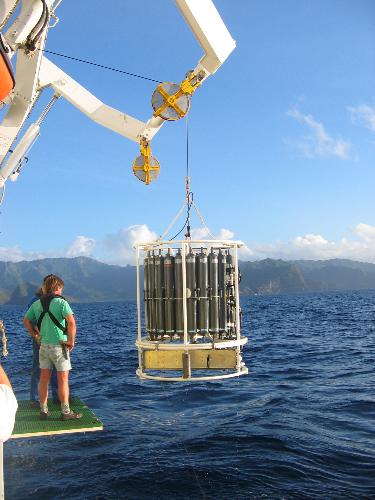
The scientists were only able to see the symbiotic partners together when they sorted freshly collected seawater samples onboard a research vessel.

"Our collaborators at the University of Hawaii, Dave Karl and Ken Doggett, put a cell sorter into a portable laboratory--a lab in a box--so now we can take the machine to sea and sort cells that minutes before were in their natural environment," says Thompson. "That's how we found the association."

Zehr noted that it's difficult to estimate the contribution of this symbiosis to global carbon and nitrogen cycles.

Other algae are more abundant and may be more important in terms of the ocean's carbon cycle than the algae hosts in this symbiosis, he says. But the cyanobacteria partners likely make this a significant contribution to global nitrogen fixation in the oceans.

"Planktonic symbioses are very difficult to study," says Foster. "The associations are often fragile.  Here we used multiple tools to identify one of the first examples of this kind of partnership in plankton."

In addition to Thompson, Zehr and Foster, the co-authors of the paper include Andreas Krupke, Niculina Musat and Marcel Kuypers of the Max Planck Institute for Marine Microbiology; Brandon Carter of UCSC; and Daniel Vaulot of the Station Biologique de Roscoff and the Pierre and Marie Curie University in Paris.

The research was also funded by the Gordon and Betty Moore Foundation and the Max Planck Society.

-NSF-

Thursday, July 19, 2012

Ancient Alteration of Seawater Chemistry Linked With Past Climate Change


Dissolution or creation of huge gypsum deposits changed sulfate content of the oceans

Scientists have discovered a potential cause of Earth's "icehouse climate" cooling trend of the past 45 million years. It has everything to do with the chemistry of the world's oceans.

"Seawater chemistry is characterized by long phases of stability, which are interrupted by short intervals of rapid change," says geoscientist Ulrich Wortmann of the University of Toronto, lead author of a paper reporting the results and published this week in the journal Science.

"We've established a new framework that helps us better interpret evolutionary trends and climate change over long periods of time. The study focuses on the past 130 million years, but similar interactions have likely occurred through the past 500 million years."

Wortmann and co-author Adina Paytan of the University of California Santa Cruz point to the collision between India and Eurasia approximately 50 million years ago as one example of an interval of rapid change.

This collision enhanced dissolution of the most extensive belt of water-soluble gypsum on Earth, stretching from Oman to Pakistan and well into western India. Remnants of the collision are exposed in the Zagros Mountains in western Iran.

The dissolution or creation of such massive gypsum deposits changes the sulfate content of the ocean, say the scientists, affecting the amount of sulfate aerosols in the atmosphere and thus climate.

"We propose that times of high sulfate concentrations in ocean water correlate with global cooling, just as times of low concentrations correspond with greenhouse [warmer] periods," says Paytan.

"When India and Eurasia collided, it caused dissolution of ancient salt deposits, which resulted in drastic changes in seawater chemistry."

That may have led to the end of the Eocene epoch--the warmest period of the modern-day Cenozoic era--and the transition from a greenhouse to an icehouse climate. "It culminated in the beginning of the rapid expansion of the Antarctic ice sheet," says Paytan.

Canada's Natural Sciences and Engineering Research Council supports Wortmann's research and the U.S. National Science Foundation (NSF) supports Paytan research.

"Abrupt changes in seawater composition are a new twist in our understanding of the links among ocean chemistry, plate tectonics, climate and evolution," says Candace Major, program director in NSF's Division of Ocean Sciences.

To make the discovery, the researchers combined past seawater sulfur composition data collected by Paytan with Wortmann's recent discovery of the strong link between marine sulfate concentrations and carbon and phosphorus cycling.

They found that seawater sulfate reflects huge changes in the accumulation and weathering of gypsum, which is the mineral form of hydrated calcium sulfate.

"While it's been known for a long time that gypsum deposits can be formed and destroyed rapidly, the effect of these processes on seawater chemistry has been overlooked," says Wortmann.

"The idea represents a paradigm shift in our understanding of how ocean chemistry changes over time, and how these changes are linked with climate."

Data used in the research were collected aboard the ocean drillship JOIDES Resolution and through the Integrated Ocean Drilling Program (IODP).

IODP is an international research program dedicated to advancing scientific understanding of the Earth through drilling, coring and monitoring the subseafloor.

The JOIDES Resolution is a scientific research vessel managed by the U.S. Implementing Organization of IODP. Texas A&M University, Lamont-Doherty Earth Observatory of Columbia University and the Consortium for Ocean Leadership comprise the implementing organization.

Two lead agencies support the IODP: the U.S. NSF and Japan's Ministry of Education, Culture, Sports, Science and Technology.

Additional program support comes from the European Consortium for Ocean Research Drilling, the Australia-New Zealand IODP Consortium, India's Ministry of Earth Sciences, the People's Republic of China's Ministry of Science and Technology, and the Korea Institute of Geoscience and Mineral Resources.

 -NSF-

Wednesday, July 11, 2012

Black Hole Caught in a Stellar Homicide


This computer-simulated image shows gas from a star that is ripped apart by tidal forces as it falls into a black hole. Some of the gas also is being ejected at high speeds into space.

Using observations from telescopes in space and on the ground, astronomers gathered the most direct evidence yet for this violent process: a supermassive black hole shredding a star that wandered too close. NASA's orbiting Galaxy Evolution Explorer (GALEX) and the Pan-STARRS1 telescope on the summit of Haleakala in Hawaii were used to help to identify the stellar remains.

A flare in ultraviolet and optical light revealed gas falling into the black hole as well as helium-rich gas that was expelled from the system. When the star is torn apart, some of the material falls into the black hole, while the rest is ejected at high speeds. The flare and its properties provide a signature of this scenario and give unprecedented details about the stellar victim.

To completely rule out the possibility of an active nucleus flaring up in the galaxy instead of a star being torn apart, the team used NASA's Chandra X-ray Observatory to study the hot gas. Chandra showed that the characteristics of the gas didn't match those from an active galactic nucleus.

The galaxy where the supermassive black hole ripped apart the passing star in known as PS1-10jh and is located about 2.7 billion light years from Earth. Astronomers estimate the black hole in PS1-10jh has a mass of several million suns, which is comparable to the supermassive black hole in our own Milky Way galaxy.

Image Credit: NASA, S. Gezari (The Johns Hopkins University), and J. Guillochon (University of California, Santa Cruz)

Tuesday, July 3, 2012

Social Bats Pay a Price: Fungal Disease, White-Nose Syndrome ... Extinction?


Study determines which bat species are headed for trouble

The effect on bat populations of a deadly fungal disease known as white-nose syndrome may depend on how gregarious the bats are during hibernation, scientists have discovered.

Species that hibernate in dense clusters even as their populations get smaller will continue to transmit the disease at a high rate, dooming them to continued decline, according to results of a new study led by biologists at the University of California, Santa Cruz (UCSC).

One gregarious species has surprised biologists, however, by changing its social behavior.

The joint National Science Foundation (NSF) and National Institutes of Health (NIH) Ecology and Evolution of Infectious Diseases (EEID) Program funded the study. The Directorates for Biological Sciences and Geosciences at NSF supports the EEID Program.

"Managing disease outbreaks appears to be a daunting task, given the complexity of most ecosystems," said Sam Scheiner, EEID program director at NSF. "This study, however, shows that in fact we can identify the key factors needed for adequate management."

White-nose syndrome has decimated bat colonies throughout the northeast since it first appeared in New York in 2006. It continues to spread in the United States and Canada.

In the study, researchers analyzed population trends in six bat species in the northeast.

They found that some bat populations are stabilizing at lower abundances, while others appear to be headed for extinction.

The results, published in the current issue of the journal Ecology Letters, centered around data from bat surveys between 1979 and 2010, covering a long period of population growth followed by dramatic declines caused by white-nose syndrome.

"All six species were affected by white-nose syndrome, but we have evidence that populations of some species are beginning to stabilize," said Kate Langwig of UCSC, first author of the paper.

"This study gives us an indication of which species face the highest likelihood of extinction, so we can focus management efforts and resources on protecting those species."

The bats hibernate during the winter in caves and abandoned mines; the number of bats can vary tremendously from one site to another.

The fungus that causes white-nose syndrome grows on the exposed skin of hibernating bats, disrupting their hibernation and causing unusual behavior, loss of fat reserves and death.

Langwig and co-authors looked at how steeply the bat populations at each site declined after they were hit by white-nose syndrome, and whether the severity of the decline was the same in large and small populations.

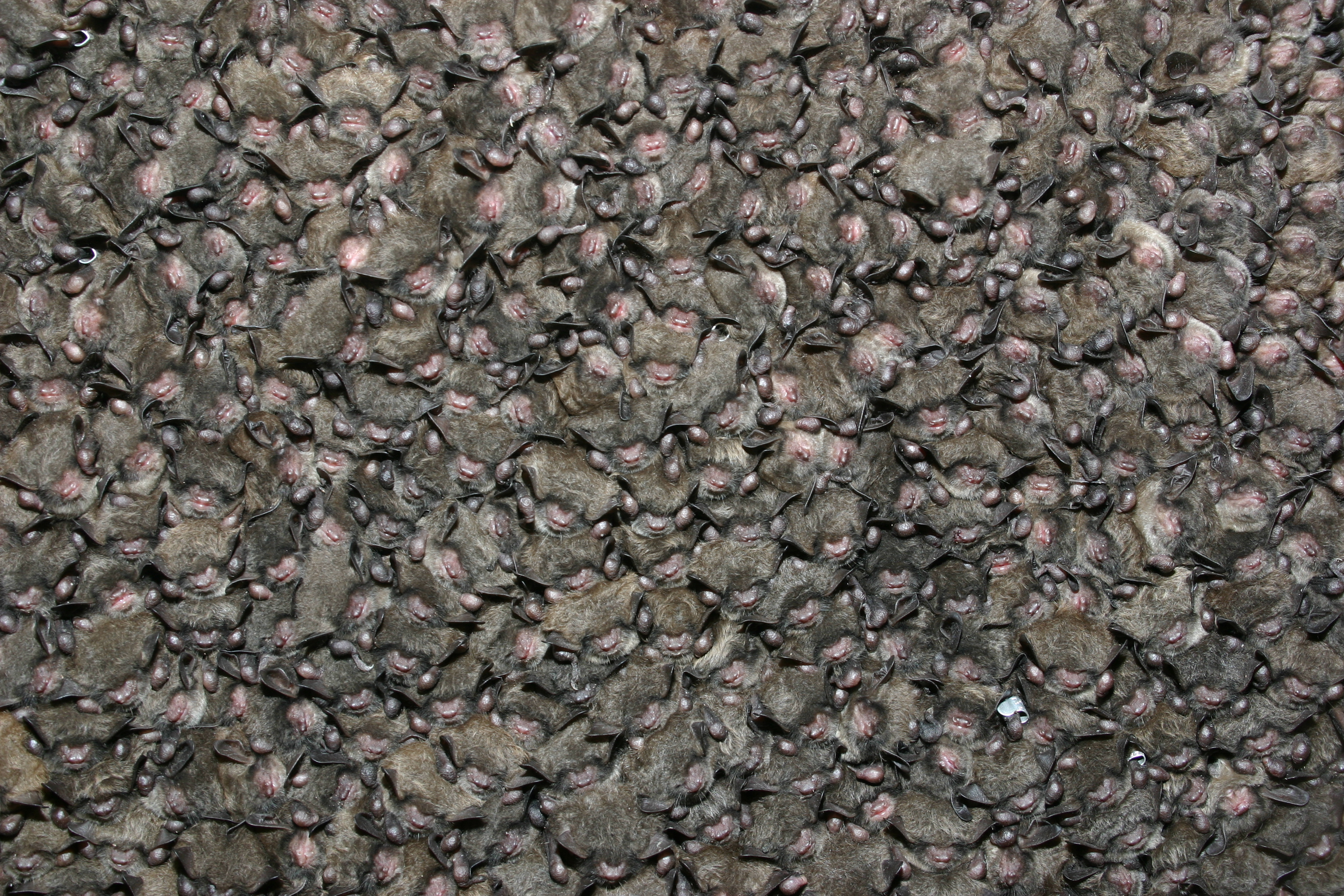
They found that for species that hibernate alone, the declines were less severe in smaller colonies. For gregarious species, however, even small colonies declined steeply.

"We found that in the highly social species that prefer to hibernate in large, tightly packed groups, the declines were equally severe in colonies that varied from 50 bats to 200,000 bats," said co-author Marm Kilpatrick of UCSC. "That suggests that colonies of those species will continue to decline even when they reach small population sizes."

Trends in the declines of different bat species since the emergence of white-nose syndrome support these predictions.

As populations get smaller, the declines tend to level off for species that roost singly, but not for socially gregarious species.

Surprisingly, however, one highly social species is bucking the trend.

The little brown bat, one of the most common bat species in the northeast, appears to be changing its social behavior, going from a species that preferred to roost in dense clusters to one in which most bats now roost apart from other bats.

"Our analysis suggests that the little brown bats are probably not going to go extinct because they are changing their social behavior in a way that will result in their persisting at smaller populations," Kilpatrick said.

Another gregarious species, the Indiana bat, continues to hibernate mostly in dense clusters and will probably continue to decline toward extinction.

"Since the appearance of white-nose syndrome, both species have become more solitary, but the change is much more dramatic in the little brown bats," Langwig said.

"We now see up to 75 percent of them roosting singly. For Indiana bats, only 8 to 9 percent are roosting alone, which does not appear to be enough to reduce transmission rates."

Even solitary roosting habits may not be enough to save some species, such as the northern long-eared bat.

Although it declined less rapidly as its colonies got smaller, 14 populations of northern long-eared bats became locally extinct within two years after the detection of white-nose syndrome. No populations remained in the study area after five years.

In contrast, populations of tri-colored bats, another solitary species, stabilized at low levels three to four years after disease detection.

"Northern long-eared bats may be particularly susceptible to the disease, so they continue to get hit pretty hard even after transmission rates are reduced," Langwig said.

The two species least affected by white-nose syndrome--big brown bats and eastern small-footed bats--are mostly solitary, although occasionally they roost in small clusters.

It's not clear why they have been less affected by the disease than other species, Langwig said.

According to Kilpatrick, one possibility is that these species roost in sites where conditions are less conducive to the disease.

The study examined the influence of different microclimates within hibernation sites, and found that declines were less severe in drier and cooler sites.

"It appears that the driest and coolest caves may serve as partial refuges from the disease," Kilpatrick said.

In addition to Langwig and Kilpatrick, co-authors of the paper include Winifred Frick of UCSC; Jason Bried of Oklahoma State University; Alan Hicks of the New York State Department of Environmental Conservation; and Thomas Kunz of Boston University.

Much of the bat population data used in the study was collected in surveys conducted by state agencies during the past 40 years.

This research was also funded by Bat Conservation International and the U.S. Fish and Wildlife Service.

 -NSF-