Showing posts with label animals. Show all posts

Tuesday, August 28, 2012

Coast Horned Lizard (P. cerroense)


A coast horned lizard (Phrynosoma cerroense) on Baja California's Vizcaíno Peninsula.

Adam Leaché, a University of California, Berkeley, Ph.D. recipient and a National Science Foundation (NSF) bioinformatics postdoctoral fellow at the University of California, Davis, at the time, and the U.S. Geological Survey released a study in 2009 that showed that over their million-year evolution, when California's coast horned lizards moved north from Baja California and spread throughout the state, they diverged into at least two new species. The species of coast horned lizard pictured here, P. cerroense, was newly identified by the researchers.

The study findings are important for future conservation efforts. Coast horned lizard populations are declining from southern Baja California to northern California for many reasons including loss of lowland habitat from agriculture and urbanization and the introduction of Argentine ants, which displace the more nutritious harvester ants that these lizards feed on.

The study was funded in part by NSF (grant DEB 03-30750). To read more about this study, see the UC-Berkeley news story For horned lizard, horns alone do not make the species.

(Date of Image: July 1991)

Credit: Jimmy A. McGuire, University of California, Berkeley

Tuesday, August 7, 2012

R.O.U.S. – Rodents Of Unusual Skills


Problem?  Send in the R.O.U.S.s!  No, not the ones from the Fire Swamp.

A rat may never be man’s best friend, but the Rugged Automated Training System research sponsored by scientists with the U.S. Army Research Laboratory, in collaboration with engineers at West Point and the Counter Explosives Hazards Center, will determine if and how these animals can be trained to save soldiers’ lives.

In July, Barron Associates Inc., Charlottesville, Va. was selected for an award under the Small Business Technology Transfer, or STTR, program to develop and test a rugged, automated and low-cost system for training rats to detect improvised explosive devices and mines, said Micheline Strand, chief of the Army Research Office‘s Life Sciences Division, which manages the program.

“The automated system we’re developing is designed to inexpensively train rats to detect buried explosives to solve an immediate Army need for safer and lower-cost mine removal,” said William Gressick, senior research engineer and the project’s principal investigator at Barron Associates. “Beyond this application, the system will facilitate the use of rats in other search tasks such as homeland security and search-and-rescue operations. In the long-term, the system is likely to benefit both official and humanitarian organizations.”

“If we can demonstrate that rats can be trained inexpensively to be reliable detectors, then this method would not only lower costs for the Army but would also create new opportunities for using animals to detect anything from mines to humans buried in earthquake rubble,” Strand said.

It is well established that animals are capable of identifying explosives at lower concentrations than abiotic systems. The Department of Defense currently relies on dogs as the animal of choice for explosives detection. The goal of this STTR program is not to replace the use of dogs, but to expand the Army’s detection capabilities.

“Training dogs is very expensive. If we can significantly reduce the cost of a trained animal, then we could provide more animals to protect soldiers.” Strand explained.

Trained rats would also create new opportunities; rats can search smaller spaces than a dog can, and are easier to transport.

Landmines kill between 15,000 and 20,000 people a year, and continue to kill adults and children decades after a conflict ends. An automated system to train rats to find mines could accelerate worldwide efforts to clear mined areas and return mined land to farming or other productive uses.

ABOUT U.S. ARMY RESEARCH LABORATORY:
The U.S. Army Research Laboratory of the U.S. Army Research Development and Engineering Command is the Army’s corporate laboratory. For more information, visit www.arl.army.mil, there you can link to the ARL Facebook page or Inside the Lab, the ARL News Channel on You Tube.

By U.S. Army Research Laboratory Public Affairs
 From www.army.mil 

Friday, July 6, 2012

A World Free of one of the Most Virulent Animal Diseases?


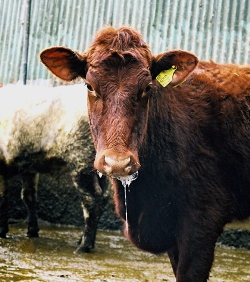
The Departments of Homeland Security and Agriculture have developed a novel vaccine for one of the seven strains of the dreaded foot-and-mouth disease, paving the way for the development of the others.

One of the most economically devastating diseases in the world for those who raise cows, sheep, pigs, goats, deer and other cloven-hoofed animals is foot-and-mouth disease (FMD). This incredibly contagious and fast-spreading disease causes fever, blisters on the feet and mouth (hence the name), loss of appetite, drooling, and lameness. Most herds affected are culled, as in the case of the 2001 outbreak in Great Britain when over 10 million animals had to be destroyed.

Traditional vaccines for FMD typically have three problems: first, there are so many different strains of the FMD virus that you must have a very well-matched vaccine to have any effect; second, traditional vaccines contain live FMD virus so they cannot be produced in the United States, and; third, depending on a vaccine's quality, it can be nearly impossible to determine whether an animal is actually infected, or has simply been exposed to the vaccine. Unless one can differentiate between vaccinated and infected animals, those animals vaccinated outside the U.S. with the traditional vaccine would be prohibited from entering any country that is designated FMD free. The United States has been FMD-free since 1929, but that is no guarantee that the disease will not strike again, as the UK learned in 2001after being FMD-free for 34 years.

Now, at the Department of Homeland Security Science and Technology Directorate's high-containment Plum Island Animal Disease Center (PIADC), located off the tip of Long Island, N.Y., scientists have produced a molecular vaccine against one strain of FMD, that 1) does not use a live FMD virus for vaccine manufacture, and, 2) can be used to differentiate an infected from inoculated animal using common diagnostic tests.

"This is the biggest news in FMD research in the last 50 years," says PIADC Director Dr. Larry Barrett. "It's the first licensed FMD vaccine that can be manufactured on the U.S. mainland, and it supports a vaccinate-to-live strategy in FMD outbreak response."

The new FMD vaccine, originally discovered by Dr. Marvin Grubman in the USDA Agricultural Research Service at PIADC, took seven years to develop and license. Dr. Bruce Harper, Director of Science at PIADC and the manager over PIADC's Targeted Advanced Development Branch, led the development team, who worked with industry partners GenVec Inc., a biopharmaceutical company in Gaithersburg, Maryland, and Antelope Valley Biologics, a Benchmark Biolabs affiliate in Lincoln, Nebraska.

The FMD viral structure includes genetic material surrounded by a coat of proteins called a capsid. The new vaccine produces only the virus coat particles, which form empty viral capsids, and not the entire genome of the virus; thus it lacks the infectious viral nucleic acids. When the vaccine is injected into the animal the resulting empty viral capsids trigger a protective immune response.

"The absence of the nucleic acids of the real virus allows us to differentiate between vaccinated and infected animals," said Grubman. "This is critical when determining that an animal is free of infection after an FMD outbreak. Now it will no longer be necessary to destroy all the animals in a herd when just a few become infected."

The development of the vaccine was a team effort that required new scientific discoveries in order to work properly. Dr. John Neilan, the Branch Chief of the DHS Targeted Advanced Development Branch at PIADC, developed a way to address the immune response to the vaccine, which made it possible to achieve the level of effectiveness required for a USDA license. The vaccine has been granted conditional license for use in cattle by the USDA Animal and Plant Health Inspection Service's Center for Veterinary Biologics. Under the conditional license, the product may be distributed should the need for it arise, as authorized by federal emergency management officials within USDA. APHIS issued the conditional license to Antelope Valley Bios, Inc., who manufactured the vaccine under a contract from GenVec.

The FMD virus, noted since at least the 16th century, survives in lymph nodes and bone marrow. Large amounts of the virus are found in all body secretions and excretions and every time an infected animal breathes out it releases large amounts of infectious virus, exposing other animals. FMD virus can survive on the ground for extended periods, and can be carried in contaminated feed, manure, on the tires of vehicles and on the shoes and clothes of people. It has been documented to spread by being carried with the wind over long distances. The most common route of introduction of FMD into a country has been through feeding contaminated meat product scraps to pigs, as was the case in the devastating 2001 outbreak in the United Kingdom.

There are seven known serotypes and more than 60 subtypes of the FMD virus, and there is no universal vaccine against the disease. Potential cost of an FMD outbreak in United States could exceed $50 billion. FMD is present today in Africa, the Middle East, Asia, and parts of South America.

PIADC has entered into a cooperative research and development agreement with an industry partner, Merial, to evaluate the FMD vaccine production process. S&T is also funding efforts to develop vaccines against other foreign animal disease threats such as classical swine fever, African swine fever, and Rift Valley fever.

"Our work isn’t over yet," says S&T's Agricultural Defense Branch Chief Michelle Colby. "This vaccine protects against just one strain of FMD, so this is just the tip of a growing iceberg. DHS has several vaccines for other FMD serotypes ready to enter the licensure process."

Tuesday, July 3, 2012

Social Bats Pay a Price: Fungal Disease, White-Nose Syndrome ... Extinction?


Study determines which bat species are headed for trouble

The effect on bat populations of a deadly fungal disease known as white-nose syndrome may depend on how gregarious the bats are during hibernation, scientists have discovered.

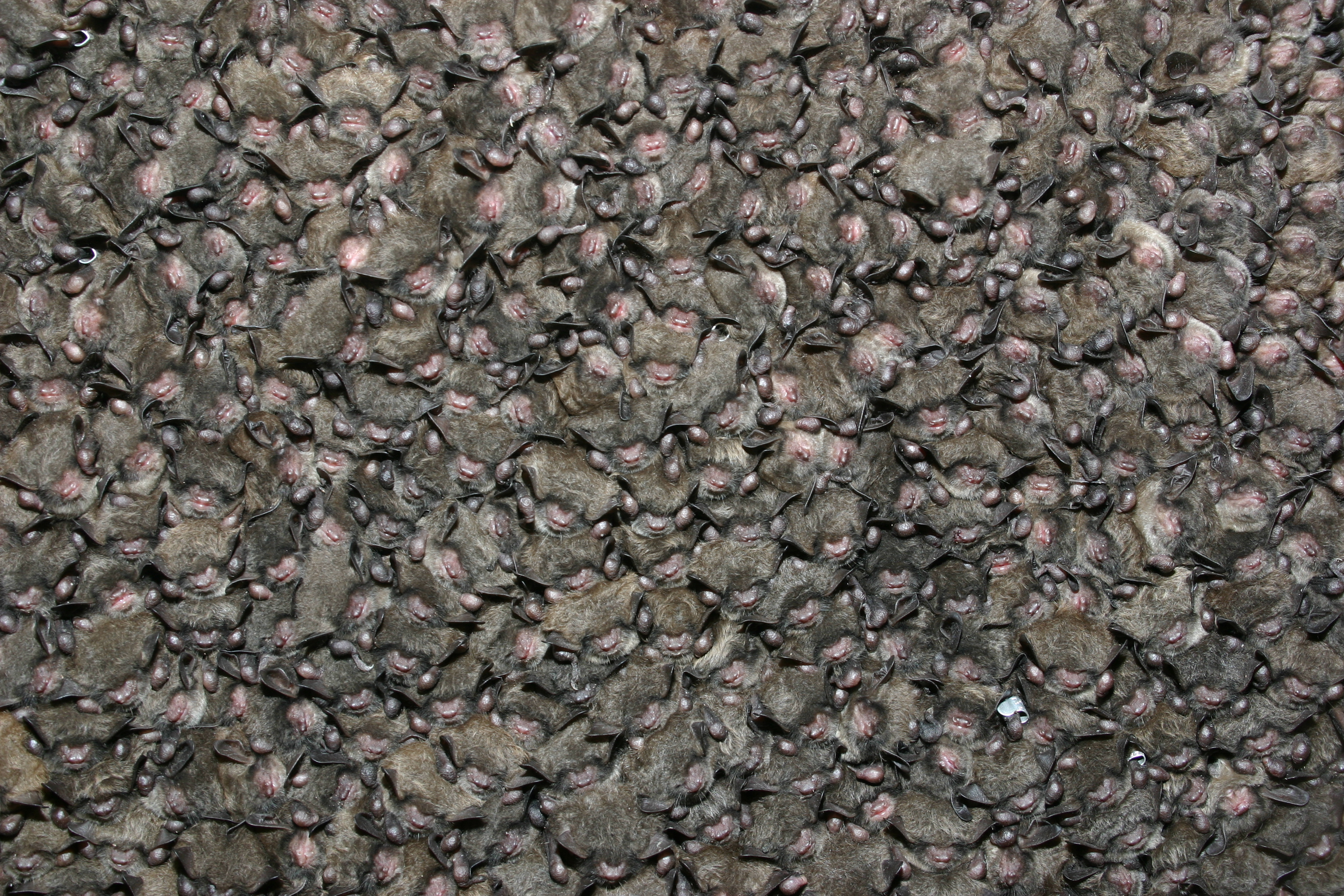
Species that hibernate in dense clusters even as their populations get smaller will continue to transmit the disease at a high rate, dooming them to continued decline, according to results of a new study led by biologists at the University of California, Santa Cruz (UCSC).

One gregarious species has surprised biologists, however, by changing its social behavior.

The joint National Science Foundation (NSF) and National Institutes of Health (NIH) Ecology and Evolution of Infectious Diseases (EEID) Program funded the study. The Directorates for Biological Sciences and Geosciences at NSF supports the EEID Program.

"Managing disease outbreaks appears to be a daunting task, given the complexity of most ecosystems," said Sam Scheiner, EEID program director at NSF. "This study, however, shows that in fact we can identify the key factors needed for adequate management."

White-nose syndrome has decimated bat colonies throughout the northeast since it first appeared in New York in 2006. It continues to spread in the United States and Canada.

In the study, researchers analyzed population trends in six bat species in the northeast.

They found that some bat populations are stabilizing at lower abundances, while others appear to be headed for extinction.

The results, published in the current issue of the journal Ecology Letters, centered around data from bat surveys between 1979 and 2010, covering a long period of population growth followed by dramatic declines caused by white-nose syndrome.

"All six species were affected by white-nose syndrome, but we have evidence that populations of some species are beginning to stabilize," said Kate Langwig of UCSC, first author of the paper.

"This study gives us an indication of which species face the highest likelihood of extinction, so we can focus management efforts and resources on protecting those species."

The bats hibernate during the winter in caves and abandoned mines; the number of bats can vary tremendously from one site to another.

The fungus that causes white-nose syndrome grows on the exposed skin of hibernating bats, disrupting their hibernation and causing unusual behavior, loss of fat reserves and death.

Langwig and co-authors looked at how steeply the bat populations at each site declined after they were hit by white-nose syndrome, and whether the severity of the decline was the same in large and small populations.

They found that for species that hibernate alone, the declines were less severe in smaller colonies. For gregarious species, however, even small colonies declined steeply.

"We found that in the highly social species that prefer to hibernate in large, tightly packed groups, the declines were equally severe in colonies that varied from 50 bats to 200,000 bats," said co-author Marm Kilpatrick of UCSC. "That suggests that colonies of those species will continue to decline even when they reach small population sizes."

Trends in the declines of different bat species since the emergence of white-nose syndrome support these predictions.

As populations get smaller, the declines tend to level off for species that roost singly, but not for socially gregarious species.

Surprisingly, however, one highly social species is bucking the trend.

The little brown bat, one of the most common bat species in the northeast, appears to be changing its social behavior, going from a species that preferred to roost in dense clusters to one in which most bats now roost apart from other bats.

"Our analysis suggests that the little brown bats are probably not going to go extinct because they are changing their social behavior in a way that will result in their persisting at smaller populations," Kilpatrick said.

Another gregarious species, the Indiana bat, continues to hibernate mostly in dense clusters and will probably continue to decline toward extinction.

"Since the appearance of white-nose syndrome, both species have become more solitary, but the change is much more dramatic in the little brown bats," Langwig said.

"We now see up to 75 percent of them roosting singly. For Indiana bats, only 8 to 9 percent are roosting alone, which does not appear to be enough to reduce transmission rates."

Even solitary roosting habits may not be enough to save some species, such as the northern long-eared bat.

Although it declined less rapidly as its colonies got smaller, 14 populations of northern long-eared bats became locally extinct within two years after the detection of white-nose syndrome. No populations remained in the study area after five years.

In contrast, populations of tri-colored bats, another solitary species, stabilized at low levels three to four years after disease detection.

"Northern long-eared bats may be particularly susceptible to the disease, so they continue to get hit pretty hard even after transmission rates are reduced," Langwig said.

The two species least affected by white-nose syndrome--big brown bats and eastern small-footed bats--are mostly solitary, although occasionally they roost in small clusters.

It's not clear why they have been less affected by the disease than other species, Langwig said.

According to Kilpatrick, one possibility is that these species roost in sites where conditions are less conducive to the disease.

The study examined the influence of different microclimates within hibernation sites, and found that declines were less severe in drier and cooler sites.

"It appears that the driest and coolest caves may serve as partial refuges from the disease," Kilpatrick said.

In addition to Langwig and Kilpatrick, co-authors of the paper include Winifred Frick of UCSC; Jason Bried of Oklahoma State University; Alan Hicks of the New York State Department of Environmental Conservation; and Thomas Kunz of Boston University.

Much of the bat population data used in the study was collected in surveys conducted by state agencies during the past 40 years.

This research was also funded by Bat Conservation International and the U.S. Fish and Wildlife Service.

 -NSF-

Tuesday, May 22, 2012

Relationship Between Social Status and Wound-Healing in Wild Baboons


Findings show it's best to be "top baboon"

Turns out it's not bad being top dog, or in this case, top baboon.

Results of a study by University of Notre Dame biologist Beth Archie and colleagues from Princeton University and Duke University finds that male baboons that have a high rank within their society recover more quickly from injuries, and are less likely to become ill than other males.

The finding is somewhat surprising, given that top-ranked males also experience high stress, which should suppress immune responses.

Archie, Jeanne Altman of Princeton and Susan Alberts of Duke examined health records from the Amboseli Baboon Research Project in Kenya. They published their results in this week's issue of the journal Proceedings of the National Academy of Sciences.

The scientists also found that social status is a better predictor of wound-healing than age.

"The power of this study is in identifying the biological mechanisms that may confer health benefits to high-ranking members of society," says George Gilchrist, program director in the National Science Foundation's (NSF) Directorate for Biological Sciences, which co-funded the research with NSF's Directorate for Social, Behavioral & Economic Sciences.

"We know that humans have such benefits, but it took meticulous long-term research on baboon society to tease out the specific mechanisms," says Gilchrist. "The question remains of causation: is one a society leader because of stronger immune function or vice versa?"

Although research on health and disease in animals in laboratory settings has been extensive, this study is one of the most comprehensive conducted on animals in a natural setting, the scientists say.

The researchers examined 27 years of data on naturally-occurring illnesses and injuries in wild male baboons. They investigated how differences in age, physical condition, stress, reproductive effort and testosterone levels contribute to status-related differences in immune function.

Previous research found that high testosterone levels and intense reproductive efforts can suppress immune function and are highest among high-ranking males.

However, Archie and colleagues found that high-ranking males were less likely to become ill and recovered faster from injuries and illnesses than low-ranking males.

The authors suggest that chronic stress, old age and poor physical condition associated with low rank may suppress immune function in low-ranking males.

"The complex interplay among social context, physiology and immune system-mediated health costs and benefits illustrates the power of interdisciplinary research," says Carolyn Ehardt, program director in NSF's biological anthropology program.

"This research begins to tease apart the trade-offs in both high- and low-status in primates--including ourselves--which may lead to a new understanding of the effects of social status on death and disease."

 -NSF-