Showing posts with label biofuels. Show all posts

Sunday, July 22, 2012

The Inevitable Demo Of The Great Green Fleet


In 2009, Secretary of the Navy (SECNAV) Ray Mabus announced five aggressive energy goals to reduce the Department of Navy’s (DON’s) consumption of energy, decrease its reliance on foreign sources of oil, and significantly increase its use of alternative energy.

The purpose of these energy goals is to improve our combat capability and to increase our energy security by addressing a significant military vulnerability: dependence on foreign oil.

One of the five energy goals is to demonstrate and then deploy a “Great Green Fleet,” a Carrier Strike Group fueled by alternative sources of energy, including nuclear power.

The Great Green Fleet is named in honor of President Theodore Roosevelt’s Great White Fleet, which helped usher in America as a global power on the world stage at the beginning of the 20th Century.

Prior to deploying the Great Green Fleet in 2016, the Navy conducted a demonstration during the 2012 Rim of the Pacific (RIMPAC) exercise, the world’s largest international maritime exercise.

The demonstration illustrated and evaluated the performance of “drop-in replacement” advanced biofuel blends and certain energy efficient technologies in an operational setting.


Advanced Biofuel Blends
The ships and aircraft will be powered by alternative fuel, either nuclear or advanced biofuel blends. The biofuel blends are 50-50 mixtures of biofuel (made from used cooking oil and algae) and petroleum-based marine diesel or aviation fuel.

Approximately 450,000 gallons of 100% “neat” biofuel were purchased in 2011 in preparation for the Great Green Fleet demonstration.

 ■Navy surface ships will be powered using 350,000 gallons of hydroprocessed renewable diesel (HRD-76) blended with an equal amount of marine diesel (F-76).
 ■Navy aircraft will burn 100,000 gallons of hydroprocessed renewable jet fuel (HRJ-5) blended with aviation fuel (JP-5).

Investments in an alternative to foreign sources of fuel will help the Navy and the nation become less dependent on foreign oil, and less subject to volatility in oil prices that can directly affect our readiness.

Energy Efficient Technologies
The Great Green Fleet demonstration will also include the following maritime efficiency measures:

 ■Solid State Lighting – Use of light-emitting diodes (LEDs) to save energy, especially when replacing incandescent fixtures or in colored lighting applications. LEDs also last longer than an incandescent or fluorescent fixture, reducing maintenance.
 ■Gas Turbine On-Line Water Wash – Allows compressors to be washed while the engine is running (normally, engines are shut down during this activity). This reduces maintenance, improves starter life, and reduces fuel consumption by keeping the compressor section of the gas turbine cleaner.
 ■Shipboard Energy Dashboard – Provides real-time situational awareness of energy demand associated with equipment. This allows the crew to minimize a ship’s energy consumption and increase its efficiency while meeting system performance and reliability requirements.
 ■Smart Voyage Planning Decision Aid – Sends messages to ships with optimized routing plans for both ship safety and fuel savings.
 ■Stern Flaps – Modifies the flow field under the hull to reduce drag, turbulence, and thus, reduce overall hull resistance.

Changing the Way We Think About Energy
As a Navy, we are grooming a new generation of ‘energy warriors’ through incentives and education.

As an example, the Incentivized Energy Conservation (i-ENCON) program encourages efficient ship operations during underway missions and supports the Secretary of the Navy’s efforts to reduce total energy consumption on Navy ships. In 2011, the i-ENCON program helped achieve over 1.1 million barrels of fuel in underburn, a cost avoidance of over 11% that would pay for an additional 56,500 steaming hours. The USS PRINCETON, USS CHAFEE and USS CHUNG HOON underburned enough fuel to win this prestigious award.

This program was so successful that the Navy recently launched its Aircraft Energy Conservation Program (known as Air-Encon) to optimize fuel consumption by the Navy’s 3,700 aircraft.

By changing the way we think about and use energy, we will continue to be the most formidable fighting force the world has ever known.

———-
Information for this story provided by greenfleet.dodlive.mil

Wednesday, July 18, 2012

#GreatGreenFleet: Nimitz First to Test Use of Aviation Biofuels


By Mass Communication Specialist 3rd Class Devin Wray, USS Nimitz Public Affairs

PACIFIC OCEAN (NNS) -- The nuclear powered aircraft carrier USS Nimitz (CVN 68) was the first ship to receive and test the use of a new blend of hydro processed renewable jet (HRJ-5) and aviation (JP-5) fuel on aircraft July 17, as part of the Navy's Great Green Fleet demonstration.

Approximately 450,000 gallons of 100 percent "neat" biofuel were purchased in 2011 in preparation for the demonstration. The demonstration serves as another milestone in the Navy's pursuit to improve combat capability through improved energy efficiency measures by investing in advanced biofuels that are domestically produced.

"It's a step towards energy independence," said Cmdr. Michael Maxwell, Nimitz' Mini Boss. "If we can prove that it works for air operations, then we will be able to mass produce it here in the U.S."

The fuel, provided by Military Sealift Command fleet replenishment oiler USNS Henry J. Kaiser (T-AO 187), will be used on board Nimitz to fuel multiple aircraft such as the F/A-18 Hornets and Super Hornets, E-2 Hawkeyes, EA-6 Prowler, and SH-60 Seahawk during the demo.

"We expect the fuel to give the same results as any other fuel we use," said Maxwell. "The only difference is that it will be cleaner."

The biofuel has been used by shore commands including the Blue Angels for approximately a year. Before the demonstration, the Nimitz will have to test the fuel to ensure the transfer to the ships holding tanks is effective and causes no changes to the fuel.

"We'll be the first to test it at sea," said Aviation Boatswain's Mate 3rd Class Joshua Palomares, a fuel lab technician aboard Nimitz. "If we can prove it can be used in a multitude of aircraft, this will become the new standard in naval aviation at sea."

The blends are a 50 percent mixture of biofuel, made from animal waste fat, algae and aviation fuel.

Nimitz, along with Carrier Air Wing Eleven, USS Chafee (DDG 90), USS Chung Hoon (DDG 93), USS Princeton (CG 59), and Kaiser are participating in the demonstration during the 2012 Rim of the Pacific (RIMPAC) exercise.

Twenty-two nations, more than 40 ships and submarines, more than 200 aircraft and 25,000 personnel are participating in the RIMPAC exercise from June 29 to Aug. 3, in and around the Hawaiian Islands.

The world's largest international maritime exercise, RIMPAC provides a unique training opportunity that helps participants foster and sustain the cooperative relationships that are critical to ensuring the safety of sea lanes and security on the world's oceans. RIMPAC 2012 is the 23rd exercise in the series that began in 1971.

Friday, June 29, 2012

Study on Fungi Evolution Answers Questions About Ancient Coal Formation and May Help Advance Future Biofuels Production


Study reveals the potentially large influences of fungi, one of the most biologically diverse classes of organisms, on our energy supplies

A new study--which includes the first large-scale comparison of fungi that cause rot decay--suggests that the evolution of a type of fungi known as white rot may have brought an end to a 60-million-year-long period of coal deposition known as the Carboniferous period. Coal deposits that accumulated during the Carboniferous, which ended about 300 million years ago, have historically fueled about 50 percent of U.S. electric power generation.

In addition, the study provides insights about diverse fungal enzymes that might be used in the future to help generate biofuels, which are currently among the most promising and attractive alternatives to fossil fuels for powering vehicles.

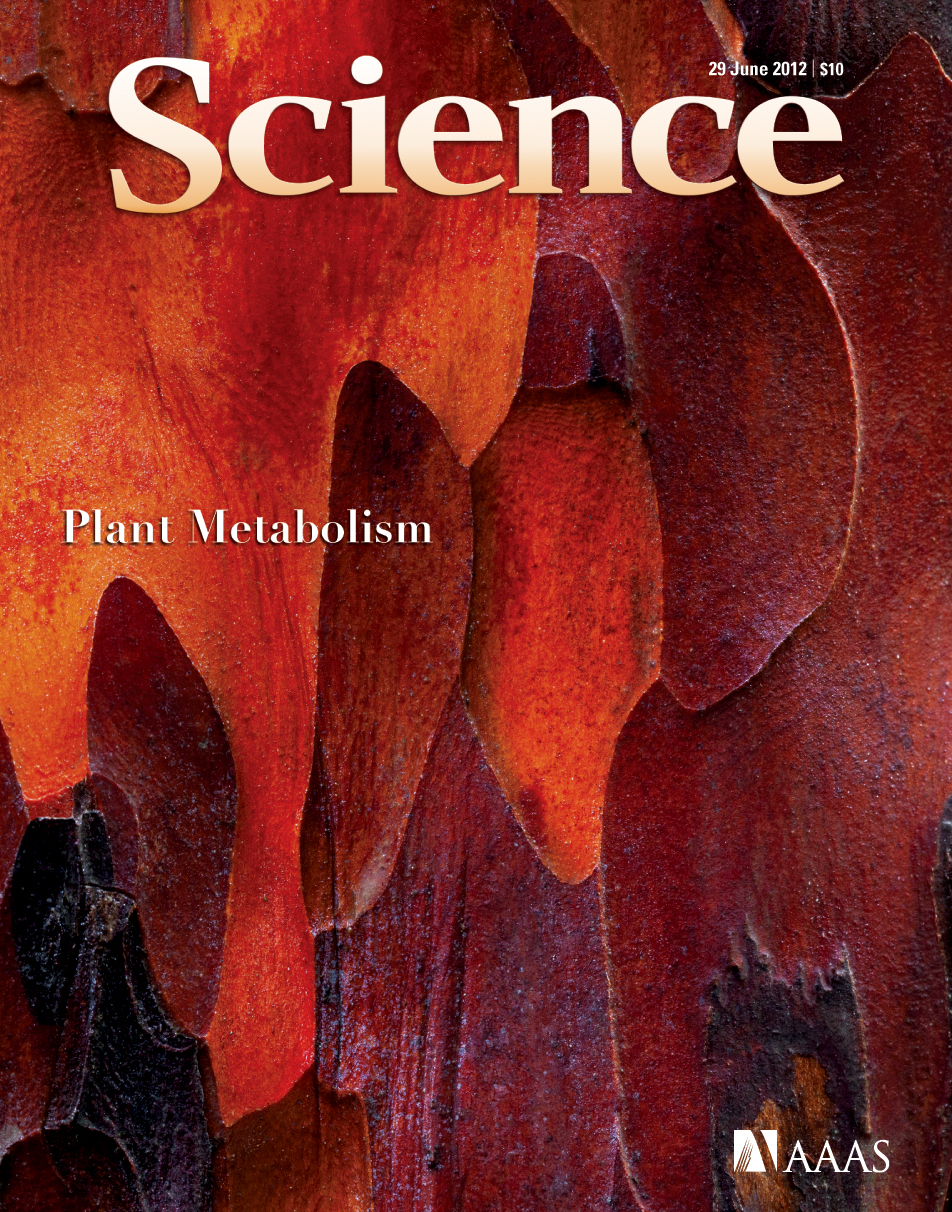
The study, which was conducted by a team of 71 researchers from 12 countries, appears in the June 29, 2012 issue of Science and was partially funded by the National Science Foundation (NSF).

There are almost 1.5 million fungi species on Earth. They perform essential ecological roles that include decomposing organisms and serving as food for many insect species and larger organisms.

However, only about five percent of fungi species have, thus far, been classified. The new study is part of an effort--supported by NSF's Assembling the Tree of Life and Partnerships for Enhancing Expertise in Taxonomy programs--to resolve evolutionary relationships between fungi species, define the diversity of fungi, and explain the early evolutionary history of fungi. Information produced by this effort is integral to the story of life on Earth and the evolution of its varied ecosystems.

The end of a geologic era
Coal is composed of the fossilized remains of plants--mostly lignin, which is a complex polymer that is an important component of the cell walls of plants and helps give wood its strength and rigidity. The study indicates that white rot fungi, which are the only types of microorganisms that can break down lignin, evolved at the end of the Carboniferous green period, and that the synchrony between the rise of white rot fungi and the close of the Carboniferous was no coincidence.

According to the study, once white rot, which breaks down lignin via enzymatic activity, became an ecological force, it destroyed huge accumulations of woody debris that would have otherwise escaped decay to ultimately be fossilized as coal.

So if not for the advent of white rot, large coal deposits may have continued to form long after the end of the Carboniferous period. This study supports a paper published in 1990 by Jennifer M. Robinson that pegged the evolution of white rot as a potential contributing factor to the end of the Carboniferous period.

The matrix
Lignin exists in cell walls as part of a tough matrix with cellulose, which is a carbohydrate composed of sugar subunits. But once white rot attacks and destroys lignin, the matrix collapses, and the cellulose is freed--to be devoured by the white rot as food.

The ability of white rot fungi to decay lignin may ultimately be used to help conquer what is among the world's most longstanding and vexing problems associated with the large-scale production of biofuels: that is, obtaining plant carbohydrates that could be converted into biofuels via fermentation processes.

It may ultimately be feasible to use white rot to break down lignin to release cellulose from cell walls, which could then be broken down into sugars. Next, the sugars would be fed to yeast that would be fermented into alcohols that would provide the bases for new biofuels.

In addition, because enzymes from white rot fungi are able to break down complex organic molecules, they have been investigated for use in bioremediation operations that involve breaking down contaminants to remove them from the environment.

Genomic comparisons
"Our study was designed to reconstruct the evolution of lignin decay mechanisms in fungi, analyze the distribution of enzymes that enable fungi to break down lignin, and better define the evolution of the gene families that encode those enzymes," said David Hibbett of Clark University, who led the study.

Hibbett and his team focused on a large group of fungi known as Agaricomycetes, which include white rot fungi as well as mushroom species that have the familiar cap-and-stem shape. The Agaricomycetes group also includes brown rot fungi that can destroy wood by breaking down cellulose and hemicellulose, which is another component of cell walls--all the while without breaking down lignin.

The researchers compared 31 fungal genomes--26 of which were sequenced at the Department of Energy's Joint Genome Institute, including 12 that were sequenced at the DOE JGI specifically for the study, and were then annotated and analyzed by NSF-funded researchers in collaboration with JGI and other partners.

"The 12 new genome sequences could serve as potential resources for industrial microbiologists aiming to develop new tools for producing biofuels, bioremediation or other products, perhaps by using recombinant DNA methods or by selecting new organisms for fermentation," said Hibbett.

"This study exemplifies the tremendous gains we can make in understanding complicated biologic processes such as lignin decomposition when we learn about the genealogical relationships of organisms," said Charles Lydeard, an NSF program director.

The evolution of white rot
The study also involved tracking the evolution of lignin-decomposing enzymes back through time. This was done via so-called "molecular clock analyses." Such analyses are based on the assumption that genes accumulate mutations through evolution at fairly predictable rates--similar to the way that the hands of a clock advance around a clock at predictable rates. The ability to estimate these mutation rates enables researchers to trace mutations back in time and estimate how recently fungal lineages shared a common ancestor but then diverged from one another.

Results of molecular clock analyses suggest that the oldest ancestor of the Agaricomcyetes was a white rot species that possessed multiple lignin-degrading enzymes and lived roughly 300 million years ago. Many surviving lineages of Agaricomycetes-including fungi species known as wood-decaying polypores and bracket fungi-produce lignin-degrading enzymes. "Our results suggest that the ability of fungi to break down lignin evolved only once," said Hibbett.

In addition, Hibbett said, "This study underscores the adaptability of fungi." This adapatability is underscored by the fact that some Agaricomycete lineages have maintained their lignin-degrading enzymes. By contrast, other Agaricomycete lineages, including brown rot and mycorrhizal species, which survive via symbiotic relationships with the roots of certain trees without decaying them, ultimately lost their lignin-degrading enzymes as they developed alternative methods of obtaining nutrition, said Hibbett. 

Potential payback
The economic value of fungi is already almost incalculable: fungi currently impact diverse applied disciplines, including agriculture, medicine and drug discovery. The more scientists learn about these important organisms, the more likely they will be to identify additional uses for them that will benefit the economy, the environment, and human welfare, as well as to develop new ways to fight wood rot that, at great costs, kills trees and destroys wood structures, including homes and ships.

Joseph Spatafora of Oregon State University who is a co-author on the study said, "It's a really exciting time in fungal biology, and part of that is due to the technology today that allows us to address the really longstanding questions."

-NSF-

Monday, June 25, 2012

Road to the New Energy Economy - Algal Biofuels


The National Science Foundation and DISCOVER magazine hosted a congressional briefing series examining what steps must be taken to develop algal biofuels as a source for America's energy future.


Credit: National Science Foundation