Showing posts with label environmentalism. Show all posts

Wednesday, September 19, 2012

Navy Ditching Steam Pipes For More Preferable Methods


The steam pipes that provided hot water to Naval Station Rota are becoming a thing of the past, just like the technology that made them necessary in the first place.  Removing the piping will make the base energy efficient, environmentally friendly and reduce risk throughout the community.


Video provided by DMA Navy YouTube channel

Monday, September 17, 2012

New "ATM" Takes Old Phones and Gives Back Green


Using sophisticated artificial intelligence, kiosks evaluate unwanted tech for resale and recycling

When new cell phones or tablets enter the marketplace, yesterday's hot technology can quickly become obsolete--for some consumers. For others, the device still has value as an affordable alternative, or even as spare parts.

With support from the National Science Foundation (NSF), ecoATM of San Diego, Calif., has developed a unique, automated system that lets consumers trade in those devices for reimbursement or recycling.

Using sophisticated artificial intelligence developed through two NSF Small Business Innovation Research grants, ecoATM kiosks can differentiate varied consumer electronics products and determine a market value. If the value is acceptable, users have the option of receiving cash or store credit for their trade--or donating all or part of the compensation to one of several charities.

ecoATM finds second homes for three-fourths of the phones it collects, sending the remaining ones to environmentally responsible recycling channels to reclaim any  rare earth elements and keep toxic components from landfills. ecoATM is certified to the eWaste environmental standards of Responsible Recycling (R2) and ISO 14001.

"The basic technologies of machine vision, artificial intelligence and robotics that we use have existed for many years, but none have been applied to the particular problem of consumer recycling," says ecoATM co-founder and NSF principal investigator Mark Bowles. "But we've done much more than just apply existing technology to an old problem--we developed significant innovations for each of those basic elements to make the system commercially viable."

ecoATM received its first NSF support in 2010, then received follow-on funding from Coinstar, Claremont Creek Ventures and Silicon Valley Bank to launch the first kiosks in 2011. The company expanded to the Washington, D.C. metropolitan area and other areas along the East Coast this month and plans to have more than 300 kiosks deployed by the end of 2012 in shopping malls and large stores across the country.

The system began as a wooden-box prototype that required the presence of an ecoATM representative to ensure that users were being honest with their trades. While that setup proved consumers would be comfortable with the device-exchange concept, it was limited by the need for human intervention.

The first NSF Small Business Innovation Research grant allowed ecoATM to develop artificial intelligence and diagnostics that delivered 97.5 percent accuracy for device recognition, removing human oversight and making the system viable for broad use. A follow-on NSF SBIR grant is helping ecoATM close that final 2.5 percent accuracy gap.

According to Bowles, traditional machine vision generally relies on pattern matching, pairing a new image to a known one. Pattern matching is a binary approach that cannot handle the complexity of ecoATM's evaluation process, which includes eight separate grades based on a device's level of damage.

"We are now able to tell the difference between cracked glass on a phone, which is an inexpensive fix, versus a broken display or bleeding pixels, which is generally fatal for the device," says Bowles. "We were warned by leading machine-vision experts that solving the inspecting/grading problem-with an infinite variety of possible flaws-was an impossible problem to solve. Yet with our NSF support, we solved it through several years of research and development, trial and error, use of artificial intelligence and neural network techniques."

The company's databases are now trained with images of more than 4,000 devices, and when an identification mistake occurs, the system learns from that mistake.

When a user places their device into an ecoATM kiosk, the artifical intelligence system conducts a visual inspection, identifies the device model and then robotically provides one of 23 possible connector cables for linking it to the ecoATM network (the company warns consumers to erase all personal data before recycling).

Using proprietary algorithms, the system then determines a value for the device based on the company's real-time, worldwide, pre-auction system.Within that system, a broad network of buyers have already bid in advance on the 4,000 different models in eight possible grades, so the kiosk can immediately provide compensation.

A number of robotic elements enable the kiosk to safely collect, evaluate and then store each device in a process that only takes a few minutes.

"The ecoATM project is an extremely innovative way to motivate the public with an incentive to 'do the right thing' with discarded electronics, both socially and environmentally," says Glenn Larsen, the NSF SBIR program officer overseeing the ecoATM grants. "This may change behavior from simply dumping unwanted electronics to a focus on recycling, while helping put more hi-tech devices in the hands of others that might not otherwise be able to afford or acquire them."

The company is partnered with San Diego-based D&K Engineering to help design and build the kiosks domestically, and has expanded from an original workforce of less than 10 in 2010 to a team of more than 150 employees and contractors today.

Since its founding, ecoATM has filed over 20 patents, been awarded seven patents to date, and won numerous awards. The company is currently one of three finalists for a Consumer Electronics Association Inaugural Innovation Entrepreneur Award.

"ecoATM meets the required thresholds of both convenience and immediate financial incentive necessary to inspire mass consumer participation in electronics recycling," adds Bowles. "We believe we are the first system to achieve those thresholds."

 -NSF-

Monday, September 3, 2012

Ancient Maya Practiced Forest Conservation


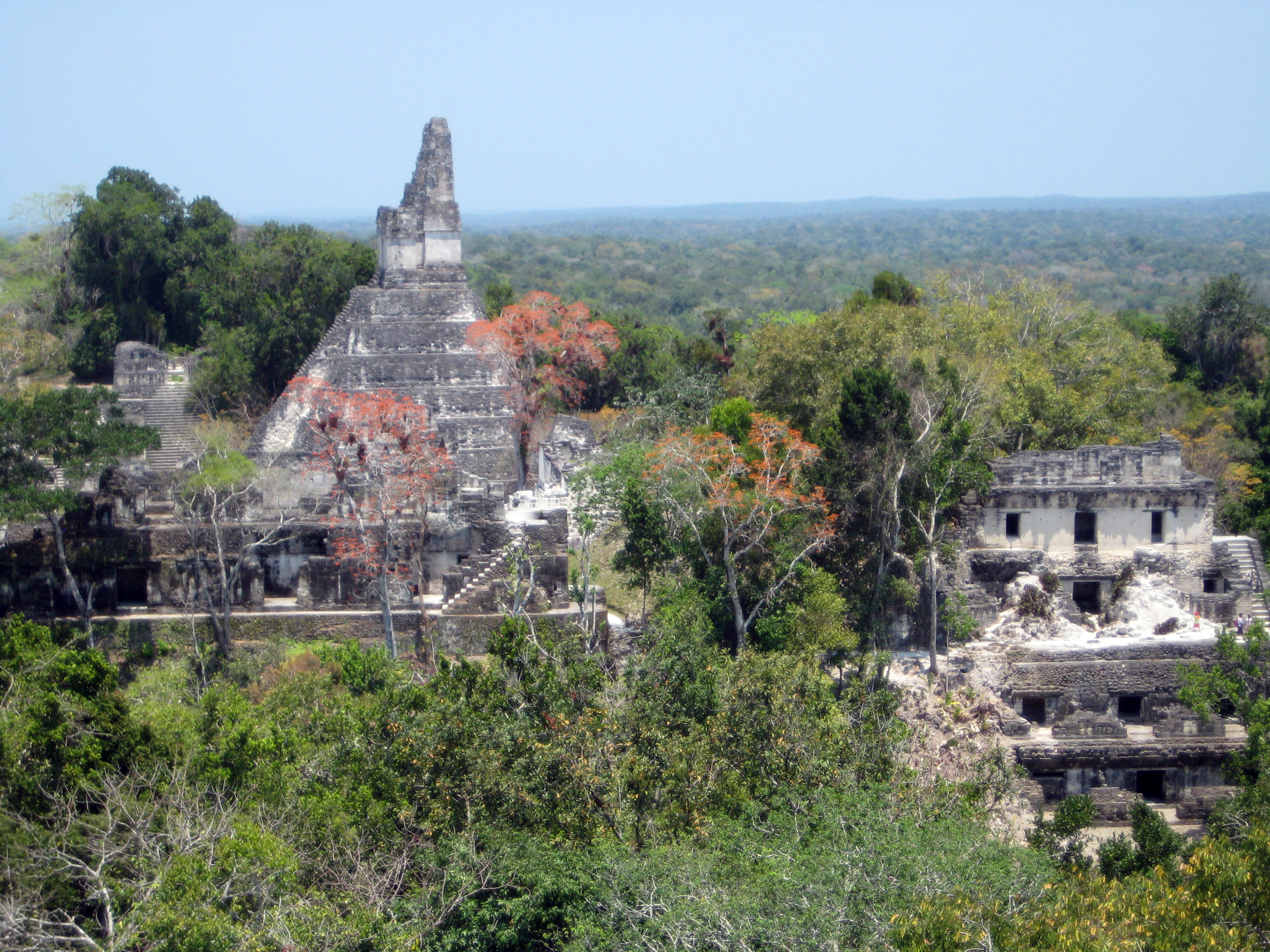
Image 1: This temple in Tikal, labeled "Temple 1" by researchers, was built by the ancient Maya somewhere between 682 and 734 A.D., and was possibly completed after Jasaw Chan K'awiil's death. It was the second temple built in the area.

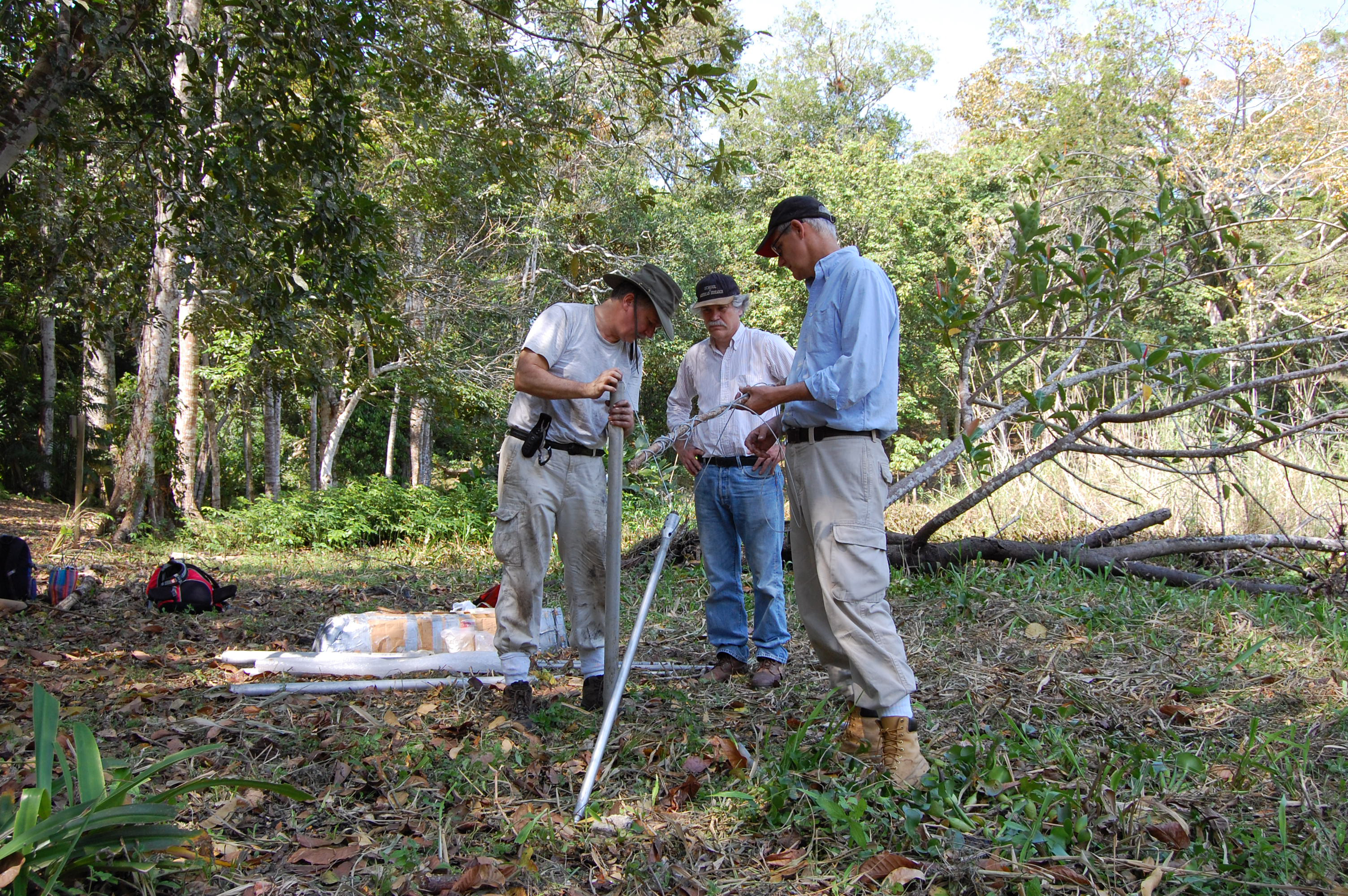
Image 2: Nick Dunning, Vern Scarborough and David Lentz (l-r) take a soil core to measure the depth of one of several large reservoirs that surround the site of Tikal, the ancient Maya city. Lentz was principal investigator for a National Science Foundation-supported study at the site.

Image 3: This temple in Tikal, labeled "Temple 5" by researchers, was built by the ancient Maya somewhere between 768 and 780 A.D.

More About These Images
David Lentz, a biology professor at the University of Cincinnati (UC), received a grant from the National Science Foundation (NSF) to study the interaction between the ancient Maya of Tikal and their local environment.

Lentz's research found that the Maya practiced forest conservation early on. They were not allowed to cut down certain forests of virgin timber--some of which were over 200 years old--which the researchers dubbed the "sacred groves." "From our research we have learned that the Maya were deliberately conserving forest resources," says Lentz. "Their deliberate conservation practices can be observed in the wood they used for construction and this observation is reinforced by the pollen record." But later, the Maya abandoned this practice.

When Jasaw Chan K'awiil took over as ruler during the Late Classic period, the Maya rebuilt the city of Tikal. This rebuilding included construction of enormous temples that required large, straight trees whose wood could withstand the weight of tons of heavy stone. Lentz found that the Maya used the sacred groves for this purpose but soon ran out of timber, which came from the Manilkara zapota (or sapodilla) tree. Sapodilla wood is soft when first cut but once it dries it's as hard as iron, making it an ideal building material for the temples. Once the sapodilla were gone, the Maya began using inferior wood from the Haematoxylon campechianum (logwood or ink wood) trees. Logwood trees, which grow in swamps, are hard like iron from start to finish. The archways to the temples built using logwood were less ornate because the tree grows crooked and is not as lofty as the sapodilla.

The earlier temples (labeled 1 through 4 by the researchers) are quite large. The beams over the doorways (called Lintels) of Temple 4 are the largest of them all, whereas Temples 5 and 6 are much smaller. But Lentz found that for Temple 3, the last temple built, the Maya went back to using sapodilla. Lentz believes they may have replanted the sacred groves after cutting them down (after 40 years, you would have a tree large enough to use for building). Also, Lentz says, things began going downhill for the Maya at this point. "Perhaps they reasoned that the gods didn't like the new style of temple and they needed to return to the construction style of earlier, and more prosperous, times."

To learn more about this research, see the UC news story UC Scientists Determine That Ancient Maya Practiced Forest Conservation 3,000 Years Ago. [Research supported by NSF grant BCS 08-10118.]

(Date of Image: February/March 2009)

Credit: Department of Biological Sciences, University of Cincinnati

Sunday, August 19, 2012

NASA Goes Green: NASA Selects Green Propellant Technology Demonstration Mission


David E. Steitz
Headquarters, Washington
202-358-1730
david.steitz@nasa.gov

WASHINGTON -- NASA has selected a team led by Ball Aerospace & Technologies Corporation of Boulder, Colo., for a technology demonstration of a high performance "green" propellant alternative to the highly toxic fuel hydrazine. With this award, NASA opens a new era of innovative and non-toxic green fuels that are less harmful to our environment, have fewer operational hazards, and decrease the complexity and cost of launch processing.

Today's use of hydrazine fuel for rockets, satellites and spacecraft is pervasive. Hydrazine is an efficient propellant and can be stored for long periods of time, but it also is highly corrosive and toxic. NASA is seeking new, non-toxic high performance green propellants that could be safely and widely used by rocketeers, ranging from government to industry and academia. Green propellants include liquid, solid, mono- propellant, which use one fuel source, or bi-propellants, which use two, and hybrids that offer safer handling conditions and lower environmental impact than current fuels.

"High performance green propellant has the potential to revolutionize how we travel to, from and in space," said Michael Gazarik, director of NASA's Space Technology Program at NASA Headquarters in Washington. "An effective green rocket fuel would dramatically reduce the cost and time for preparing and launching space missions while decreasing pollution and harm to our environment."

Following a solicitation and peer-review selection process, NASA chose the Green Propellant Infusion Mission proposal and a team lead by Ball and co-investigators from the Aerojet Corporation in Redmond, Washington, the U.S. Air Force Research Laboratory at the Wright Patterson Air Force Base in Ohio, the U.S. Air Force Space and Missile Systems Center at the Kirkland Air Force Base in New Mexico, NASA's Glenn Research Center in Cleveland and NASA's Kennedy Space Center in Florida for the new mission.

NASA's Green Propellant Infusion Mission is expected to be developed and flown in approximately three years. The Space Technology Program will provide $45 million for the mission, with some additional cost-sharing by mission co-investigators.

This demonstration will bridge the gap between technology development and use of green propellant. The team will develop and fly a high performance green propellant, demonstrating and characterizing in space the functionality of the integrated propulsion system. Such a demonstration will provide the aerospace community with a new system-level capability for future missions.

Maturing a space technology, such as a revolutionary green propellant, to mission readiness through relevant environment testing and demonstration is a significant challenge from a cost, schedule and risk perspective. NASA's Technology Demonstration Missions Program performs this function, bridging the gap between laboratory confirmation of a technology and its inital use on an operational mission.

The Technology Demonstration Missions Program is part of the Space Technology Program, which is innovating, developing, testing and flying hardware for use in NASA's future science and exploration missions.

For more information about NASA's Space Technology Program and Technology Demonstration Missions, visit http://www.nasa.gov/oct.

- end -

Friday, June 29, 2012

Study on Fungi Evolution Answers Questions About Ancient Coal Formation and May Help Advance Future Biofuels Production


Study reveals the potentially large influences of fungi, one of the most biologically diverse classes of organisms, on our energy supplies

A new study--which includes the first large-scale comparison of fungi that cause rot decay--suggests that the evolution of a type of fungi known as white rot may have brought an end to a 60-million-year-long period of coal deposition known as the Carboniferous period. Coal deposits that accumulated during the Carboniferous, which ended about 300 million years ago, have historically fueled about 50 percent of U.S. electric power generation.

In addition, the study provides insights about diverse fungal enzymes that might be used in the future to help generate biofuels, which are currently among the most promising and attractive alternatives to fossil fuels for powering vehicles.

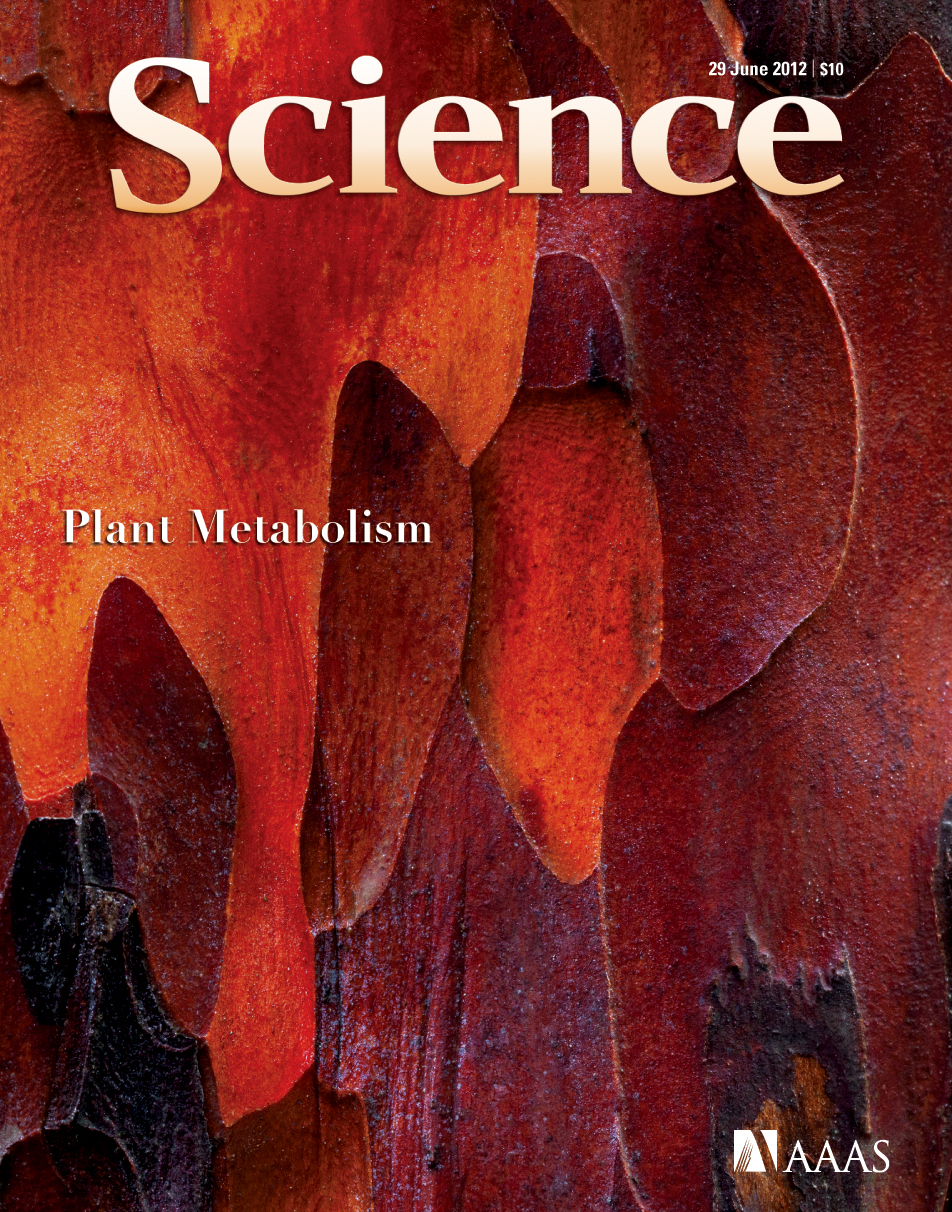
The study, which was conducted by a team of 71 researchers from 12 countries, appears in the June 29, 2012 issue of Science and was partially funded by the National Science Foundation (NSF).

There are almost 1.5 million fungi species on Earth. They perform essential ecological roles that include decomposing organisms and serving as food for many insect species and larger organisms.

However, only about five percent of fungi species have, thus far, been classified. The new study is part of an effort--supported by NSF's Assembling the Tree of Life and Partnerships for Enhancing Expertise in Taxonomy programs--to resolve evolutionary relationships between fungi species, define the diversity of fungi, and explain the early evolutionary history of fungi. Information produced by this effort is integral to the story of life on Earth and the evolution of its varied ecosystems.

The end of a geologic era
Coal is composed of the fossilized remains of plants--mostly lignin, which is a complex polymer that is an important component of the cell walls of plants and helps give wood its strength and rigidity. The study indicates that white rot fungi, which are the only types of microorganisms that can break down lignin, evolved at the end of the Carboniferous green period, and that the synchrony between the rise of white rot fungi and the close of the Carboniferous was no coincidence.

According to the study, once white rot, which breaks down lignin via enzymatic activity, became an ecological force, it destroyed huge accumulations of woody debris that would have otherwise escaped decay to ultimately be fossilized as coal.

So if not for the advent of white rot, large coal deposits may have continued to form long after the end of the Carboniferous period. This study supports a paper published in 1990 by Jennifer M. Robinson that pegged the evolution of white rot as a potential contributing factor to the end of the Carboniferous period.

The matrix
Lignin exists in cell walls as part of a tough matrix with cellulose, which is a carbohydrate composed of sugar subunits. But once white rot attacks and destroys lignin, the matrix collapses, and the cellulose is freed--to be devoured by the white rot as food.

The ability of white rot fungi to decay lignin may ultimately be used to help conquer what is among the world's most longstanding and vexing problems associated with the large-scale production of biofuels: that is, obtaining plant carbohydrates that could be converted into biofuels via fermentation processes.

It may ultimately be feasible to use white rot to break down lignin to release cellulose from cell walls, which could then be broken down into sugars. Next, the sugars would be fed to yeast that would be fermented into alcohols that would provide the bases for new biofuels.

In addition, because enzymes from white rot fungi are able to break down complex organic molecules, they have been investigated for use in bioremediation operations that involve breaking down contaminants to remove them from the environment.

Genomic comparisons
"Our study was designed to reconstruct the evolution of lignin decay mechanisms in fungi, analyze the distribution of enzymes that enable fungi to break down lignin, and better define the evolution of the gene families that encode those enzymes," said David Hibbett of Clark University, who led the study.

Hibbett and his team focused on a large group of fungi known as Agaricomycetes, which include white rot fungi as well as mushroom species that have the familiar cap-and-stem shape. The Agaricomycetes group also includes brown rot fungi that can destroy wood by breaking down cellulose and hemicellulose, which is another component of cell walls--all the while without breaking down lignin.

The researchers compared 31 fungal genomes--26 of which were sequenced at the Department of Energy's Joint Genome Institute, including 12 that were sequenced at the DOE JGI specifically for the study, and were then annotated and analyzed by NSF-funded researchers in collaboration with JGI and other partners.

"The 12 new genome sequences could serve as potential resources for industrial microbiologists aiming to develop new tools for producing biofuels, bioremediation or other products, perhaps by using recombinant DNA methods or by selecting new organisms for fermentation," said Hibbett.

"This study exemplifies the tremendous gains we can make in understanding complicated biologic processes such as lignin decomposition when we learn about the genealogical relationships of organisms," said Charles Lydeard, an NSF program director.

The evolution of white rot
The study also involved tracking the evolution of lignin-decomposing enzymes back through time. This was done via so-called "molecular clock analyses." Such analyses are based on the assumption that genes accumulate mutations through evolution at fairly predictable rates--similar to the way that the hands of a clock advance around a clock at predictable rates. The ability to estimate these mutation rates enables researchers to trace mutations back in time and estimate how recently fungal lineages shared a common ancestor but then diverged from one another.

Results of molecular clock analyses suggest that the oldest ancestor of the Agaricomcyetes was a white rot species that possessed multiple lignin-degrading enzymes and lived roughly 300 million years ago. Many surviving lineages of Agaricomycetes-including fungi species known as wood-decaying polypores and bracket fungi-produce lignin-degrading enzymes. "Our results suggest that the ability of fungi to break down lignin evolved only once," said Hibbett.

In addition, Hibbett said, "This study underscores the adaptability of fungi." This adapatability is underscored by the fact that some Agaricomycete lineages have maintained their lignin-degrading enzymes. By contrast, other Agaricomycete lineages, including brown rot and mycorrhizal species, which survive via symbiotic relationships with the roots of certain trees without decaying them, ultimately lost their lignin-degrading enzymes as they developed alternative methods of obtaining nutrition, said Hibbett. 

Potential payback
The economic value of fungi is already almost incalculable: fungi currently impact diverse applied disciplines, including agriculture, medicine and drug discovery. The more scientists learn about these important organisms, the more likely they will be to identify additional uses for them that will benefit the economy, the environment, and human welfare, as well as to develop new ways to fight wood rot that, at great costs, kills trees and destroys wood structures, including homes and ships.

Joseph Spatafora of Oregon State University who is a co-author on the study said, "It's a really exciting time in fungal biology, and part of that is due to the technology today that allows us to address the really longstanding questions."

-NSF-