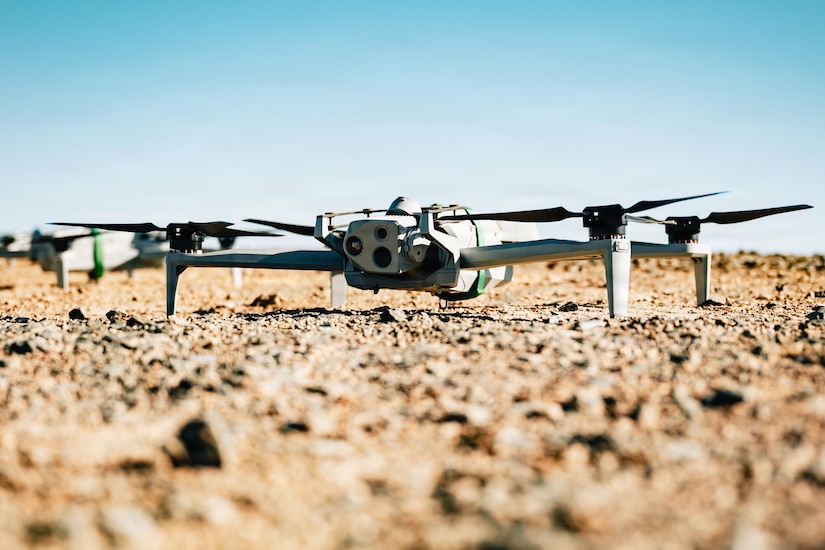
Small unmanned aircraft systems, once largely
confined to overseas battlefields, are increasingly being exploited by
criminal organizations, cartels and terrorist networks inside the
homeland.
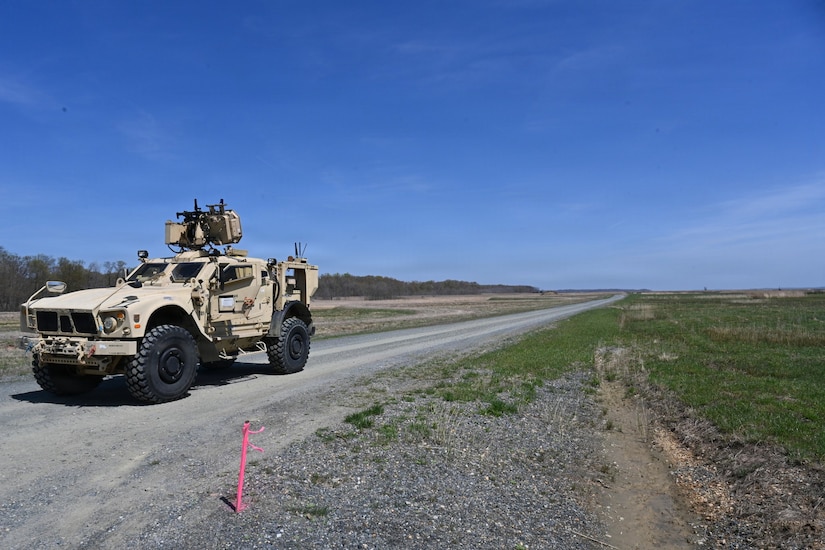
In response, the War Department is leading a coordinated,
whole-of-government effort to strengthen counter-unmanned aircraft
systems capabilities in direct support of military forces and state,
local, territorial and tribal law enforcement partners.
At the center of this effort is Joint Interagency Task Force 401, a
specialized organization established in August to rapidly integrate,
test and deliver C-UAS capabilities. The task force's mission and
progress in support of local law enforcement were the focus of a law
enforcement symposium held at Joint Base Myer–Henderson Hall in
Arlington, Virginia, Dec. 11.
The urgency of that partnership is underscored by recent real-world events, during which drones disrupted air travel in Europe.
"Unmanned systems are a defining threat of our time," said Army Brig.
Gen. Matt Ross, JIATF-401 director. "They are prolific, they are
evolving rapidly, and they are no longer confined to combat zones.
Nothing is more important than defending our homeland, our people and
the law enforcement professionals who protect them every day."
The central focus of JIATF 401's mission is supporting state, local,
territorial and tribal law enforcement, particularly as the nation
prepares to host major international events like the 2026 FIFA World Cup
and the 2028 Summer Olympics. This includes enhanced planning,
technical integration and assisting with capability delivery to the 11
U.S. cities scheduled to host World Cup matches.
To accelerate this support, the task force is working in close
coordination with the Defense Logistics Agency to assist law enforcement
agencies and to leverage a Notice of Funding Opportunity from the
Federal Emergency Management Agency. The $250 million available is
dedicated to counter-UAS and air domain awareness capabilities. Through
this partnership, DLA provides contracting expertise, logistics support
and scalable procurement pathways to help state, local, territorial and
tribal agencies move rapidly to full-fielded capabilities.
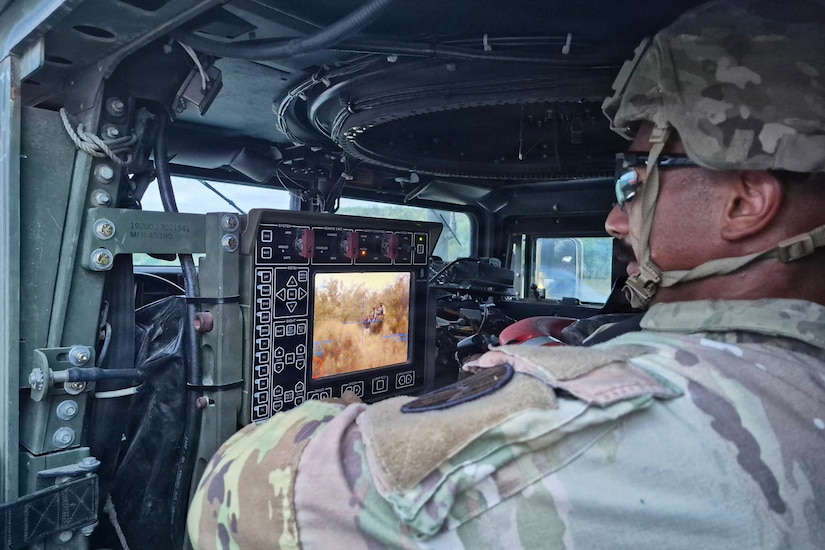
"Our goal is to integrate sensors, effectors and mission command
systems into a responsive, interoperable network that protects service
members and American citizens alike," Ross said. "By pairing JIATF 401's
operational expertise with DLA's logistics and contracting
capabilities, we are helping law enforcement turn available grant
funding into real, deployable counter-UAS capacity, quickly and
responsibly."
A cornerstone of this effort is the development of a counter-UAS
marketplace, a centralized mechanism that allows interagency and law
enforcement partners to access DOW test data, operational user feedback
and validated procurement options. This approach reduces risk,
accelerates fielding timelines and ensures taxpayer resources are
applied to proven solutions.
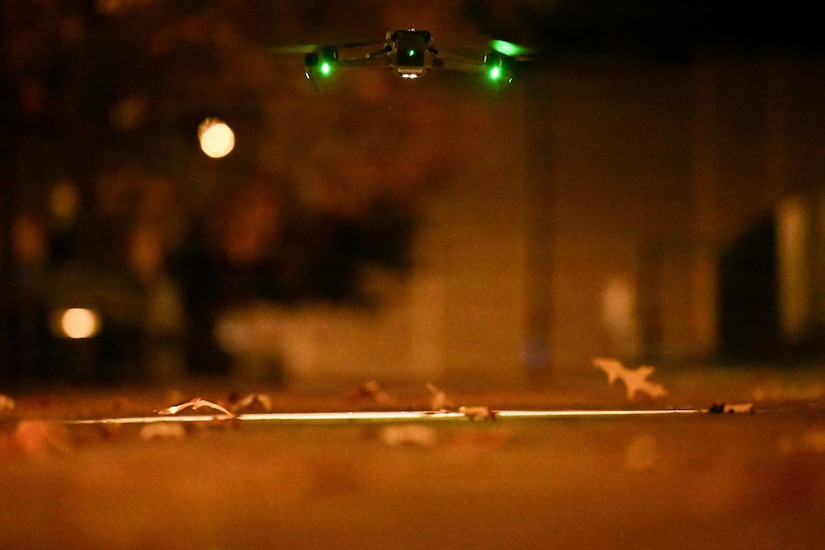
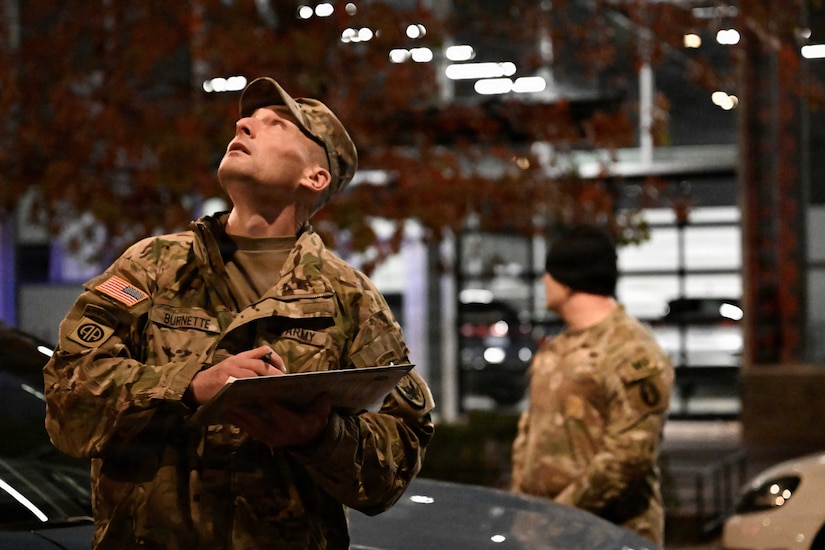
The symposium also highlighted the need for a shared, integrated air
picture across jurisdictions. The Joint Task Force National Capital
Region and the Military District of Washington shared their experiences
coordinating and executing a counter-drone training exercise, which can
serve as a model for municipalities across the country, in Washington,
Nov. 17-21.
"We need a common air picture that includes drones," Ross said,
citing more than 3,000 drone incursions detected along the southern
border in the past year. "That requires integrating data from both
classified and unclassified sensors and proliferating active and passive
sensing across federal and nonfederal partners. We're not there yet,
but we are making measurable progress."
Senior leaders from across the federal and law enforcement
enterprises attended the symposium, including Army Secretary Daniel P.
Driscoll, and JTF NCR and MDW Commander Army Brig. Gen. Antoinette Gant
and Bureau of Alcohol, Tobacco, Firearms and Explosives Deputy Director
Robert Cekada.
Andrew Giuliani, executive director of the White House FIFA Task
Force, also participated to highlight how his team is working with JIATF
401 to assist local law enforcement in cities hosting 2026 World Cup
matches — underscoring the depth and breadth of the coalition aligned
behind this mission.
Ross said events like this serve as a clear signal of national
resolve. Through sustained partnership with state, local, territorial
and tribal law enforcement, deliberate integration with DLA, and
disciplined use of FEMA grant funding, DOW is strengthening the nation's
ability to secure its airspace and protect the American people today,
and in the years ahead.
"JIATF-401 exists to integrate joint and interagency skills to create
the layered counter-drone defense our nation requires," he added.





 Posts
Posts

