Showing posts with label drone defense. Show all posts

Sunday, August 30, 2026

Army Lasers Blast Drones, Proving Directed-Energy Weapons Are Future

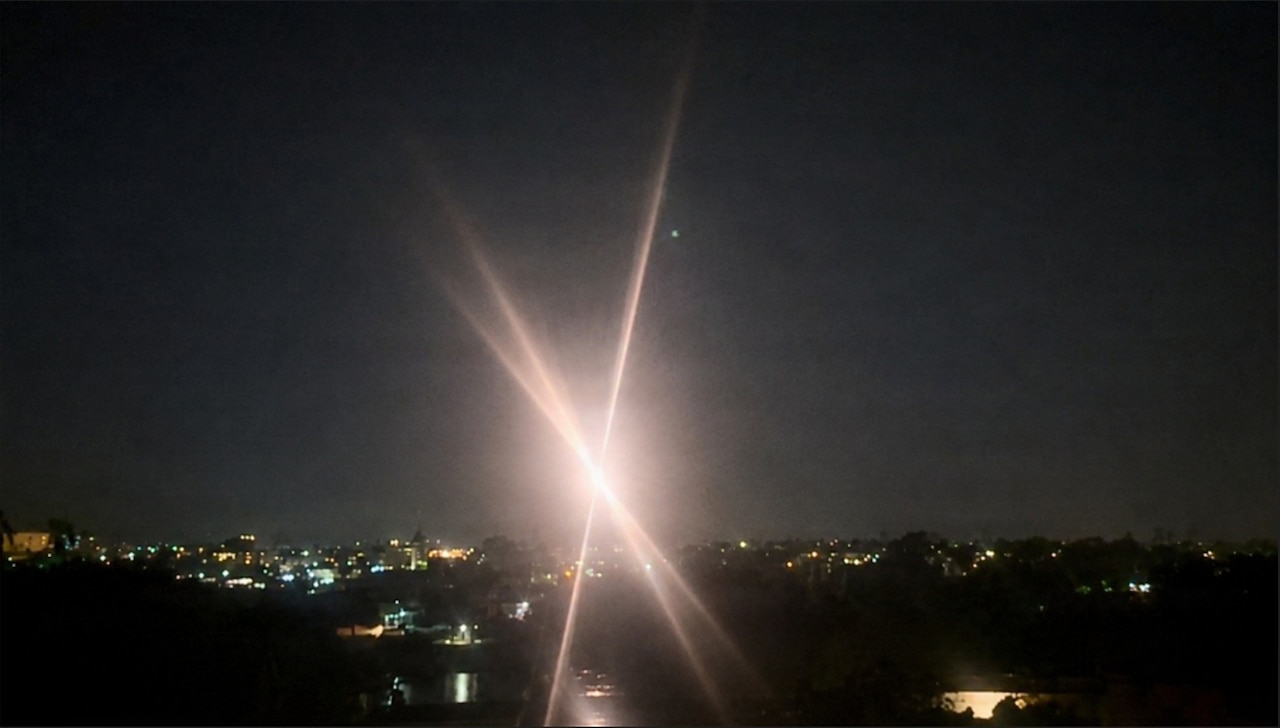
A bright light emits flares into the night sky over a city.

Earlier this week, service members assigned to Joint Task Force Southern Border used the Army Multipurpose High Energy Laser system to stop three hostile, unmanned aircraft systems deemed a threat. They were believed to be linked to drug cartels. 

"The successful defeat of these adversarial drones is a direct testament to the readiness, vigilance and technological edge of the [joint task force]," said Army Maj. Gen. Curtis Taylor, Joint Task Force Southern Border commander. "By integrating layered countermeasures alongside advanced directed-energy capabilities like this laser system, we have made it clear that we will not tolerate hostile surveillance." 

The operation marks the first use of the laser system to defeat cartel-linked drones along the southern border. 

Using directed-energy weapons, such as this, is part of the future of warfare, a War Department official said.  

"The future of warfare obviously is going to include mass attritable drones," the official added.  

The department will procure hundreds of thousands of drones as soon as next year, as well as counter-UAS technology, including directed-energy systems. 

"The department is proliferating directed-energy technology to protect the homeland and the southern border," the official said. "And [U.S. Northern Command and Joint Task Force Southern Border are] deploying these capabilities to take out any ... cartel drones that are doing incursions at the border." 

Directed-energy weapons, such as lasers, can be used to take out both drones and incoming cruise missiles, at a much lower cost than using more expensive kinetic weapons like missiles. Developing scaled directed energy weapons systems, such as what was used at the border, is one of the department's six critical technology areas.  

The other areas include: applied artificial intelligence, biomanufacturing, contested logistics technologies, quantum and battlefield information dominance, and scaled hypersonics. 

"[Directed-energy systems are] low cost per shot, with deep magazines and they can come out against drone swarms," the official said. "That's something that's different than a traditional kinetic system. It's good for the cost-exchange ratio because ... it's better than us firing a $2 million missile at [an inexpensive] drone." 

The use of directed-energy weapons on drones is also in line with the department's counter-drone effort, the official noted. 

By integrating layered countermeasures alongside advanced directed-energy capabilities like this laser system, we have made it clear that we will not tolerate hostile surveillance."
Army Maj. Gen. Curtis Taylor, Joint Task Force Southern Border commander

In June, Secretary of War Pete Hegseth visited White Sands Missile Range, New Mexico, where he observed a variety of directed-energy systems in operation, including the first milestone test of the Golden Dome for America. 

"Cutting-edge directed energy was harnessed, and the Dynamic Defense Autonomous Defeat system flawlessly and autonomously cued, targeted and eliminated a multitude of incoming threats," the secretary said. "This test was executed on schedule and dynamically defeated every threat. I watched our elite warfighters integrate with next-generation technology to stop incoming drones and cruise missiles dead in their tracks." 

In July, the War Department awarded two agreements under the Joint Laser Weapon System program to advance the next-generation cruise missile and unmanned aerial system defense architecture. The agreements have an initial award value of $86 million and a total program ceiling of $847 million. The Joint Laser Weapon System program is meant to transition directed-energy capabilities from demonstration prototypes into field-ready, production-oriented platforms. 

"We must actively defend the homeland against emerging threats," said Emil Michael, undersecretary of war for research and engineering and chief technology officer for the War Department. "We are partnering with industry to rapidly deliver deep magazine directed energy capabilities to the joint force that can be seamlessly deployed across multiple domains."

Tuesday, August 4, 2026

Department of War Enhances C-UAS Marketplace to Expand Access to Validated Technologies

The Department of War, through Joint Interagency Task Force 401 (JIATF-401), is enhancing its counter-unmanned aerial system (C-UAS) marketplace to improve how military organizations, domestic law enforcement agencies, and international allies and partners identify, evaluate and acquire validated counter-drone technologies.

Developed in partnership with Kaizen Laboratories, the application helps users rapidly identify proven solutions, enabling clearer procurement pathways and faster fielding timelines.

These ongoing enhancements will make it easier for authorized users to search technologies by operational requirements, review validated performance data, and purchase C-UAS products through a streamlined process.

"JIATF-401 remains focused on delivering the right counter-UAS capabilities to the right users at the right time," said U.S. Army Maj. Mike Hapner, C-UAS marketplace lead for JIATF-401. "Our revolutionary marketplace, powered through our partnership with industry, creates a streamlined, trusted pathway for the Joint force, domestic law enforcement, and our international partners to rapidly discover and acquire validated technologies."

The C-UAS marketplace also supports the Secretary of the Army's Foreign Military Sales (FMS) Fast Lane initiative by integrating with existing acquisition pathways to accelerate requirements development and reduce foreign military sales timelines. Through this process, industry partners submit their products for inclusion in the FMS Fast Lane. JIATF-401, in partnership with Deputy Assistant Secretary of the Army for Defense Exports & Cooperation (DASA DE&C), then evaluates and pre-clears these products for Foreign Military Sales, ensuring the capabilities are seamlessly integrated across the joint force, partners, and Allies.

The marketplace is part of JIATF-401's broader effort to strengthen collaboration across government, industry, and Allied nations while expanding access to trusted C-UAS capabilities. By providing a common platform for validated capabilities, JIATF-401 is helping ensure users can make informed acquisition decisions and respond more quickly to an evolving drone threat.

"Drones are a defining threat of our time," said Brig. Gen. Matt Ross, director of JIATF-401. "The proliferation of small systems and small drones and the threat that they pose both to critical infrastructure and to defense critical assets requires us to move faster in this space. In order to address this threat, we are expanding the counter-UAS marketplace to allow us to share best practices and equipment globally."

The JIATF-401 C-UAS Marketplace can be accessed here: https://cuas.mil/

Thursday, June 25, 2026

Army Armaments Center Develops New Counter-UAS Capability

A new effort led by the U.S. Army Combat Capabilities Development Command Armaments Center demonstrated advancements developed for fire control, enabling the ability to engage and defeat drones with a common remotely operated weapon station while shooting on the move.

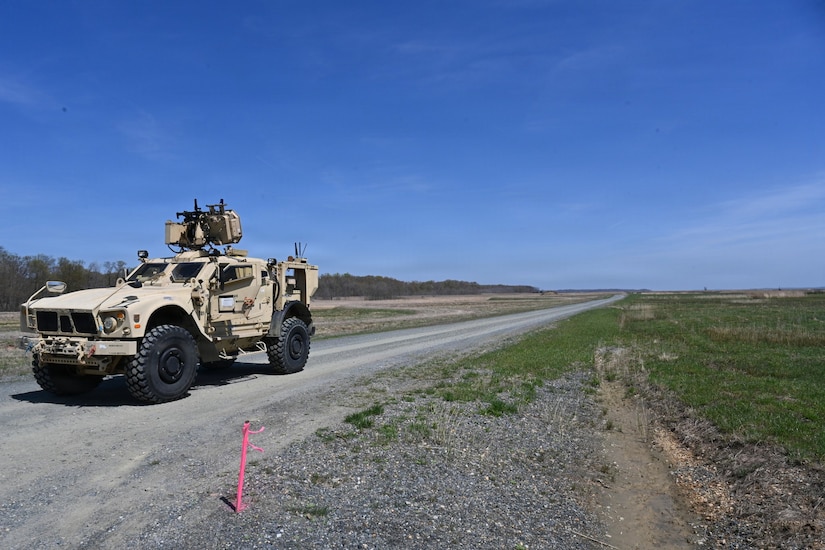
A military vehicle is parked on a gravel road in a grassy field.

The fire control project is a Science and Technology Integration Office software effort that is designing, developing and demonstrating advanced counter-drone fire control capabilities. The project underwent testing in April at the Aberdeen Proving Ground in Aberdeen, Maryland. 
 
According to Nick Cascia, project officer, the initiative began as a mission-driven response to the emerging small unmanned aerial system threat after leadership directed the team to pursue an advanced fire control capability to defeat small drones.

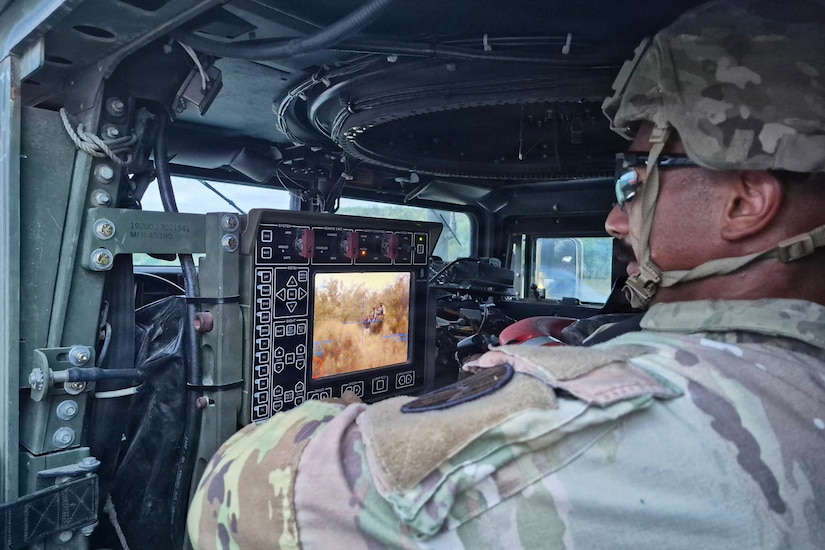
A man in a camouflage military uniform looks at a screen inside a military vehicle.

The effort integrated the Armaments Center's Gunslinger fire control, originally developed under the Future Attack Reconnaissance Aircraft program, and adapted it for ground-to-air targeting. The remote weapon station is able to defeat small moving targets while the vehicle is in motion by using the Gunslinger's fire control, as well as various vehicle sensor feeds, to provide real-time data, ensuring the weapon is accurately aimed at the target drone. 
 
This fire control solution uses a modular open system approach, so the developed software as well as any future enhancements can be shared across the Army. Once matured, the software will improve system accuracy against drones, reducing the number of rounds needed to defeat the threat.

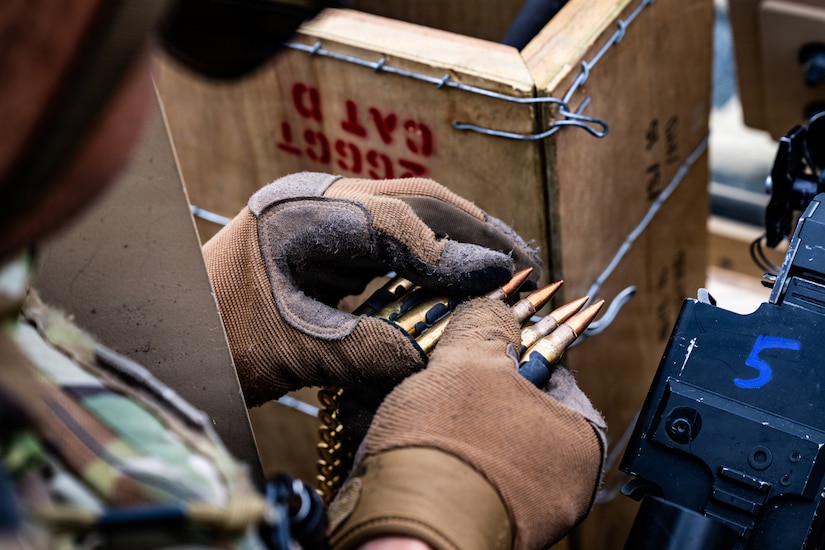
A person in a camouflage military uniform and brown gloves holds a string of large bullets.

 
According to James Little, deputy project lead, the development team received promising results from their April tests and will iterate and build upon these results in subsequent tests to improve system performance. With these tests, developers will continue to increase the speed of both the vehicle and drone. 
 
"It's a great start to the effort," Cascia explained. "The [project] team has put considerable time and effort into developing our advanced fire control algorithms and preparing for this test. Once we started destroying drones, it showed the hard work was paying off."

Thursday, December 18, 2025

Joint Interagency Task Force Integrates Skills, Creates Layered Counter-Drone Defense

Small unmanned aircraft systems, once largely confined to overseas battlefields, are increasingly being exploited by criminal organizations, cartels and terrorist networks inside the homeland.

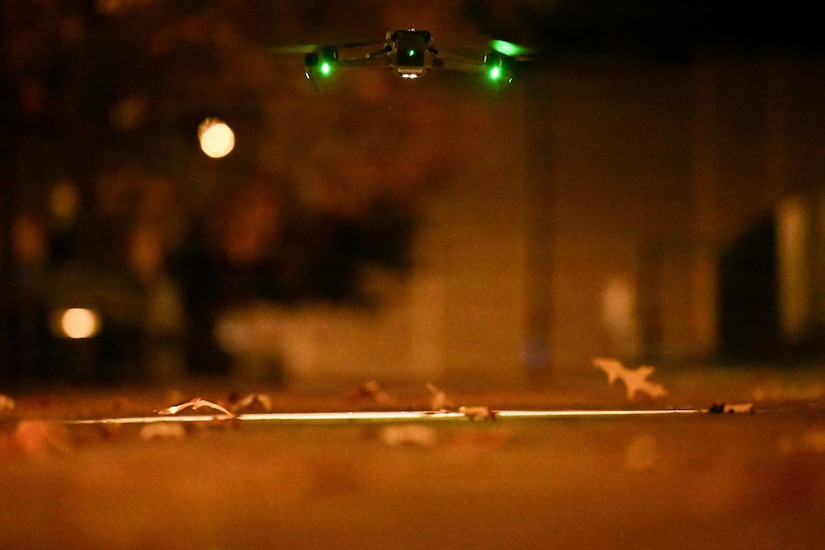
A small drone launches from the ground outside at night.

In response, the War Department is leading a coordinated, whole-of-government effort to strengthen counter-unmanned aircraft systems capabilities in direct support of military forces and state, local, territorial and tribal law enforcement partners.

At the center of this effort is Joint Interagency Task Force 401, a specialized organization established in August to rapidly integrate, test and deliver C-UAS capabilities. The task force's mission and progress in support of local law enforcement were the focus of a law enforcement symposium held at Joint Base Myer–Henderson Hall in Arlington, Virginia, Dec. 11.

The urgency of that partnership is underscored by recent real-world events, during which drones disrupted air travel in Europe.

"Unmanned systems are a defining threat of our time," said Army Brig. Gen. Matt Ross, JIATF-401 director. "They are prolific, they are evolving rapidly, and they are no longer confined to combat zones. Nothing is more important than defending our homeland, our people and the law enforcement professionals who protect them every day." 

The central focus of JIATF 401's mission is supporting state, local, territorial and tribal law enforcement, particularly as the nation prepares to host major international events like the 2026 FIFA World Cup and the 2028 Summer Olympics. This includes enhanced planning, technical integration and assisting with capability delivery to the 11 U.S. cities scheduled to host World Cup matches.

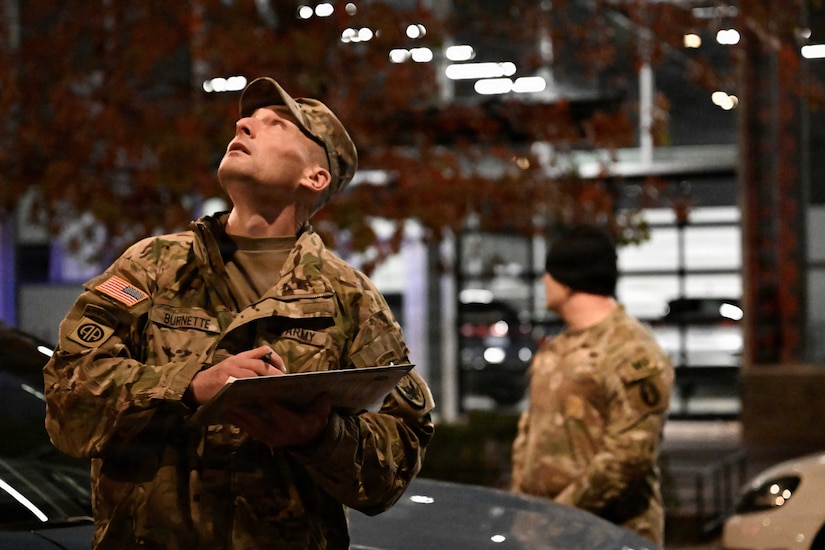
A man in a camouflage military uniform looks up, observing something out of frame while holding a clipboard.

To accelerate this support, the task force is working in close coordination with the Defense Logistics Agency to assist law enforcement agencies and to leverage a Notice of Funding Opportunity from the Federal Emergency Management Agency. The $250 million available is dedicated to counter-UAS and air domain awareness capabilities. Through this partnership, DLA provides contracting expertise, logistics support and scalable procurement pathways to help state, local, territorial and tribal agencies move rapidly to full-fielded capabilities. 

"Our goal is to integrate sensors, effectors and mission command systems into a responsive, interoperable network that protects service members and American citizens alike," Ross said. "By pairing JIATF 401's operational expertise with DLA's logistics and contracting capabilities, we are helping law enforcement turn available grant funding into real, deployable counter-UAS capacity, quickly and responsibly." 

A cornerstone of this effort is the development of a counter-UAS marketplace, a centralized mechanism that allows interagency and law enforcement partners to access DOW test data, operational user feedback and validated procurement options. This approach reduces risk, accelerates fielding timelines and ensures taxpayer resources are applied to proven solutions. 

The symposium also highlighted the need for a shared, integrated air picture across jurisdictions. The Joint Task Force National Capital Region and the Military District of Washington shared their experiences coordinating and executing a counter-drone training exercise, which can serve as a model for municipalities across the country, in Washington, Nov. 17-21.

"We need a common air picture that includes drones," Ross said, citing more than 3,000 drone incursions detected along the southern border in the past year. "That requires integrating data from both classified and unclassified sensors and proliferating active and passive sensing across federal and nonfederal partners. We're not there yet, but we are making measurable progress."

Senior leaders from across the federal and law enforcement enterprises attended the symposium, including Army Secretary Daniel P. Driscoll, and JTF NCR and MDW Commander Army Brig. Gen. Antoinette Gant and Bureau of Alcohol, Tobacco, Firearms and Explosives Deputy Director Robert Cekada.

A man in business attire sits at a long table with people in similar attire.
 

Andrew Giuliani, executive director of the White House FIFA Task Force, also participated to highlight how his team is working with JIATF 401 to assist local law enforcement in cities hosting 2026 World Cup matches — underscoring the depth and breadth of the coalition aligned behind this mission.    

Ross said events like this serve as a clear signal of national resolve. Through sustained partnership with state, local, territorial and tribal law enforcement, deliberate integration with DLA, and disciplined use of FEMA grant funding, DOW is strengthening the nation's ability to secure its airspace and protect the American people today, and in the years ahead.  

"JIATF-401 exists to integrate joint and interagency skills to create the layered counter-drone defense our nation requires," he added.