Showing posts with label dna. Show all posts

Monday, September 17, 2012

"Regulation of the Cell Cycle and DNA Damage-Induced Checkpoint Activation"


"Regulation of the Cell Cycle and DNA Damage-Induced Checkpoint Activation," by Erin Olson and her team at R&D Systems, Inc., Minneapolis, Minn.

Inside a cell's nucleus, some proteins act like quality control auditors, ensuring that it's safe for the cell to copy its DNA and divide. This informational graphic from Erin Olson and her team at R&D Systems, Inc. in Minneapolis, Minn., sketches how these proteins seek out DNA damage during checkpoints as the cell moves between the four stages of its cycle. In the purple circles, they juxtapose the actions of the checkpoint proteins with the normal events inside the cell's nucleus. Some of these checkpoint proteins detect DNA damage, while others sit on the broken site and recruit new proteins to send out the call for DNA repair enzymes to fix the problem. Olson hopes the poster will serve as a quick reference for researchers and biology students.

This image won Honorable Mention in the Informational Graphics category of the 2009 International Science & Engineering Visualization Challenge (SciVis) competition, sponsored by the National Science Foundation and the journal Science. The competition is held each year to celebrate the grand tradition of science visualization and to encourage its continued growth. The spirit of the competition is to communicate science, engineering and technology for education and journalistic purposes. To learn more about the competition and view all the winning entries, see the NSF SciVis Special Report (Date of Image: January-April 2009)

Credit: Erin Olson, Daphne Orlando and Tim Manning; R&D Systems, Inc.

"DNA of Maple Seed Flight"


"DNA of Maple Seed Flight," by David Lentink, Wageningen University.

The autorotating flight path of a maple seed is visualized here in a composite, multiflash photo. The seed exhibits a DNA-like flight spiral.

In trying to determine how the seeds of maple trees descend so slowly, Lentink and colleagues found that by swirling, maple seeds generate a tornado-like vortex that sits atop the front leading edge of the seeds as they spin slowly to the ground. This leading-edge vortex lowers the air pressure over the upper surface of the maple seed, effectively sucking the wing upward to oppose gravity, giving it a boost. The vortex doubles the lift generated by the seeds compared to nonswirling seeds. Lentink's research was published in Science (June 12, 2009); this photo appeared on the cover.

This image was entered for judging in the Photography category of the 2009 International Science & Engineering Visualization Challenge (SciVis) competition, sponsored by the National Science Foundation and the journal Science. The competition is held each year to celebrate the grand tradition of science visualization and to encourage its continued growth. The spirit of the competition is to communicate science, engineering and technology for education and journalistic purposes. To learn more about the competition and view all the winning entries, see the NSF SciVis Special Report

This research was supported by a grant from the National Science Foundation (IBN 02-17229). For more information on Lentink's research related to this photo, see the Caltech news story Maple Seeds and Animals Exploit the Same Trick to Fly.

(Date of Image: May 2009)

Credit: David Lentink, Wageningen University

Tuesday, August 14, 2012

The 3-D Structure of Human Genome Deciphered (Image 11)


Discovered by Giuseppe Peano in 1890, Peano curves are one-dimensional curves that densely fill higher-dimensional space. A published 3-D map of the genome suggests that long stretches of DNA fold into Peano, curve-like structures.

A team of researchers from Harvard University, the Broad Institute of Harvard and the Massachusetts Institute of Technology (MIT), the University of Massachusetts Medical School, and MIT deciphered the 3-D structure of the human genome, paving the way for new insights into genomic function and expanding our understanding of how cellular DNA folds at scales that dwarf the double helix.

The research was supported in part by the National Science Foundation. To learn more, see the story in the online Harvard Gazette the A look inside Scientists have deciphered 3-D structure of the human genome.

(Date of Image: 2009)

Credit: Leonid A. Mirny and Erez Lieberman-Aiden

The 3-D Structure of Human Genome Deciphered (Images 9 and 10)


Discovered by Giuseppe Peano in 1890, Peano curves are one-dimensional curves that densely fill higher-dimensional space. A published 3-D map of the genome suggests that long stretches of DNA fold into Peano, curve-like structures.

A team of researchers from Harvard University, the Broad Institute of Harvard and the Massachusetts Institute of Technology (MIT), the University of Massachusetts Medical School, and MIT deciphered the 3-D structure of the human genome, paving the way for new insights into genomic function and expanding our understanding of how cellular DNA folds at scales that dwarf the double helix.

The research was supported in part by the National Science Foundation. To learn more, see the story in the online Harvard Gazette the A look inside Scientists have deciphered 3-D structure of the human genome.

(Date of Image: 2009)

Credit: Leonid A. Mirny and Erez Lieberman-Aiden

The 3-D Structure of Human Genome Deciphered (Images 7 and 8)


In this image, nearby regions on a chain of DNA are indicated using similar colors. The fractal globule has a hierarchical organization; regions nearby along the chain are also nearby in 3-D.

Image 8: Discovered by Giuseppe Peano in 1890, Peano curves are one-dimensional curves that densely fill higher-dimensional space. A published 3-D map of the genome suggests that long stretches of DNA fold into Peano, curve-like structures.

A team of researchers from Harvard University, the Broad Institute of Harvard and the Massachusetts Institute of Technology (MIT), the University of Massachusetts Medical School, and MIT deciphered the 3-D structure of the human genome, paving the way for new insights into genomic function and expanding our understanding of how cellular DNA folds at scales that dwarf the double helix.

The research was supported in part by the National Science Foundation. To learn more, see the story in the online Harvard Gazette the A look inside Scientists have deciphered 3-D structure of the human genome.

(Date of Image: 2009)

Credit: Leonld A. Mirny and Maxim Imakaev

The 3-D Structure of Human Genome Deciphered (Images 5 and 6)


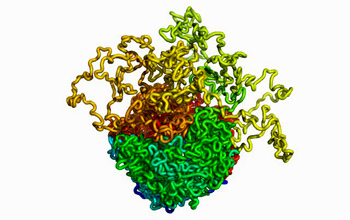
In Image 5, nearby regions on a chain of DNA are indicated using similar colors. The fractal globule has a hierarchical organization; regions nearby along the chain are also nearby in 3-D. Part of this globule is cut out. In the resulting cross-section, the internal spatial clustering is evident.

Image 6 shows the result of reversing the force constraining a subchain of a fractal globule. The subchain unravels easily because the globule lacks knots, making the subchain accessible.

A team of researchers from Harvard University, the Broad Institute of Harvard and the Massachusetts Institute of Technology (MIT), the University of Massachusetts Medical School, and MIT deciphered the 3-D structure of the human genome, paving the way for new insights into genomic function and expanding our understanding of how cellular DNA folds at scales that dwarf the double helix.

The research was supported in part by the National Science Foundation. To learn more, see the story in the online Harvard Gazette the A look inside Scientists have deciphered 3-D structure of the human genome. (Date of Image: 2009)

Credit: Leonid A. Mirny, Maxim Imakaev and Alexnader N. Mirny

The 3-D Structure of Human Genome Deciphered (Images 3 and 4)


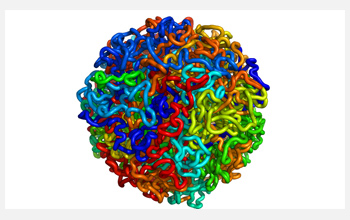
In Image 3, nearby regions on a chain of DNA are indicated using similar colors. The fractal globule has a hierarchical organization; regions nearby along the chain are also nearby in 3-D.

Image 4: A contiguous stretch of DNA chain inside a fractal globule packs into a compact, unknotted structure, making it easy to pack and unpack.

A team of researchers from Harvard University, the Broad Institute of Harvard and the Massachusetts Institute of Technology (MIT), the University of Massachusetts Medical School, and MIT deciphered the 3-D structure of the human genome, paving the way for new insights into genomic function and expanding our understanding of how cellular DNA folds at scales that dwarf the double helix.

The research was supported in part by the National Science Foundation. To learn more, see the story in the online Harvard Gazette the A look inside Scientists have deciphered 3-D structure of the human genome. (Date of Image: 2009)

Credit: Leonld A. Mirny and Maxim Imakaev

The 3-D Structure of Human Genome Deciphered (Images 1 and 2)


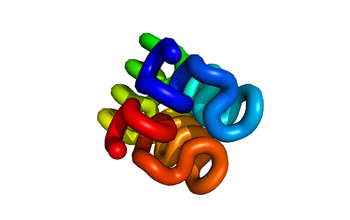
A contiguous stretch of DNA chain inside an equilibrium globule generates an extended, highly knotted shape.


In Image 2, nearby regions on a chain of DNA are indicated using similar colors. The equilibrium globule is highly entangled; regions nearby along the chain are far apart in 3-D.

A team of researchers from Harvard University, the Broad Institute of Harvard and the Massachusetts Institute of Technology (MIT), the University of Massachusetts Medical School, and MIT deciphered the 3-D structure of the human genome, paving the way for new insights into genomic function and expanding our understanding of how cellular DNA folds at scales that dwarf the double helix.

The research was supported in part by the National Science Foundation. To learn more, see the story in the online Harvard Gazette the A look inside Scientists have deciphered 3-D structure of the human genome.

(Date of Image: 2009)

Credit: X. Robert Bao, Leonid A. Mirny and Maxim Imakaev

Saturday, June 30, 2012

Provocative Prescription for Chemical Evolution in Plants


Researchers speculate "specialized metabolism" was key to terrestrial takeover of plants

"Plants produce a repository of structurally diverse chemicals ..." That's how a new paper begins that proposes some provocative ideas about how plants developed the wide assortment of chemicals they use to sustain life and how they developed other chemicals that may or may not contribute to their immediate survival, but instead often ensure reproductive success in changing, earth environments.

In a June 29 journal Science review paper, Joseph P. Noel, a lead investigator at the Salk Institute for Biological Studies and the Howard Hughes Medical Institute, and colleagues speculate that plant chemodiversity results from rapid and sometimes unanticipated evolutionary steps.

Noel, along with Jing-Ke Weng and Ryan Philippe also with the Salk Institute, theorize that a very early form of chemical reactions that occurred in the prebiotic soup paved the way for production of chemicals important to the survival of the earliest cellular organisms--chemicals including those essential for building nucleic acids--biological molecules such as DNA, RNA and proteins necessary for encoding, transmitting and expressing genetic information.

The researchers speculate these chemical processes, now catalytically robust, evolved into separate pathways both in early plants and in their aquatic ancestors.

One pathway--having chemical processes termed primary metabolism--allowed the production of life-sustaining chemicals.

The other pathway produced chemicals that no longer carry life sustaining functions. Instead, these chemicals have more subtle effects on plants' fitness, or reproductive success in their local environments.

In the paper, the researchers hypothesize these secondary chemical processes arose from the more conserved, life-sustaining processes and term them "specialized metabolism."

"Understanding how plants evolved their ability to synthesize secondary metabolites--such a vast and diverse array of chemicals--is a challenging problem," said Parag Chitnis, director of NSF's Division of Molecular & Cellular Biosciences, which funded Noel's research. "In this article, Dr. Noel and his colleagues present an attractive and plausible explanation."

Noel, Weng and Philippe speculate that specialized metabolism is more malleable than life-sustaining metabolic processes, and that specialized metabolic systems can evolve rapidly to produce new "tailor-made molecules" as means to adapt to ever-changing environments.

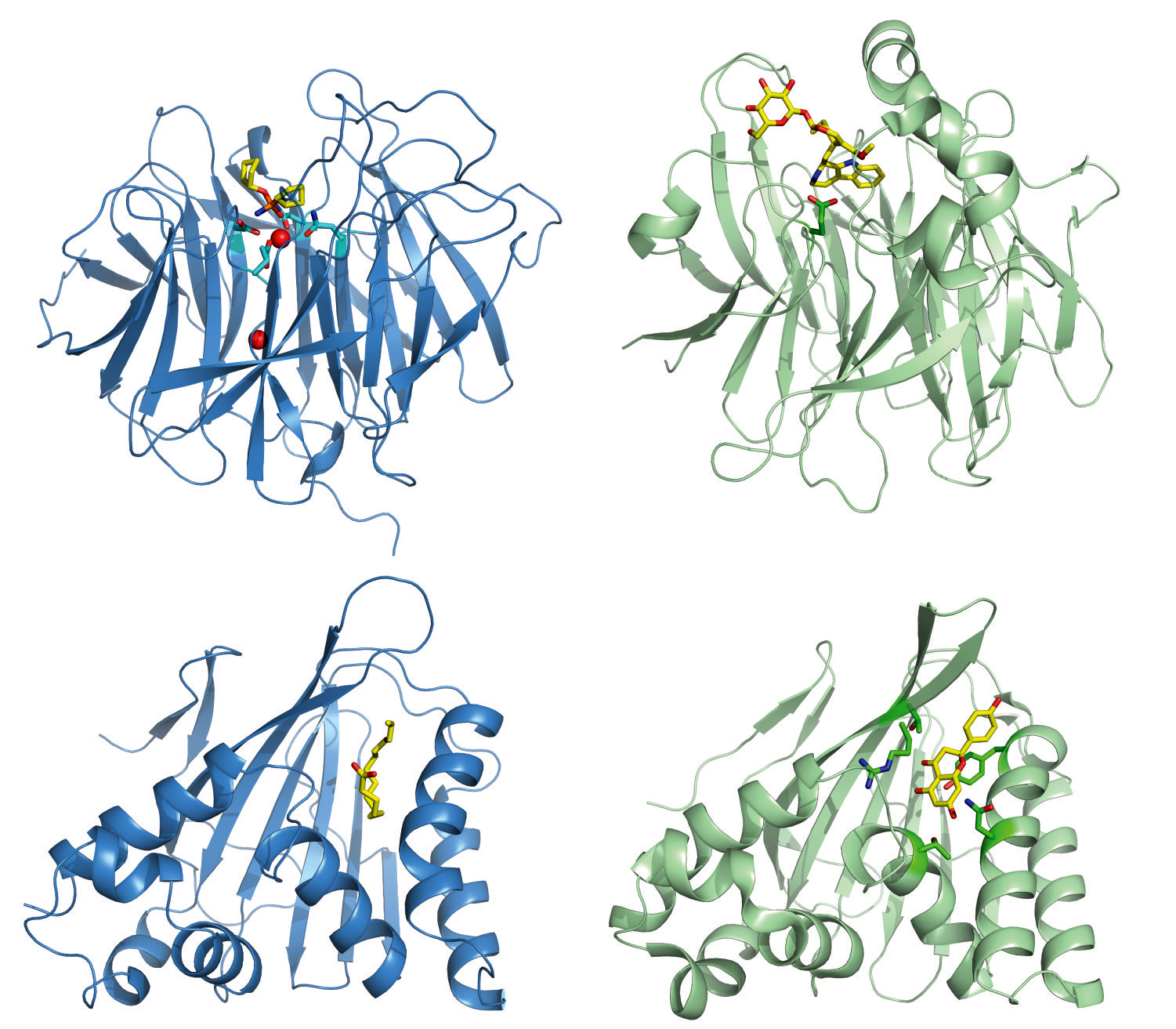
"Primary metabolism likely arose from promiscuous primeval metabolic reactions and evolved toward greater catalytic precision and efficiency," the researchers write in their article. "Specialized metabolism likely emerged from primary metabolism."

According to the researchers, specialized metabolism likely permitted more and varied chemical reactions and natural products because the enzymes responsible for their synthesis were more flexible in ways scientists are only now beginning to understand at the molecular level.

The upshot was the emergence of secondary chemical reactions that produce color in flowers; rubber for vehicle tires; flavor, smells, nutrition and browning in fruits and wine; natural plant antibiotics; fragrances to attract pollinators and repel herbivores, and even the characteristic aroma and flavor of the cabbage and tomato families.

"Plant secondary metabolism generates a huge diversity of chemicals that are not only very important to the plant, but also for humans," said Greg Warr, a program manager in NSF's Division of Molecular & Cellular Biosciences. "For example, we often depend on plant products for nutrition, fuel, biorenewable chemicals, clothing, shelter and pharmaceuticals."

What's more, Noel and colleagues speculate the depth of specialized metabolism likely mirrored the takeover of Earth by plants that form the essential core of the global food network. As primary metabolism produced life-sustaining chemical reactions, specialized metabolism gave rise to secondary chemical reactions that allowed plants to adapt to geographically dispersed environments, many of which are challenging to other forms of life.

For example, some metabolites, plant hormones regulate various aspects of plant growth and development in response to environmental cues, while others act as ultraviolet sunscreens and prevent dehydration.

"The ability of these complex biological systems in plants to evolve quickly to solve problems of plant survival and reproduction, will ultimately teach us the lessons learned over a 500 million year old experiment plants have been conducting since the dawn of terrestrial life," said Noel.

"Without this ongoing experiment, humankind and all the animal life we know of on the terrestrial earth would cease to exist."

The researchers hope the Science review paper will help provide a provocative and more informed set of hypotheses regarding the amazing tapestry of plant chemistry while also posing still unanswered but fundamental problems to life. "It will certainly guide future research in this important area," said Chitnis.

 -NSF-

Tuesday, June 5, 2012

Scientists Complete Most Comprehensive Genetic Analysis Yet of Corn


Genetic analysis could help meet nutrition needs of growing population

An interdisciplinary team, led by researchers at Cornell University and the U.S. Department of Agriculture-Agricultural Research Service (USDA-ARS), today published the most comprehensive analysis to date of the corn genome.

The team expects the achievement to speed up development of improved varieties of one of the world's most important agricultural commodities. The results should boost international efforts to increase yields, expand areas where corn can be cultivated and produce varieties better equipped to resist pests and disease.

Funded in the United States by the National Science Foundation (NSF) and the USDA, the work was a collaborative effort by scientists at 17 U.S. and foreign institutions that include the University of Wisconsin-Madison; University of Missouri-Columbia; North Carolina State University; Beijing Genome Institute; University of California, Davis and the International Maize and Wheat Improvement Center, Mexico City, Mexico.

The study appears in two corn genome projects published in separate reports in the June 3 online edition of the journal Nature Genetics.

"This work represents a major step forward and an important tool in the arsenal available to scientists and breeders for improving a vital source of nutrition," said Edward B. Knipling, administrator of USDA's Agricultural Research Service.

The analysis could also help those who develop corn yields as a source of fuel, who manage crops in the face of changing climates and who are concerned about the diminishing supply of arable land and growing populations, he said.

"This project is a stellar example of how collaborations of scientists, here and abroad, leverage resources across multiple agencies to enable transformational research with the potential to address urgent societal needs for a bio-based economy," said John Wingfield, assistant director for NSF's Biological Sciences Directorate.

It is anticipated that the tools and approaches generated in this project will enable scientists to look at genetic differences in other organisms as they respond to global climate change, human disturbance and invasive species, Wingfield explained.

The studies' collaborators shed light on corn's genetic diversity, detail how it evolved and outline how corn--known as maize among scientists--continues to diversify as it adapts to changing climates and habitats.

One study, published in the journal led by team member, USDA-ARS and Cold Spring Harbor Laboratory scientist Doreen Ware, examines the genetic structure and the relationships and sequential ordering of individual genes in more than 100 varieties of wild and domesticated corn.

Another study led by team member Jeff Ross-Ibarra from the University of California, Davis gives an extraordinary glimpse into how corn evolved more than 8,700 years ago from a wild grass in the lowland areas of southwestern Mexico into today's ubiquitous international commodity.

The researchers compared wild varieties with traditional corn varieties from across the Americas and with modern improved breeding lines. They identified hundreds of genes that played a role in the transformation of corn from its wild origins to today's cultivated crop and show how that transition was largely achieved by ancient farmers who first domesticated it thousands of years ago.

Last year, the economic value of the U.S. corn crop was $76 billion, with U.S. growers producing an estimated 12 billion bushels, more than a third of the world's supply.  Corn is the largest production crop worldwide, providing food for billions of people and livestock and critical feedstock for production of biofuels.

-NSF-