Showing posts with label clean water. Show all posts

Thursday, September 6, 2012

Detainee Drinking Water & The Science That Goes With It


A team of highly qualified sailors here are currently maintaining the vital process of nanofiltration that enables groundwater from Parwan province to be utilized in the day-to-day operations of the Detention Facility in Parwan.

Chief Petty Officer Andrew Anderson, supply lead, Task Group Trident, supervises a team of sailors responsible for running a water plant here, and maintaining a holding tank they call Big Blue that supplies disinfected, non-potable water to the DFIP.

“The job we do of monitoring and producing water is very important,” said Anderson. “Every person, our service members, counterparts and detainees, need water, and the constant production of water for the DFIP is crucial to the success of the mission.”

Task Group Trident is a subordinate unit of Task Force Protector. Protector is the unit responsible for the secure and humane care, custody and control of all the detainees in the DFIP.

Though water production is not the first thing that typically comes to mind when one thinks of detention operations, the very ground work for providing humane care, custody and control is based on water production. Without a sustainable water source, the personnel in and around the facility would be without showers, working toilets, laundry services or fire suppression capabilities.

“The lack of water can create a volatile environment inside the facility and place the detainees and guard force at risk,” said Lt. Col. Kenneth J. Tauke, commander, Task Force Tar Heel. Tar Heel oversees the day-to-day operations of the DFIP.

To avoid an incident, Anderson and his team are on call 24 hours a day to quickly react to any issues involving water production.

“The sailors selected to operate the water producing unit are sailors who have experience and training acquired from their Navy schools and shipboard experience,” said Anderson, discussing the challenges of water production in Afghanistan. “All of their experience prior to this mission was aboard a ship.”

Nanofiltration is a filtration process in which a fluid is encouraged to pass over a membrane that acts like a sieve to separate out impurities. The membrane blocks impurities in the fluid, allowing only the fluid to pass through, while trapping undesirable materials on the other side, according to wiseGEEK.com.

The water purification system is not without complications. According to Anderson, some of the biggest hurdles come during the winter when the pipes freeze and crack. The system works well with maintenance, but finding replacement parts is difficult and Anderson’s team understands that they must maintain the purification system.

“If an item or section breaks, we don’t have on-hand backup parts,” said Anderson. “If we don’t fix it quickly, the plant will not produce water, which impacts the DFIP greatly.”

Task Group Trident will continue to maintain the water purification plant here until the Afghan National Army unit assigned to the DFIP is trained and capable of maintaining the system.

“The sailors and I take great pleasure in maintaining the water plant like we were taught aboard ships and engineering spaces,” said Anderson while discussing his team’s impact on the Protector mission. “Our small part maintaining the water plant, we do with great pride.”

Story by Capt. Mike Barth
 42nd Military Police Brigade

Monday, April 30, 2012

Better Than Bottled Water


Water purification specialists with Combat Logistics Battalion 24, 24th Marine Expeditionary Unit , put their water purification systems to the test on a Moroccan beach, during the bi-lateral exercise named African Lion 2012.

The Marines assembled a Tactical Water Purification System  (TWPS) and Lightweight Water Purification System  (LWPS) on the beach to turn ocean water into a sustainable, potable water source for the Marines conducting training operations with the Royal Moroccan Armed Forces , and test the systems on a foreign water source.

“Instead of bringing thousands of pallets of water ashore, this is what we use,” said Cpl. Kyle Slusher, a water purification specialist with CLB 24. “This is what’s going to sustain our force, and we can use it wherever there is a water source.”

Marines  use water purification systems to sustain their forces and also to provide water for a number of other operations such as disaster relief, and humanitarian assistance, according to Cpl. Cody Sorrell, a water purification specialist.

“We can use this capability for any sort of mission where Marines are going to be there a long period of time,” Sorrell said. “You can’t conduct operations without a sustainable water source.”

The current mission is to provide a clean water source for Marines training ashore in the desert landscape of Morocco . The water these Marines are sustaining the training units ashore who are working with members of the Moroccan military.

Without this capability, the logistics problem of supplying clean water to the shores of Morocco would become a problem of time and money that would distract from the mission of training between the Marines and Moroccans.

The TWPS is 10,000 pounds, and able to purify approximately 10,000 gallons of water a day by pumping it through a series of filters, which reduce the TDS (total dissolved solids) rating to a level more than fit for human consumption.

Pound for pound for Marines on the ground, it is more than worth its weight in water.

“It’s better than bottled water,” said Slusher.

According to the Marion, Ohio native, the average bottle of water has a TDS ratting between 400 and 500. Using the TWPS, water purification specialist can reduce the TDS ratting to 20.

“A bottle of water from the TWPS is more pure than what you would get from a factory,” he said. “It’s because the only thing we have to add back into the water is chlorine to preserve it.”

The TWPS has the ability to purify water ranging from lake water to nuclear contaminated water, he said.

“If a nuclear bomb went off behind me, we would be able to provide contaminate free water in an hour,” he said.

The LWPS is a smaller version of the TWPS. While not able to boast the same range of capabilities as the TWPS, its use is focused on supplying a small force. Weighing 3,580 pounds the system is able to provide around 2,000 gallons of water a day.

“We use this somewhere we have a really small foot print,” he said.

The last opportunity the Marines had to test their system’s capabilities was in September 2011 at Fort Pickett, Va. , where they filtered lake water, substantially easy to filter in comparison to the salty ocean water they now face in Morocco, according to Slusher.

“Right now we’re showing we can get in, set up and operate it anywhere,” he said.

Story written by Sgt. Richard Blumenstein
On location in Morocco

Wednesday, April 18, 2012

Earth Week: A Stream Is a Stream Is a Stream: Or Is It?


Scientists supported by NSF SEES use everything from microscopes to deep-sea submersibles in their research.

But how many SEES scientists need a machete?

During Earth Week--or any time of year--that's exactly what LeRoy Poff requires. Poff is an aquatic ecologist and evolutionary biologist at Colorado State University and an NSF Science, Engineering and Education for Sustainability- (SEES) Dimensions of Biodiversity principal investigator.

To characterize the lesser-known aspects of the diversity of life on Earth, NSF's decade-long Dimensions of Biodiversity campaign aims to transform, by 2020, how scientists describe and understand the scope and role of life on Earth.

The effort is funded by NSF's Directorate for Biological Sciences, Directorate for Geosciences and Office of Polar Programs.

"By establishing networks of interdisciplinary, globally-engaged scientists, Dimensions of Biodiversity will have a lasting effect on biodiversity science," says John Wingfield, NSF assistant director for Biological Sciences. "It has the potential to transform the way we conduct biological research in this arena."

The Dimensions of Biodiversity campaign is important, says Wingfield, because assessing the living diversity of Earth is not as straightforward as simply listing species.

Earth is rapidly losing species. It's happening faster than scientists can understand the roles these species play and how they function.

With their disappearance comes lost opportunities to comprehend the history of life, to better predict the future of the living world and to make beneficial discoveries in the areas of food, fiber, fuel, pharmaceuticals and bio-inspired innovation.

Poff and colleagues from Colorado State, Cornell University and the University of Nebraska are trying to change that.

They're studying how temperature variation and extreme weather such as floods and droughts affect life in temperate Colorado and tropical Ecuadorian streams.

The scientists are comparing how aquatic insects and fish in small streams along the Colorado Front Range--which has a seasonally variable climate--and insects, fish and amphibians in streams in Ecuador, with its more stable climate, are faring at a time when Earth is heating up.

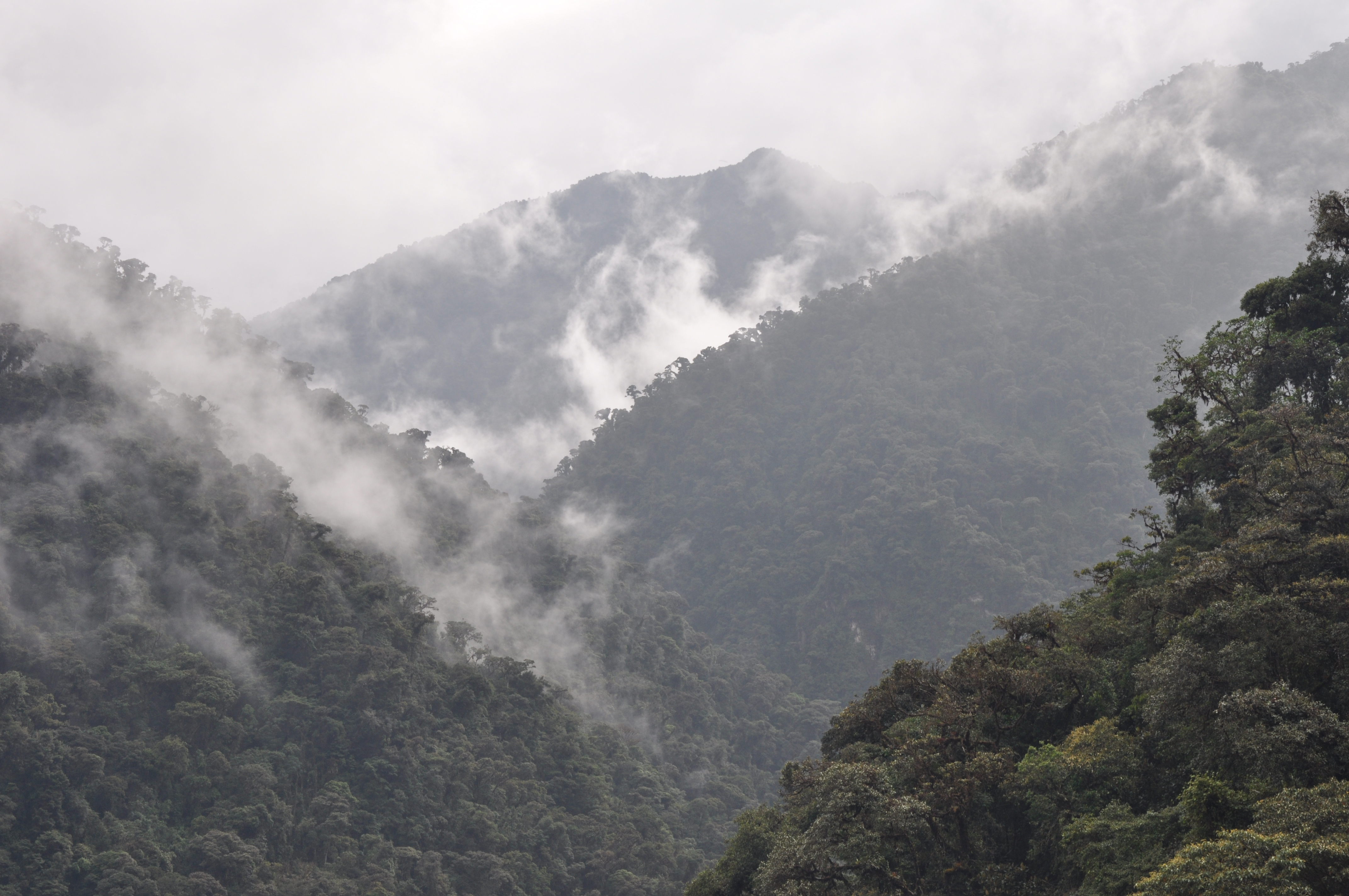
"To get to our Colorado research sites," says Poff, "there's relatively easy access along mostly paved roads." But to reach streams in the cloud forest headwaters of the Amazon, he says, it takes a machete to bushwhack through tangled vines choking narrow waterways.

Poff and colleagues will identify new species in both locales by barcoding these species' DNA, as well as track species movements based on their tolerance of warming water and declining oxygen levels.

"We're trying to understand how animals will respond to climate change based on their evolutionary history in a particular climate zone," says Poff.

"To do that, we need to know their physiological responses to thermal and oxygen stress. This is one of the first studies to look at the sensitivity of species to both temperature and environmental variation such as floods and droughts."

The research team's hypothesis is that temperate species are likely to be less sensitive to climate change than those in the tropics.

Temperate streams are subject to large seasonal differences in temperature; the organisms that live in them occupy a wide range of elevations.

In the Colorado Rockies, for example, there's a big change between summer and winter temperatures in streams. That suggests, Poff believes, that species there could be somewhat tolerant of future climate warming.

In contrast, studying species diversity in the tropics, he says, is like taking apart the layers of a cake.

"Temperature doesn't vary seasonally at any given altitude," says Poff. "But as you move up in elevation you pass through layers of increasingly colder temperatures."

He's trying to discover whether aquatic insects, fish and frogs are restricted to a narrow range of elevation and temperature--one layer of the cake.

"If they are--and that's coupled with a poor ability to disperse over land to find another small stream as temperatures warm--they could be more vulnerable to changes in climate," Poff says.

He plans to use a new understanding of species' sensitivity to climate change, and the ability of species to move with changing conditions, as a basis for developing maps for policy-makers and others.

The maps will show where animals are most vulnerable to climate change in tropical and temperate streams.

"The knowledge being developed," says Tim Killeen, NSF assistant director for Geosciences, "will lead to improved, science-based decision-making about our common future."

To reach that goal, Poff is fording chutes from North to South America. His research takes not only microscopes and high-tech genetics labs.

It takes a machete.

-- Cheryl Dybas, NSF (703) 292-7734 cdybas@nsf.gov

Tuesday, March 27, 2012

NAVOCEANO Using Airborne Laser to Survey in Belize


From Naval Meteorology and Oceanography Command Public Affairs

BELIZE CITY, Belize (NNS) -- For almost two months, since early February 2012, the Naval Oceanographic Office (NAVOCEANO) has been using airborne laser and imagery systems to conduct cooperative hydrographic surveys in the coastal waters of Belize.

The survey work is part of an ongoing, long-term project to survey the western Caribbean Sea off the coasts of Belize, Honduras and Nicaragua, based on U.S. 4th Fleet oceanography, hydrography and bathymetry (OHB) survey requirements.

"This is just a piece of a much bigger program," said Bill Elenbaas, head of NAVOCEANO's Airborne Coastal Surveys branch. "There are a lot of miles to cover."

The surveys are designed to improve safety of navigation by mapping the seafloor and locating shallow reefs and other obstructions in the approaches to Belize's major ports, Belize City and Big Creek, and are being conducted in cooperation with the government of Belize. The airborne laser system, called Compact Hydrographic Airborne Rapid Total Survey (CHARTS) system, is particularly effective in the Caribbean Sea because of the water clarity. Laser systems are useful OHB survey tools in clear and/or shallow water because the system uses light to map the bottom. U.S. and Belize governments will use the data to make new charts.

"Comparison of the survey data with existing navigation products showed significant discrepancies in the locations of charted features," Elenbaas said. "In addition to improving the safety of navigation in coastal waters, these data can be used for maritime security, environmental management and to support Belize's important eco-tourism industry."

Big Creek is the country's major oil port as well as an important agriculture port. The nation also is building a new Coast Guard base at Big Creek. New charts will allow the port to increase its traffic and consequently its business because all of the obstructions and channels will be clearly and accurately mapped. The area is home to one of the world's largest coral reef systems, which makes it environmentally sensitive as well as difficult to navigate.

"This (project) will be important to their economy as well," said Eric L. Villalobos, U.S. Naval Forces Southern Command/C4F Representative for the Naval Meteorology and Oceanography Command (NMOC), the parent command of NAVOCEANO.

He said the socio-economic development value of the work attracted the attention of the U.S. Ambassador to Belize, Vinai Thummalapally, and the Deputy Chief of Mission, Margaret Hawthorne, who made a 90-minute visit to the NAVOCEANO mission field office in Belize City.

Last week, the Commander of the Belize Coast Guard, Capt. Elton Bennet, and the Ports Commissioner/Harbor Master of the Belize Port Authority, Maj. (ret) John Flowers, visited the field office for an hour.

Last year, the operation was in Honduras. Villalobos said that crews worked two months in 2010 in Nicaragua and expect to work here again for about two months this year.

"We are chipping away at a large C4F requirement," he said.