Showing posts with label diseases. Show all posts

Friday, September 7, 2012

Influenza & Flu Vaccines -- Science Behind The News


Every flu season, Americans battle coughs, fevers and body aches. The flu is a respiratory illness caused by a virus, a pathogen that causes disease in the human body. To understand how the flu is caught, spread and treated, Duke University's Katia Koelle explains the biology of a virus and how it is transmitted.

Credit: NBC Learn and the National Science Foundation

Monday, August 20, 2012

Tactical-Biological Detector


Bad things can come in tiny packages.

The post- 9/11 anthrax mailings drove that point home in  a dramatic manner.  Fortunately, America has  a new sentinel on duty – the Tactical Biological Detector (TAC-BIO), an aerosol biological  detector that has redefined the state-of-the-art  with its small, low-cost, low-power design.

The  TAC-BIO team started with a well-known  detection principle – namely, that airborne biological agents excited by certain ultraviolet light will fluoresce and scatter light in a specific and  identifiable manner – and then improved nearly every element of the long-standing detection  technique.

TAC-BIO is a truly man-portable unit.

Compared to competing technologies, TAC-BIO  has a 50% smaller footprint, weighs 80% less,  consumes only 4% as much power, and manages  all of this in a cost-effective platform.  Previous  fluorescent detection systems required expensive, high-powered ultraviolet lasers.

The TAC-BIO  team eschewed the tried-and-true laser sources  and instead built their device on semiconductor ultraviolet optical sources (SUVOS).  They developed an entirely new front-end assembly  with a novel airflow system to pull air into the  detector unit where the SUVOS laser device  illuminates the sample.

Any biological particle  present will fluoresce and scatter a portion of the  light.  Novel mirrors and other optics focus the resulting fluorescence and scatter onto a detector, where a unique photon-counting technique  is used to quantify the results for analysis by an onboard microprocessor.

Audible and visible  alarms are sounded if the unit reaches threshold levels of detection.

The Edgewood Chemical Biological Center  licensed TAC-BIO to General Dynamics Armament and Technical Products and to Research  International, Inc.  One technology transfer  recipient has already completed a substantial  commercial sale and is poised for a follow-on deal.  Both recipients are on or ahead of their development and sales schedules.  Of critical  importance to the Department of Defense is that one licensee is a candidate for a $117 million U.S. military acquisition.

The technology emerged from the creative and  unique collaboration of nine researchers from a  large federal lab, industry, and academia working  to build a new sensor from the ground up around  a novel laser light source.  The effort yielded five patents, novel optics, a unique air intake system, and a new optical interrogation technique.   TAC-BIO is designed to detect airborne biomaterials, with an emphasis on bio-threat agents such as anthrax.

From U.S. Army Edgewood Chemical Biological Center
 https://www.ecbc.army.mil 

Monday, August 6, 2012

Fighting Pandemics With The Power Of Plants


Pandemic.

Even the word conjures up strong feelings and emotions (and, in some cases, dramatic film representations of what it would be like to have to survive such a thing).  As overall human activity pushes ever further into previously undeveloped territory, the likelihood of exposure to new pandemic diseases increases.

U.S. military forces are the front line of U.S. national security, but as a globally deployed force they are also on the front line of any new pathogen-based health threat that may emerge.  The 2009 Army Posture Statement, cites a World Health Organization estimate of between 20 and 50 percent of the world’s population being affected if a pandemic were to emerge.

WHO forecasts “it may be six to nine months before a vaccine for a pandemic virus strain becomes available.”

I’m sorry, have these people not seen a “virus wipes out the world” movie or video game?  Six to nine months is the difference between a little plague and a zombie outbreak! There has to be a better way!  Oh…That’s what they’re working on.

In a separate report on pandemic influenza, the WHO describes several challenges to producing sufficient volumes of vaccine using current, egg-based protein-production technology, including the likelihood that two doses per person could be required due to the absence of pre-existing immunity.  In short, the potential for a pandemic exists and current technological limitations on defensive measures put the health and readiness of U.S. military forces at risk.

A technological solution to increase the speed and adaptability of vaccine production is urgently needed to match the broad biological threat.  Okay, I think I can safely say that none of us really want to see/experience/die from a pandemic of any sort, thereby justifying the need for swift virus-killing resolution.  Therefore, bring on the alternatives, please.

Researchers at DARPA (oh those clever folks) are working on this very thing, and one one of the ways that they’re doing that is by using the power of plants.

DARPA’s Blue Angel program seeks to demonstrate a flexible and agile capability for the Department of Defense to rapidly react to and neutralize any natural or intentional pandemic disease.  Building on a previous DARPA program, Accelerated Manufacture of Pharmaceuticals, Blue Angel targets new ways of producing large amounts of high-quality, vaccine-grade protein in less than three months in response to emerging and novel biological threats.

One of the research avenues explores plant-made proteins for candidate vaccine production.

“Vaccinating susceptible populations during the initial stage of a pandemic is critical to containment,” said Dr. Alan Magill, DARPA program manager. “We’re looking at plant-based solutions to vaccine production as a more rapid and efficient alternative to the standard egg-based technologies, and the research is very promising.”

In a recent milestone development under Blue Angel, researchers at Medicago Inc. produced more than 10 million doses (as defined in an animal model) of an H1N1 influenza vaccine candidate based on virus-like particles (VLP) in one month. Production adhered to Phase 1 appropriate current good manufacturing practices.  Now that’s the kind of turnaround I like to see.

Very unlike the slow and terrifying process Will Smith’s character went through in the movie I Am Legend that led to him having a deadly standoff with a bunch of clever zombies (and there  is no worse kind of zombie to have, if you ask me) in his glass-walled laboratory.  We’ll call this: worst case scenario.

The Blue Angel work was part of a “rapid fire” test that ran from March 25, 2012, to April 24, 2012, at a facility in Durham, NC. A third-party laboratory tested the production lots to confirm the immunogenicity of the vaccine candidate. Testing confirmed that a single dose of the H1N1 VLP influenza vaccine candidate induced protective levels of hemagglutinin antibodies in an animal model when combined with a standard aluminum adjuvant.

The equivalent dose required to protect humans from natural disease can only be determined by future, prospective clinical trials.

“The results we’ve achieved here with plant-based production of vaccines represent both significant increase in scale and decrease in time-to-production over previous production capabilities in the same time period. The plant-made community is now better positioned to continue development and target FDA approval of candidate vaccines,” Magill said. “Once the FDA has approved a plant-made vaccine candidate, the shorter production times of plant-made pharmaceuticals should allow DoD to be much better prepared to face whatever pandemic next emerges.”

I don’t care if it’s humans or aliens or Potty the Potted Plant that saves us, I’m just glad that they’re preparing for epic not-so-great-when-it-happens-in-real-life pandemic emergencies.  I think this might be a turning point in the way we see and work on combating biological challenges like pandemics.  Planets to save the world?  I approve and applaud this concept.  Let’s hope that if and when the time comes, we’re adequately prepared to combat these wide-spread diseases that could infect our troops, and in turn, the rest of our population.

Zombie outbreaks included.

———-
Information for this story provided by DARPA

Jessica L. Tozer is a blogger for DoDLive and Armed With Science.  She is an Army veteran and an avid science fiction fan, both of which contribute to her enthusiasm for technology in the military. I Am Legend image courtesy of Warner Bros.

Friday, July 6, 2012

A World Free of one of the Most Virulent Animal Diseases?


The Departments of Homeland Security and Agriculture have developed a novel vaccine for one of the seven strains of the dreaded foot-and-mouth disease, paving the way for the development of the others.

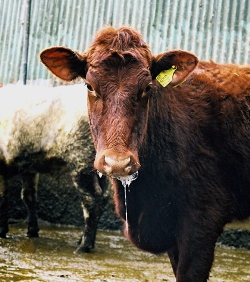
One of the most economically devastating diseases in the world for those who raise cows, sheep, pigs, goats, deer and other cloven-hoofed animals is foot-and-mouth disease (FMD). This incredibly contagious and fast-spreading disease causes fever, blisters on the feet and mouth (hence the name), loss of appetite, drooling, and lameness. Most herds affected are culled, as in the case of the 2001 outbreak in Great Britain when over 10 million animals had to be destroyed.

Traditional vaccines for FMD typically have three problems: first, there are so many different strains of the FMD virus that you must have a very well-matched vaccine to have any effect; second, traditional vaccines contain live FMD virus so they cannot be produced in the United States, and; third, depending on a vaccine's quality, it can be nearly impossible to determine whether an animal is actually infected, or has simply been exposed to the vaccine. Unless one can differentiate between vaccinated and infected animals, those animals vaccinated outside the U.S. with the traditional vaccine would be prohibited from entering any country that is designated FMD free. The United States has been FMD-free since 1929, but that is no guarantee that the disease will not strike again, as the UK learned in 2001after being FMD-free for 34 years.

Now, at the Department of Homeland Security Science and Technology Directorate's high-containment Plum Island Animal Disease Center (PIADC), located off the tip of Long Island, N.Y., scientists have produced a molecular vaccine against one strain of FMD, that 1) does not use a live FMD virus for vaccine manufacture, and, 2) can be used to differentiate an infected from inoculated animal using common diagnostic tests.

"This is the biggest news in FMD research in the last 50 years," says PIADC Director Dr. Larry Barrett. "It's the first licensed FMD vaccine that can be manufactured on the U.S. mainland, and it supports a vaccinate-to-live strategy in FMD outbreak response."

The new FMD vaccine, originally discovered by Dr. Marvin Grubman in the USDA Agricultural Research Service at PIADC, took seven years to develop and license. Dr. Bruce Harper, Director of Science at PIADC and the manager over PIADC's Targeted Advanced Development Branch, led the development team, who worked with industry partners GenVec Inc., a biopharmaceutical company in Gaithersburg, Maryland, and Antelope Valley Biologics, a Benchmark Biolabs affiliate in Lincoln, Nebraska.

The FMD viral structure includes genetic material surrounded by a coat of proteins called a capsid. The new vaccine produces only the virus coat particles, which form empty viral capsids, and not the entire genome of the virus; thus it lacks the infectious viral nucleic acids. When the vaccine is injected into the animal the resulting empty viral capsids trigger a protective immune response.

"The absence of the nucleic acids of the real virus allows us to differentiate between vaccinated and infected animals," said Grubman. "This is critical when determining that an animal is free of infection after an FMD outbreak. Now it will no longer be necessary to destroy all the animals in a herd when just a few become infected."

The development of the vaccine was a team effort that required new scientific discoveries in order to work properly. Dr. John Neilan, the Branch Chief of the DHS Targeted Advanced Development Branch at PIADC, developed a way to address the immune response to the vaccine, which made it possible to achieve the level of effectiveness required for a USDA license. The vaccine has been granted conditional license for use in cattle by the USDA Animal and Plant Health Inspection Service's Center for Veterinary Biologics. Under the conditional license, the product may be distributed should the need for it arise, as authorized by federal emergency management officials within USDA. APHIS issued the conditional license to Antelope Valley Bios, Inc., who manufactured the vaccine under a contract from GenVec.

The FMD virus, noted since at least the 16th century, survives in lymph nodes and bone marrow. Large amounts of the virus are found in all body secretions and excretions and every time an infected animal breathes out it releases large amounts of infectious virus, exposing other animals. FMD virus can survive on the ground for extended periods, and can be carried in contaminated feed, manure, on the tires of vehicles and on the shoes and clothes of people. It has been documented to spread by being carried with the wind over long distances. The most common route of introduction of FMD into a country has been through feeding contaminated meat product scraps to pigs, as was the case in the devastating 2001 outbreak in the United Kingdom.

There are seven known serotypes and more than 60 subtypes of the FMD virus, and there is no universal vaccine against the disease. Potential cost of an FMD outbreak in United States could exceed $50 billion. FMD is present today in Africa, the Middle East, Asia, and parts of South America.

PIADC has entered into a cooperative research and development agreement with an industry partner, Merial, to evaluate the FMD vaccine production process. S&T is also funding efforts to develop vaccines against other foreign animal disease threats such as classical swine fever, African swine fever, and Rift Valley fever.

"Our work isn’t over yet," says S&T's Agricultural Defense Branch Chief Michelle Colby. "This vaccine protects against just one strain of FMD, so this is just the tip of a growing iceberg. DHS has several vaccines for other FMD serotypes ready to enter the licensure process."

Saturday, June 2, 2012

Controlling Sepsis Can Save Service Member Lives


Sepsis  is an overwhelming blood infection, which when coupled with shock (such as that which may be experienced following a combat injury) has a mortality rate near 50 percent.

Current methods to identify and treat sepsis may take 48 hours or longer – resulting in increased recovery time from combat wounds and hundreds of preventable deaths.

In fall 2011, DARPA began research to limit the impact of sepsis on the U.S. warfighter through the Dialysis-Like Therapeutics (DLT)  program. The goal of DLT is to demonstrate a portable device capable of sensing and removing various targets in the blood (e.g. bacteria, viruses, toxins, and cytokines) on clinically relevant time scales.

As pathogen load is strongly correlated with patient morbidity and mortality, early detection and rapid reduction is considered fundamental to program success and eventual clinical impact. Research to date has focused on advancing the components needed for such a device.

Today, DARPA announced a solicitation  seeking integration of previously awarded DLT projects to develop sensors, complex fluid manipulation architectures, separation technologies and closed-loop control algorithms.

After integration, DARPA hopes for a single device capable of removing at least 90 percent of sepsis-causing material from a patient within 24 hours. The DLT device sought by DARPA would differ from kidney dialysis devices by potentially enabling continuous, early sensing based on the entire blood volume, removing the need for anticoagulants, and facilitating label-free separation of multiple targets within the blood.

“DLT represents a revolutionary approach in the treatment of blood-borne illness,” said Tim Broderick , DARPA program manager. “If successful, this technology could be used to treat sepsis faster and more effectively, saving lives and reducing treatment costs. In 2009 alone, more than 1,500 active duty Service members were diagnosed with sepsis. DLT may eliminate the need for expensive culture-based identification methods and extended hospital stays. And, as the technology matures, we believe the device could be adapted to diagnose and treat a variety of illnesses.”

DLT is a technology demonstration and human trials will not be funded. However, proposers are encouraged to submit plans for testing that would result in an investigational device exemption approval from the Food and Drug Administration (FDA). The FDA will be engaged with the DLT team throughout the program lifecycle by reviewing proposals, participating in proposers’ day meetings and participating in Government review boards.

Information for this post provided by DARPA

Thursday, May 24, 2012

Better Drug Delivery With New Smart Inhaler (Images 1 and 2)


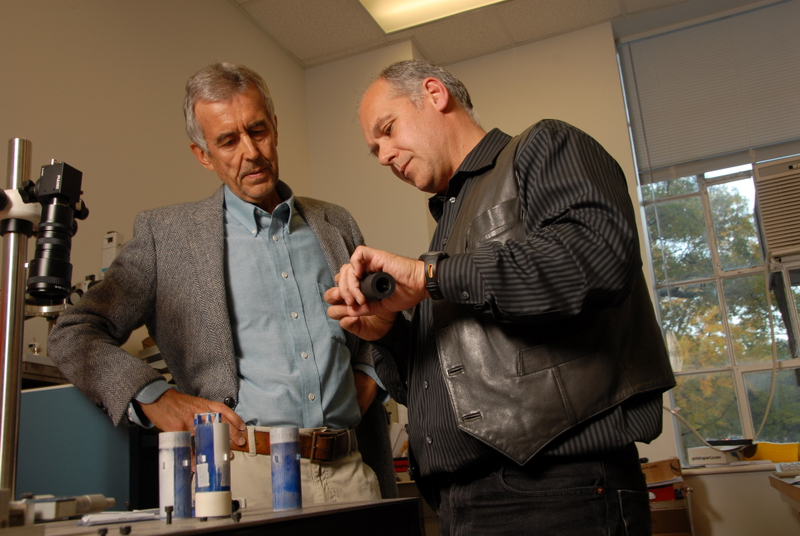
Professors Clement Kleinstreuer (left) and Stefan Seelecke of the College of Engineering at North Carolina State University examine parts of a smart inhaler system they developed that could improve treatment of diseases by targeting drugs onto diseased tissue without affecting healthy areas of the throat and lungs. The system could be a breakthrough for patients suffering from lung cancer, asthma, diabetes and other ailments.

This computer controlled inhaler system implements a technology that for the first time, tightly controls where inhaled drugs end up in the respiratory system. Developed by engineers at North Carolina State University, the system could improve treatment of diseases by targeting drugs onto diseased tissue without affecting healthy areas of the throat and lungs--a breakthrough for patients suffering from lung cancer, asthma, diabetes and other ailments.

To read more about this discovery, see the NC State news story New Inhaler System Could Be Breakthrough for Disease Treatment. (Date of Images: 2008-09)

Credit: Roger Winstead, North Carolina State University