Showing posts with label national institutes of health. Show all posts

Friday, March 9, 2012

Six-Month Old Word Learners


Suppose a baby's first word is "mommy" or "daddy"--words an infant usually says around his or her first birthday. Of course, the little cherub puts a gleam in her parents' eyes; she's finally talking and is well on her way to becoming the next big opera star or a world famous author.

But new research says infants may begin understanding language much sooner than previously thought. They understand the meaning of some words far earlier than parents or even social scientists theorized. In fact, before they talk, walk or point, infants know the meanings of some words merely from everyday exposure to them.

"By six months, infants understand the meaning of words related to foods and body parts," said Elika Bergelson, a doctoral candidate in psychology at the University of Pennsylvania, who recently conducted a study that challenges current views of the developmental sequence of human language learning.

"Unlike previous research, which has shown that young infants know their own name or the words 'mommy' or 'daddy,' or can be trained to learn words for novel objects in the lab, here we show that infants have knowledge about word categories that are a part of their daily life."

Bergelson and her coauthor, associate professor Daniel Swingley also with the Department of Psychology and the Institute for Research in Cognitive Science at the University of Pennsylvania, conducted the study. The Proceedings of the National Academy of Sciences published it in its February 13 issue.

"The work by Swingley and colleagues continues a long tradition of research demonstrating that even very young infants engage in complex perceptions and inferences about the world around them," said Peter Vishton, a developmental psychologist in the National Science Foundation's Division of Behavioral and Cognitive Sciences, which partially funded the study.

"Babies can't tell us about what they know, but their looking patterns demonstrate that they make sense of the people, objects and events in their surroundings," said Vishton, "to some extent from the moment they are born."

Using a research method called "language-guided looking" or "looking-while-listening" researchers presented six- to nine-month old infants with visual displays, usually sets of two pictures. Then a parent named a picture in each set using a sentence like, "Look at the apple." Researchers then gauged the infant's visual fixations on named pictures as a measure of the infant's word understanding.

Most of the 33 infants in the study recognized most of the 20 items tested, which were food-related or body parts. Researchers compared the tests of the six to nine month olds with 50 babies 10 to 20 months old.

"We were most surprised that we found evidence of word-meaning knowledge this early," said Swingley. "We knew that infants around this age were very good at discriminating and categorizing speech sounds, but it seemed unlikely that they would be able to show word-meaning knowledge, without training, in the laboratory setting."

Prior research generally classifies infants younger than about 10-12 months as 'prelinguistic' and conventional thinking suggests word learning doesn't start until around a child's first birthday. Because of that, the researchers in this study expected to find that maybe around 9 months there might be some word recognition, but certainly not at 6-7 months.

"In the context of this tradition," said Vishton, "the current finding that 6-month-olds possess knowledge about the meanings of nouns associated with body parts is quite striking."

"The babies surprised us," said Swingley.

"The bulk of current evidence on the language abilities of 6-12 month olds document their savvy abilities to pull out various properties about the sounds of language: which sounds their language has as separate categories, where words begin and end, what kind of patterns or consistencies there are in the speech stream, etc.," said Bergelson, arguing that this leads to language acquisition theories that suggest infants younger than 10-12 months old are not yet "word learners."

"Our findings may lead to changes in the way that we understand language acquisition and its development," she said.
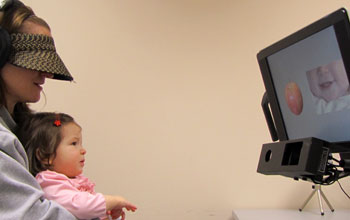
"In terms of the message to parents and caretakers," added Swingley, "our work suggests that young infants understand a little of what is said to them, so it makes sense to talk to them. When we talk to infants as real conversational partners, and talk about what they are interested in, we create the ideal conditions for learning.

"There's more and more work showing strong correlations between how much parents talk to their young children and those children's vocabulary size," he said. "Overheard language doesn't do it, television doesn't do it. What young children learn from best is when we treat them as real conversational partners."

The National Institutes of Health also funded part of this research.

-- Bobbie Mixon

Monday, February 6, 2012

Domestic Cats, and Wild Bobcats and Pumas, Living in Same Area Have Same Diseases

Domestic cats, wild bobcats and pumas that live in the same area share the same diseases.

And domestic cats may bring them into human homes, according to results of a study of what happens when big and small cats cross paths.

Initial results of the multi-year study are published today in the scientific journal PLoS One by a group of 14 authors.

The joint National Science Foundation (NSF) and National Institutes of Health (NIH) Ecology and Evolution of Infectious Diseases (EEID) Program funded the study. Scientists at Colorado State University and other institutions conducted the research.

It provides evidence that domestic cats and wild cats that share the same outdoor areas in urban environments also can share diseases such as Bartonellosis and Toxoplasmosis. Both can be spread from cats to people.

"Human-wildlife interactions will continue to increase as human populations expand," said Sam Scheiner, program director for EEID at NSF.

"This study demonstrates that such interactions can be indirect and extensive," said Scheiner. "Through our pets we are sharing their diseases, which can affect our health, our pets' health and wildlife health."

The study looked at urban areas in California and Colorado. Its results show that diseases can spread via contact with shared habitat.

All three diseases the scientists tracked--Toxoplasmosis, Bartonellosis and FIV, or feline immunodefiency virus--were present in each area.

The research also demonstrates that diseases can be clustered due to urban development and major freeways that restrict animal movement.

"The results are relevant to the big picture of domestic cats and their owners in urban areas frequented by wild cats such as bobcats and pumas," said Sue VandeWoude, a veterinarian at Colorado State and co-leader of the project.

"The moral of this story is that diseases can be transmitted between housecats and wildlife in areas they share, so it's important for pet owners to keep that in mind."

The researchers followed wild and domestic cats in several regions of Colorado and California to determine whether the cats had been exposed to certain diseases.

The effort includes data from 800 blood samples from felines of all sizes, including 260 bobcats and 200 pumas, which were captured and released, and 275 domestic cats.

"As human development encroaches on natural habitat, wildlife species that live there may be susceptible to diseases we or our domestic animals carry and spread," said Kevin Crooks, a biologist at Colorado State and co-leader of the project.

"At the same time, wildlife can harbor diseases that humans and our pets can in turn get. Diseases may be increasingly transmitted as former natural areas are developed."

The project also looked at whether bobcats in southern California were segregated into different populations by major highways.

By analyzing genetic and pathogen data, the scientists found that bobcats west or east of Highway 5 near Los Angeles rarely interbred, but that the bobcats did cross into each other's territory often enough to share diseases such as FIV.

"The evidence suggests that bobcats are moving across major highways, but are not able to easily set up new home territories," said VandeWoude.

"They can, however, spread diseases to one another when they cross into each other's territories. This could result in inbreeding of the bobcats trapped by urban development and end up in the spread of diseases."

VandeWoude and Crooks say that the results don't necessarily mean that all domestic cats that are allowed to roam outdoors are at a high level of risk. They plan further studies to better assess that risk.

It does mean that domestic cats and wild cats who share the same environment--even if they do not come into contact with each other--also can share diseases.

The findings show that pumas are more likely to be infected with FIV than bobcats or domestic cats. While FIV cannot be transmitted to people, it is highly contagious among felines.

The rate of Toxoplasmosis was high in pumas and bobcats across Colorado and California.

Toxoplasmosis is caused by a parasite that, when carried by healthy people, has no effect but that can cause complications for infants and adults with compromised immune systems.

Cats only spread Toxoplasmosis in their feces for a few weeks following infection with the parasite. Like humans, cats rarely have symptoms when first infected.

Bartonellosis is a bacterial infection also called cat scratch disease. If someone is scratched by a cat with Bartonellosis, the scratch may become infected, but the infection is usually a mild one.

Other studies underway include a fine-scale analysis of urban landscape features that affect disease incidence; evaluation of pathogen exposure and transmission in bobcats; and a survey of domestic cat owners about their attitudes toward risks for pets from wildlife.

Large-scale projects looking at movement patterns of bobcats and pumas in Colorado, and a motion-activated camera analysis of human and wildlife interactions along urban areas, are also in progress.

The take-home message, the researchers say, is that life in the wild may not be so wild after all.

In addition to VandeWoude and Crooks, co-authors of the paper are: Sarah Bevins, Scott Carver, Mo Salman and Michael Lappin of Colorado State University; Erin Boydston, Lisa Lyren and Robert Fisher of the Western Ecological Research Center, U.S. Geological Survey; Mat Alldredge and Kenneth Logan of the Colorado Division of Parks and Wildlife; Seth Riley of the National Park Service in Thousands Oaks, Calif.; and T. Winston Vickers and Walter Boyce of the University of California at Davis.

NSF's Directorates for Biological Sciences and Geosciences, along with NSF's Directorate for Social, Behavioral & Economic Sciences, support the EEID Program.

For more information on the NSF-NIH EEID Program, please see NSF's special report: Ecology of Infectious Diseases. 

-NSF-

Wednesday, January 25, 2012

"Vision and Change in Undergraduate Biology" Initiative Charts New Path for College-level Biology

According to a rising chorus of biology educators, major changes in the teaching of undergraduate biology are needed to bring undergraduate biology courses into the 21st century. Such changes, these educators say, are necessary because modern biology has, in recent years, undergone major transformations. For example, biologists have used emerging technologies and interdisciplinary collaborations to rapidly open new areas of biological research and pioneer new approaches that enhance our understanding of living systems.

Associated advancements in biology are helping society better address urgent problems involving climate, energy, food and health. At the same time, a communications revolution has created a hyper-connected world in which information flows fast and freely. Because of these trends, the ways in which we discover, understand and learn about biology have profoundly changed.

In response to these new realities, biology educators are considering ways to better prepare college students for careers in the life sciences and to promote biological literacy in our citizenry. In doing so, they have increasingly recognized that traditional undergraduate teaching approaches that aim to "cover it all" cannot accommodate the ongoing explosion of new information in biology.

A call to action
To help biology educators modernize undergraduate biology education, the National Science Foundation (NSF)--in partnership with the Howard Hughes Medical Institute (HHMI), the National Institutes of Health (NIH) and the American Association for the Advancement of Science (AAAS)--launched a national initiative in 2007 called Vision and Change in Undergraduate Biology. This initiative was designed to distill a set of cutting-edge, 21st century approaches to undergraduate biology education from decades of conversations, reports and calls for change. Steadily gaining momentum, the initiative has, thus far, culminated in:

1.A national conference, entitled "Transforming Undergraduate Biology Education: Mobilizing the Community for Change," that was held in 2009 and attended by more than 500 biology faculty members, administrators, students and other stakeholders. The conference was hosted by AAAS with support from the NSF and input from HHMI and NIH.

2.The release in 2011 of a final report, entitled "Vision and Change in Undergraduate Biology Education: A Call to Action", which--based on the diverse insights expressed at the conference--provides a roadmap for the future of undergraduate biology education.

The final report's findings were summarized by a quote from Carol Brewer, professor emeritus of biological sciences at the University of Montana and the conference co-chair, that was included in a summary of the final report.  Brewer said, "We all have work ahead of us to ensure that the transformations we make in biology classrooms around the country reflect the biology we do in the 21st Century."

To help guide this transformative effort, the final report identifies:

•Core concepts that students must understand in order to become biologically literate. These concepts are: 1) evolution (the diversity of life-forms that have evolved over time through mutations, selection, and genetic change; 2) structure and function (the basic units of biological structures that define the functions of all living things); 3) information flow, exchange and storage (the influence of genetics on the control of the growth and behavior of organisms); 4) pathways and transformations of energy and matter (the ways in which chemical transformation pathways and the laws of thermodynamics govern the growth and change of biological systems); and 5) systems (the ways in which living things are interconnected and interact with one another).

•Core competencies--beyond the concepts identified above--that students must experience in order to become biologically literate and practice science. These competencies are: 1) the ability to apply the process of science; 2) the ability to use quantitative reasoning; 3) the ability to use modeling and simulation; 4) the ability to tap into the interdisciplinary nature of science; 5) the ability to communicate and collaborate with other disciplines; and 6) the ability to understand relationships between science and society.

Facilitating change in the biology classroom
Another critical aspect of the report is its emphasis on the importance of developing student-centered teaching approaches that actively engage students in interactive, inquiry-driven, cooperative and collaborative activities. According to the report, these approaches should convey to students the wonder of the natural world and the passion and curiosity of scientists, involve students in authentic research experiences and teach students how to evaluate complex biological problems from varied perspectives without just reciting facts and terminology.

To promote the development of student-centered approaches, the report directs readers to practical resources to help them integrate student-centered learning throughout biology curriculums, relevant examples of successful models and approaches to student-centered learning, and practical advice on using assessment tools.

In addition, the report recommends designing and revising undergraduate biology courses to incorporate clearly defined, measurable goals, the latest insights into how people learn, and successful best practices in teaching that have been identified by science education researchers and practitioners.

The report also cites the need for institutions--including colleges, universities, professional societies and federal and private funding sources--to create environments that promote advances in biology education. The report advises institutions to do so by preparing and training future faculty members to create student-centered classrooms, offering professional development in teaching to all of biology faculty members, hiring biologists who have education specialties, and devoting funds and resources to improving biology education.

Gaining momentum
To further energize biology educators, the next phases of the Vision and Change in Undergraduate Biology Initiative are currently being planned. These steps will involve engaging the biology community in the identification and dissemination of strategies for curricular reform at the departmental and institutional levels, and developing, in partnership with professional societies, a Web portal that features curricular resources for undergraduate biology courses that are based on the latest developments in scientific teaching.

What's next? A large national meeting is currently being planned for 2013. This meeting will focus on updates to the initiative's progress and on methods used to achieve such progress. In addition, vision and change fellows will be identified who will work together to draft an implementation framework that is expected to help institutionalize the adoption of the recommendations across various types of institutions.

-- Cynthia Wei, Former AAAS Science & Technology Policy Fellow at NSF Cynthia3wei@gmail.com

Thursday, April 7, 2011

USU, NIH study maps hotspots of genetic rearrangement

Findings in mice could aid in understanding how mammals genetically adapt

Researchers at the Uniformed Services University of Health Sciences (USU) and the National Institutes of Health (NIH) are concentrating focus on mouse chromosomes to map hotspots of genetic recombination – sites where DNA breaks and reforms to shuffle genes. Their findings have the potential to improve the detection of genes linked to disease and to help understand the root causes of genetic abnormalities. The research, published online April 3 in Nature, moves scientists one step closer to understanding how mammals evolve and respond to their environments.

Genetic recombination occurs at hotspots in cells that form sperm and eggs. At these sites, rearrangements ensure that the combination of genes passed on to every sperm and egg cell is unique. By studying precursors of mouse sperm cells during the early stages of genetic recombination, the scientists have created a precise, first-of-its-kind map of recombination hotspots in a multi-celled organism.

With this map, researchers also hope to pinpoint where, how and why abnormalities in the number of chromosomes can occur. Such abnormalities – for instance, the extra copy of chromosome 21 that gives rise to Down syndrome – are the leading known cause of miscarriages, congenital birth defects, and mental retardation in the United States.

“We wanted to figure out how recombination varied across the genome,” said R. Daniel Camerini-Otero, M.D., Ph.D., one of the senior authors on the paper and a researcher at the NIH’s National Institute of Diabetes and Digestive and Kidney Diseases (NIDDK). “Hotspots are the starting point for the process that ensures that every person is unique. These hotspots facilitate the adaptation of populations to environmental influences through evolution. Our findings will allow us to explore things like how environment and genetic background affect the recombination landscape.”

“Now that we have mapped recombination hotspots genome-wide, we can actually carry out studies on the whole mouse genome,” said Galina Petukhova, Ph.D., assistant professor in the USU Department of Biology and one of the paper’s senior authors. “This will be very beneficial in extending our knowledge to organisms as complex as humans, as faulty recombination can lead to infertility or birth defects. We continue to move closer to our ultimate goal of helping to prevent these health issues.” "This work is a powerful illustration of the utility of model organisms in the quest to understand fundamental biological processes and their role in human health," said George Santangelo, Ph.D., who oversees Dr. Petukhova's and other genetic recombination grants at the NIH’s National Institute of General Medical Sciences, which helped fund this research.

Camerini-Otero compared the map’s new level of precision to the difference between being able to zoom in to see a city block – all that was available until now – to being able to zoom in to see each and every building on that block. “What we were looking for was resolution that was much higher than ever seen before,” said Camerini-Otero. “Now that we can actually see these individual events, we can begin to understand their molecular structure.”

The researchers – including lead authors Fatima Smagulova, Ph.D., of USU, and Ivan V. Gregoretti, Ph.D., of NIDDK– used cutting-edge DNA sequencing technology and lots of computational power to take a snapshot of all the individual pieces of DNA that were taking part in recombination at a given moment in living cells. They then used this snapshot of short DNA pieces to draw a map of where chromosomes have an increased potential to be broken and to come back together in new ways.

Mice were used as subjects for this study because the researchers needed a population that could be created with a specific and identical genetic background. With this initial study a success, they hope to apply the same techniques to study recombination in people in the near future.

The end result is a catalog of about 10,000 hotspots and resembles a detailed map of where diversity can arise in the genome and of sites where such processes may go awry. The researchers next plan to apply what they’ve seen and learned with this new map to further understand chromosomal abnormalities, genetic recombination, genome stability and evolution.  The study is available at http://www.nature.com/nature/journal/vaop/ncurrent/full/nature09869.html.

The Uniformed Services University of the Health Sciences, or USU, is the nation’s federal health sciences university. USU students are primarily active-duty uniformed officers in the Army, Navy, Air Force and Public Health Service who are being educated to deal with wartime casualties, emerging infectious diseases and other public health emergencies. Of the university’s more than 4,500 physician alumni, the vast majority are supporting operations in Iraq, Afghanistan and elsewhere, offering their leadership and expertise. For more information, visit www.usuhs.mil.

The NIDDK conducts and supports research in diabetes and other endocrine and metabolic diseases; digestive diseases, nutrition, and obesity; and kidney, urologic, and hematologic diseases. Spanning the full spectrum of medicine and afflicting people of all ages and ethnic groups, these diseases encompass some of the most common, severe, and disabling conditions affecting Americans. For more information about NIDDK and its programs, see www.niddk.nih.gov.

The National Institutes of Health (NIH) — The Nation's Medical Research Agency — includes 27 Institutes and Centers and is a component of the U. S. Department of Health and Human Services. It is the primary federal agency for conducting and supporting basic, clinical, and translational medical research, and it investigates the causes, treatments, and cures for both common and rare diseases. For more information about NIH and its programs, visit http://www.nih.gov.

This research also was funded in-part by the National March of Dimes Foundation.