Showing posts with label university of california davis. Show all posts

Tuesday, August 28, 2012

Coast Horned Lizard (P. cerroense)


A coast horned lizard (Phrynosoma cerroense) on Baja California's Vizcaíno Peninsula.

Adam Leaché, a University of California, Berkeley, Ph.D. recipient and a National Science Foundation (NSF) bioinformatics postdoctoral fellow at the University of California, Davis, at the time, and the U.S. Geological Survey released a study in 2009 that showed that over their million-year evolution, when California's coast horned lizards moved north from Baja California and spread throughout the state, they diverged into at least two new species. The species of coast horned lizard pictured here, P. cerroense, was newly identified by the researchers.

The study findings are important for future conservation efforts. Coast horned lizard populations are declining from southern Baja California to northern California for many reasons including loss of lowland habitat from agriculture and urbanization and the introduction of Argentine ants, which displace the more nutritious harvester ants that these lizards feed on.

The study was funded in part by NSF (grant DEB 03-30750). To read more about this study, see the UC-Berkeley news story For horned lizard, horns alone do not make the species.

(Date of Image: July 1991)

Credit: Jimmy A. McGuire, University of California, Berkeley

Sunday, July 22, 2012

All Washed Up and Somewhere to Go


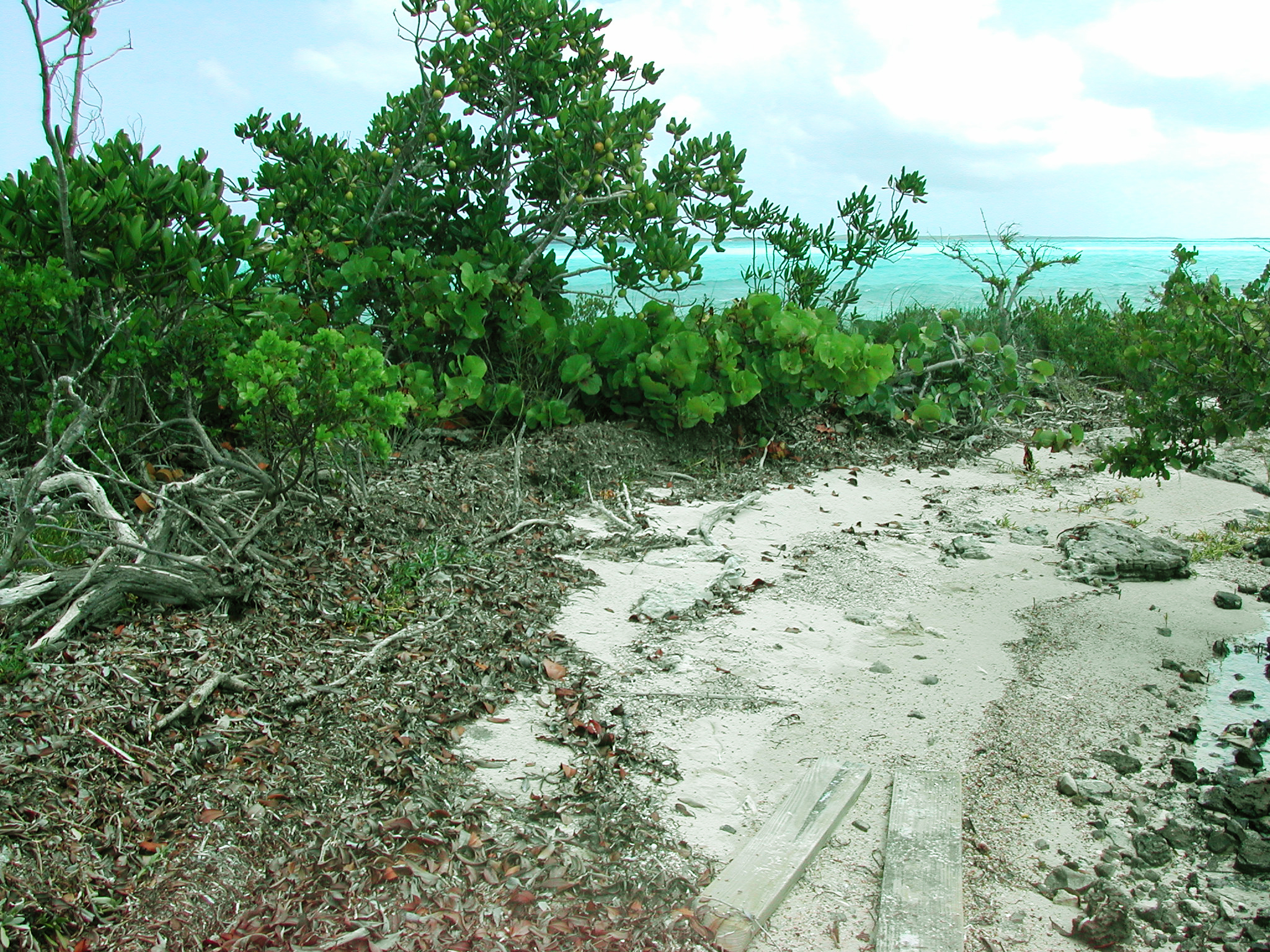
Seaweed on beaches is an ecological treasure trove

Wrack, it's called--the tangled mass of seaweed found on beaches around the world. It washes in with the high tide and lingers long after the waters recede.

Beach-goers in summer barely notice it, other than to call it a nuisance. They step across piles of it to get to the water, finding the seaweed little but a hindrance.

They might want to take a second look, says ecologist David Spiller of the University of California, Davis (UC-Davis), currently on leave at the National Science Foundation (NSF) as a program director in the Division of Environmental Biology.

"Seaweed provides an important connection between two ecosystems," he says, "that of the sea and that of the land."

Ecologists generally studied habitats with the idea that what happens there stays there--or at least stays within certain boundaries. They assumed that most interactions occur within one habitat, rather than across two or more.

But that thinking has gone out to sea.

Spiller and colleagues conducted a study of the effects of "deposition events" on seaweed species inhabiting tropical islands in the Bahamas. In this case, the researchers looked at seaweed transported from one location to another by hurricanes and other major storms.

They added seaweed to six shoreline plots and removed seaweed from six other plots over a three-month-period.  All plots were monitored for 12 months after the initial change.

Spiller found that washed-up seaweed is in fact a resource "subsidy" that's consumed by flies and small amphipods such as beach fleas, which in turn are eaten by lizards and predatory arthropods like spiders.

Seaweed also decomposes directly into the soil, providing nutrients to plants. In the study, the growth rate of land-based plants near seaweed-subsidized plots was 70 percent higher than in non-seaweed-subsidized plots.

In subsidized plots, the density of lizards also increased rapidly, averaging 63 percent higher than in non-subsidized plots. In addition, lizards shifted their diets to marine-based prey.

When clumps of seaweed appeared on the scene, they attracted marine amphipods that reproduce rapidly. Lizards then went from land-based vegetation to seaweed to feast on the treasure trove.

The addition of seaweed also led to an increase in insect damage to plants living along the beach. When lizards moved to seaweed from land-based vegetation, their usual prey--plant-eating insects--were free to go on a spree, decimating plant leaves as they munched.

"What we saw may be called a 'fertilization effect' in which seaweed adds nutrients to plants, increasing their growth rate," says Spiller, "and a 'predator-diet-shift effect' in which lizards shift from eating land-based prey to consuming small, marine detritivores that breed in seaweed."

Spiller and colleagues published the results in the journal Ecology. Co-authors of the paper are Jonah Piovia-Scott, Amber Wright, Louie Yang and Thomas Schoener of UC-Davis, Gaku Takimoto of Toho University in Japan, and Tomoya Iwata of the University of Yamanashi in Japan.

Understanding how various factors influence species interactions in food webs is a central goal of current ecological research, say the scientists.

In a follow-up study published in the journal Science, the biologists looked at the effect of another predator, ants, on plant-eating insects on the same islands. The ants chow down on the insects, giving plants a breather.

A combination of ants and lizards has a strong positive effect--on plants. But insects aren't as lucky.

Predatory ants on islands in the Bahamas are nocturnal; lizards go about their business by day. In a world with both ants and lizards, plant-eating insects are hit from both sides.

But when seaweed is added to the mix, the effect disappears. Like the lizards, the ants head for the beach to dine on small creatures breeding in shoreline seaweed. 

Damage to land-based plants then increases as there are more of the plant-eating insects.

"Ecosystems are clearly very complicated networks of interactions," says Spiller.

Seaweed "wrack" is likely to increase with more frequent storms as a result of global warming, as well as from increased nutrient run-off that fuels seaweed growth--and via a reduction in seaweed-eating fish caused by overfishing.

"We all need to take a closer look," says Spiller, "at that line of seaweed on the sand."

-- Cheryl Dybas, NSF (703) 292-7734 cdybas@nsf.gov

Tuesday, July 3, 2012

NASA Astronaut Stephen K. Robinson Leaves Agency


Joshua Buck
Headquarters, Washington     
202-358-1100
jbuck@nasa.gov
 
Jay Bolden
Johnson Space Center, Houston
281-483-5111
jay.e.bolden@nasa.gov
 
HOUSTON -- NASA astronaut Stephen Robinson has left the space agency. Robinson ends his 36-year NASA career as a veteran of three spacewalks with more than 48 days of spaceflight experience. Robinson will become a professor at the University of California at Davis in the fall of 2012. His last day at NASA was June 30.

Robinson began work with NASA as a cooperative education student in 1975 at the agency's Ames Research Center at Moffett Field, Calif. He was selected for the astronaut corps in 1995. Robinson served as a mission specialist on four spaceflights, including space shuttle missions STS-85 in 1997, STS-95 in 1998, STS-114 in 2005 and STS-130 in 2010. On his second spaceflight, Robinson was one of Sen. John Glenn's crewmates during Glenn's historic return to space after 36 years.

His third flight was NASA's 2005 return to flight mission after the loss of shuttle Columbia in February 2003. During STS-114, Robinson performed the only in-flight spacewalk to repair of a shuttle’s heat-shield. During his final spaceflight, Robinson orchestrated the spacewalks and the complex robotic installation of the Tranquility node and cupola onto the International Space Station.

"Steve will be sorely missed by the Astronaut Office," said Janet Kavandi, director of Flight Crew Operations. "He was a fellow classmate, and I will personally miss his ever-positive attitude and smiling face. We wish him the best in his future endeavors, and we are confident that he will be a positive influence and wonderful mentor to inquisitive minds at the University of California at Davis."

Robinson holds a bachelor of science in mechanical engineering and aeronautical engineering from the University of California at Davis and a master of science and doctorate in mechanical engineering from Stanford University.

For Robinson's complete biography, visit http://www.jsc.nasa.gov/Bios/htmlbios/robinson.html.

- end -

Wednesday, May 30, 2012

Male Parasitic Wasp (Diachasma alloeum)


A male parasitic wasp (Diachasma alloeum) on an apple. This wasp is speciating in sympatry along with its host, the apple maggot (Rhagoletis pomonella).

Research by ecologist Andrew Forbes of the University of California, Davis, found that when the apple maggot shifted hosts from the hawthorn tree to the apple, it triggered a cascading effect on the ecosystem.

Forbes and his colleagues found that the wasp, which attacks the apple maggot, has formed new incipient species as a result of specializing on diversifying fly hosts, including the apple-infesting race of R. pomonella.

The apple maggot, which is native to North America, shifted from its ancestral hawthorn host (Crataegus spp.) to the introduced European apple less than 250 years ago. "The two populations," Forbes said, "have since become partially reproductively isolated due to a number of host-related adaptations and are now distinct host races" (a group of organisms in the process of becoming a new species due to their close association with a particular host plant or animal). Forbes says this example of speciation in action may tell us more about why certain groups of organisms are more diverse than others, as well as suggest why certain areas and/or biotic regions may have more species than others.

[Research supported by a dissertation grant from the National Science Foundation (DEB 07-09647).] [This picture is associated with the following study: Forbes, A.A., L.L. Stelinski, T.H.Q. Powell, J.J. Smith and J.L. Feder. 2009. Sequential sympatric speciation across trophic levels. Science. 323: 776-779.]

(Date of Image: 2006)

Credit: Andrew A. Forbes

Thursday, April 19, 2012

History is Key Factor in Plant Disease Virulence


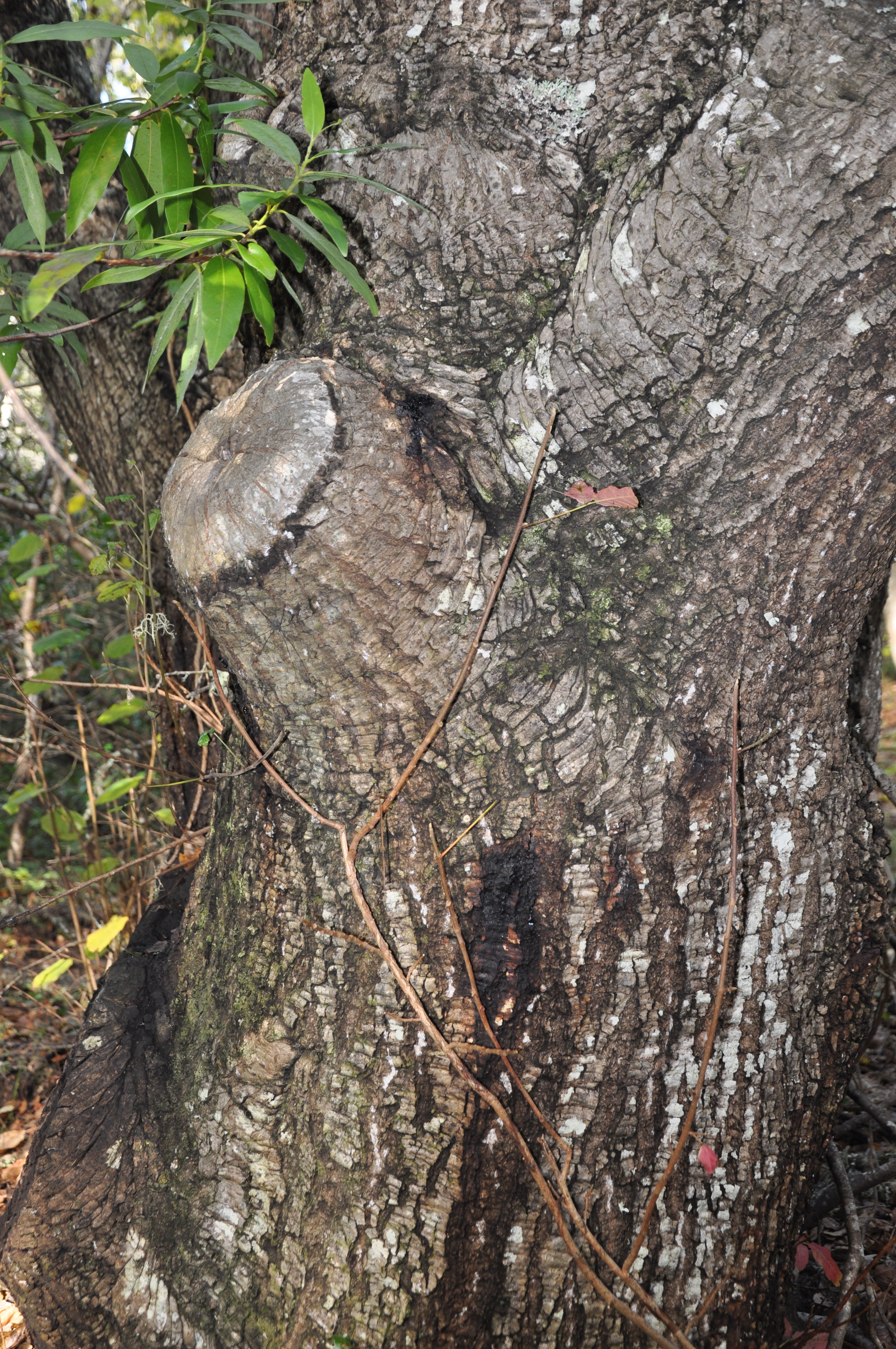
The virulence of plant-borne diseases depends on not just the particular strain of a pathogen, but on where the pathogen has been before landing in its host, according to new research results.

Scientists from the University of California System and the U.S. Department of Agriculture's Agricultural Research Service (USDA ARS) published the results today in the journal PLoS ONE.

The study demonstrates that the pattern of gene regulation--how a cell determines which genes it will encode into its structure and how it will encode them--rather than gene make-up alone affects how aggressively a microbe will behave in a plant host.

The pattern of gene regulation is formed by past environments, or by an original host plant from which the pathogen is transmitted.

"If confirmed, this finding could add a key new dimension to how we look at microbes because their history is going to matter--and their history may be hard to reconstruct," said Matteo Garbelotto, an environmental scientist at the University of California, Berkeley and co-author of the paper.

Epigenetic factors--for example, gene regulation mechanisms controlled by diet or exposure to extreme environments--are well-known to affect the susceptibility of humans to some diseases.

The new study is the first to show a similar process for plant pathogens.

"Sudden oak death, for example, is one of many pathogens that seemingly came out of nowhere to ravage the forests of California," said Sam Scheiner, a director of the National Science Foundation's (NSF) Ecology and Evolution of Infectious Diseases (EEID) program, which funded the research.

"This study shows that such sudden emergence can happen through rapid evolution, and may provide clues for predicting future epidemics."

The EEID program is a joint effort of NSF and the National Institutes of Health. At NSF, it is supported by the Directorates for Biological Sciences and Geosciences.

Garbelotto said that other scientists hypothesized that gene regulation has an effect on plant pathogens, based on the evolutionary rates of portions of the genome that are known to have an effect on gene regulation.

"Our work provides the concrete evidence those hypotheses were correct," he said.

Researchers showed that genetically identical strains of the sudden oak death pathogen isolated from different plant hosts were strikingly different in their virulence and their ability to proliferate.

They also demonstrated that these traits were maintained long after they had been isolated from their hosts.

"We found that an identical strain placed in two different plant hosts will undergo distinct changes that will persistently affect the strain's virulence and fitness," said Takao Kasuga, a molecular geneticist with the USDA ARS and the lead author of the paper.

The implications for disease control are significant.

Scientists say that it may not be enough to know what strain of pathogens they are dealing with in order to make treatment decisions; it also may be necessary to know how the pathogen's genes are being regulated.

This study shows that gene regulation may be the result of the environments the strain inhabited before being identified.

Garbelotto uses a parallel example of a well-known human pathogen: particular strains of the H1N1 flu virus have been identified as highly virulent, so a diagnosis of one of these strains indicates to doctors that they should treat that flu aggressively.

"But, hypothetically, if you caught one of these aggressive strains of H1N1 from a guy that went to, for example, Paris, it could be 10 times more dangerous. You may never know from whom you got it, and it's even less likely that you'll be able to learn where your infector visited before passing the germ on to you."

In plants, Garbelotto said, tracking a pathogen's history may prove even more difficult.

Correct information could give scientists a new weapon to use against virulent strains of diseases like sudden oak death, which can devastate forests and the ecosystems that depend on them.

The researchers also identified two groups of genes that are capable of affecting virulence and whose expression patterns are indicative of the previous host species they inhabited.

Understanding the regulation of these genes may provide scientists with future approaches to control a disease, such as manipulating gene expression to artificially reduce the aggressiveness of plant pathogens.

While Garbelotto stresses that more study is needed, he says if the paper's findings are confirmed, it could influence not just treatment but policy as well.

"Most countries impose regulations on microbes based on their genetic make up--which ones can and can't cross state and international lines and how they must be transported," he said.

"Our findings suggest that when making regulatory policy, we may also need to identify gene expression levels and take into account the history of a microbe."

Co-authors of the paper include Melina Kozanitas and Daniel Huberli, also of UC Berkeley; Mai Bui of the USDA ARS; and David Rizzo, a plant pathologist at University of California, Davis.

 -NSF-