Showing posts with label michigan state university. Show all posts

Thursday, September 20, 2012

Bacteria's Key Innovation Helps Understand Evolution


Genomic analysis of E. coli shows multiple steps to evolve new trait

Several years ago researchers at Michigan State University (MSU) reported discovering a novel, evolutionary trait in a long-studied population of Escherichia coli, a rod-shaped bacterium commonly found in the lower intestine of mammals. The E. coli added a helping of citrate to its traditional diet of glucose, even though other E. coli can't consume citrate in the presence of oxygen.

These same biologists have now analyzed this new trait's genetic origins and found that in multiple cases, the evolving E. coli population needed more than one mutational step before the key innovation took hold.  Complex traits, like using a new food source, are thought to be difficult and arise rarely, making the research of broad interest to both evolutionary biologists and public health scientists.

The findings, reported in this week's journal Nature, document the step-by-step process by which organisms evolve new functions. The study also highlights the importance of evolutionary changes that alter the physical arrangement of genes, leading to new patterns of gene regulation.

E. coli normally can't digest citrate when oxygen is present because they don't express the right protein to absorb citrate molecules. Citrate is a salt or class of citric acid commonly found in fruit such as lemons. So how did this mutation occur?

To find the answer, postdoctoral researcher Zachary Blount and MSU Hannah Distinguished Professor of Microbiology and Molecular Genetics Richard Lenski analyzed dozens of complete genome sequences from bacteria that had evolved this new trait and had been sampled and stored at different time points in the history of the lineage.

The National Science Foundation's Division of Environmental Biology partly funded the research, as did the NSF-supported BEACON Center for the Study of Evolution in Action.

The team used samples from Lenski's long-term E. coli experiment that started in February 1988 and has been ongoing for more than 24 years. The experiment allows Lenski and his students and colleagues to study more than 56,000 generations of bacterial evolution. In terms of generations, it is the longest running evolution experiment in history.

Twelve populations of E. coli live in an incubator in Lenski's laboratory producing about seven new generations every 24 hours. Each day, scientists take one percent of each population and transfer it into a new food source, a flask containing fresh glucose, which the bacteria readily eat, and citrate, which one population discovered how to eat after more than 30,000 generations. The researchers also take samples every 500 generations, and freeze them for later study.

Because they freeze the samples, when something new emerges the scientists can go back to earlier generations to look for the steps that happened along the way, which is what occurred in this case.

The researchers found that at least three mutations were required for the bacteria to effectively use citrate when oxygen is present. One or more mutations were necessary to set the physiological stage for the two later events. Then a critical gene duplication occurred that effectively re-wired the expression of a previously silent gene.

"These bacteria have evolved to consume a food resource--citrate--that no wild E. coli uses. Three mutations are required for this to happen, and they must occur in a specific order," said George Gilchrist, NSF program manager for the BEACON Science and Technology Center. "This study shows that the first mutation is required to set the stage for the next two, but surprisingly, this turns out to occur repeatedly and independently in different populations. What this suggests is that complex traits, at least in the microbial world, can evolve quickly and repeatedly."

Additional co-authors include Jeff Barrick, University of Texas and Carla Davidson, University of Calgary.

To learn more about this research, see the journal article in Nature magazine.

 -NSF-

Thursday, August 23, 2012

Watching Evolution Unfold


Image 1: Jeffrey Barrick, a postdoctoral research associate in Michigan State University's (MSU) Department of Microbiology and Molecular Genetics, views bacteria cultures. Barrick worked in the lab of Richard Lenski, the Hannah Professor of Microbial Ecology at MSU, who studies the process of evolution using fast-reproducing bacteria that allow him to watch the process in action.

Image 2: Bacteria cultures grow in a Petri dish in the evolutionary biology lab of Richard Lenski, the Hannah Distinguished Professor of Microbial Ecology at Michigan State University. Lenski studies the process of evolution using fast-reproducing bacteria that allow him to watch the process in action.

Lenski began the study in 1988, when he started experimenting with 12 populations the bacteria E. coli. Lenski used E. coli from the same ancestral strain and living in identical environments so he could see how similarly or differently they would evolve. He planned on running the experiment for at least a year and culture about 2,000 bacterial generations, but 21 years and almost 40,000 generations later the experiment continues. The research has been supported by the National Science Foundation and the Defense Advanced Research Projects Agency.

(Date of Images: October 2009)

Credit: G. L. Kohuth, Michigan State University

Thursday, August 9, 2012

NASA To Hold Media Teleconference About Record-Breaking Galaxy Cluster


J.D. Harrington
Headquarters, Washington     
202-358-5241
j.d.harrington@nasa.gov

WASHINGTON -- NASA will hold a media teleconference at 1 p.m. EDT Wednesday, Aug. 15, to discuss an extraordinary galaxy cluster that is smashing several important cosmic records.

The panelists are:
-- Michael McDonald, Hubble Fellow, Massachusetts Institute of Technology, Cambridge, Mass.
-- Bradford Benson, astrophysicist, University of Chicago
-- Megan Donahue, professor of astronomy, Michigan State University, East Lansing
-- Martin Rees, professor of cosmology and astrophysics, University of Cambridge, United Kingdom

For dial-in information to ask questions, reporters must send their name, media affiliation and telephone number to j.d.harrington@nasa.gov by noon Aug. 15.

The general public also can ask the panelists questions via Twitter using the hashtag #asknasa.

Audio of the teleconference will be streamed live at http://www.nasa.gov/newsaudio.

For more information about NASA's Chandra X-ray Observatory, visit http://chandra.harvard.edu and http://www.nasa.gov/chandra.

- end -

Monday, May 14, 2012

Queen of Spades Key to New Evolutionary Hypothesis


Microscopic ocean plankton mimic card also known as the Black Queen

Sleight of hand is a trait that belongs mainly to humans.

Or so scientists thought.

Studies of common, microscopic ocean plankton named Prochlorococcus show that humans aren't the only ones who can play a mean game of cards.

Their method lurks in the Black Queen Hypothesis, as it's called, after the Queen of Spades in the card game Hearts.

Scientists Jeffrey Morris and Richard Lenski of Michigan State University and the BEACON Center for the Study of Evolution in Action, and Erik Zinser of the University of Tennessee, Knoxville, knew that smaller genomes were the norm in symbiotic microbes--those that have reciprocally beneficial relationships--but wondered how non-symbionts got away with cutting out functions it appeared they needed.

These non-symbiotic microbes, the researchers found, may be getting others to do the hard work of living for them.

The biologists published their results in a recent issue of the journal mBio, in a paper titled: "The Black Queen Hypothesis: Evolution of Dependencies through Adaptive Gene Loss."

"Black Queen" sets forth the notion that eliminating a necessary function confers an evolutionary advantage--as long as your neighbors continue to do the work. "It would make sense for a microbe to 'want' to lose a gene that's a burden," says Morris, "and get someone else to pick it up."

In the game of Hearts, the winning strategy involves avoiding the Queen of Spades.

"A microbe stuck carrying the load for another is, in effect, holding the Queen of Spades," Morris says. "But the Queen of Spades is a card that, while a drag, is necessary--whether in the hand or in the sea. If everyone threw out the Queen of Spades, it would be 'game over.' The whole community would suffer."

To test the Black Queen Hypothesis, the researchers applied it to a genus of microbes that has been the source of scientific confusion. Prochlorococcus, one of the most common groups of plankton in the open ocean, has a much smaller genome than biologists would expect in free-living bacteria.

How has Prochlorococcus been so successful in colonizing the sea while jettisoning seemingly important genes, including the gene for catalase-peroxidase, which lets the microbes neutralize hydrogen peroxide, a compound that can damage or kill cells?

Prochlorococcus, it turns out, relies on other microorganisms to remove hydrogen peroxide from the environment, says Zinser, "allowing it to dump its responsibilities on the unlucky card-holders floating around nearby."

It's a clear instance, Zinser says, of one species making out like a bandit while letting other members of the community carry the load.

The Black Queen Hypothesis offers a new way of looking at complex, linked communities of microbes, says Lenski.

"People often think about evolution as leading to more and more complex organisms, and that's often, but not always, the case," he says. "Sometimes organisms evolve to become simpler if that saves time or energy."

Under the Black Queen Hypothesis, these simpler organisms take advantage of "helpers" that perform essential functions. In that sense, beneficiaries are "cheaters" that exploit what might be called a public service.

Sometimes they contribute in other ways. Prochlorococcus, which benefits from the peroxide clean-up performed by other microbes, contributes energy through photosynthesis that supports the larger community.

The Black Queen Hypothesis describes an evolutionary process that may include cheating, but in other ecological contexts, may result in neutral or positive interactions between species.

Take Shooting the Moon, an alternate route to victory in Hearts. This risky move requires a player to capture all the point-scoring cards, including the Queen of Spades, the opposite of the usual strategy of minimizing one's points.

Shooting the Moon may be an analog to the Black Queen Hypothesis. Might a species, having become a helper for one function, therefore be more likely to become a helper for other, unrelated functions?

"Such an outcome would involve evolution toward a niche with high resource requirements," write the scientists in their paper, "but with the advantage of high 'job security' for the helper owing to the dependence of the community on its continued well-being."

The scientists ask, what forces lead to the reliance of communities on keystone organisms, whose extinction can lead to instability and potential catastrophe?

"The Black Queen Hypothesis has far-reaching implications for understanding the evolutionary forces behind diverse, interconnected ecological communities," says George Gilchrist, program director in the National Science Foundation's Division of Environmental Biology, which co-funded the research with NSF's Division of Ocean Sciences.

In the game of Hearts--or the game of life--the Queen of Spades, it turns out, may be the most important card.

-- Cheryl Dybas, NSF (703) 292-7734 cdybas@nsf.gov

Saturday, April 28, 2012

Can Nature's Beauty Lift Citizens From Poverty?


Researchers release findings on who benefits from nature tourism

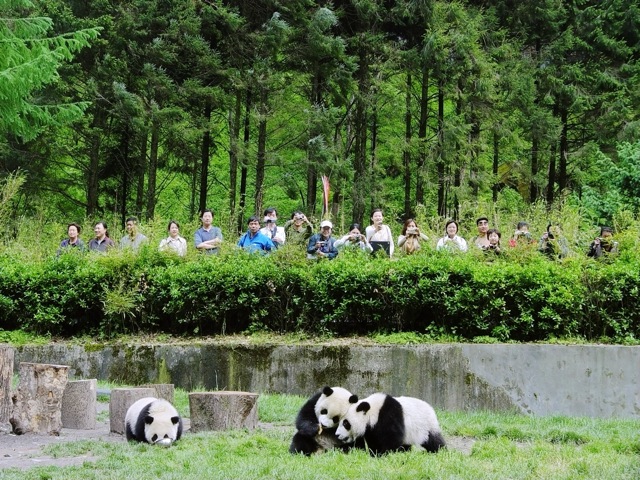
Using nature's beauty as a tourist draw can boost conservation in China's valued panda preserves, but it isn't an automatic ticket out of poverty for the humans who live there, a unique long-term study shows.

Often those who benefit most from nature-based tourism are people who already have resources. The truly impoverished have a harder time breaking into the tourism business, according to the paper, "Drivers and Socioeconomic Impacts of Tourism Participation in Protected Areas," published in the April 25 edition of PLoS One.

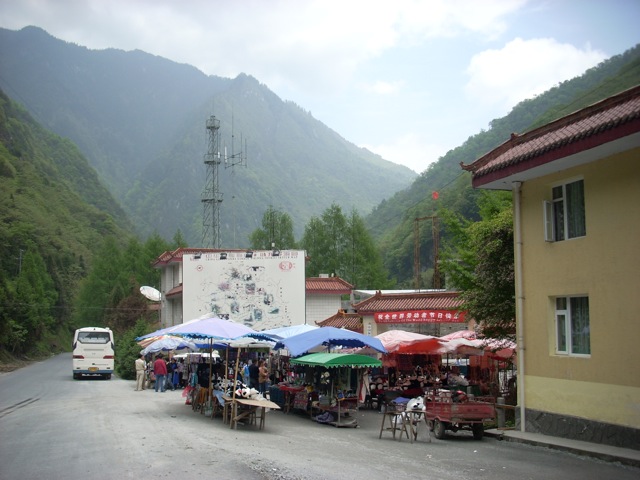
The study looks at nearly a decade of burgeoning tourism in the Wolong Nature Reserve in Southwestern China. China, like many areas in the world, banks on tourism over farming for economic viability, while attempting to preserve fragile animal habitat.

But until now, no one has taken a close look at the long-term implications for people economically.

"Long-term studies like this one give us a birds-eye view into the multifaceted connections between people and the environments they occupy," said Thomas Baerwald, a program director for the Geography and Spatial Sciences Program at the National Science Foundation (NSF), which partially funded the study.

"Finding the right balance between economics that lift people from poverty and habitat management is an important role for social and environmental scientists and will be important into the future."

Lead researcher Wei Liu is a Ph.D. candidate in the Center for Systems Integration and Sustainability (CSIS) at Michigan State University (MSU). He and his colleagues took advantage of the center's 15-year history of work in Wolong, which they call an excellent laboratory to study the complex interactions of humans and nature.

"This study shows the power of having comprehensive long-term data to understand how everything works together," Liu said. "This is the first time we've been able to put it together to understand how changes are being made."

The PLoS One paper is co-authored by Christine Vogt, MSU professor of community, agriculture, recreation and resource studies; Junyan Luo, research associate; Guangming He, research assistant; Kenneth Frank, professor of measurement and quantitative methods and fisheries and wildlife; and Jianguo "Jack" Liu, Rachel Carson Chair in Sustainability. All but Vogt are members of CSIS; Jack Liu is director.

Wei Liu and his colleagues followed 220 families in Wolong from 1999 to 2007 as they rode the wave of change in an area shifting from farming to bringing in tourists, who wanted to see the land of the giant pandas as well as experience its beauty.

That wave abruptly stopped in 2008 with the massive Sichuan earthquake that measured 8.0 on the moment magnitude scale used by seismologists to calculate the size of earthquakes. Damage to roads and buildings from Sichuan still impedes business development today.

Wei Liu and team studied the impact of having resources in Wolong. Residents who already had money, were educated, and had relationships with governmental officials had a much greater chance of being successful with the arrival of nature-based tourism.

Lacking these resources made it harder, which is significant since many of China's programs and initiatives aim to lift people out of poverty.

"The policies haven't yet reached their full potential," Wei Liu said. "But now we have the data to show what's happening.

An interesting piece of the research was learning that people who are engaged in the tourism trade were more likely to acknowledge the tradeoffs between tourism development and conservation. Wei said they acknowledged that tourism increased noise, traffic congestion and disturbance to wildlife.

Wei Liu said this research can help China--and other countries around the world--with the next steps of developing policies to balance tourism with habitat management. The area is working hard to rebuild from the earthquake, just as other developing tourism areas are challenged by natural disasters. The study, he and his colleagues say, can point to opportunities to improve policies.

The research was funded by NSF and NASA. Research on the interactions between human behavior and the environment can help guide policy, and are an important focus of NSF's Directorate for Social, Behavioral and Economic Sciences.

-NSF-