Showing posts with label university of minnesota. Show all posts

Friday, May 4, 2012

Plant Diversity Is Key to Maintaining Productive Vegetation


Long-term study finds that each species plays a role in maintaining a productive ecosystem

Vegetation, such as a patch of prairie or a forest stand, is more productive in the long run when more plant species are present, results of a new study show.

The long-term study of plant biodiversity found that each species plays a role in maintaining a productive ecosystem, especially when a long time horizon is considered.

The research found that every additional species in a plot contributed to a gradual increase in both soil fertility and biomass production over a 14-year period.

This week's issue of the journal Science publishes the results. They highlight the importance of managing for diversity in prairies, forests and crops, according to Peter Reich, lead author of the paper and a forest ecologist at the University of Minnesota.

Reich and colleagues looked at how the effect of diversity on productivity of plants changed over the long-term.

Two large field experiments were conducted at the National Science Foundation's (NSF) Cedar Creek Long-Term Ecological Research (LTER) site in Minnesota, one of 26 such NSF LTER sites around the globe in ecosystems from forests to grasslands, tundra to coral reefs.

"This study reveals what short-term experiments have missed: that the effects of biodiversity loss on ecosystems are more complex, severe and unpredictable than previously thought," says Matt Kane, an NSF LTER program director.

"The work shows the importance of doing long-term research," says Kane, "in this case documenting for the first time the critical importance of biodiversity for ecosystem health and sustainability."

The biodiversity experiments at Cedar Creek are the longest-running such experiments in the world, says Reich.

They contain plots with one, four, nine or 16 different species of plants.

The research used long-lived prairie plants, but serves as a model system for all vegetation, whether prairie, forest or row crop.

The study also showed how diversity works by demonstrating that different species have different ways of acquiring water, nutrients and carbon--and maintaining them in an ecosystem.

"Prior shorter-term studies, most about two years long, found that diversity increased productivity, but that having more than six or eight species in a plot gave no additional benefit," Reich says.

The scientists found that over a 14-year time span, all 16 species in the most diverse plots contributed more and more each year to higher soil fertility and biomass production.

"The take-home message," says Reich, "is that when we reduce diversity in the landscape--think of a cornfield or a pine plantation or a suburban lawn--we are failing to capitalize on the valuable natural services that biodiversity provides."

Co-authors of the paper are David Tilman, Forest Isbell, Kevin Mueller, Sarah Hobbie and Nico Eisenhauer of the University of Minnesota, and Dan Flynn of the University of Zurich.

 -NSF-

Friday, April 13, 2012

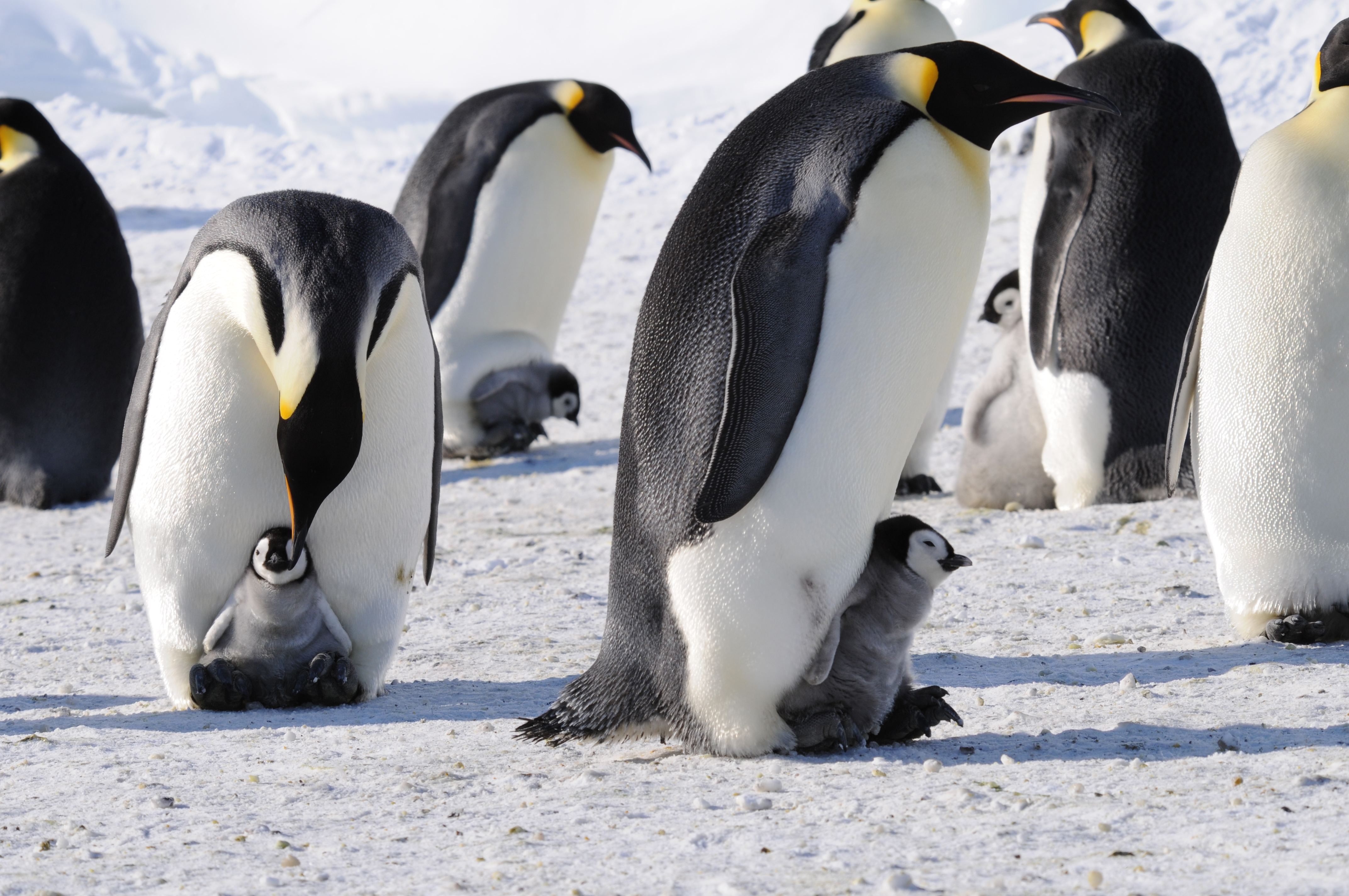
Scientists Determined First-ever Census for Emperor Penguins


A new study using satellite mapping technology reveals there are twice as many emperor penguins in Antarctica than previously thought.

The results provide an important benchmark for monitoring the impact of environmental change on the population of this iconic bird, which breeds in remote areas that are very difficult to study because they often are inaccessible with temperatures as low as -58 degrees Fahrenheit.

Reporting this week in the journal PLoS ONE, an international team of scientists describe how they used Very High Resolution satellite images to estimate the number of penguins at each colony around the coastline of Antarctica.

Using a technique known as pan-sharpening to increase the resolution of the satellite imagery, the science teams were able to differentiate between birds, ice, shadow and penguin poo or guano. They then used ground counts and aerial photography to calibrate the analysis.

Lead author and geographer Peter Fretwell at British Antarctic Survey (BAS), which is funded by the U.K.'s Natural Environment Research Council, explains, "We are delighted to be able to locate and identify such a large number of emperor penguins. We counted 595,000 birds, which is almost double the previous estimates of 270,000-350,000 birds. This is the first comprehensive census of a species taken from space."

On the ice, emperor penguins with their black and white plumage stand out against the snow and colonies are clearly visible on satellite imagery. This allowed the team to analyze 44 emperor penguin colonies around the coast of Antarctica, and seven previously unknown colonies.

"The methods we used are an enormous step forward in Antarctic ecology because we can conduct research safely and efficiently with little environmental impact, and determine estimates of an entire penguin population, said co-author Michelle LaRue from the University of Minnesota and funded by the U.S. National Science Foundation (NSF).

"The implications of this study are far-reaching: we now have a cost-effective way to apply our methods to other poorly-understood species in the Antarctic, to strengthen on-going field research, and to provide accurate information for international conservation efforts."

NSF manages the U.S. Antarctic Program through which it coordinates all U.S. scientific research on the southernmost continent and aboard ships in the Southern Ocean as well as related logistics support.

Co-author and BAS biologist Phil Trathan noted, "Current research suggests that emperor penguin colonies will be seriously affected by climate change. An accurate continent-wide census that can be easily repeated on a regular basis will help us monitor more accurately the impacts of future change on this iconic species."

Scientists are concerned that in some regions of Antarctica, earlier spring warming is leading to loss of sea ice habitat for emperor penguins, making their northerly colonies more vulnerable to further climate change.

Trathan continued, "Whilst current research leads us to expect important declines in the number of emperor penguins over the next century, the effects of warming around Antarctica are regional and uneven. In the future, we anticipate that the more southerly colonies should remain, making these important sites for further research and protection."

This research is a collaboration between BAS, University of Minnesota/NSF, Scripps Institution of Oceanography and the Australian Antarctic Division.

 -NSF-

Tuesday, January 17, 2012

Biologists Replicate Key Evolutionary Step in Life on Earth

More than 500 million years ago, single-celled organisms on Earth's surface began forming multi-cellular clusters that ultimately became plants and animals.

Just how that happened is a question that has eluded evolutionary biologists.

Now scientists have replicated that key step in the laboratory using common Brewer's yeast, a single-celled organism.

The yeast "evolved" into multi-cellular clusters that work together cooperatively, reproduce and adapt to their environment--in essence, they became precursors to life on Earth as it is today.

The results are published in this week's issue of the journal Proceedings of the National Academy of Sciences (PNAS).

"The finding that the division-of-labor evolves so quickly and repeatedly in these 'snowflake' clusters is a big surprise," says George Gilchrist, acting deputy division director of the National Science Foundation's (NSF) Division of Environmental Biology, which funded the research.

"The first step toward multi-cellular complexity seems to be less of an evolutionary hurdle than theory would suggest," says Gilchrist. "This will stimulate a lot of important research questions."

It all started two years ago with a casual comment over coffee that bridging the famous multi-cellularity gap would be "just about the coolest thing we could do," recalled Will Ratcliff and Michael Travisano, scientists at the University of Minnesota (UMN) and authors of the PNAS paper.

Other authors of the paper are Ford Denison and Mark Borrello of UMN.

Then came the big surprise: it wasn't that difficult.

Using yeast cells, culture media and a centrifuge, it only took the biologists one experiment conducted over about 60 days.

"I don't think anyone had ever tried it before," says Ratcliff. "There aren't many scientists doing experimental evolution, and they're trying to answer questions about evolution, not recreate it."

The results have earned praise from evolutionary biologists around the world.

"To understand why the world is full of plants and animals, including humans, we need to know how one-celled organisms made the switch to living as a group, as multi-celled organisms," says Sam Scheiner, program director in NSF's Division of Environmental Biology.

"This study is the first to experimentally observe that transition," says Scheiner, "providing a look at an event that took place hundreds of millions of years ago."

In essence, here's how the experiments worked:

The scientists chose Brewer's yeast, or Saccharomyces cerevisiae, a species of yeast used since ancient times to make bread and beer because it is abundant in nature and grows easily.

They added it to nutrient-rich culture media and allowed the cells to grow for a day in test tubes.

Then they used a centrifuge to stratify the contents by weight.

As the mixture settled, cell clusters landed on the bottom of the tubes faster because they are heavier. The biologists removed the clusters, transferred them to fresh media, and agitated them again.

Sixty cycles later, the clusters--now hundreds of cells--looked like spherical snowflakes.

Analysis showed that the clusters were not just groups of random cells that adhered to each other, but related cells that remained attached following cell division.

That was significant because it meant that they were genetically similar, which promotes cooperation. When the clusters reached a critical size, some cells died off in a process known as apoptosis to allow offspring to separate.

The offspring reproduced only after they attained the size of their parents.

"A cluster alone isn't multi-cellular," Ratcliff says. "But when cells in a cluster cooperate, make sacrifices for the common good, and adapt to change, that's an evolutionary transition to multi-cellularity."

In order for multi-cellular organisms to form, most cells need to sacrifice their ability to reproduce, an altruistic action that favors the whole but not the individual, Ratcliff says.

For example, all cells in the human body are essentially a support system that allows sperm and eggs to pass DNA along to the next generation.

Thus multi-cellularity is by its nature very cooperative.

"Some of the best competitors in nature are those that engage in cooperation, and our experiment bears that out," says Travisano.

Evolutionary biologists have estimated that multi-cellularity evolved independently in about 25 groups.

Travisano and Ratcliff wonder why it didn't evolve more often since it's not that difficult to recreate in a lab.

Considering that trillions of one-celled organisms lived on Earth for millions of years, it seems like it should have, Ratcliff says.

That may be a question the biologists will answer in the future using the fossil record for thousands of generations of multi-cellular clusters, which are stored in a freezer in Travisano's lab.

Since the frozen samples contain multiple cell lines that independently became multi-cellular, the researchers can compare them to learn whether similar or different mechanisms and genes were responsible in each case, Travisano says.

The next steps will be to look at the role of multi-cellularity in cancer, aging and other critical areas of biology.

"Multi-cellular yeast is a valuable resource for investigating a wide variety of medically and biologically important topics," Travisano says.

"Cancer was recently described as a fossil from the origin of multi-cellularity, which can be directly investigated with the yeast system.

"Similarly the origins of aging, development and the evolution of complex morphologies are open to direct experimental investigation that would otherwise be difficult or impossible."
 
-NSF-

Monday, December 19, 2011

Journal Piece Reveals New Data-driven Methods for Understanding Climate Change

In February 2012, the journal Nature Climate Change will publish a paper on rainfall extremes in India by principal investigator Vipin Kumar of the University of Minnesota's computer science and engineering department and co-principal investigator Auroop Ganguly of the civil and environmental engineering department at Northeastern University in Boston, members of the National Science Foundation's (NSF) Expeditions project team.

Nature pre-published the paper online today.

Based on new data-driven methods, or novel adaptations for understanding climate change developed by the Expeditions team, the paper identifies a steady and significant increase in geographical variability within India over the past half-century. The data-driven methods used, say the researchers, can be generalized not just to other regions beyond India, but to both observed and model-simulated climate data as well.

"Rainfall extremes are rather difficult to characterize over space and time, particularly at regional or local scales. However, our current understanding of the geographical patterns of heavy rainfall and their changes over time guides water resources and flood hazards management as well as policy negotiations related to urbanization or emissions control," the researchers note in the paper. "Thus, in vulnerable regions of the world where floods may claim many lives and water drives the economy or in emerging nations which may contribute significantly to the atmospheric inventory of greenhouse gases, major science advances are needed."

"If we were to use India as a case study, we find that top scientists and peer-reviewed publications do not agree on the nature of observed trends in heavy rainfall over the country," they add. "This has led to scientific controversies and uncertainties about adaptation and mitigation strategies in a vulnerable yet rapidly growing region of the world."

"This Expeditions in Computing project brings together interdisciplinary researchers from multiple institutions to pursue a bold, ambitious, research agenda by building reliable predictive models from climate data that could potentially transform how we understand and respond to climate change," explains Vasant Honavar, NSF program manager in NSF's Division of Information and Intelligent Systems. "The Nature Climate Change piece provides a hint of how sophisticated data mining methods could help fill gaps in our understanding of climate change, and ultimately, produce actionable insights that can help minimize the negative effects of climate change on humans and the environment."

-NSF-

Friday, December 2, 2011

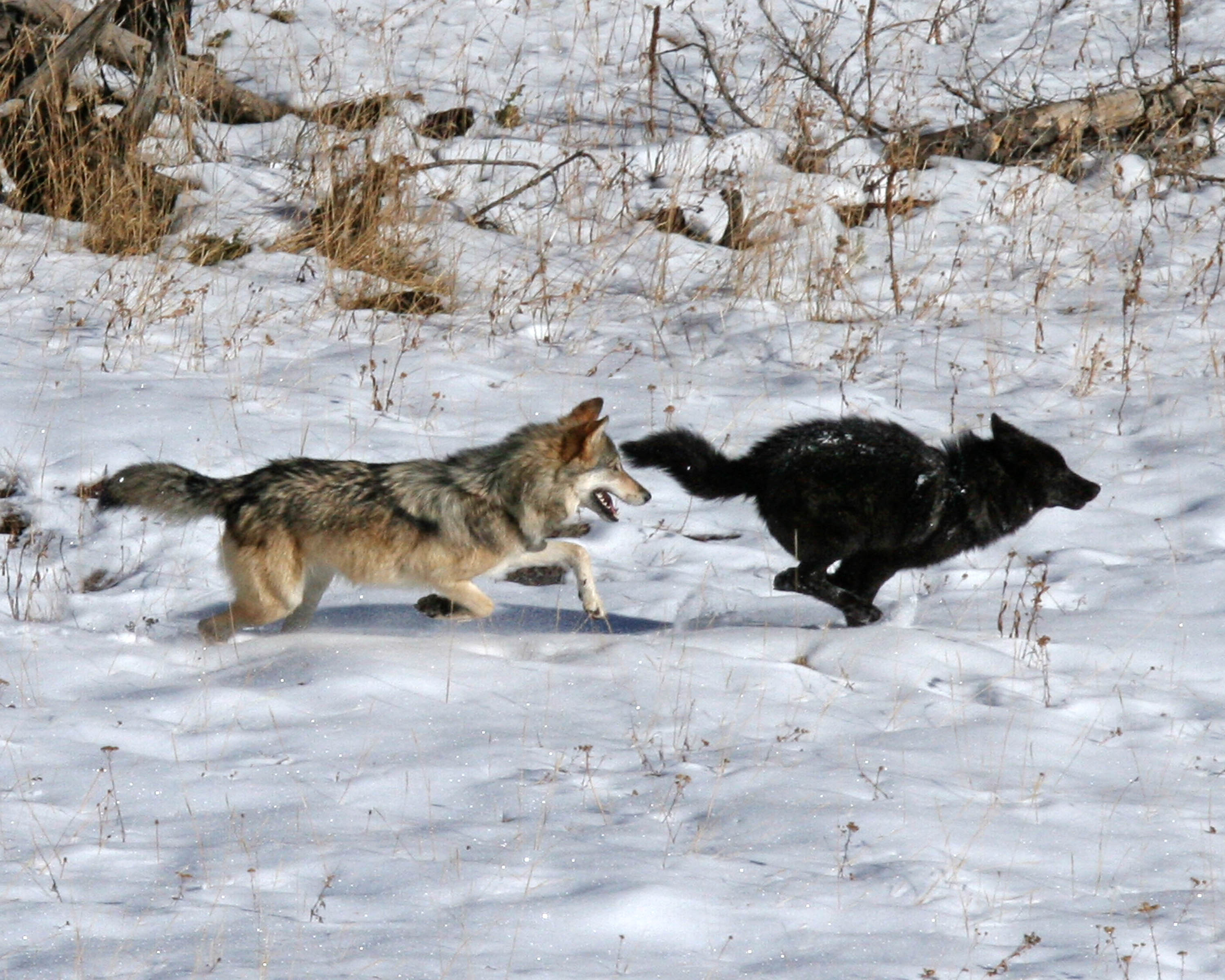
Study of Yellowstone Wolves Improves Ability to Predict Their Responses to Environmental Changes

A study of the wolves of Yellowstone National Park recently improved predictions of how these animals will respond to environmental changes.

The study, which was partially funded by the National Science Foundation, appears in the Dec. 2, 2011 issue of Science.

Part of the Yellowstone Wolf Project, researchers tracked changes in various characteristics of wolves living in the  national park between 1998 and 2009. They found some tracked characteristics--such as population size--are related to population ecology, while other tracked characteristics--such as coat color--are genetically determined through evolution.

The project also involved using a new model to compare data collected on Yellowstone wolf characteristics to environmental conditions through the years covered by the study. Researchers defined conditions in the park during each year of the study along a continuum from "good years" to "bad years"--with good years more favorable to wolf survival than bad years.

Tim Coulson of Imperial College London, the study's lead author, explains, "The novelty of the new model is that it looks at how the frequencies of changes in environmental conditions along the 'good to bad' year continuum simultaneously impact many wolf characteristics."

Study results indicate:

•Environmental changes will inevitably generate simultaneous ecological and evolutionary responses in the Yellowstone wolves.
•Changes in mean environment conditions will impact the size of the Yellowstone wolf population more than will changes in the variability of environmental conditions.
•A single environmental change may impact various wolf characteristics differently, depending on which particular aspects of wolf biology it impacts.

Researchers say to understand their conclusions, suppose environmental conditions in a "good year" helped increase the population size of Yellowstone wolves by increasing their survival rates. Also, suppose that a grey coat color would confer a survival advantage to wolves. Then, under those particular "good" conditions, an increase in the size of the wolf population would be expected to produce an increase in the prevalence of grey coats among the wolves.

By contrast, suppose that certain environmental conditions in a "good year" helped increase the population size of Yellowstone wolves by increasing the availability of their prey. Because the availability of prey and coat color are not related to one another, under those particular "good" conditions, an increase in the size of the wolf population would not be expected to produce an increase in the prevalence of grey coats among the wolves.

Coulson says increasing the specificity of the model's predictions requires collecting more data on the ecological and evolutionary responses of Yellowstone's wolves to various environmental conditions and on the relationships of these responses to one another.

As part of this effort, the Yellowstone Wolf Project research team currently is studying the differential impacts of various environmental changes on ecological and evolutionary characteristics of Yellowstone wolves during various stages of their life cycles. The team also  is working to identify the types of environmental conditions--such as the sizes of various populations of prey species and the amount and residence time of snow on the ground--that define good, bad and intermediary years for wolves.

The researchers hope once the methods developed through this study are refined, they may be applicable to other types of species, such as insects or crop pests, that live in other types of ecosystems. What's more, Coulson suggests that these methods may ultimately help answer questions about human populations. As just one example, the methods developed through this study might ultimately be used to help predict the impacts of the ongoing obesity epidemic on survival and fertility rates and the resulting influence of those variables on the growth rate of selected human populations.

The National Science Foundation provided funding to all of this paper's co-authors: Daniel R. MacNulty of the University of Minnesota at St Paul, Daniel Stahler of the National Park Service, Bridgett vonHoldt of the University of California at Irvine, Robert K. Wayne of the University of California at Los Angeles and Douglas Smith of the National Park Service.

-NSF-